384 vs 640 Thermal: Is the Upgrade Worth the Money?
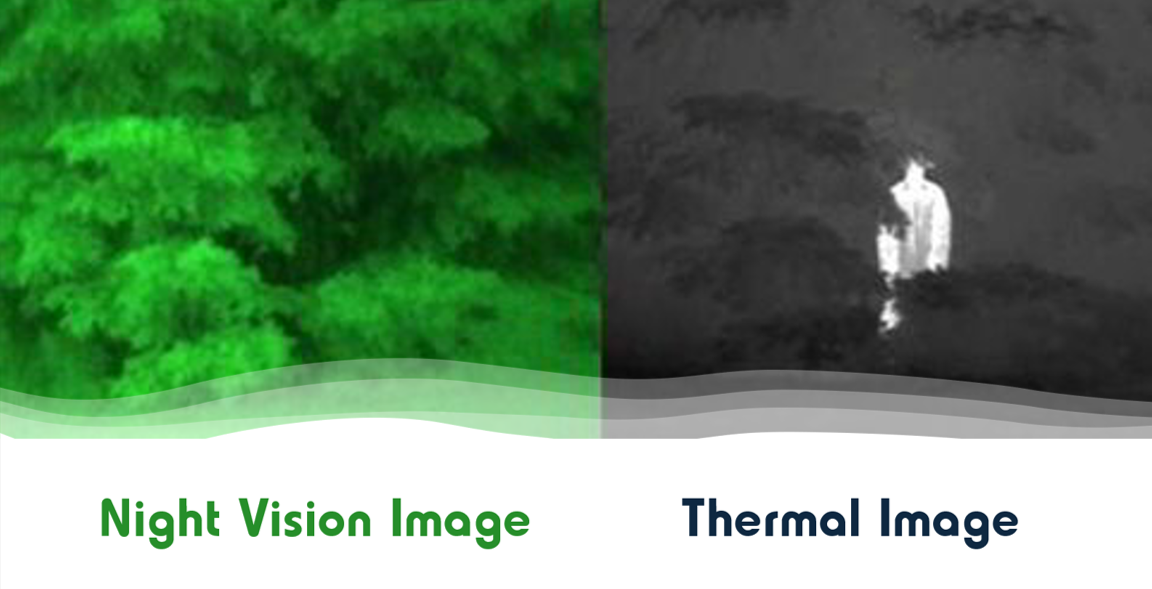
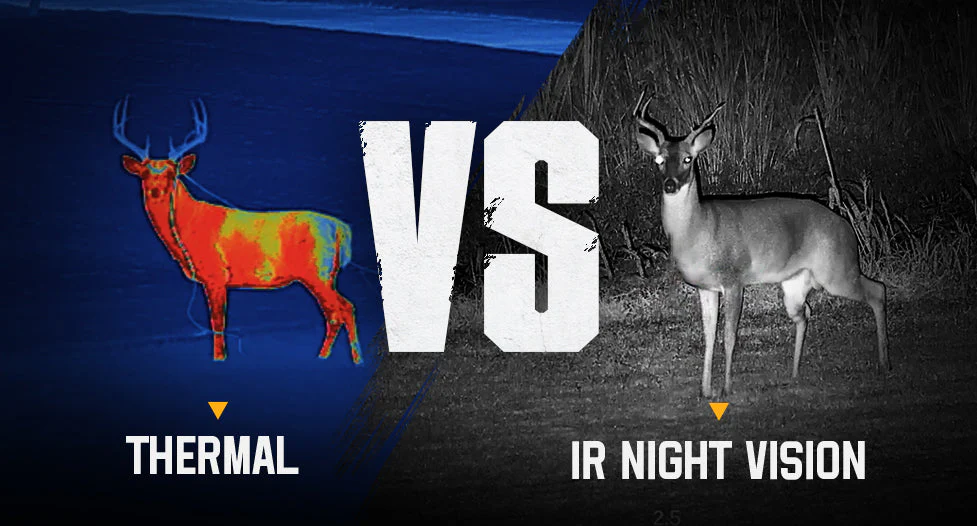
A 640 thermal sensor shows more detail and identifies game at greater distances than a 384, but it costs significantly more. For most European hunting, a 384 is enough and the better value, while a 640 earns its price only if you hunt open ground at long range or need to identify targets far away. The 384 vs 640 thermal decision is really a question of how far you hunt and how much detail you need at distance.
This guide explains the real difference, when each makes sense, and what they cost. For the bigger picture, see our complete guide to thermal imaging for hunting.
384 vs 640 thermal: What is the real difference?
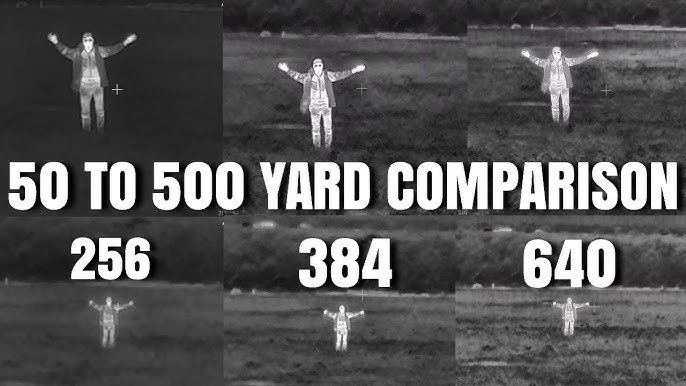
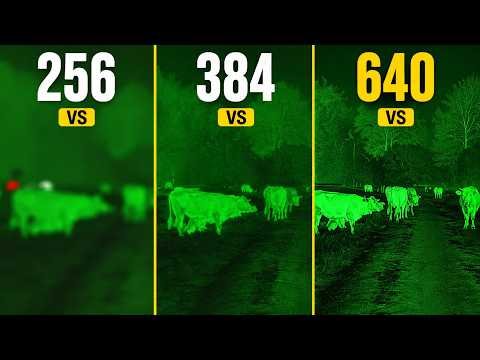
The numbers refer to the thermal sensor’s pixel count: a 384 sensor is 384×288 pixels, and a 640 sensor is 640×512. A 640 has more than twice the pixels of a 384, so it packs more detail into the same image. That extra detail does two things: it makes the picture look sharper, and it lets you identify what an animal is at a greater distance, because more pixels fall on the target. For the full-resolution ladder, see thermal sensor resolution explained.
384 vs 640 compared
| Factor | 384×288 | 640×512 |
|---|---|---|
| Pixel count | 110,592 | 327,680 |
| Image detail | Good | Noticeably sharper |
| Identification range | Strong at typical hunting distances | Better at long range |
| Field of view (same lens) | Narrower | Wider |
| Best use | All-round night hunting | Long range and open ground |
| Typical price | From around €1,150 | From around €2,300 |
One detail many buyers miss: at the same focal length, a 640 sensor gives a wider field of view than a 384, because the larger sensor captures more of the scene. That makes 640 units easier to scan with as well as sharper.
When 384 is enough (and saves you money)
A 384 sensor is enough for most hunting in Europe, and choosing it over a 640 can save you €1,000 or more. At the ranges most boar, fox, and deer are detected and shot; a 384 detects and identifies game well. If you hunt woodland, field edges, and mixed ground out to a few hundred meters, a good 384, such as the AGM Sidewinder TM35-384, with its sub-20 mK sensor, gives you a clean, capable image without paying for reach you will rarely use. Put the money you save toward a better lens or a spare battery instead.
When 640 is worth it
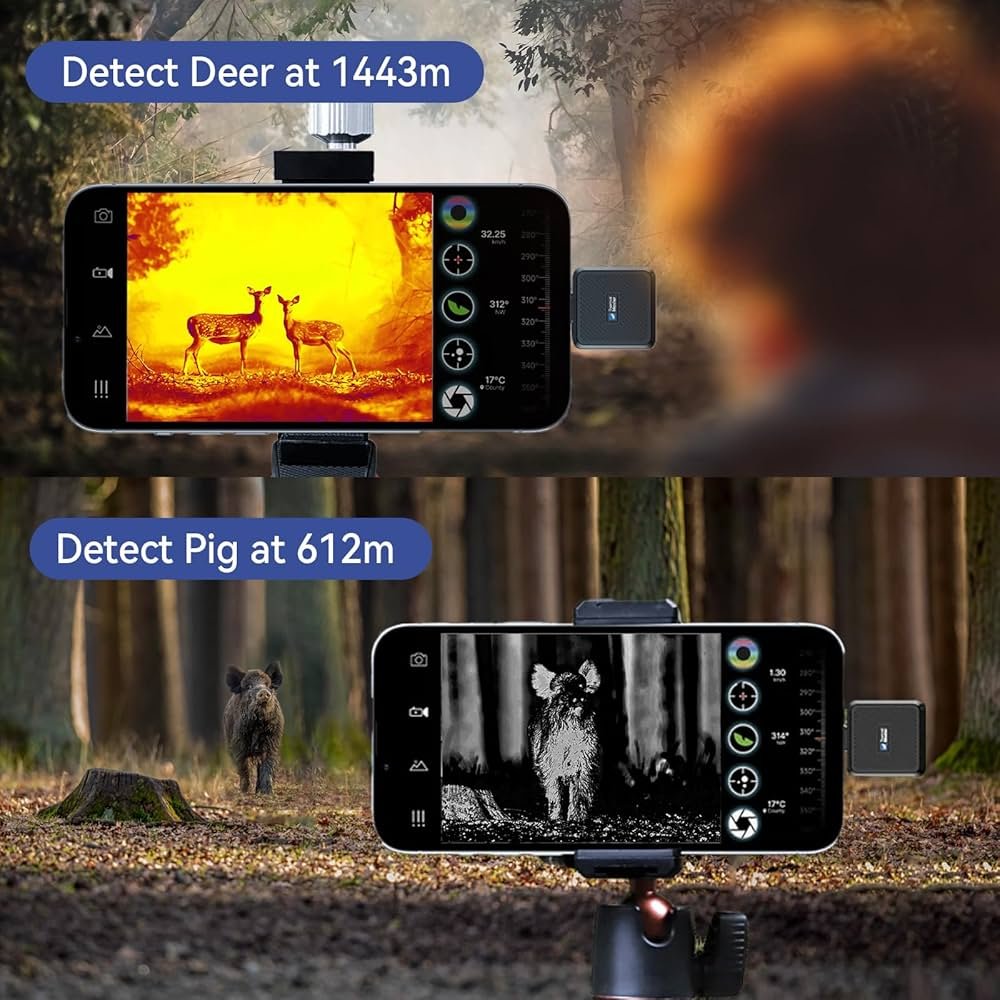
A 640 sensor is worth the extra cost when you hunt open ground at long range or when identifying a target at a distance matters. On an open hill, in large fields, or when foxing across stubble, the extra detail of a 640 lets you identify what an animal is much further out, which can make the difference between a confident shot and a wasted stalk. If you regularly work beyond a few hundred meters or simply want the sharpest image available, a 640 like the AGM Sidewinder TM35-640 or the ThermTec Ares 650 LRF is worth the expense. Compare them in the thermal monoculars range.
Does a 640 detect further than a 384?
Not necessarily for raw detection, because the lens drives detection range as much as the sensor. A 384 with a long 50 mm lens can detect heat as far as a 640 with a shorter lens. The 640 excels in identification, as it clearly indicates the heat source at a greater distance by resolving more detail. So if your goal is spotting heat far away, lens matters most; if your goal is identifying it far away, the 640 sensor matters most. We explain detection versus identification in how far can a thermal monocular see.
384 vs 640 by price
Here is how the two sit in the catalogue, using comparable models so the gap is clear.
| Model | Sensor | Lens | Price |
|---|---|---|---|
| AGM Taipan TM15-384 | 384×288 | 15 mm | €1,156 |
| AGM Sidewinder TM35-384 | 384×288 | 35 mm | €1,958 |
| AGM Sidewinder TM35-640 | 640×512 | 35 mm | €2,315 |
| AGM Sidewinder TM50-640 | 640×512 | 50 mm | €2,918 |
Comparing the two Sidewinder TM35 models, which share the same 35 mm lens, the step from 384 to 640 costs around €357. That is the clearest way to see what the resolution upgrade alone is worth.
Frequently asked questions
Is a 640 thermal worth the extra cost?
It depends on how you hunt. If you regularly work open ground at long range or need to identify game at a distance, a 640 is worth it for the extra detail and identification range. If you hunt woodland and mixed ground at normal distances, a 384 does the job for noticeably less money. Spend the difference on a 640 only when your hunting genuinely needs that extra reach and detail.
Can you see the difference between 384 and 640 in the field?
Yes, especially at distance. Up close, both look good, but as the range increases, the 640 image stays sharper and lets you make out details that the 384 starts to lose. The difference is most obvious when you are trying to identify an animal far away rather than just spot it.
Does a higher resolution mean a longer detection range?
Not directly. Detection range is driven mainly by the lens, so a 384 with a long lens can detect heat as far as a 640 with a short one. Higher resolution mainly improves identification range and image sharpness, not raw heat detection. For maximum detection, look at the lens; for maximum identification, look at the sensor.
What about 256 or 320 sensors?
256 and 320 sensors sit below 384 and suit shorter-range scanning, game recovery, and entry budgets. They detect game well at closer distances but show less detail and identify at a shorter range than a 384. For an all-around hunting device, 384 is the value sweet spot, with 640 as the long-range upgrade.
Resolution or NETD: Which matters more?
Both matter, but they do different jobs. Resolution drives how much detail you see and how far you can identify game, while NETD drives how cleanly a warm target separates from its background, especially in damp or low-contrast conditions. A 384 with a low sub-20 mK NETD can give a more usable image on a mild, wet night than a 640 with a higher NETD. Look at the two together rather than chasing pixel count alone.
Quick facts: 384 vs 640 thermal
| 384 pixel count | 384×288 (110,592 pixels) |
|---|---|
| 640 pixel count | 640×512 (327,680 pixels) |
| 384 is best for | All-round hunting, best value |
| 640 is best for | Long range and identification |
| Detection range driver | Mainly the lens, not the sensor |
| Typical price gap (same lens) | Around €350 to €600 |