
Thermal Imaging Riflescope
Showing all 8 results
-
Pulsar thermal imaging
Pulsar Talion XG35 Thermal Imaging Riflescope
Original price was: $3 520.00.$2 970.00Current price is: $2 970.00. Add to cart -
Pulsar thermal imaging
Pulsar Talion XQ35 Pro Thermal Imaging Riflescope
Original price was: $2 090.00.$1 870.00Current price is: $1 870.00. Add to cart -
Pulsar thermal imaging
Pulsar Thermion 2 LRF XG60 Thermal Imaging Riflescope
Original price was: $4 730.00.$4 290.00Current price is: $4 290.00. Add to cart -
Pulsar thermal imaging
Pulsar Thermion 2 LRF XL50 Thermal Imaging Riflescope
Original price was: $5 720.00.$5 280.00Current price is: $5 280.00. Add to cart -
Pulsar thermal imaging
Pulsar Thermion 2 LRF XL60 Thermal Imaging Riflescope
Original price was: $5 830.00.$5 390.00Current price is: $5 390.00. Add to cart -
Pulsar thermal imaging
Pulsar Thermion 2 LRF XP50 Pro Thermal Imaging Riflescope
Original price was: $4 070.00.$3 740.00Current price is: $3 740.00. Add to cart -
Pulsar thermal imaging
Pulsar Thermion 2 LRF XP60 Thermal Imaging Riflescope
Original price was: $5 060.00.$4 785.00Current price is: $4 785.00. Add to cart -
Pulsar thermal imaging
Pulsar Trail 3 LRF Thermal Imaging Riflescope (XR50 and XQ50)
Price range: $2 310.00 through $2 860.00 Select options This product has multiple variants. The options may be chosen on the product page
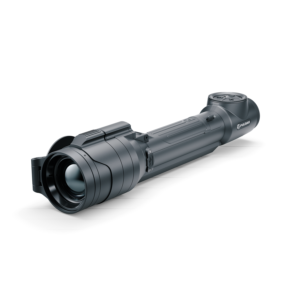
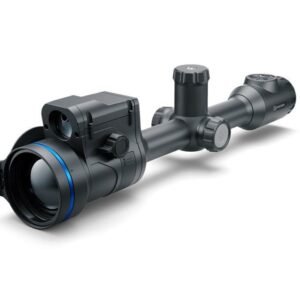
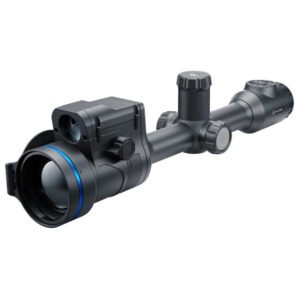
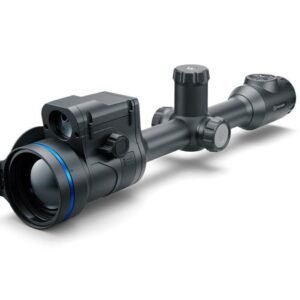
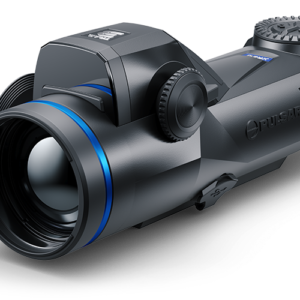
Pulsar Thermal Scopes
Pulsar thermal scopes are premium thermal riflescopes built for night hunting, predator control, and long-range shooting in the dark. This collection holds the full Pulsar riflescope range we stock, the Thermion 2 and Thermion Duo, the Talion, and the Trail, in 384, 640, and 1024 sensor resolutions, with and without a built-in laser rangefinder. Every scope is a genuine Pulsar, priced in euros, fully warranted, and dispatched tracked across the EU and worldwide. Not sure which fits your rifle and range? Compare the models below, or read our Pulsar buying guide, and then buy with confidence.
- In stock, euro pricing, EU delivery. Genuine Pulsar scopes are dispatched tracked across the EU and worldwide, with no surprise import fees within the EU.
- Full warranty and real support. Every scope is warranted and backed by people who use thermal in the field, not a call center.
- Every sensor and budget. From the compact Talion to the 1024-sensor Thermion 2 LRF, with rangefinder options for long-range work.
How to choose a Pulsar thermal scope
Pick a Pulsar thermal scope by three things, in this order: your typical shooting distance, whether you need a rangefinder, and your budget. Most buyers over-spend on magnification and under-spend on sensor quality. Get the sensor and NETD right first, then match magnification and lens to your range.
Sensor resolution sets how far out you can identify a target. Pulsar’s 384 sensors (Talion XQ35) suit general night hunting to moderate range. The 640 sensors (Thermion 2 XG50, Talion XG35) are the best choice for most hunters. The 1024 sensor (Thermion 2 LRF XL60) pushes identification furthest for long-range precision.
NETD (thermal sensitivity) decides image clarity in rain, fog, and humidity. Pulsar’s current scopes run from <25 to <40 mK. Lower is better, and it matters most on damp, low-contrast nights.
A laser rangefinder (LRF) eliminates holdover guesswork beyond about 200 meters. If you shoot at distance in the dark, the LRF models earn their premium.
Pulsar thermal scope comparison
| Model | Sensor | Magnification | Detection range | LRF | Best for | |
|---|---|---|---|---|---|---|
| Talion XQ35 Pro | 384 17 µm | 2.5-10x | ~1,400 m | No | Value night hunting | |
| Talion XG35 | 640 12 µm | 2-16x | ~1,750 m | No | All-round 640 | |
| Thermion 2 XG50 | 640 12 µm | 3-24x | ~2,300 m | No | Long-range flexibility | |
| Thermion 2 LRF XL60 | 1024 12 µm | 2.5-20x | ~2,800 m | Yes. | Precision + ranging |
One honest note on detection range: a scope advertised at 2,800 m detects a large heat source at that distance, but you identify an animal well enough for an ethical shot far closer, often a few hundred metres, and weather shortens it. Buy based on the sensor and NETD, not the headline range number. Our thermal detection range guide explains why.
New to thermal, or cross-shopping brands? Read our best thermal scope for the money guide, compare with AGM and ThermTec scopes, or start with a thermal monocular to scan before you shoot.
Common buying questions
How much does a Pulsar thermal scope cost?
Pulsar thermal scopes start at around 1700 euro for a Talion 384 and go up to 4900 euro for a 1024-sensor Thermion 2 LRF. The 640 models most hunters choose sit in the middle. See the current euro prices for each scope above. Pulsar sets a minimum advertised price, so genuine dealers show similar figures; be cautious of anything far cheaper.
Where are Pulsar thermal scopes made?
Pulsar is a European brand, part of the Vibe/Yukon Advanced Optics group, with design and manufacturing rooted in Europe (Lithuania) and Belarusian heritage. The sensors are sourced from established European and global suppliers. This European engineering is a large part of why Pulsar commands its reputation for build quality.
How do I zero (sight in) a Pulsar thermal scope?
To zero a Pulsar thermal scope, you use a target that shows a heat contrast, allowing you to see your point of aim and impact, similar to how you would zero a day scope. Pulsar’s one-shot freeze-zeer lets you fire a shot, freeze the image, and move the reticle to the impact point. Each model’s manual gives the exact steps, and we are happy to talk you through it after purchase.
Which Pulsar thermal scope is best?
For value, the Talion XQ35 Pro. For all-round 640 performance, choose the Talion XG35 or Thermion 2 XG50. For long-range precision with ranging, choose the Thermion 2 LRF XL60. The best choice depends on your distance, whether you need a rangefinder, and your budget.
Pulsar or AGM thermal scope, which is better?
Both are strong. Pulsar leads on software, build quality, and resale value. AGM often gives you more sensors for the money and a longer warranty. For a premium scope with the best app and support, choose Pulsar; for maximum specification per euro, compare AGM scopes. We sell both and will give you an honest steer for your situation.
Can a Pulsar thermal scope be used in daylight?
Yes. Thermal scopes detect heat, not light, so they work in daylight, shade, and total darkness, and daylight will not damage the sensor. Contrast can be lower in the heat of the day when the ground warms up.