
AGM Thermal Monocular: Every Model Compared (2026)
An AGM thermal monocular is a handheld heat-imaging device from AGM Global Vision, the American manufacturer that has done more than anyone to push thermal prices down since 2019. AGM builds the widest handheld range of any brand we carry and backs it with a five-year transferable warranty, the longest in the category.
This guide compares every current AGM thermal monocular, explains the naming, and is honest about which models are worth buying and which have been superseded. We stock AGM alongside Pulsar, ThermTec, HIKMICRO, and ATN, so we have no reason to oversell it.
Browse the AGM range or the full thermal monocular category.
Why AGM matters in thermal
AGM Global Vision entered the market properly in 2019 and made a substantial impression at SHOT Show 2020. The timing was ideal: FLIR withdrew from consumer hunting sales in January 2020, leaving a gap just as AGM arrived with aggressive pricing.
Three things define the brand.
Price pressure. AGM’s Rattler and Taipan lines put usable thermal into the hands of buyers who previously could not afford it. Much of the price drop across the entire category over the past five years can be traced back to that competition.
A five-year transferable warranty. The longest anyone offers and transferable to a second owner. On a device costing well over a thousand euros, that is worth real money, and it supports resale value.
Range breadth. AGM makes handhelds, clip-ons, riflescopes, and fusion devices across almost every price point.
The weakness is the consistency of generation. AGM iterates quickly, and older models sit on shelves next to current ones at similar prices with meaningfully different specifications. That trips up more buyers than anything else about the brand.
Decoding AGM model names
| Element | Meaning |
|---|---|
| Asp | Older observational handheld line, 17µm sensors |
| Taipan / Taipan V2 | Compact affordable handheld line, 12µm |
| Sidewinder | Premium handheld line, best sensitivity |
| Seeker | Handheld observational line |
| Fuzion / Fusion | Thermal blended with a visible channel |
| Rattler | Clip-on and riflescope line, not handheld |
| TM | Thermal monocular |
| First number | Objective lens in millimetres, e.g. 19, 25, 35, 50 |
| Second number | Sensor resolution, e.g. 256, 320, 384, 640 |
| LRF | Built-in laser rangefinder |
| V2 | Second generation |
So an AGM Sidewinder TM35-640 is a premium handheld with a 35mm lens and a 640 sensor. A Taipan V2 19-384 is a second-generation compact with a 19mm lens and a 384 sensor.
That naming is genuinely more logical than most of the industry’s, once you know the pattern.
The AGM thermal monocular range compared
| Model | Sensor | Pixel pitch | NETD | Lens | Notes |
|---|---|---|---|---|---|
| Sidewinder TM25-384 | 384×288 | 12µm | ≤20 mK | 25 mm | Premium, 64 GB, IP67, 50 Hz |
| Sidewinder TM35-384 | 384×288 | 12µm | ≤20 mK | 35 mm | Best sensitivity in the range |
| Sidewinder TM35-640 | 640×512 | 12µm | ≤20 mK | 35 mm | High-resolution premium |
| Sidewinder TM50-640 | 640×512 | 12µm | ≤20 mK | 50 mm | Longest reach |
| Taipan V2 19-384 | 384×288 | 12µm | Sub-20 to 35 mK | 19 mm | Wide field, removable 18650 |
| Taipan V2 25-384 | 384×288 | 12µm | Sub-20 to 35 mK | 25 mm | Detection to ~1,250 m |
| Taipan V2 10-256 | 256×192 | 12µm | 10 mm | Entry, very wide field | |
| Asp TM35-384 | 384×288 | 17µm | <35 mK | 35 mm F1.0 | Older generation, 2.4x |
| Seeker 19-384 | 384×288 | 19 mm | Observational | ||
| Fuzion LRF TM35-384 | 384×288 | 12µm | 35 mm | Fusion imaging plus LRF |
Products by Category
-
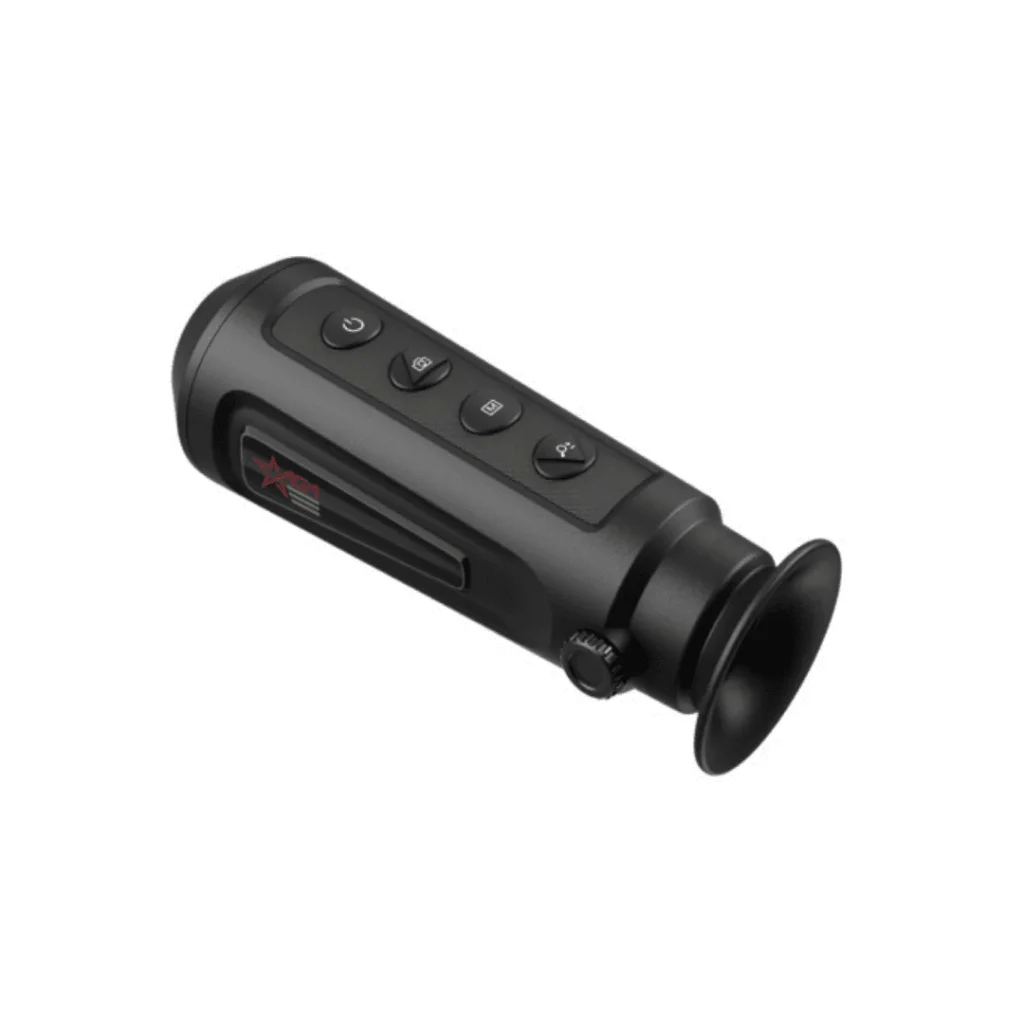
AGM Asp-Micro TM-160 Thermal Monocular
-
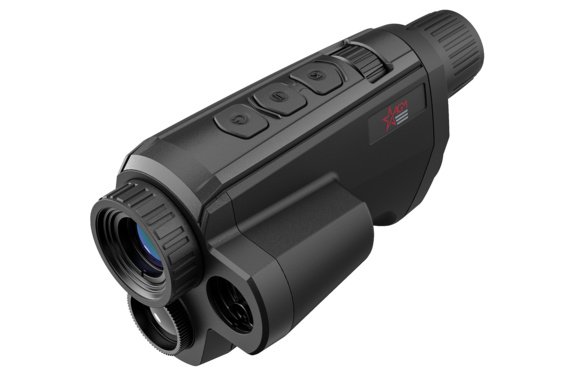
AGM Fuzion LRF TM25-384 Thermal Monocular
-
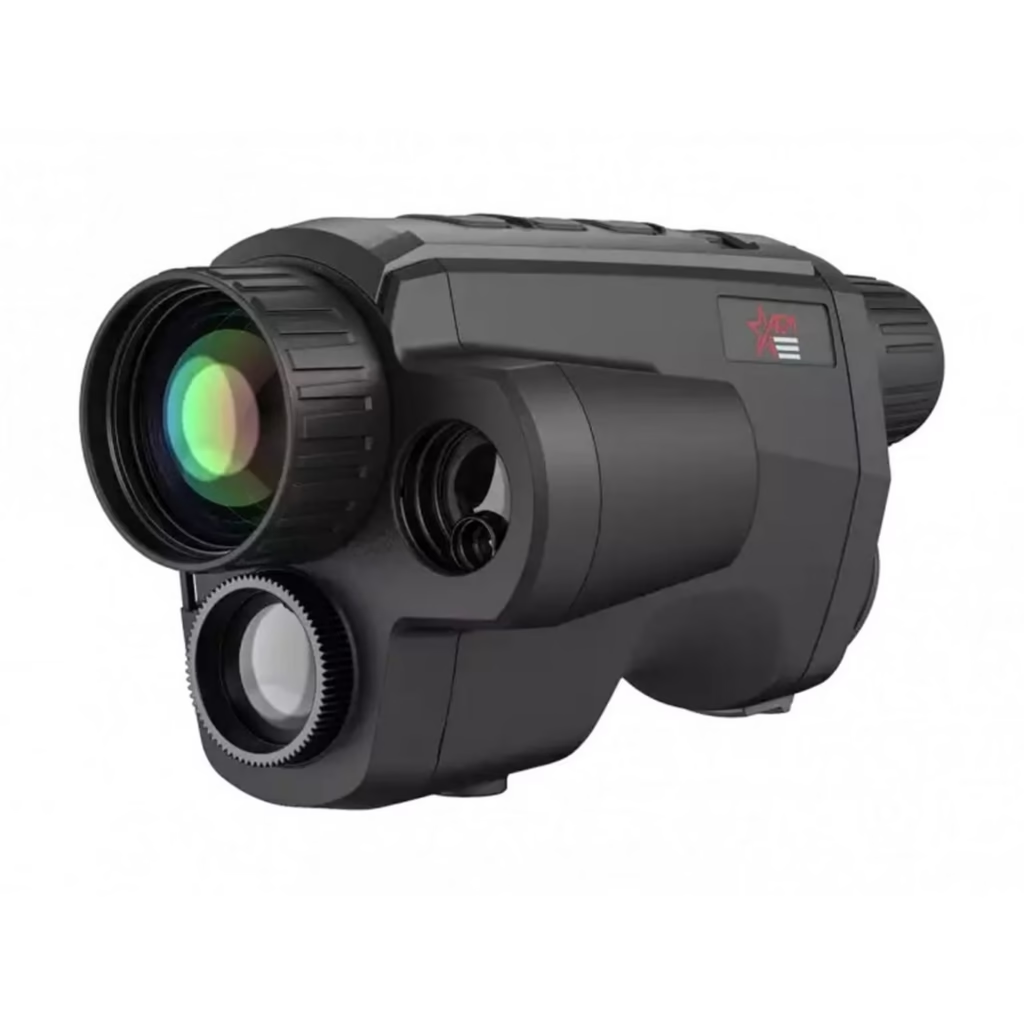
AGM Fuzion LRF TM35-384 Thermal Monocular
-
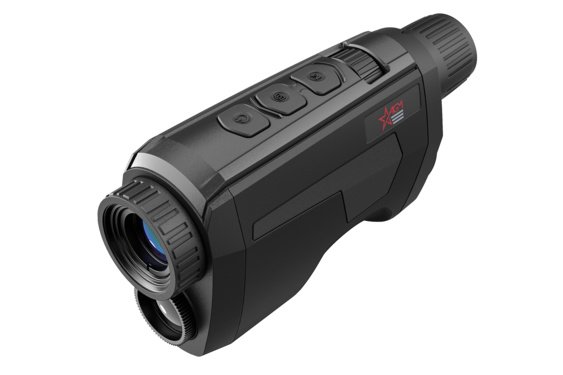
AGM Fuzion LRF TM35-640 Thermal Monocular
-
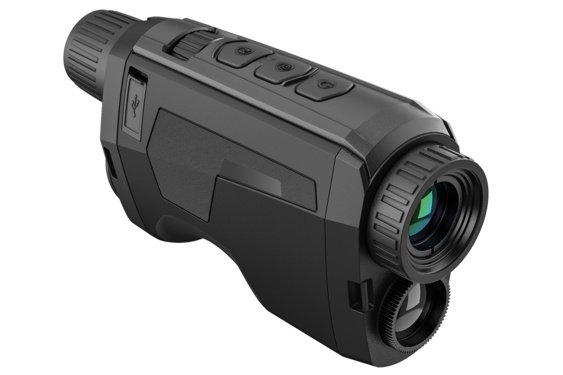
AGM Fuzion LRF TM50-640 Thermal Monocular
-
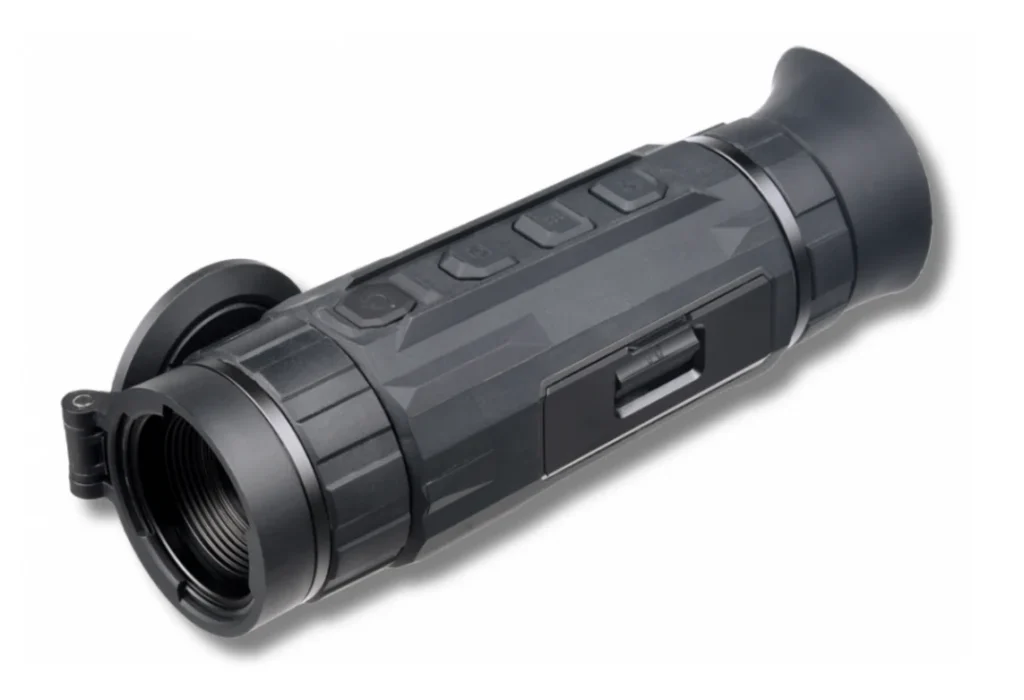
AGM Sidewinder TM25-384 Thermal Monocular
-
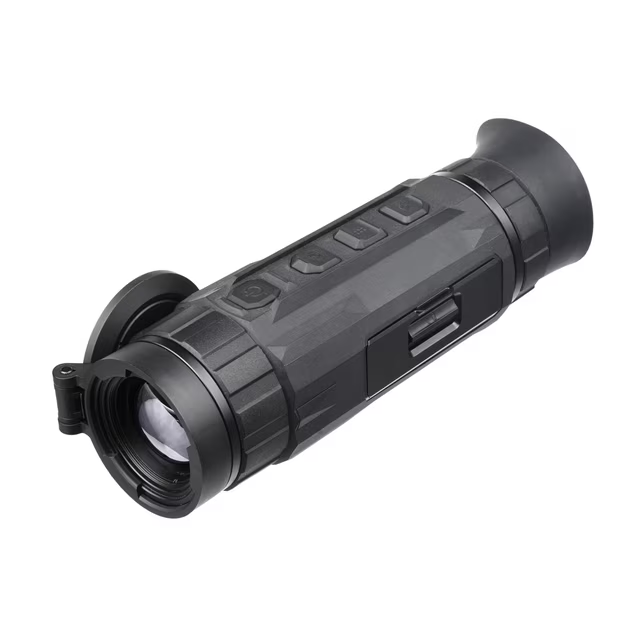
AGM Sidewinder TM35-384 Thermal Monocular
-
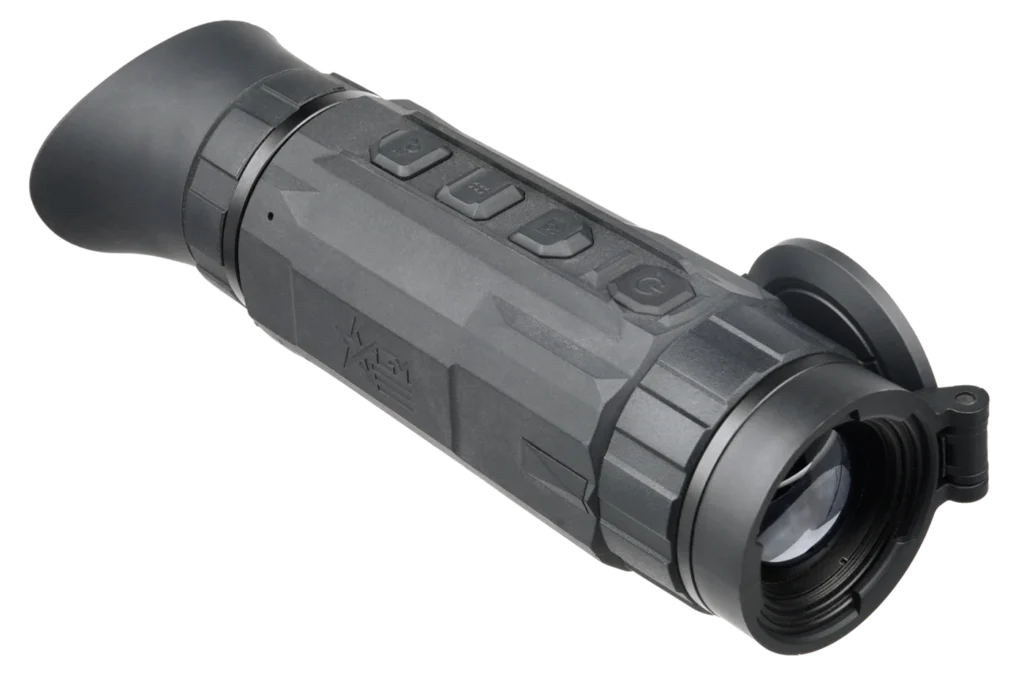
AGM Sidewinder TM35-640 Thermal Monocular
-
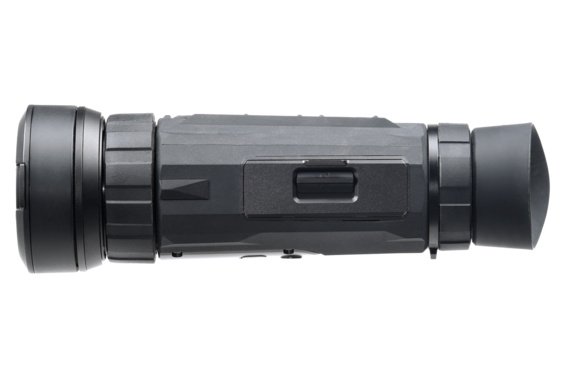
AGM Sidewinder TM50-640 Thermal Monocular
AGM Sidewinder: the one to look at
The Sidewinder is AGM’s premium handheld and the model that changed how we think about the brand. A 12 µm detector at NETD ≤ 20 mK is genuinely competitive with anything at the price, paired with a 1024×768 OLED display, 64 GB of internal memory, a 50 Hz refresh rate, and IP67 sealing. Digital zoom runs 1x, 2x, 4x, and 8x, and the AGM Connect app handles sharing and control.
Sub-20mK is the specification that matters. It means the Sidewinder holds a usable image in fog, drizzle, and humidity, which is where cheaper devices collapse. Against a Pulsar Axion 2 XG35 at under 40 mK, the Sidewinder is the more sensitive device despite costing less.
If you buy one AGM thermal monocular, buy a Sidewinder.
AGM Taipan V2: the value pick
The Taipan V2 is the affordable compact, built around a 12µm 384×288 sensor with detection to roughly 1,250 m. AGM describes the series as offering some of the best image quality the company has produced.
Two practical upgrades over the original Taipan matter. First, a removable 18650 battery, which uses a cheap standard cell available anywhere rather than a proprietary pack. Second, a 90-degree tilt sensor that automatically blanks the display when the device is lowered, which meaningfully extends runtime in real use.
Sensitivity varies by variant between roughly sub-20mK and sub-35mK, so check the specific model rather than assuming. The 19mm version gives a wide field for close, brushy ground; the 25mm reaches further.
AGM Asp: superseded, but still sold
The Asp TM35-384 runs an older 17µm sensor at under 35mK behind a 35mm F1.0 lens, with 2.4x base magnification, a 1024×768 OLED display, and detection to roughly 780m. It was a decent device when it launched, and it still produces a usable image in cold, dry conditions.
It has been superseded. If an Asp and a Taipan V2 or Sidewinder are similarly priced, buy the newer one. The sensitivity difference is not marginal.
AGM Fuzion: thermal plus visible
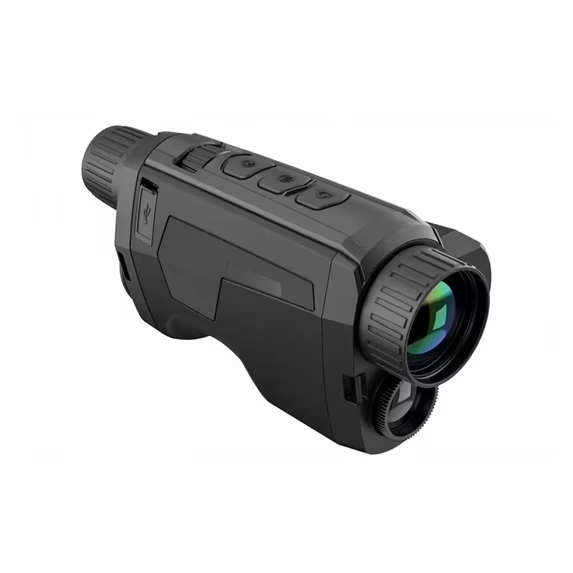
Fuzion models blend a thermal channel with a visible-light channel into a single fused image rather than making you switch between them. For identification work that is genuinely useful, because thermal tells you something is there, and the visible channel helps tell you what. It is AGM’s clearest technical differentiator.
Our thermal binocular guide covers the wider multi-spectrum and fusion category.
AGM versus the competition
| Model | Sensor | NETD | Standout | Warranty |
|---|---|---|---|---|
| AGM Sidewinder TM35-384 | 384 12µm | ≤20 mK | 64 GB, IP67, value | 5 years |
| AGM Taipan V2 25-384 | 384 12µm | 20-35 mK | 18650 cell, tilt sensor | 5 years |
| ThermTec Cyclone | 640 12µm | <20 mK | 255 g, 20 h, €899 | Manufacturer |
| ThermTec Wild Pro | 640 12µm | <15 mK | Best sensitivity, LRF | Manufacturer |
| Pulsar Axion 2 XG35 | 640 12µm | <40 mK | Build, software, resale | Manufacturer |
| HIKMICRO Lynx 3.0 | 256 / 384 | Varies | From €329 | Manufacturer |
Where AGM wins. Warranty, straightforwardly. Five years of transferability is a genuine advantage that nobody else matches. The Sidewinder’s ≤20mK sensitivity is strong for the money, and the Taipan V2’s standard 18650 battery is cheaper to live with than proprietary packs.
Where AGM loses. Resolution at the price. AGM’s premium handhelds are largely 384 sensors, while a ThermTec Cyclone gives you a 640 sensor at under 20 mK for €899. Software polish also trails Pulsar’s Stream Vision 2 by a distance.
The honest summary. Buy AGM if warranty length and battery practicality matter to you, or if you want the Fuzion’s fused imaging. Buy ThermTec if you want more sensors per euro. Buy Pulsar if building and resale matter most. Our complete thermal monocular guide compares every brand in detail.
Which AGM thermal monocular should you buy?
The Sidewinder TM35-384 is the best AGM handheld for image quality at a sensible price. The ≤20mK sensor is the reason why.
Sidewinder TM50-640 if you need reach and resolution and the budget allows.
Taipan V2 25-384 if you want the value pick with a standard replaceable battery and you hunt at moderate range.
Taipan V2 19-384 if you work in woodland and close cover where a wide field is out of reach.
Fuzion LRF if identification matters as much as detection and you want ranging built in.
The Asp is not recommended unless it is heavily discounted. The 17µm sensor, with a sensitivity of under 35mK, is a generation behind.
Buying an AGM: what to check
Confirm the generation. This is the single most important check with AGM. Older Asp and first-generation Taipan stock sits beside current Sidewinder and Taipan V2 at similar prices with very different sensitivities. Please read the exact model code, not the family name.
Read the NETD figure for the specific variant. Taipan V2 sensitivity varies between models.
Check what battery it uses. The 18650 cells on Taipan V2 are cheap and available anywhere. Confirm whether a spare and charger are included.
Confirm the warranty transfers. An AGM’s five years are transferable, which supports resale, but verify with your dealer.
Buy from an authorized dealer in your customs area so the warranty is honored and you avoid import duty. Our thermal monocular buying guide covers these topics.
Frequently asked questions
What is the best AGM thermal monocular?
The Sidewinder line, and specifically the TM35-384 for most buyers. Its 12 µm detector at NETD ≤ 20 mK is the most sensitive AGM makes in a handheld, paired with a 1024 x 768 OLED display, 64 GB of memory, and IP67 sealing. If you need more reach and resolution, try the TM50-640.
Is AGM a good thermal brand?
Yes, particularly on value and warranty. AGM has improved sharply since its older 17 µm Asp devices, and the current Sidewinder and Taipan V2 lines are competitive on sensitivity. The five-year transferable warranty is the longest in the category. What it falls short in AGM trails is resolution per euro and software polish.
What is the difference between AGM Sidewinder and Taipan V2?
Sidewinder is the premium line, with the most sensitive sensor at ≤20 mK, 64 GB of memory, and IP67 sealing. The Taipan V2, which is the value line, features a 12µm 384 sensor, a removable standard 18650 battery, and a tilt sensor that saves power. Sidewinder for image quality, Taipan V2 for value and battery practicality.
How long is the AGM warranty?
Five years, and it transfers to a second owner. That is the longest warranty of any thermal brand we carry, and because it transfers, it supports the resale value of the device.
Is the AGM Asp still worth buying?
Only at a substantial discount. It uses an older 17µm sensor at under 35mK, which is a generation behind the 12µm sub-20mK detectors in the current Sidewinder line. In cold, dry conditions it performs acceptably; in damp weather the difference is obvious.
What does TM35-384 mean on an AGM?
“TM” means thermal monocular, “35” is the objective lens in millimeters, and “384” is the sensor resolution. So a TM50-640 has a 50mm lens and a 640 sensor. AGM’s naming is more logical than most of the industry once you know the pattern.
Does AGM make a thermal monocular with a rangefinder?
Yes. The Fuzion LRF models include a built-in laser rangefinder alongside fusion imaging, and the ReachIR LRF line also offers ranging. If you only scan rather than shoot, you can save money by skipping ranging entirely.
What is AGM Fuzion?
Fuzion blends a thermal channel and a visible-light channel into one fused image rather than switching between them, overlaying heat data onto a visible picture. It helps with identification, since thermal alone tells you something warm is present but not what it is.
Is AGM better than Pulsar?
They win on different things. AGM offers a longer warranty, better sensitivity than Pulsar’s 12µm compacts, and standard batteries. Pulsar offers better build quality, far better software, and much stronger resale value, plus genuine sensitivity leadership in the Telos. Compare specific models rather than badges.
Where is AGM made?
AGM Global Vision is an American company that entered the thermal market properly in 2019. It expanded quickly after FLIR withdrew from consumer hunting sales in January 2020 and now offers one of the broadest thermal ranges available.
Browse the AGM range and compare it against ThermTec, Pulsar, and HIKMICRO, or read our complete thermal monocular guide. Also see the handheld buyer’s guide, thermal monoculars for sale, and comparisons of thermal scopes, clip-ons, and binoculars.