
Pulsar Binoculars
Showing all 6 results
-
Pulsar thermal imaging
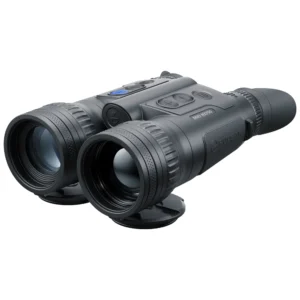
Pulsar Merger Duo NXP50 Multispectral Thermal & Night Vision Binocular
Original price was: $4 180.00.$3 850.00Current price is: $3 850.00. Add to cart -
Pulsar thermal imaging
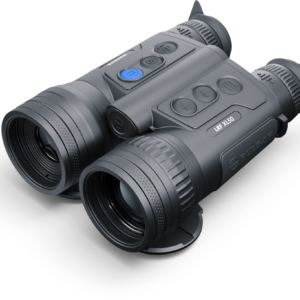
Pulsar Merger LRF XL50 Thermal Imaging Binocular
Original price was: $7 150.00.$6 765.00Current price is: $6 765.00. Add to cart -
Pulsar thermal imaging
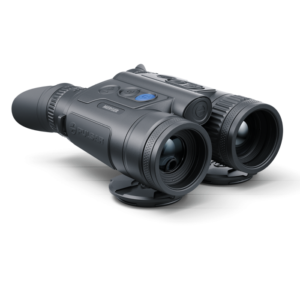
Pulsar Merger LRF XP35 Thermal Imaging Binocular
Original price was: $3 080.00.$2 860.00Current price is: $2 860.00. Add to cart -
Pulsar thermal imaging
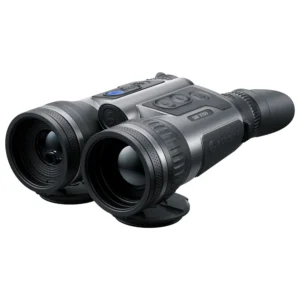
Pulsar Merger LRF XT50 Thermal Imaging Binocular
Original price was: $5 720.00.$5 280.00Current price is: $5 280.00. Add to cart -
Pulsar thermal imaging
Pulsar Symbion LRF DXR50 Multispectral Thermal Binocular
Original price was: $4 180.00.$3 960.00Current price is: $3 960.00. Add to cart -
Pulsar Binoculars
Pulsar Symbion LRF DXT50 Multispectral Thermal Binocular
Original price was: $5 720.00.$5 390.00Current price is: $5 390.00. Add to cart
Pulsar Thermal Binoculars
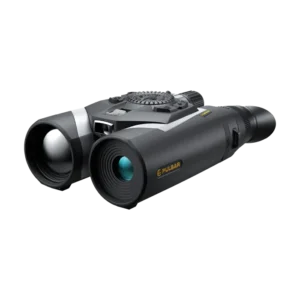
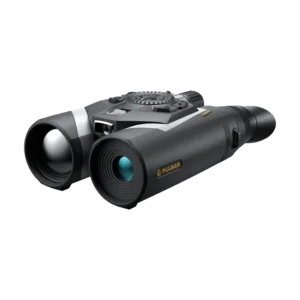
Pulsar thermal binoculars provide two-eyed thermal observation for long glassing sessions, enabling you to detect and track game across open ground in total darkness. This collection holds the full Pulsar binocular range we stock, led by the flagship Merger series with a laser rangefinder, in 384 and 640 sensor resolutions. Every unit is a genuine Pulsar, priced in euros, fully warranted, and dispatched tracked across the EU and worldwide. Two-eyed viewing is far more comfortable than a monocular for extended observation, and the Merger’s dual sensors and ranging make it a serious tool for open country. Compare the models below, read our thermal binoculars buying guide, and then buy.
- In stock, euro pricing, EU \ worldwide delivery. Genuine Pulsar binoculars are dispatched with tracking across the EU and worldwide, with no surprise import fees within the EU.
- Two-eyed comfort for long sessions. You’ll experience far less eye strain than with a monocular when you’re glassing open ground for hours.
- Built-in rangefinding. Merger LRF models measure exact distance while you observe; no separate device is needed.
How to choose Pulsar thermal binoculars
Choose Pulsar thermal binoculars by how far you observe, whether you need a rangefinder, and your budget. Binoculars suit hunters and observers who glass for long periods and want the comfort of both eyes, where a monocular would tire one eye. Spend on the sensor and NETD first, then match the lens to your range.
Sensor resolution sets how far out you can identify what you see. Pulsar’s 384 binoculars suit mid-range work; the 640 models (Merger LRF XP50, XT50) give the detail and reach for long-range open-country observation.
NETD (thermal sensitivity) decides clarity in fog, rain, and humidity. The merger series runs from around 18 to 40 mK, depending on the model. Lower is better, most noticeably on damp, low-contrast nights.
A laser rangefinder (LRF) measures exact distance while you observe. Most merger models carry one, which is a real advantage in binoculars, since you are often observing before deciding on a stalk or shot.
Pulsar thermal binocular comparison
| Model | Sensor | NETD | Detection range | LRF | Best for | |
|---|---|---|---|---|---|---|
| Merger LRF XP35 | 640 17 µm | <40 mK | ~1,500 m | Yes. | Compact 640 with ranging | |
| Merger LRF XP50 | 640 17 µm | <40 mK | ~1,800 m | Yes. | All-round flagship | |
| Merger LRF XT50 | 640 12 µm | <18 mK | ~2,300 m | Yes. | Best image and long range | |
| Merger Duo NXP50 | 640 + digital | <25 mK | ~1,800 m | Yes. | Thermal + night vision in one |
New to thermal, or cross-shopping brands? Read our thermal binoculars for a hunting guide, compare thermal vs. night vision, or see Pulsar monoculars if a lighter handheld suits you better. You can also compare other brands, like AGM and ThermTec, too.
Common buying questions
Which is the best Pulsar thermal binocular?
For most buyers, the Merger LRF XP50 is the all-round flagship. For the best image and longest range, choose the Merger LRF XT50, which features an 18 mK 12 µm sensor. For a compact option with ranging, the Merger LRF XP35. If you want thermal and night vision in one device, the Merger Duo NXP50.
What is the difference between the Pulsar Merger and Accolade?
The Merger is Pulsar’s current flagship thermal binocular line, with dual sensors, laser rangefinding, and the latest software. The Accolade is an older generation model. Both give two-eyed thermal viewing; the Merger offers newer sensors, better sensitivity, and current app support. For a new purchase, the merger is the stronger choice.
Do Pulsar thermal binoculars have a rangefinder?
Most merger models do. The Merger LRF versions include a built-in laser rangefinder that measures exact distance while you observe, which is especially useful in binoculars since you often glance and judge distance before a stalk. Check the specific model, as non-LRF versions exist.
Are thermal binoculars better than a thermal monocular?
For long observation sessions, yes, because two-eyed viewing is far more comfortable and less tiring. A monocular is lighter, cheaper, and better for quick scanning and carrying. Many hunters own both: a monocular for mobile scanning and binoculars for sustained glassing from a fixed position. See our thermal monocular range to compare.
Do you sell Pulsar thermal binoculars for sale with delivery to my country?
We ship genuine Pulsar thermal binoculars tracked across the EU and worldwide, subject to the export rules that apply to thermal optics in some destinations. If you are unsure whether we can ship a model to your country, ask us first, and we will confirm before you order.
Can Pulsar thermal binoculars be used in daylight?
Yes. Thermal binoculars detect heat, not light, so they work in daylight, shade, and total darkness, and daylight will not damage the sensor. Contrast can be lower in the heat of the day when the ground warms up.