
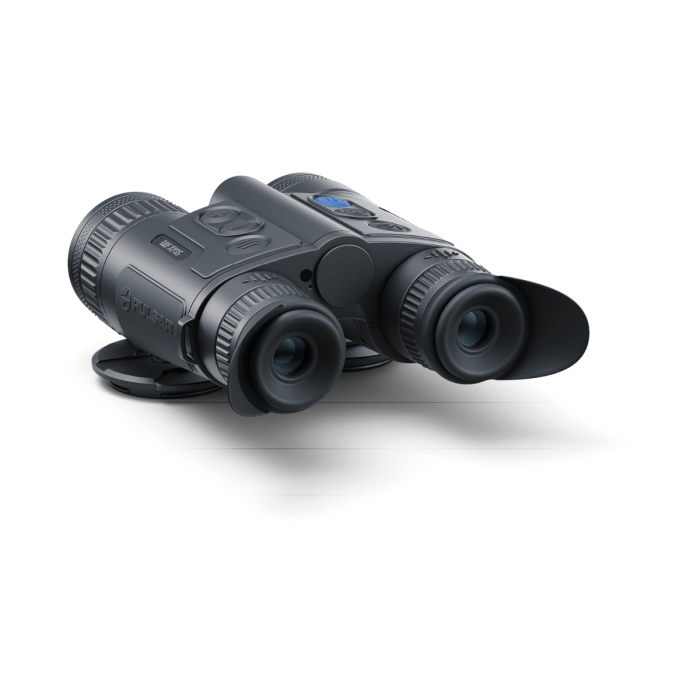
Pulsar Merger LRF XP35 comprehensive review
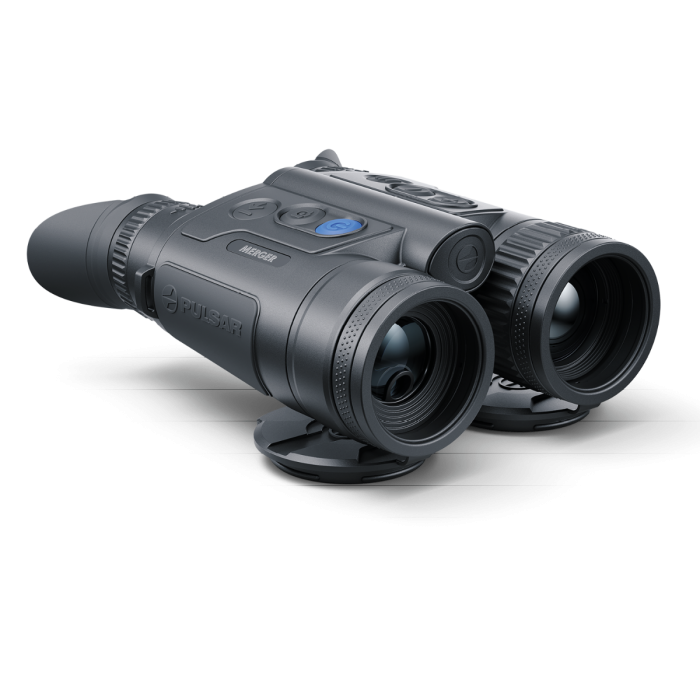
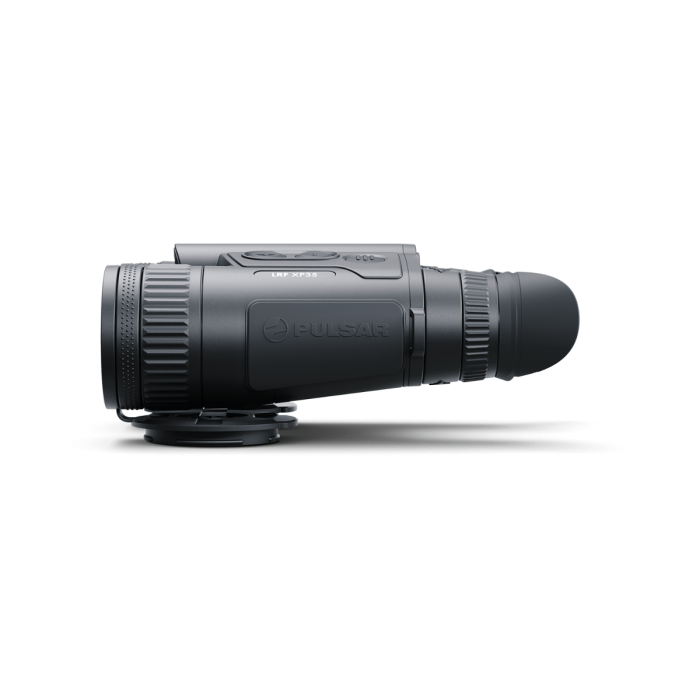
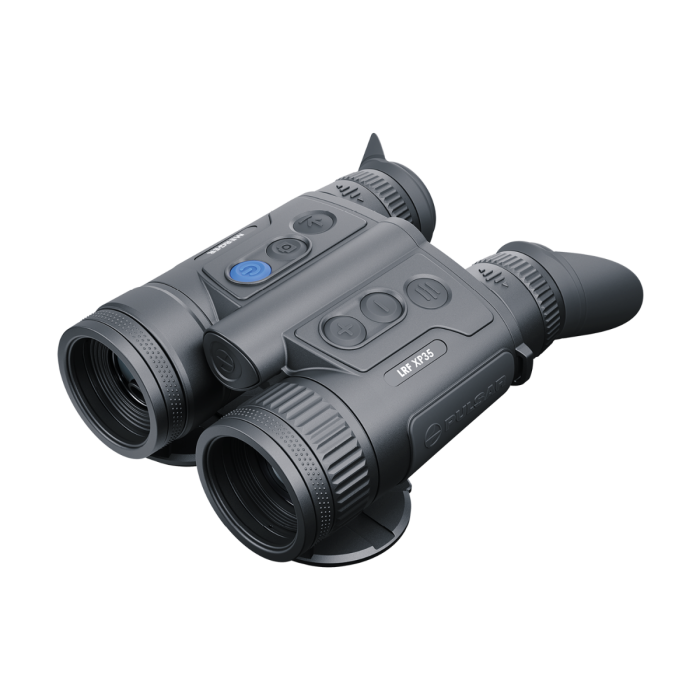
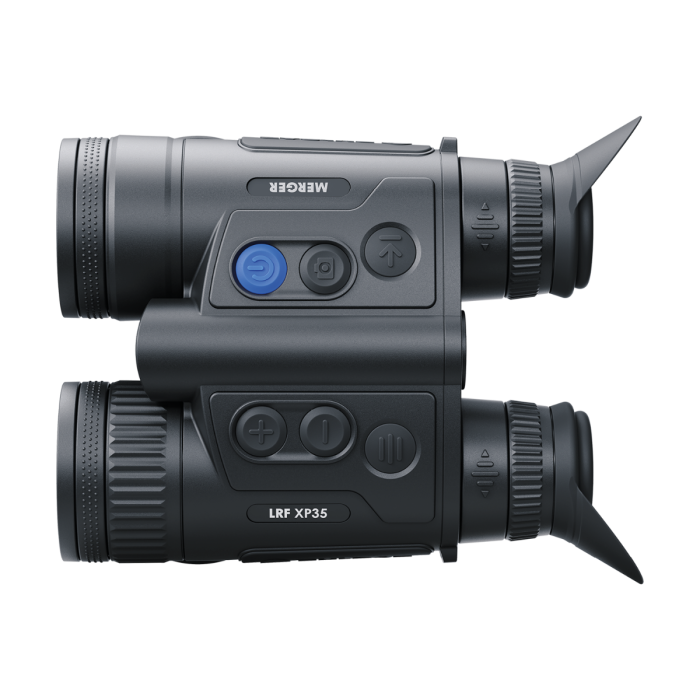
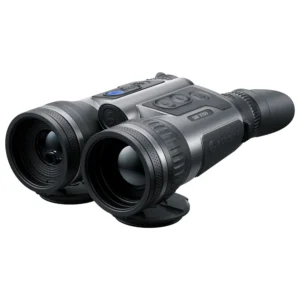
The Pulsar Merger LRF XP35 trades reach for a wide field of view. Its 35 mm F/1.0 lens gives the widest field in the Merger range at 17.8 degrees, which is exactly what you want in timber, brush, and mixed terrain where game appears close and you need to catch movement fast.
The 640×480, 17 micron sensor runs a low NETD below 25 mK, so it holds a clean, high-contrast image in fog, rain, and low-contrast conditions. Magnification runs 2.5-10x, and detection reaches around 1,350 m, which comfortably covers the closer ranges this binocular is built for. It is the lightest, most affordable Merger LRF, and its balanced weight makes long handheld scanning comfortable.
The built-in laser rangefinder reads to around 1,000 m for quick distance calls. The 64 GB recorder, Stream Vision 2 connectivity, and magnesium IPX7 housing round it out. For close-to-mid-range woodland hunting, the XP35 is the practical, wide-view choice.
Key features and specifications
| Technical specification | Field performance value |
|---|---|
| Sensor resolution | 640×480, 17 microns |
| System NETD (thermal sensitivity) | Below 25 mK (clean in fog) |
| Objective lens | 35 mm F/1.0 |
| Magnification | 2.5-10x |
| Field of view | 17.8 degrees (widest in range) |
| Detection range | Up to ~1,350 m |
| Laser rangefinder | Built-in, up to ~1,000 m |
| Frame rate | 50 Hz |
| Battery life | Up to 8 hours |
| Protection | IPX7 waterproof |
Real-world hunting scenarios and use cases
In thick woodland, game shows up close and moves fast. The XP35’s wide 17.8-degree field catches that movement where a narrow, long-range binocular would miss it. Its low weight makes it easy to carry and scan all night, and its sensitivity keeps the boar visible in damp, low-contrast cover. It is the woodland stalker’s spotter.
Why choose the XP35 over a 50 mm merger?
Choose the XP35 for a wider field of view, lighter weight, and a lower price, which suits close-to-mid-range woodland and brush. Choose a 50 mm merger (XL50 or XT50) for longer detection range and higher resolution on open ground. It is a field-of-view versus reach decision.
Reviews
There are no reviews yet.