
Adder Thermal Scopes
Showing all 6 results
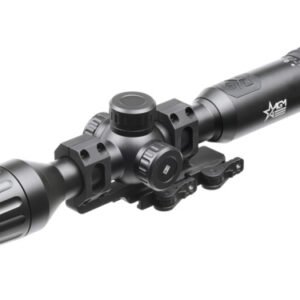
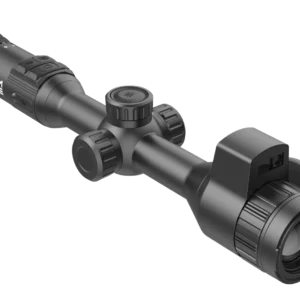
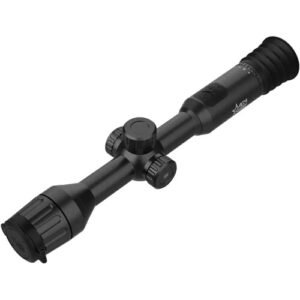
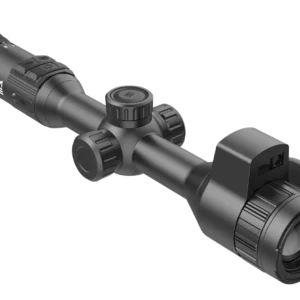
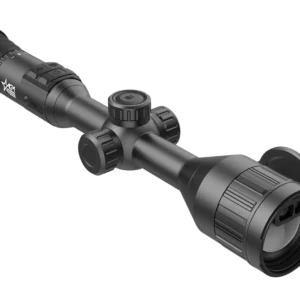
AGM Adder Thermal Scopes
The AGM Adder is a thermal riflescope built into a conventional 30 mm tube, so it mounts in standard rings and handles like a day scope. That is the entire design brief, and it explains why shooters switching from glass optics tend to choose the Adder over bridge-style thermal bodies.
We stock both generations. The original Adder TS has a sub-35 mK sensor and a 15-hour dual battery system. The AGM Adder V2 runs a sub-15 mK sensor with an in-lens 1,000 m laser rangefinder and a 2560×2560 display. That sensitivity difference decides how the scope performs in fog and drizzle, which is most of the European season.
Quick-scan decision triggers:
- Shipped from Berlin in 2 to 3 days across the EU and other parts of the world.
- Adder V2 models add a rangefinder without changing the profile. The 1,000 m laser sits inside the front lens, so the scope still mounts in standard 30 mm rings.
- Every model comes with a five-year transferable warranty, which is longer than what Pulsar, ThermTec, or Hikmicro offer, and the warranty moves with the scope when you sell it.
Which AGM Adder Is Right for You?
Two questions decide it: how wet is your climate, and do your shooting distances change?
Everything else is shared. Every Adder uses a 12-micron detector at 50 Hz in a 30 mm tube, with 64 GB of onboard storage, shot-activated recording, Wi-Fi, IP67 sealing, and a five-year warranty. What separates the two generations is sensor sensitivity and rangefinding.
The generation split, honestly.
| Adder TS | Adder V2 | |
|---|---|---|
| Thermal sensitivity | Sub-35 mK | Sub-15 mK |
| Display | 1024×768 OLED | 2560×2560 OLED |
| Calibration | Mechanical shutter | Shutterless, no freeze or click |
| Rangefinder | Bluetooth pairing with an external unit | 1,000 m built into the lens |
| Ballistic calculator | No | Yes, 5 profiles |
| Runtime | Up to 15 hours | Up to 9 hours |
| Batteries | Two 18650 plus one CR123A | Internal plus removable 18650 |
NETD measures the smallest temperature difference a sensor can resolve, in millikelvins. Lower is more sensitive. Sub-35 mK against sub-15 mK is more than double the noise floor, and it matters most exactly when thermal contrast collapses: ground fog, drizzle, high humidity, or a damp field at first light where a deer is barely warmer than the grass.
The practical rule: in wet conditions, an Adder V2 with a 384 sensor produces a more usable image than an Adder TS with a 640 sensor. Resolution shows you detail. Sensitivity decides whether there is any detail to show.
The Adder TS keeps one real advantage: runtime. Its dual power system, two built-in 18650 cells plus a replaceable CR123A, runs up to 15 hours against 9 on the V2. For multi-day trips without charging, that is operational rather than theoretical.
And one feature almost nobody mentions. The Adder TS has no built-in rangefinder, but it pairs with an external laser rangefinder over Bluetooth and displays the range inside the scope. If you already own a decent handheld rangefinder, the gap between TS and V2 narrows considerably.
The full range
| Model | Generation | Sensor | Lens | NETD | Rangefinder | Price |
|---|---|---|---|---|---|---|
| AGM Adder TS35-384 | TS | 384×288 | 35 mm | Sub-35 mK | Bluetooth external | $2,475 |
| AGM Adder TS50-384 | TS | 384×288 | 50 mm | Sub-35 mK | Bluetooth external | $2,805 |
| AGM Adder V2 LRF 35-384 | V2 | 384×288 | 35 mm | Sub-15 mK | Built in | $3,025 |
| AGM Adder TS35-640 | TS | 640×512 | 35 mm | Sub-35 mK | Bluetooth external | $3,520 |
| AGM Adder TS50-640 | TS | 640×512 | 50 mm | Sub-35 mK | Bluetooth external | $4,290 |
| AGM Adder V2 LRF 50-640 | V2 | 640×512 | 50 mm | Sub-15 mK | Built in | $4,840 |
Wet climate, variable distances: an Adder V2. The V2 LRF 35-384 is the value entry, and the V2 LRF 50-640 is the long-range answer.
Dry country, known distances, multi-day trips: an Adder TS. The TS35-384 covers the medium range, and the TS50-640 is the reach option.
Both Adder 640 models give roughly double the pixels on target compared to the 384 versions, which makes the difference between reading a shape and reading posture and outline at distance.
Lens size: the 35 mm models are specified for the medium range, and the 50 mm for the long range. A larger objective gathers more infrared energy, extending usable identification distance at the cost of field of view and front-end weight.
Related buying guides and complementary gear
If you are cross-shopping brands, our best thermal scope buying guide compares AGM against Pulsar, ThermTec, and Hikmicro on sensitivity, rangefinding, and resale value. If you are still deciding between technologies, thermal versus night vision covers where each one actually wins, and thermal imaging for hunting explains detection versus identification range properly.
Prefer a compact body over a 30 mm tube? The AGM Rattler V3 range uses the same sub-15 mK sensor generation as the Adder V2, but in a smaller housing. For switchable optics, the AGM Clarion dual focus scopes carry two physical lenses. For laser rangefinding on a tighter budget, look at the AGM Varmint V2 LRF range, and for AGM’s 1280 flagship, see the Evolver thermal scope.
Whichever model you choose, pair it with a thermal monocular for scanning. Scanning with a rifle-mounted optic means pointing a loaded rifle at everything you want to identify. Our guides to thermal monoculars for hunting and AGM thermal monoculars cover the pairing, and the Pulsar thermal monocular range is worth a look if you want a premium scanning device. If you shoot in groups, thermal binoculars are the alternative.
Are you working in low light rather than full dark? Compare these options to our night vision monoculars, night vision binoculars, and night vision goggles. We also carry Pulsar thermal riflescopes and HIKMICRO thermal rifle scopes if you want to compare outside AGM.
AGM Adder Buying Questions
What is the difference between the AGM Adder V2 and the Adder TS?
The Adder V2 uses a sub-15 mK sensor, a 2560×2560 display and shutterless calibration, and adds a 1,000 m laser rangefinder built into the front lens with a five-profile ballistic calculator. The Adder TS uses a sub-35 mK sensor, a 1024×768 display, and a mechanical calibration shutter, with no built-in rangefinder. Both use a 30 mm tube. The sensitivity difference determines image quality in fog, rain, and high humidity.
Can the Adder TS work with a rangefinder?
Yes, but not a built-in one. The Adder TS pairs with an external laser rangefinder over Bluetooth and displays the range reading inside the scope. If you already own a handheld rangefinder, this recovers most of the capability the V2 has built in. If you don’t already have one, be sure to factor its cost into your comparison.
Which AGM Adder V2 LRF model should I buy?
The V2 LRF 35-384 at $3,025 is the value entry: it has the same sub-15 mK sensitivity and rangefinder as the flagship, with a 384 sensor and 35 mm lens for medium range. The V2 LRF 50-640 at $4,840 doubles the pixels on target and adds a 50 mm objective for long-range identification. If most of your shooting is within 300 m, the 35-384 is sufficient.
Will the AGM Adder fit my existing scope rings?
Yes, if they are 30 mm. The adder uses a conventional 30 mm tube housing specifically so it mounts in standard rings rather than requiring a proprietary bridge mount. Shooters moving from day optics generally find both the mounting and handling familiar.
Do you ship AGM?
Yes. We hold stock in Berlin and deliver across Germany and most of the EU and other parts of the world in 2 to 3 days. This matters more than it sounds:
How long does an AGM Adder run on a charge?
The Adder TS runs up to 15 hours using two built-in 18650 rechargeable cells plus one replaceable CR123A lithium battery. The Adder V2 runs up to 9 hours on an internal cell plus a removable 18650. The TS advantage comes from having no rangefinder to power and a lower-resolution display. Both support external USB power.