
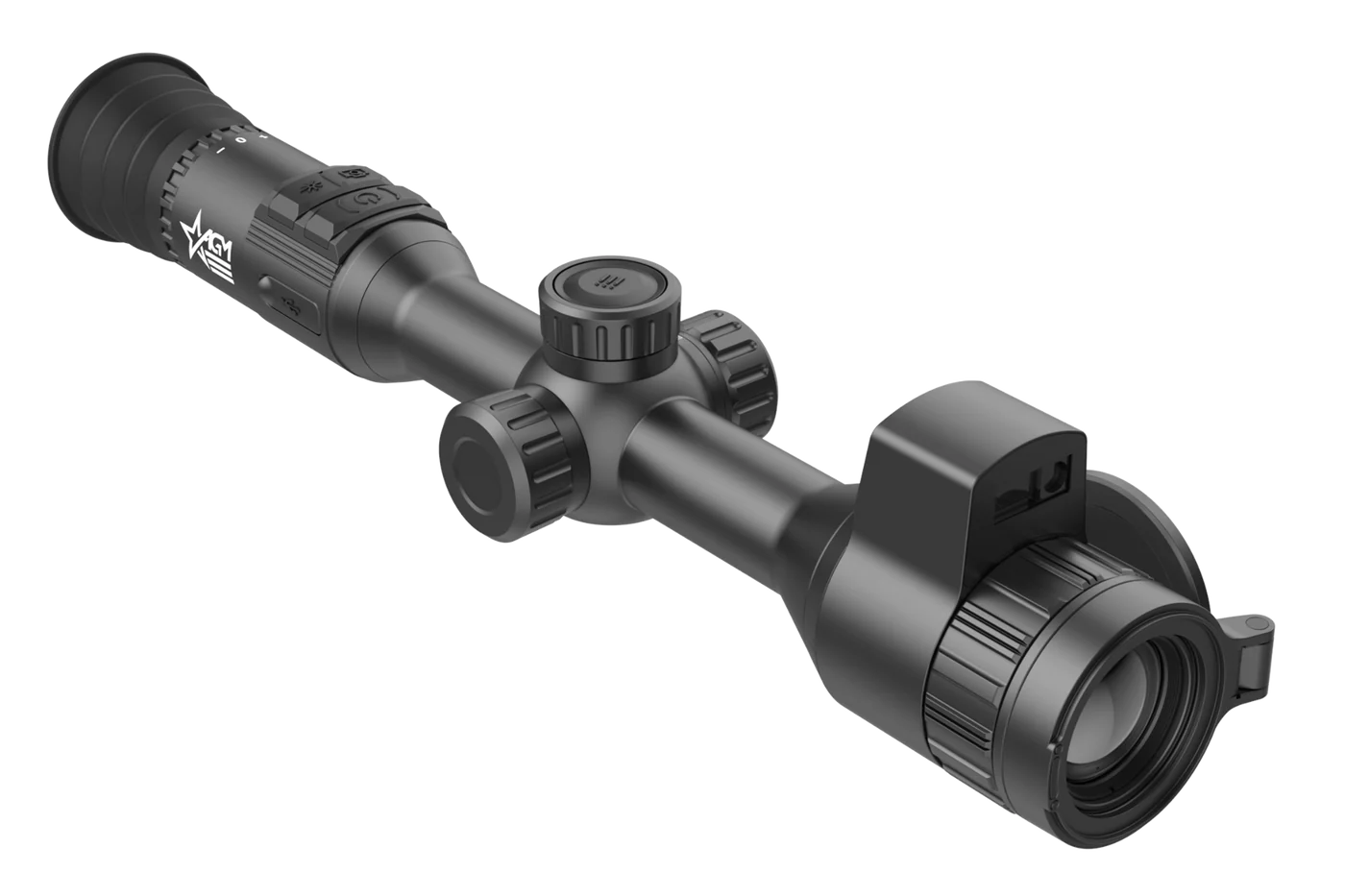
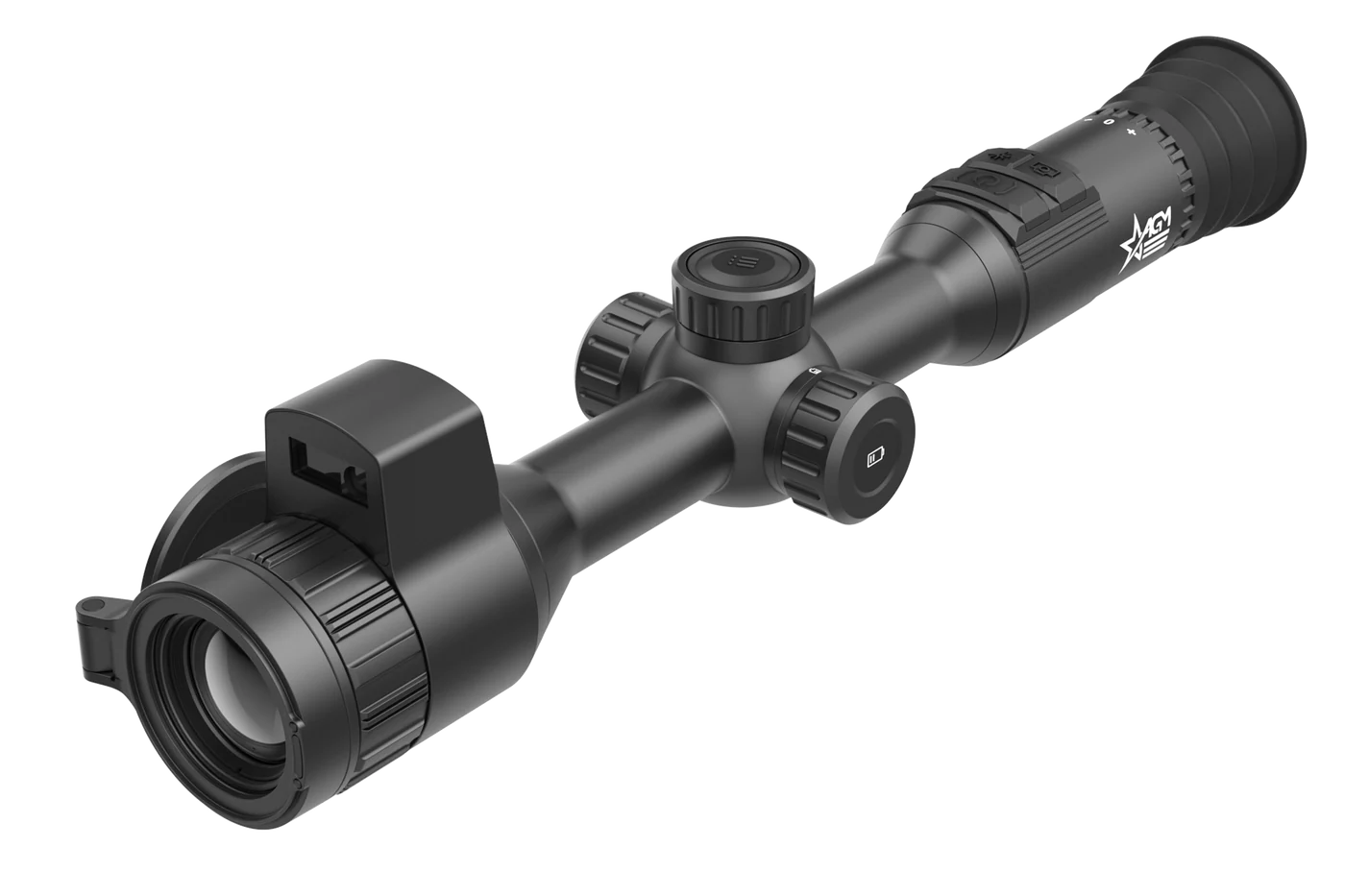
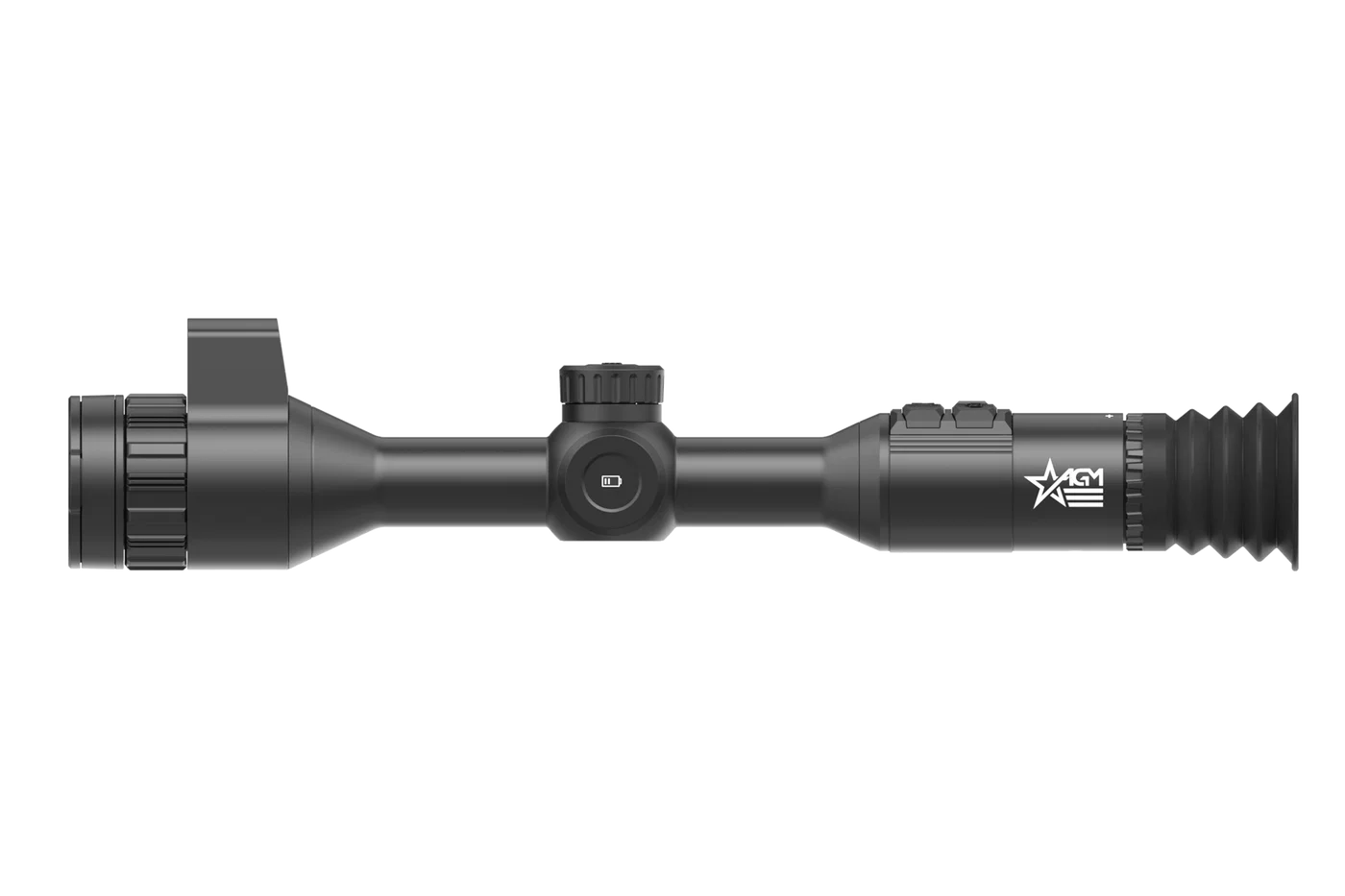
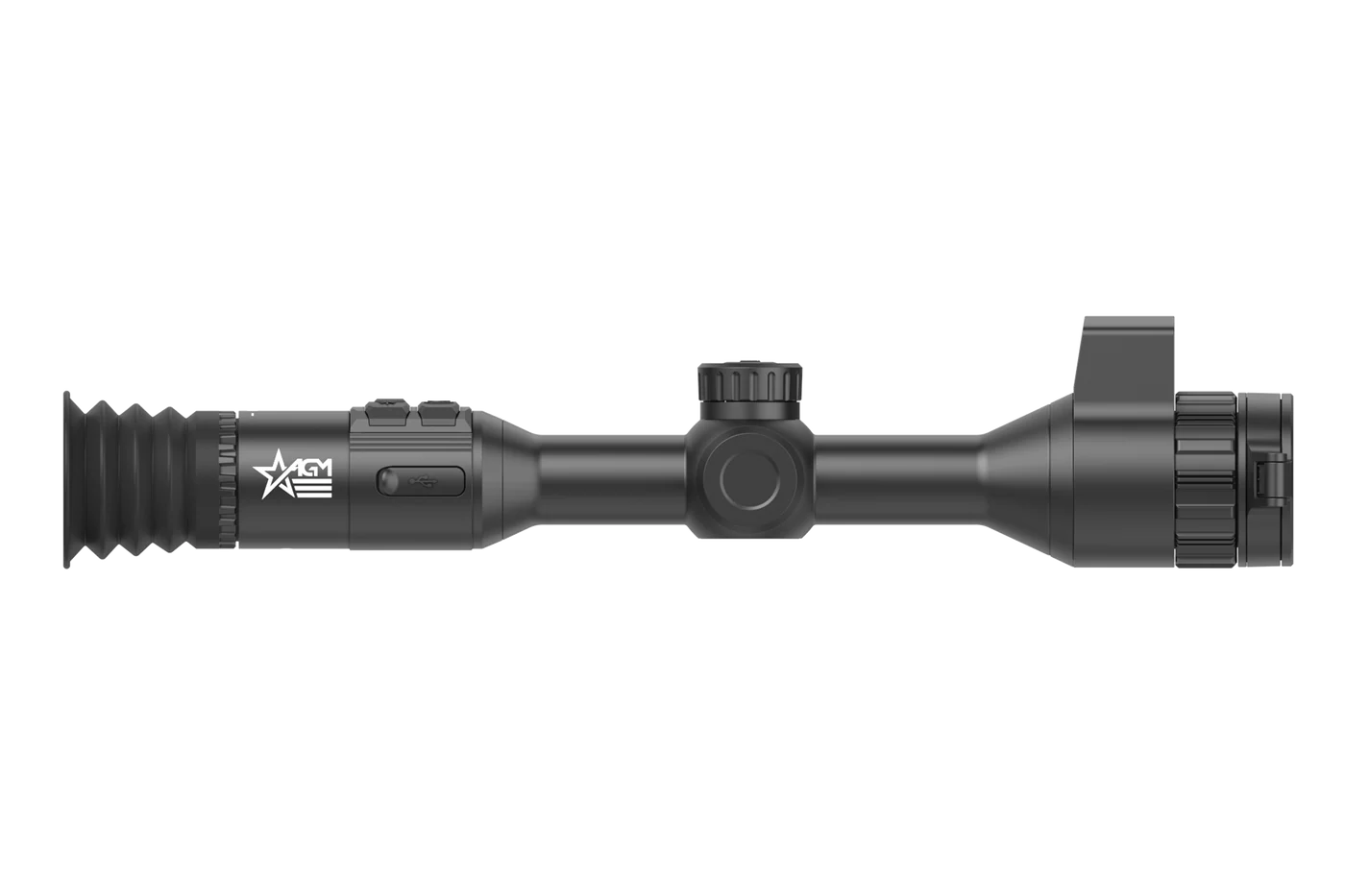
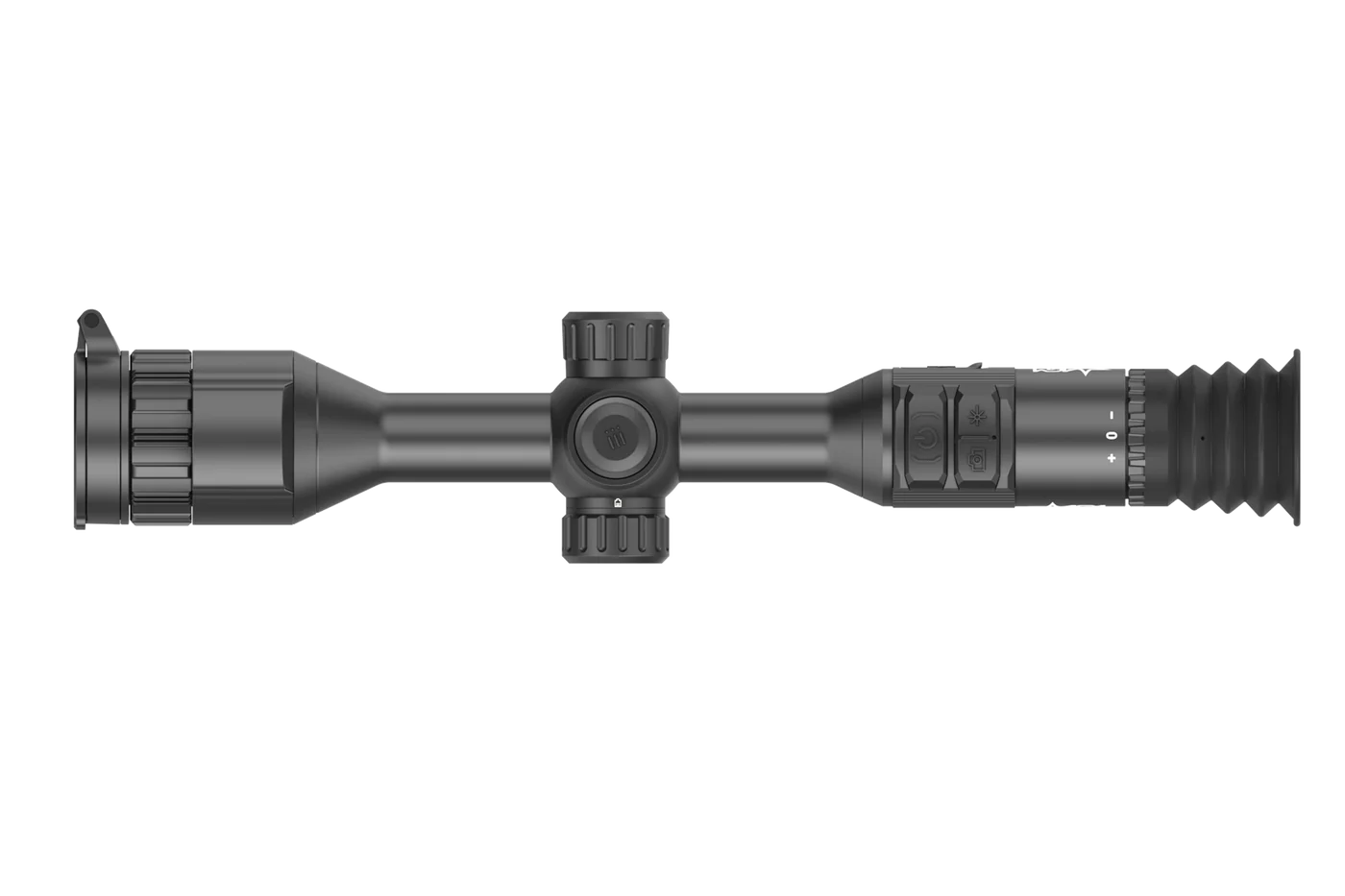
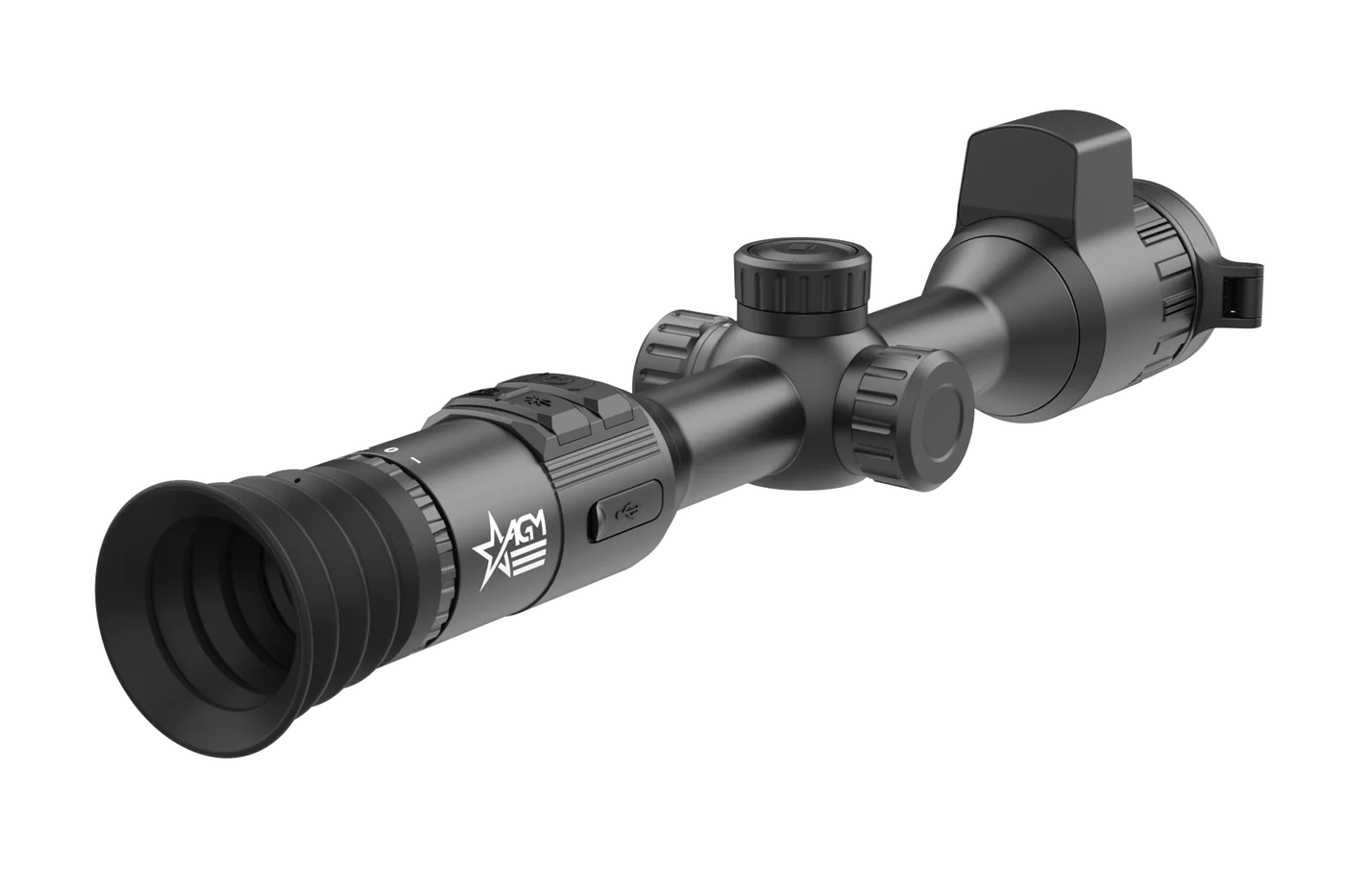
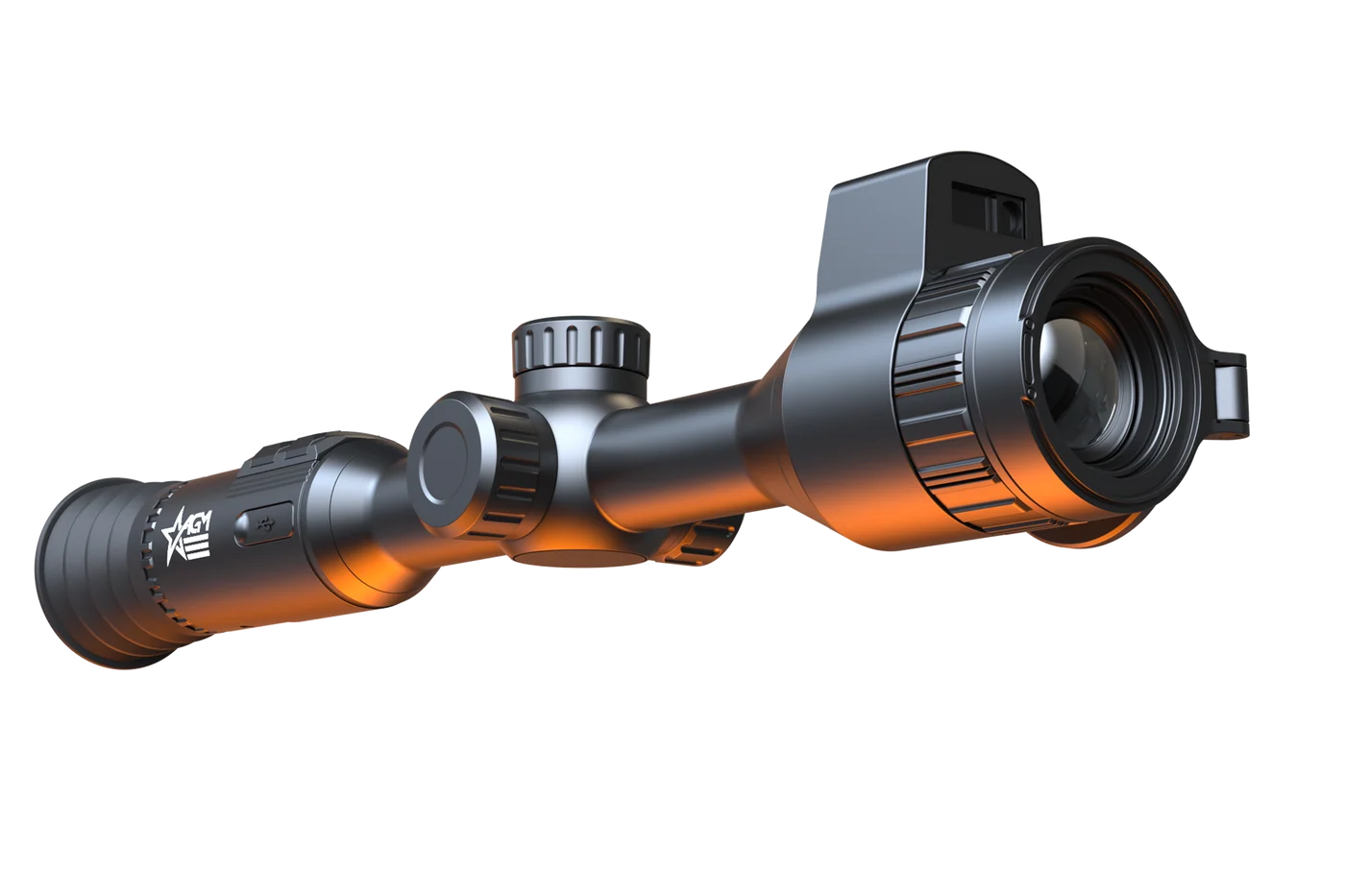
The 2× base magnification is the reason to choose this one.
AGM set the TS35-640 at 2× base magnification, lower than the 3× of the TS35-384. Their reasoning is worth repeating: 2× is high enough that digital zoom to 4× and 8× does not destroy the image, and low enough that the field of view stays wide.
That combination suits hog work specifically. Hogs move in sounders. You are reading a group, picking an animal, and keeping the others in frame for follow-up shots. A narrow field means losing track of where the rest are and losing your chosen animal when it crosses behind another.
It also works for predators in moderate cover, where the priority is finding the animal fast rather than identifying it at maximum distance.
The honest comparison with the V2
At €3,650.00, this scope costs €700 more than our Adder V2 LRF 35-384 at €2,950.00. Here is what you get and give up for that money.
You get a 640×512 sensor instead of 384×288, which is double the pixels on target and meaningfully better identification at distance. You also get up to 13 hours of runtime against 9.
You give up sensor sensitivity, sub-35 mK against sub-15 mK. You give up display resolution, 1024×768, against 2560×2560. You give up the 1,000-yard rangefinder and ballistic calculator entirely. You give up shutterless NUC, so this scope’s shutter closes periodically with a brief freeze and an audible click.
In dry conditions at longer range, the 640 sensor is worth the money. In fog, drizzle, or high humidity, a sub-15 mK 384 sensor produces the more usable image, and it is also cheaper. Be honest with yourself about which conditions you actually hunt in.
Display, recording, and power
A 1024×768 OLED display with five internal reticle options. Shot Activated Recording captures the shot without you reaching for a button. 64 GB eMMC storage onboard, with Wi-Fi for live streaming and app recording.
Power comes from two built-in 18650 rechargeable cells plus one replaceable CR123A lithium, giving up to 13 hours. That is two hours less than the 384 model, which is the cost of driving a 640 sensor. It remains well ahead of any current-generation thermal scope. A USB-C power bank extends it further.
Build and mount
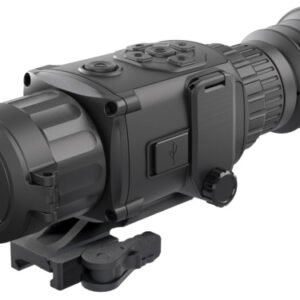
Conventional 30 mm tube housing, so it mounts in standard 30 mm rings without a proprietary bridge. Built for round-the-clock operation across weather conditions.
Compare against the Adder V2 LRF 50-640 if you want a 640 sensor with current-generation sensitivity and rangefinding, or see the full Adder range and our thermal scope buying guide.
Technical specifications
| Feature | Specification |
|---|---|
| Thermal resolution | 640×512 |
| Pixel pitch | 12 micron |
| NETD | Sub-35 mK |
| Lens size | 35 mm |
| Base magnification | 2× |
| Display | 1024×768 OLED |
| Reticles | 5 internal options |
| Laser rangefinder | Not fitted |
| Storage | 64 GB eMMC |
| Battery | Two built-in 18650 rechargeable plus one replaceable CR123A lithium |
| Runtime | Up to 13 hours |
| External power | USB-C, 5V power bank |
| Housing | 30 mm tube |
| Recording | Video, Shot Activated Recording |
| Connectivity | Wi-Fi live streaming and app recording |
FAQ
Why does the Adder TS35-640 have lower base magnification than the TS35-384?
AGM set it at 2× deliberately. A 640 sensor carries more pixels, so a lower base magnification still supports clean digital zoom to 4× and 8×. The payoff is a wider field of view, which suits hunting hogs in groups and finding predators in cover. The 384 model runs 3× because it needs the higher optical starting point to hold image quality when zoomed.
Is the Adder TS35-640 good for hog hunting?
Yes. The 2× base magnification and resulting wide field of view are well suited to tracking a sounder, picking a target, and keeping the rest of the group in frame for follow-up shots. Note that it has no rangefinder, so if your shots vary in distance, you will be estimating range yourself.
How does the Adder TS35-640 compare to the Adder V2 LRF 50-640?
The TS has a 640 sensor at sub-35 mK, a 1024×768 display, no rangefinder, and up to 13 hours of runtime at €3,650.00. The V2 has a 640 sensor at sub-15 mK, a 2560×2560 display, a 1,000-yard in-lens rangefinder with a ballistic calculator, a shutterless NUC, and 9 hours of runtime at €4,600.00. The V2 is better in poor weather; the TS runs longer and costs less.
Does the Adder TS35-640 have a shutterless NUC?
No. Shutterless calibration was introduced with the Adder V2 generation. The TS uses a mechanical shutter for non-uniformity correction, which briefly freezes the image and produces an audible click on its own schedule. At close range that click can be enough to move an animal.
What is the runtime on the Adder TS35-640?
Up to 13 hours, from two built-in 18650 rechargeable cells plus one replaceable CR123A lithium battery. That is two hours less than the 384-sensor TS35-384 and still substantially longer than current-generation thermal scopes, which typically run 5.5 to 9 hours.
Reviews
There are no reviews yet.