
Varmint V2 Thermal Rifle Scope
Showing all 2 results
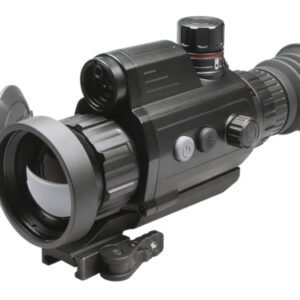
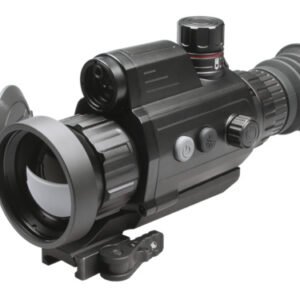
AGM Varmint V2 LRF Thermal Rifle Scopes
The AGM Varmint V2 exists to fix one specific problem. Thermal scopes show you a flat digital image with none of the depth cues your brain uses through glass, so estimating distance through one is unreliable past about 200 m.
Every Varmint V2 LRF carries a built-in 600 m laser rangefinder accurate to ±1 m, feeding an onboard ballistic calculator. Press the button, get a confirmed number, and the reticle uses your stored load data to correct for drop. No second device is needed, and there is no need to hand off the rifle.
Both models run a 12-micron sensor below 20 mK on a single non-proprietary 18650 battery, and both work off the rifle as a handheld scanning monocular.
Quick-scan decision triggers:
- Shipped worldwide from Berlin, with delivery in 2 to 3 days across Europe. Most AGM stock sits in the US behind ITAR and EAR export restrictions that block international delivery.
- Non-proprietary 18650 battery. Spares cost a few euros from any supplier, not €80 for a manufacturer-specific pack, and availability does not depend on AGM.
- An American-made ADM quick-detach mount is included, so you can pull the scope, scan handheld, and remount it at the same zero.
Why the AGM Varmint V2 Has a Rangefinder
Look through a traditional glass scope, and your brain gets depth cues from focus, parallax, and the way the image falls off toward the edges. Look through a thermal scope, and you get a flat digital display with none of that. Everything sits on one plane.
The practical consequence is that distance estimation through a thermal optic is worse than with the naked eye, and both become unreliable past 200 m in the dark. Most hunters solve this problem by carrying a separate rangefinder, which means taking a hand off the rifle at exactly the moment you want both on it.
AGM built a 600 m laser into the Varmint V2 body: ±1 m accuracy, 905 nm, Class 1 eye-safe. The onboard ballistic calculator applies the range to your stored profile and corrects the aim point.
On the 600 m figure, it is shorter than the 1,000 m units on the Rattler V3 and Adder V2 ranges. It is shorter than the 1,000 m units on the Rattler V3 and Adder V2 ranges. In practice, that gap matters less than it reads, because the laser return off a soft animal target degrades well before the rated maximum on any scope. Six hundred meters of reliable ranging covers the large majority of ethical shots, and on the 384 model it sits comfortably beyond where you can identify with confidence anyway.
The two models
| Varmint V2 LRF 35-384 | Varmint V2 LRF 50-640 | |
|---|---|---|
| Sensor | 384 × 288 | 640 × 512 |
| NETD | Below 20 mK | Below 20 mK |
| Lens | 35 mm F1.0 | 50 mm F1.0 |
| Magnification | 3× to 24× | Confirm with us. |
| Field of view | 7.5° × 5.7° | Confirm with us. |
| Detection range | 1,800 m | Confirm with us. |
| Rangefinder | 600 m, ±1 m | 600 m, ±1 m |
| Price | $2,310 | $3,520 |
Choose the Varmint V2 LRF 35-384 if you want the most affordable way into laser rangefinding. At $2,310 it is the cheapest scope we stock with a built-in laser, and Bass Pro currently lists the same model at $2,965. Realistic identification ranges from roughly 350 to 400 m for fox-sized animals and exceeds 500 m for deer-sized animals, all within the rangefinder’s reliable envelope.
Choose the Varmint V2 LRF 50-640 if identification distance matters. Doubling the pixels on the target makes the difference between just reading a shape and also reading posture and outline. The 50 mm objective also gathers more infrared energy, which improves image quality at any distance, not just the far end.
Both have a 1024×768 OLED display, 10 reticle types in 4 colors, picture-in-picture, highest temperature spot tracking, Jungle and Recognition scene modes, 16 GB of onboard storage, recoil-activated video with sound, digital boresight at 0.13 mil per click, a 1.5 m drop rating, and Wi-Fi via the AGM Connect app.
Coming from the Original Varmint LRF TS?
If you are searching for the Varmint LRF TS35-384 or Varmint LRF TS50-640, those are the previous generation. The V2 replaced them, and here is what actually changed.
| Varmint LRF TS | Varmint V2 LRF | |
|---|---|---|
| Sensor | Earlier 12-micron detector | Sub-20 mK 12 micron |
| Ballistic calculator | No | Yes, onboard. |
| User interface | Original | Redesigned |
| Image settings | Fixed | Customizable |
| Video | Standard | Recoil-activated, with sound |
| Rangefinder | 600 m | 600 m (carried over) |
| Battery | Removable 18650 | Removable 18650 (carried over) |
The rangefinder, the compact housing, and the non-proprietary battery all carried across. What you gain is sensitivity, the calculator, and the interface. If your TS is working and you already hold a zero on it, the upgrade case rests mostly on the ballistic calculator.
How the AGM Varmint V2 Fits AGM’s Range
Something worth understanding before you buy, because no other retailer stocks enough of the range to explain it.
AGM builds most of its thermal riflescopes on one platform and differentiates by what they add:
| Scope | What it is | What it adds |
|---|---|---|
| Rattler V3 | The current base platform | Newest sensor at sub-15 mK, in-lens 1,000 m LRF on most models |
| Varmint V2 | The same platform | A 600 m laser rangefinder, in the most compact body |
| Clarion | Previous-generation platform | Two mechanically switching lenses |
| Adder | The same electronics | A conventional 30 mm tube housing |
So, the honest comparison for your budget is
- Want the newest sensor? Rattler V3, with a sub-15 mK rating, outperforms the Varmint’s sub-20 mK.
- Want the longest laser? Adder V2 or Rattler V3 LRF, both 1,000 m against 600 m.
- Want to mount in standard 30 mm rings? Adder.
- Want two lenses in one scope? Clarion.
- Want rangefinding in the smallest, lightest body, on standard batteries, at the lowest price? Varmint V2. That is what it is for.
It Works as a Handheld Monocular
The Varmint V2 body is compact enough to use off the rifle, and the included ADM quick-detach mount makes that practical: pull the scope, scan handheld, and remount at the same zero.
That matters more than it sounds. Scanning with a rifle-mounted optic means pointing a loaded rifle at everything you want to look at, which is poor practice regardless of what the scope costs. The usual fix is buying a separate thermal monocular, which is another €1,500 or more.
It is not as comfortable as a purpose-built monocular for a long scanning session, and if you are out three nights a week, you will want the dedicated device. But for a hunter working to a budget, it is a genuine dual-use case, and it is one of the few real arguments for the Varmint over a Rattler V3.
Runtime, and Being Straight About It
A single removable 18650 rechargeable cell. Published runtime figures vary between sources from 4 to 6 hours, and we would rather tell you that than pick the flattering number. Please confirm the current figure with us before placing your order if it is important to you.
Either way, it is the shortest runtime across the AGM scopes we stock, and that is the honest weakness of this range.
The offsetting point is real: 18650 is a standard non-proprietary format. Spares cost a few euros from any supplier, against €80 or more for manufacturer-specific packs, and availability does not depend on AGM continuing to produce them in five years. Carry two spares, and the runtime stops mattering. External 5V power over USB-C extends it further for static positions.
Related buying guides and complementary gear
Cross-shopping brands? Our best thermal scope buying guide compares AGM against Pulsar, ThermTec, and Hikmicro on sensitivity, range finding, and resale value. Still deciding between technologies? Thermal versus night vision covers where each one wins, and thermal imaging for hunting explains why detection range and identification range are completely unique numbers.
Across the rest of the AGM range: the Rattler V3 compact scopes for the newest sensor, the Adder 30mm tube scopes for standard ring mounting, the Clarion dual focus scopes for two lenses in one optic, the Secutor thermal scopes for long tactical shifts, and the Evolver thermal scope for AGM’s 1280 flagship.
For a dedicated scanning device, see our guides to thermal monoculars for hunting and AGM thermal monoculars, or the Pulsar thermal monocular range if you want a premium option. For observing in groups, thermal binoculars are the alternative.
Working in low light rather than full dark? Compare against our night vision monoculars, night vision binoculars, and night vision goggles. We also stock Pulsar thermal rifle scopes and HIKMICRO thermal rifle scopes.
AGM Varmint V2 Buying Questions
How far does the AGM Varmint V2 rangefinder reach?
Up to 600 m with ±1 m accuracy, using a 905 nm Class 1 eye-safe laser. That is shorter than the 1,000 m units on the Rattler V3 and Adder V2 ranges, but laser return off a soft animal target degrades before the rated maximum on any scope. Six hundred meters of reliable ranging covers the large majority of ethical shots.
What is the difference between the Varmint LRF TS and the Varmint V2 LRF?
The V2 is the current generation and replaced the TS. AGM upgraded to a sub-20 mK 12-micron sensor, added an onboard ballistic calculator, redesigned the user interface, added customisable image settings, and added recoil-activated video with sound. The integrated 600 m laser rangefinder, the compact housing, and the removable 18650 battery all carried across from the original.
Can the AGM Varmint V2 be used as a handheld monocular?
Yes. The compact body and included ADM quick-detach mount make it practical to remove the scope, scan handheld, and remount at the same zero. It is less comfortable than a purpose-built thermal monocular for long sessions, but it means you are not pointing a loaded rifle at everything you want to identify.
What battery does the AGM Varmint V2 use?
A single removable 18650 rechargeable cell. The important part is that 18650 is a standard non-proprietary format, so spares cost a few euros from any supplier rather than the €80 or more typical of manufacturer-specific packs. Published runtime figures vary between sources, so ask us to confirm the current figure. External 5V power over USB-C extends it.
Do you ship AGM Varmint V2 scopes outside the United States?
Yes. We ship worldwide from Berlin, with 2- to 3-day delivery across Europe, and international delivery is available elsewhere. This matters because AGM’s own site and every major US dealer carry ITAR and EAR export restrictions that prevent shipping thermal optics abroad, so buyers outside the US regularly reach checkout and find they cannot complete the order.
Which Varmint V2 model should I buy?
The 35-384 at $2,310 is the affordable route into laser rangefinding, with realistic identification to roughly 350 to 400 m on fox-sized animals. The 50-640 at $3,520 roughly doubles the pixels on target and adds a 50 mm objective, which extends identification distance and improves image quality at every range.