
Pulsar Monoculars
Showing all 5 results
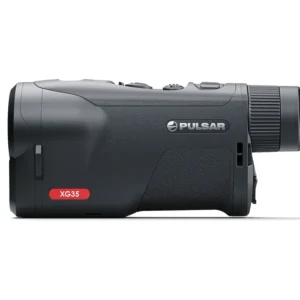
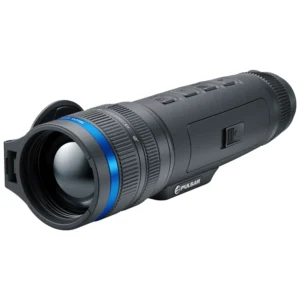
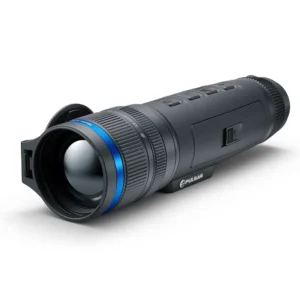
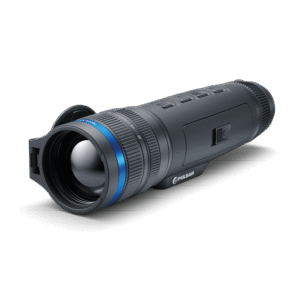
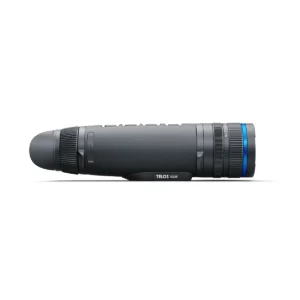
Pulsar Thermal Monoculars
Pulsar thermal monoculars are premium handheld thermal imagers for finding game, scanning the ground, and observing in complete darkness. This collection holds the full Pulsar monocular range we stock: the compact Axion, the modular Telos with laser rangefinder, and the flagship Helion, in 384 and 640 sensor resolutions. Every unit is a genuine Pulsar, priced in euros, fully warranted, and dispatched tracked across the EU and worldwide. A monocular helps you find game; you scan with it before you ever raise your rifle. Not sure which fits your range and budget? Compare the models below, or read our thermal monocular buying guide, then buy.
- In stock, euro pricing, EU delivery. Genuine Pulsar monoculars are dispatched tracked across the EU and worldwide, with no surprise import fees within the EU.
- Best thermal software and resale. Pulsar’s Stream Vision 2 app and magnesium build hold their value better than any rival.
- Every size and budget. From the pocketable Axion Compact XQ19 to the rangefinding Telos LRF XP50, every size and budget is covered.
How to choose a Pulsar thermal monocular
Pick a Pulsar thermal monocular by three things: how far you need to see, whether you want a built-in rangefinder, and how compact it must be. Spend on the sensor and NETD first, then match the lens to your range. A monocular is for finding and identifying game, not for shooting, so field of view and a quick, clean image matter as much as raw reach.
Sensor resolution drives how far out you can identify what you see. Pulsar’s 384 monoculars (Axion 2 XQ35, Telos XQ35) suit close-to-mid-range work. The 640 models (Axion 2 XG35, Telos XL50, Helion 2 XP50) provide more detail and reach for open ground.
NETD (thermal sensitivity) decides clarity in fog, rain, and humidity. Pulsar monoculars run at <25 to <40 mK, depending on the model. Lower is better, and it matters most on damp, low-contrast nights. Worth noting: Pulsar’s 384 XQ-series sensors are often more sensitive than the higher-resolution 640 models, so do not assume more pixels means a cleaner image.
A laser rangefinder (LRF) measures exact distance before a stalk or shot. The Telos LRF and Axion 2 LRF models include this feature; if you only scan, you can skip it.
Pulsar thermal monocular comparison
| Model | Sensor | NETD | Detection range | LRF | Best for | |
|---|---|---|---|---|---|---|
| Axion Compact XQ19 | 384 17 µm | <40 mK | ~1,300 m | No | Pocketable, budget entry | |
| Axion 2 XG35 | 640 12 µm | <40 mK | ~1,750 m | No | Compact 640 all-rounder | |
| Telos LRF XP50 | 640 17 µm | <18 mK | ~1,800 m | Yes. | Best image and ranging | |
| Helion 2 XP50 | 640 17 µm | <25 mK | ~1,800 m | No | Flagship observation |
New to thermal, or cross-shopping brands? Read our best thermal monocular for hunting guides, compare with AGM and ThermTec monoculars, or see Pulsar thermal scopes if you need a rifle-mounted optic.
Common buying questions
Which is the best Pulsar thermal monocular?
For a pocketable budget option, the Axion Compact XQ19 is a great choice. For a compact 640 all-rounder, consider the Axion 2 XG35. For the best image quality with built-in ranging, the Telos LRF XP50, which many reviewers rate as one of the best thermal monoculars available. The right choice depends on your range, whether you need an LRF, and your budget.
What is the difference between the Pulsar Axion, Telos, and Helion?
The Axion is the compact, pocketable line, ideal as a first thermal or a light scanner. The Telos is modular and upgradeable, with the option of a laser rangefinder and the best sensitivity in the range. The Helion is the larger flagship observation monocular. All share Pulsar’s Stream Vision 2 app and build quality.
Does the Pulsar thermal monocular have a rangefinder?
Some models do. The Telos LRF and Axion 2 LRF versions have a built-in laser rangefinder for measuring exact distance. The standard Axion, Telos, and Helion models do not have a built-in laser rangefinder. Choose an LRF model if you range before a shot; skip it if you only scan and observe.
Pulsar or AGM thermal monocular, which is better?
Both are strong. Pulsar leads on software, build quality, and resale value. AGM often gives you more sensors for the money and a longer warranty. For a premium monocular with the best app, choose Pulsar; for maximum specifications per euro, compare AGM monoculars. We sell both and will give you an honest recommendation.
Do you sell Pulsar thermal monoculars for sale with delivery to my country?
We ship genuine Pulsar thermal monoculars tracked across the EU and worldwide, subject to the export rules that apply to thermal optics in some destinations. If you are unsure whether we can ship a model to your country, ask us first, and we will confirm before you order.
Can a Pulsar thermal monocular be used in daylight?
Yes. Thermal monoculars detect heat, not light, so they work in daylight, shade, and total darkness, and daylight will not damage the sensor. Contrast can be lower in the heat of the day when the ground warms up.