
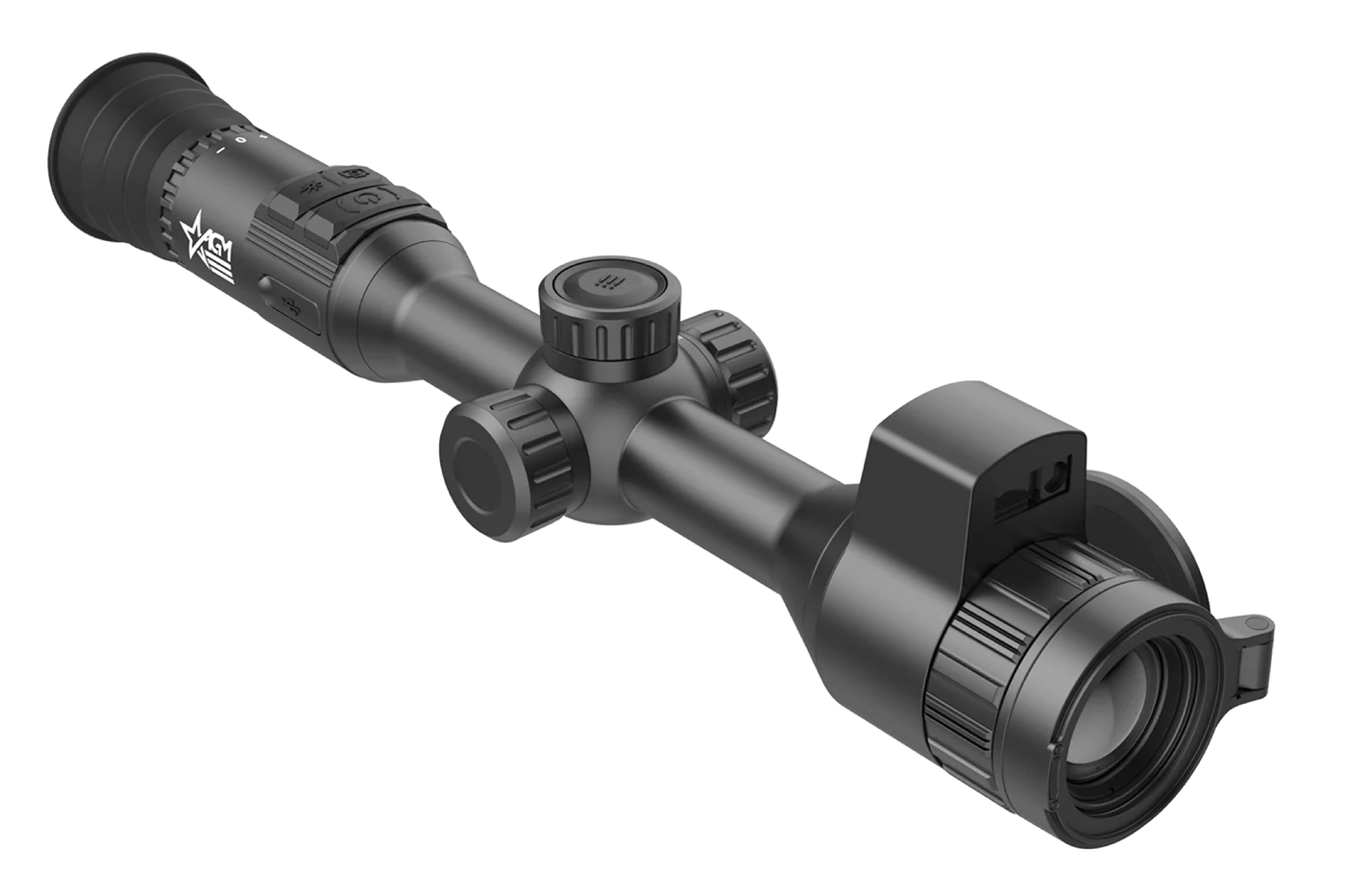
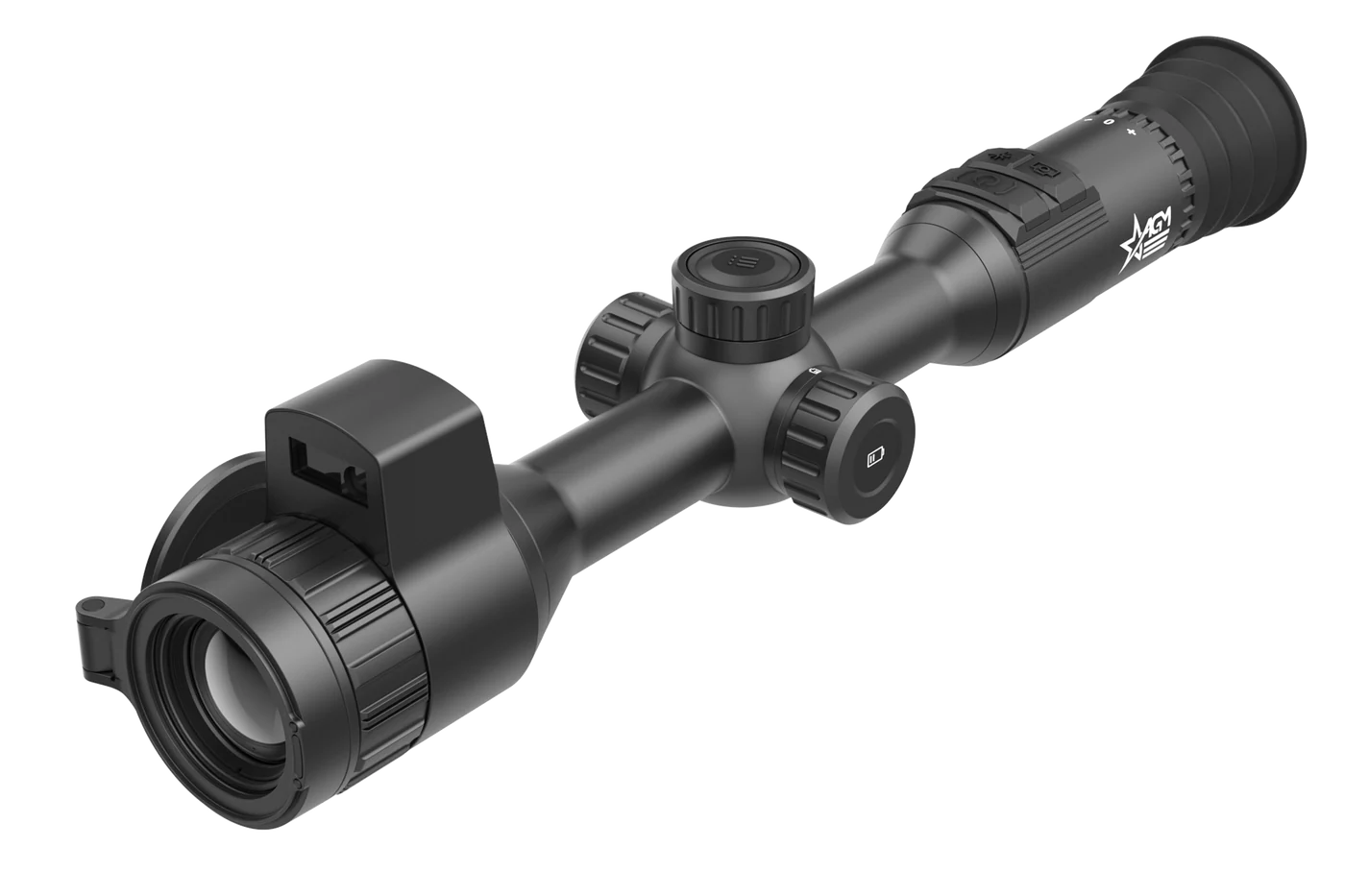
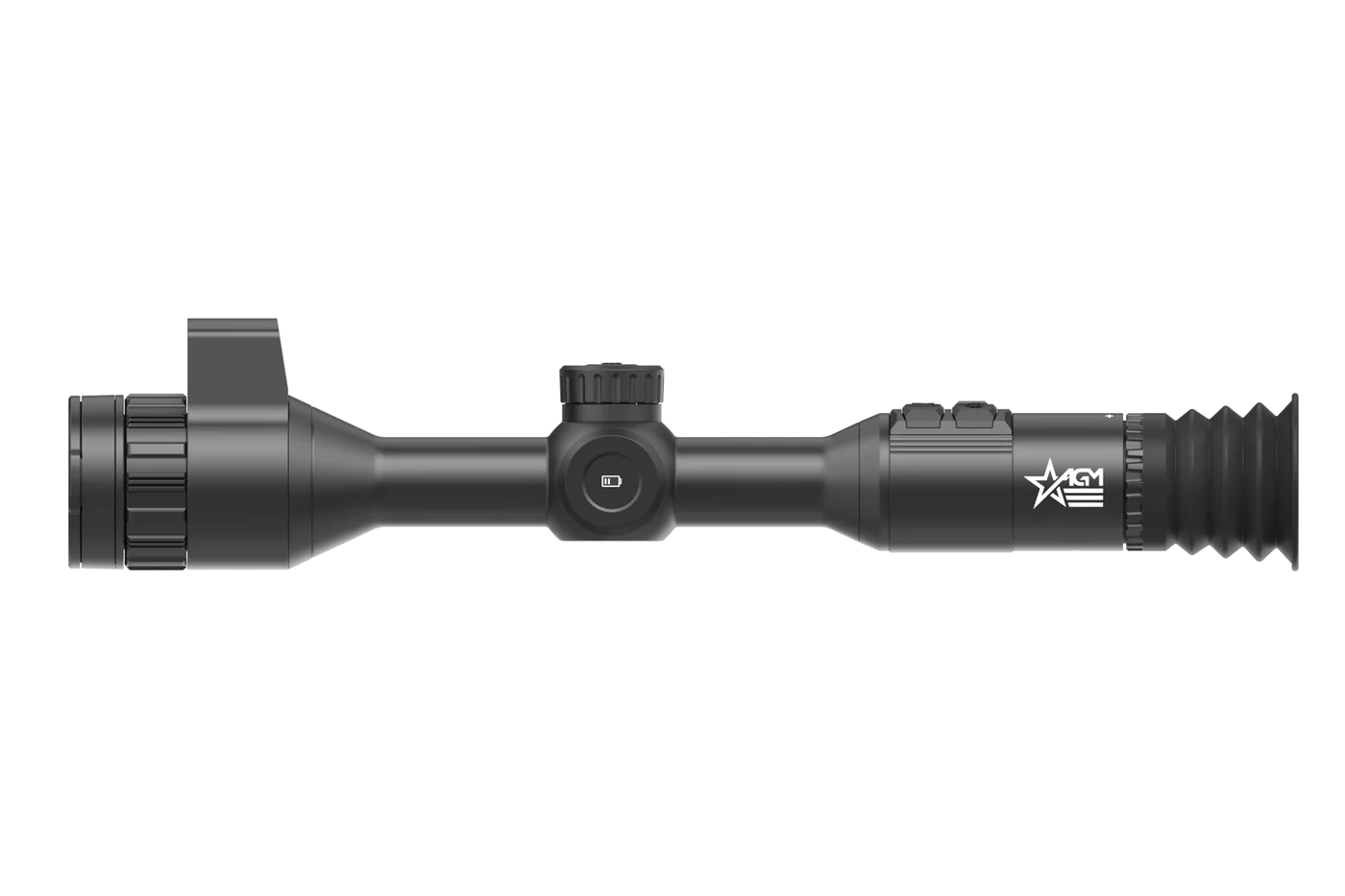
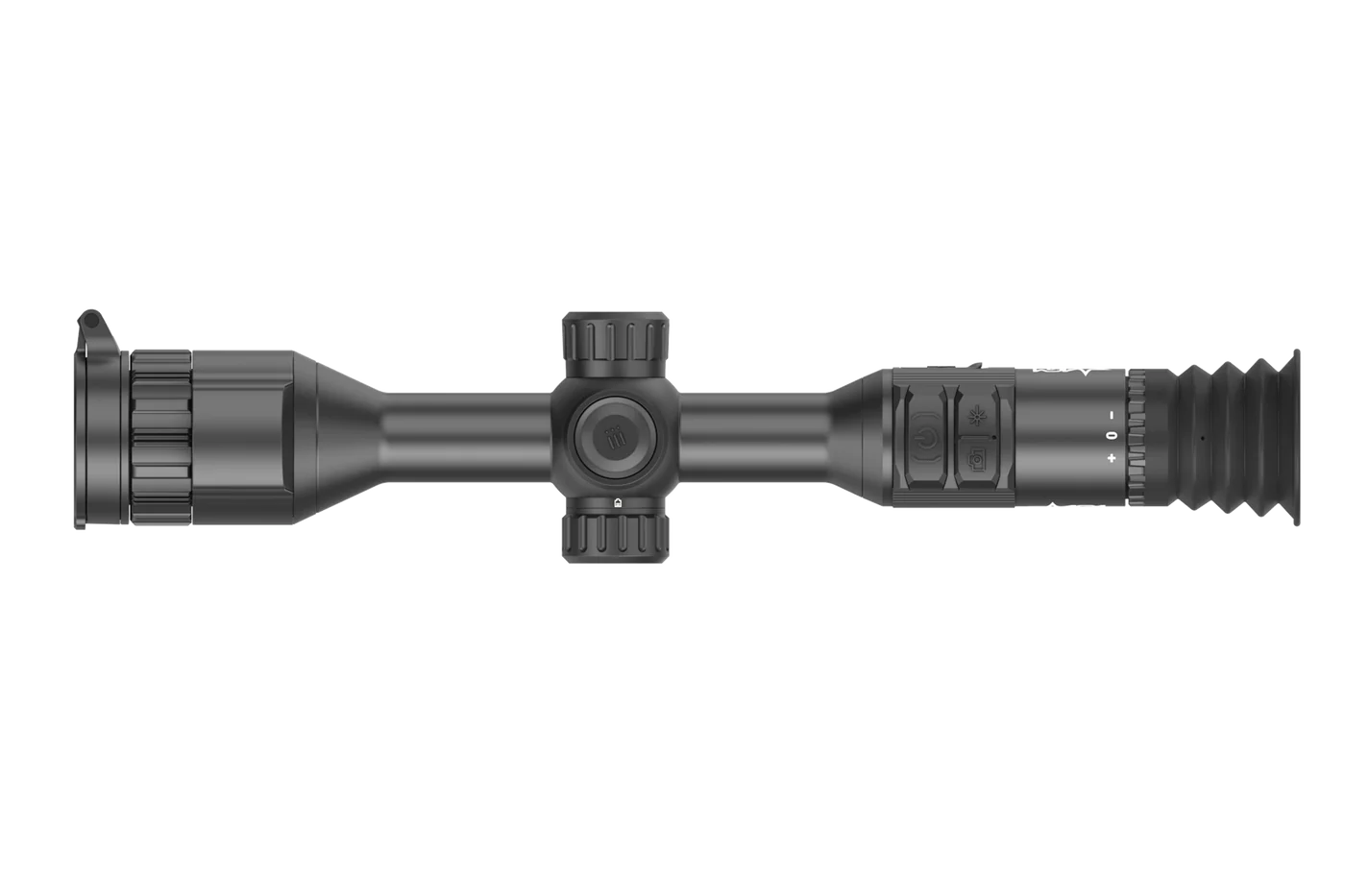
Read this before you compare it to the 640 models.
This scope costs €2,750.00. Our Adder TS35-640 costs €3,650.00 and has a 640×512 sensor, against this one’s 384×288. On resolution alone the more expensive scope wins.
On all other features, however, it does not. This scope has a sub-15 mK noise floor against sub-35 mK. It has a 2560×2560 display against 1024×768. It has a rangefinder and a ballistic calculator, which the TS does not have at all. It has shutterless NUC, so no image freeze and no shutter click.
In fog, drizzle, or high humidity, a 384 sensor at sub-15 mK produces a more usable image than a 640 sensor at sub-35 mK. Not a marginally different one. In low thermal contrast, sensitivity is the binding constraint, and resolution is close to irrelevant, because you cannot resolve detail that the sensor cannot separate from background noise in the first place.
If you hunt dry, open country, and shoot past 400 m, the 640 resolution is worth having. For European conditions, this option serves most buyers better.
4× base magnification and what it costs you
The V2 35-384 starts at 4×, higher than the 2.5× of the V2 LRF 35-640 and the 3× of the Gen 1 TS35-384. Higher base magnification on a 12-micron sensor means digital zoom degrades later: you can push to 16× before resolution loss becomes obvious, and the range runs to 24×.
The trade-off is field of view. At 4× you see less ground at once, which makes tracking a moving animal through cover harder and finding one in the first place slower. This model is a scope for shooting rather than searching, which is the correct division of labor anyway. Pair it with a thermal monocular and scan with that.
The 0.5× incremental step zoom means you are not locked into 4×, 8×, or 16× jumps. You can sit at 6.5× if that is what the distance calls for.
Display, interface, and rangefinding
The 2560×2560 micro display carries a semi-circular interface showing battery, magnification, range, time, and pitch scale around the edge rather than across the image. Pitch readout is worth understanding: the ballistic calculator corrects for range but not for incline, and shooting up or down a slope changes effective drop.
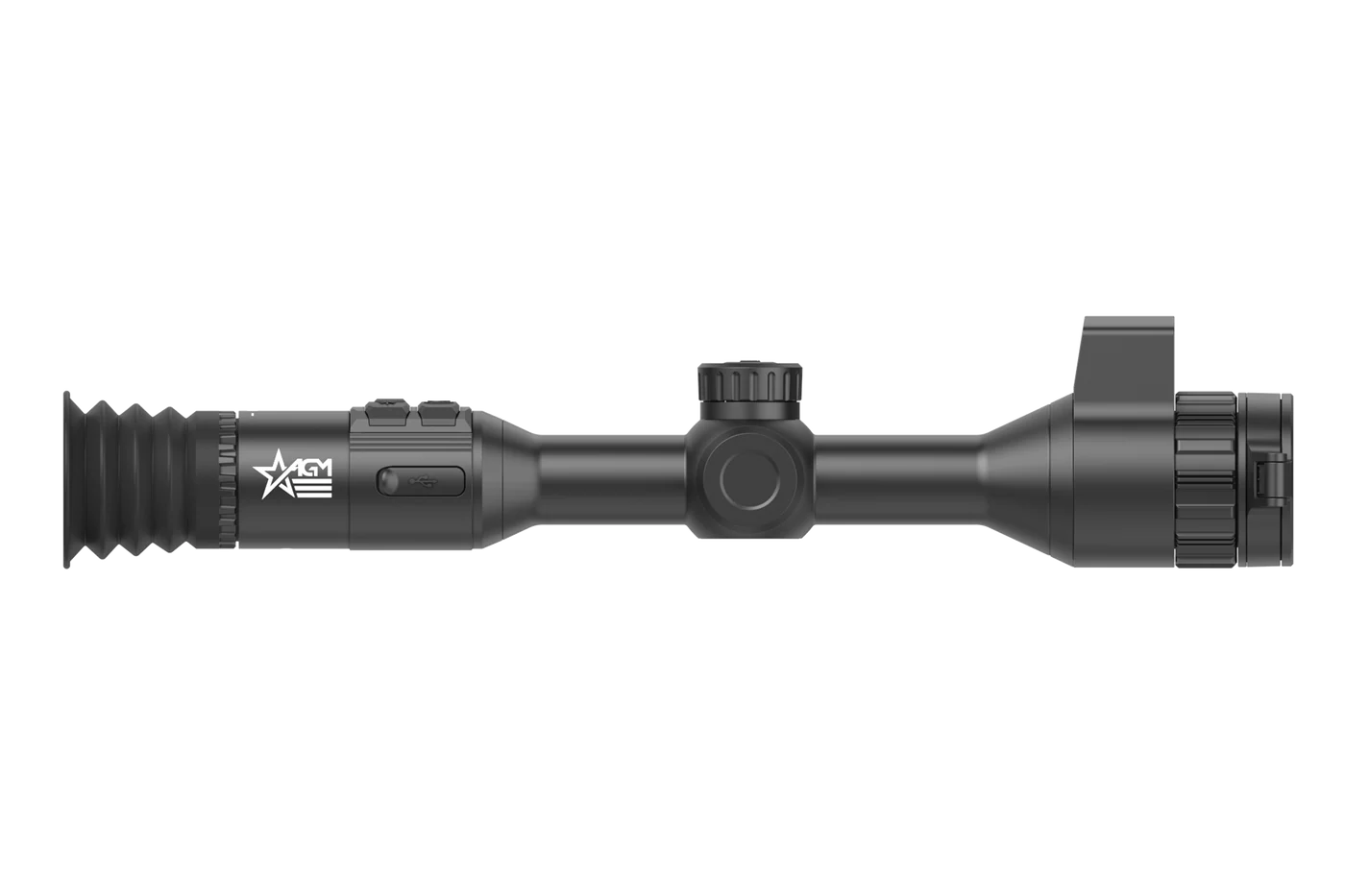
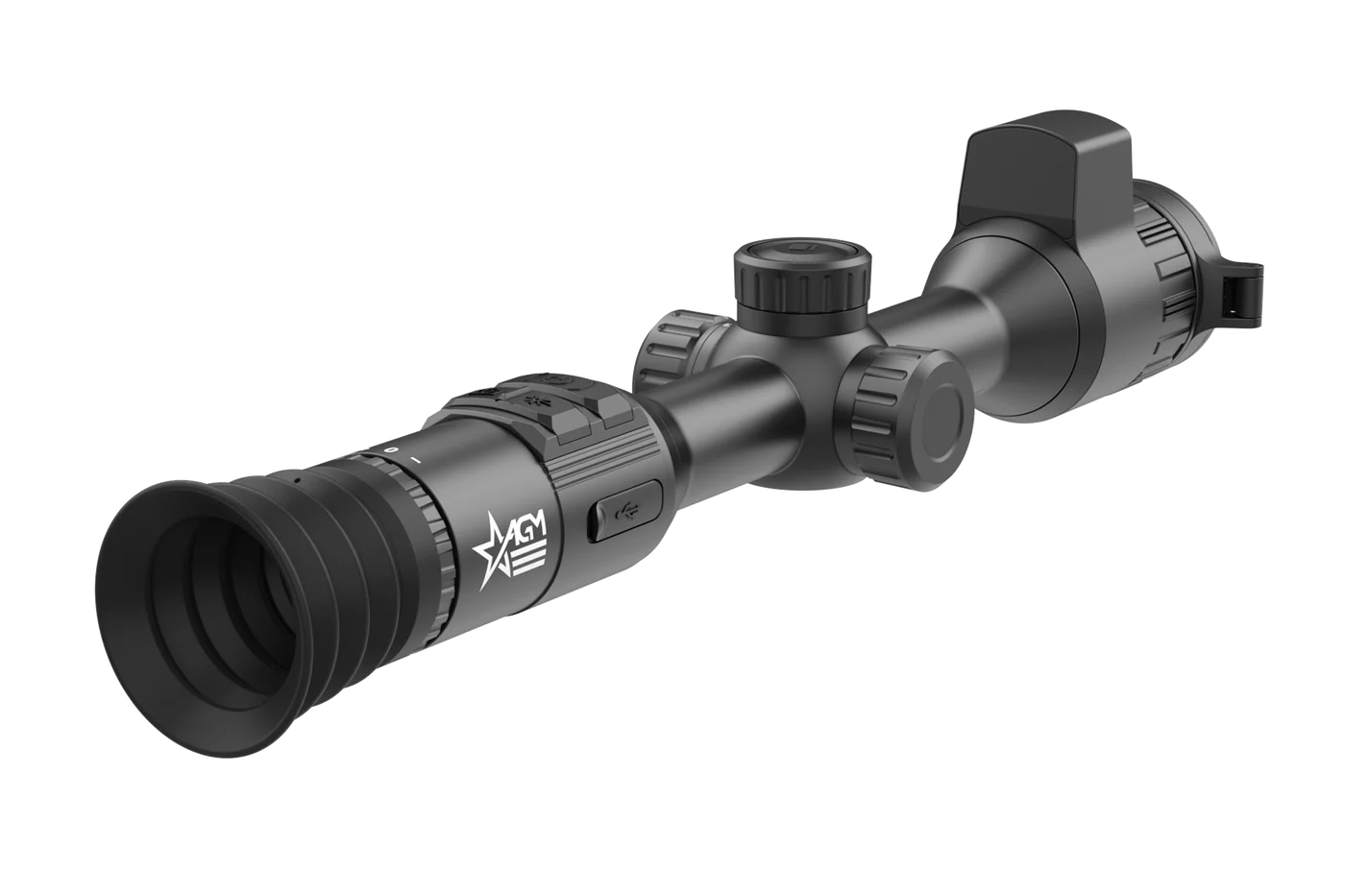
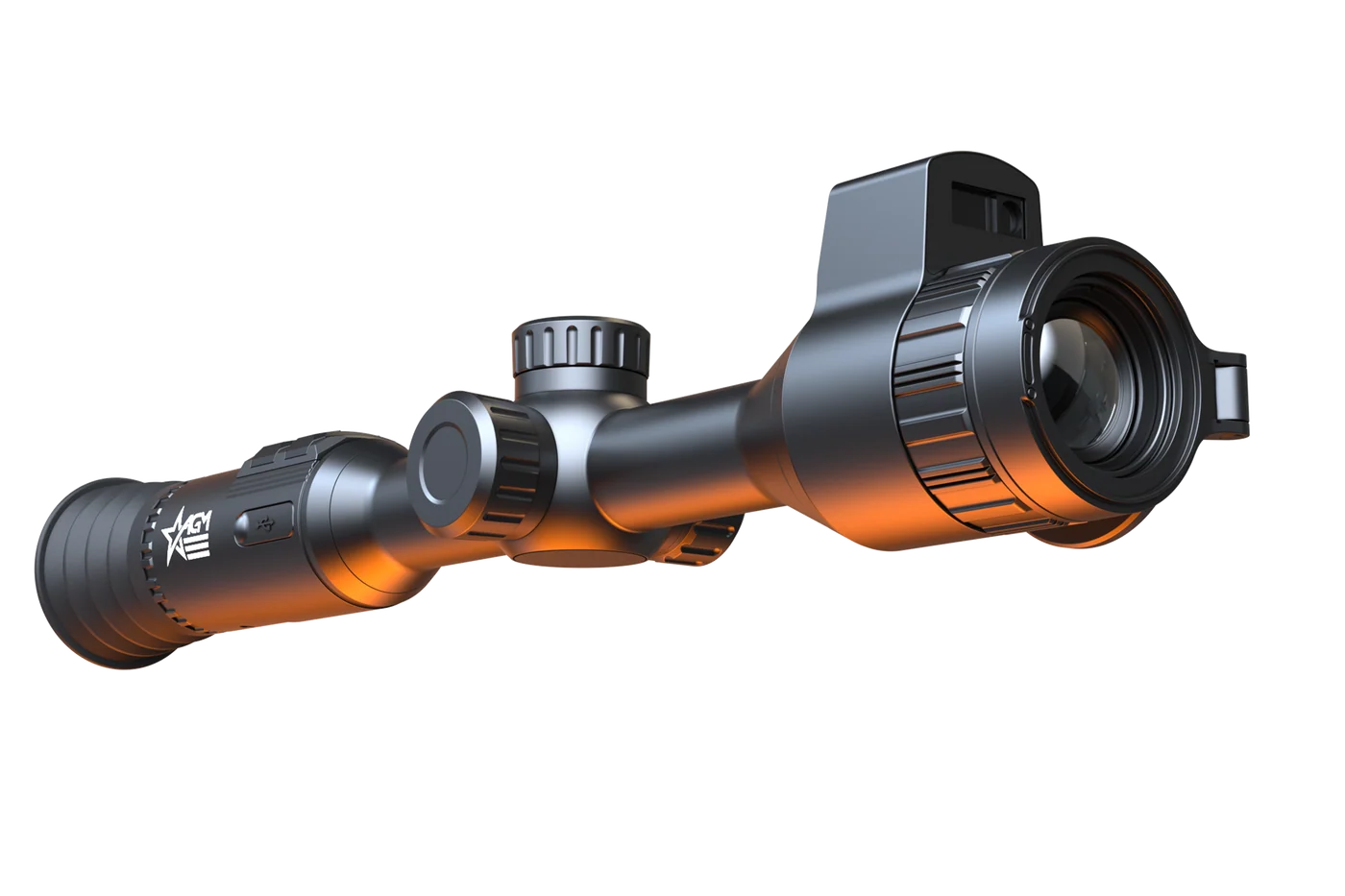
The 1,000-yard laser sits inside the front lens assembly, on the same optical axis as the thermal channel. Five ballistic profiles stored onboard.
Ten brightness and ten contrast steps. All six palettes plus warm and cool hue modes. Shutterless NUC.
Power, build, and support
Dual power system: internal rechargeable cell plus removable 18650, up to 9 hours with the rangefinder running. USB-C for external power at 5V/2A with QC3.0. The USB-C port charges the internal battery only, so the 18650 needs the supplied charger.
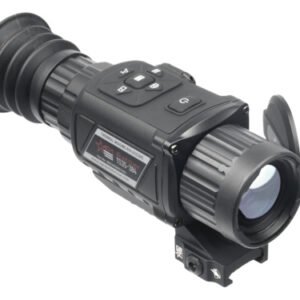
IP67, rated to 1,000 g recoil. 64 GB storage with Shot Activated Recording and on-device playback. An American-made ADM Recon 30 mm one-piece mount is included. Five-year warranty.
Being a 30 mm tube, it also fits standard rings if you prefer your own mounting solution.
See the full Adder range, the Rattler V3 range if you do not need a tube form factor, or our thermal scope buying guide for cross-brand comparison.
Technical specifications
| Feature | Specification |
|---|---|
| Thermal resolution | 384×288 |
| Pixel pitch | 12 micron |
| NETD | Sub-15 mK |
| Lens size | 35 mm |
| Magnification | 4× to 24× |
| Zoom adjustment | 0.5× incremental step |
| Display | 2560×2560 OLED micro display |
| Interface | Semi-circular, with battery, magnification, range, and pitch readout |
| Laser rangefinder | 1,000 yd, integrated in lens assembly |
| Ballistic calculator | Onboard, 5 profiles |
| NUC | Shutterless |
| Palettes | Black Hot, White Hot, Red Hot, Fusion, Red Monochrome, Green Monochrome, warm and cool hues |
| Storage | 64 GB eMMC |
| Battery | Internal rechargeable plus removable 18650, up to 9 hours |
| External power | USB-C, 5V DC/2A, QC3.0 |
| Recoil resistance | 1,000 g |
| Housing | 30 mm tube, IP67 |
| Recording | Video with audio, shot activated recording, on-device playback |
| Mount | ADM Recon 30 mm one-piece, included |
| Warranty | 5 years |
FAQ
Is the Adder V2 LRF 35-384 better than the Adder TS35-640 despite the smaller sensor?
In wet conditions, yes. The V2 runs at sub-15 mK against sub-35 mK on the TS, has a 2560×2560 display against 1024×768, and adds a rangefinder and ballistic calculator the TS lacks entirely. In fog, drizzle, and high humidity, sensitivity determines image quality more than resolution does. The TS35-640 is the better choice only in dry conditions and at longer ranges.
What magnification does the Adder V2 LRF 35-384 offer?
It runs 4× to 24×, with 4× as the base optical magnification and 0.5× incremental step adjustment through the range. The higher 4× base means digital zoom holds image quality better than lower-base scopes, with usable detail to around 16× before noticeable degradation.
Does the Adder V2 LRF 35-384 fit standard scope rings?
Yes. It uses a conventional 30 mm tube housing, so it mounts in any standard 30 mm ring. An American-made ADM Recon 30 mm one-piece mount is included in the box if you do not have a preferred setup.
How many ballistic profiles can it store?
Five. The onboard ballistic calculator takes range from the integrated laser and applies your stored load data to correct the aim point. Five profiles typically cover one rifle with several loads, plus a second rifle, without the menu depth becoming awkward to navigate in the dark.
Does the ballistic calculator account for shooting uphill or downhill?
No. It corrects for range and your stored load data. Incline angle changes effective bullet drop, and you correct for that yourself, which is why the interface displays a pitch scale. Wind is also not calculated. Treat the calculator as removing range estimation error, not as a complete firing solution.
Reviews
There are no reviews yet.