
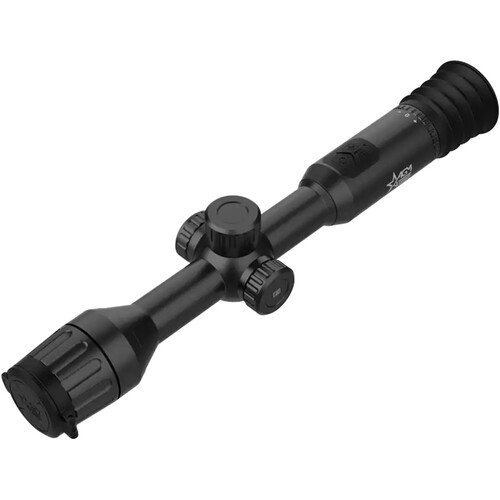
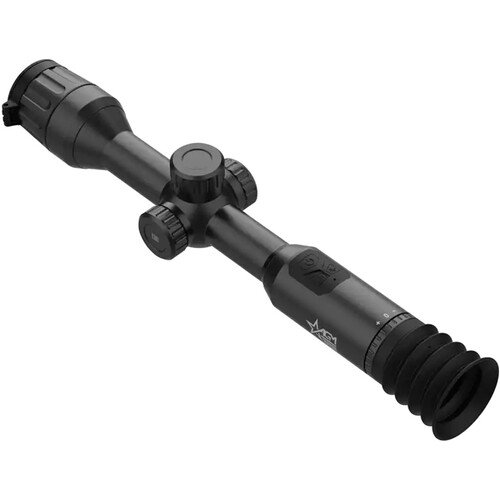
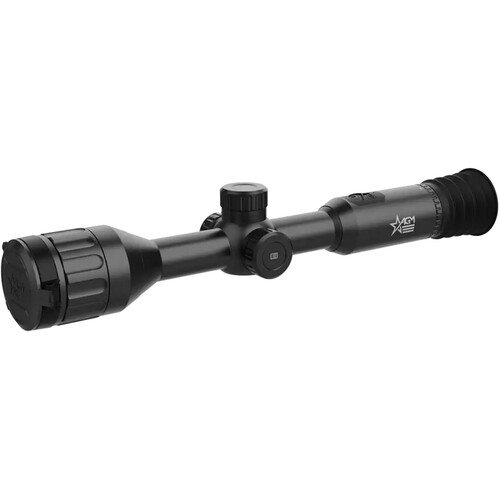
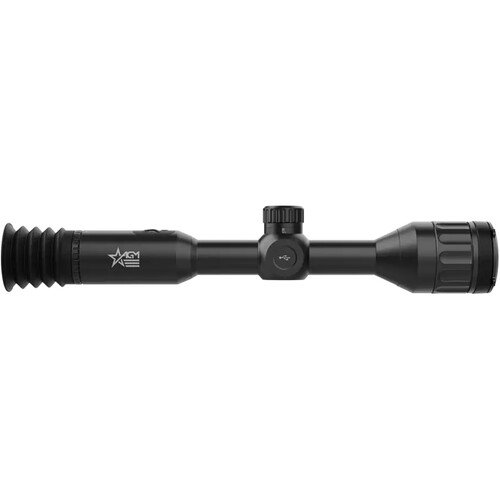
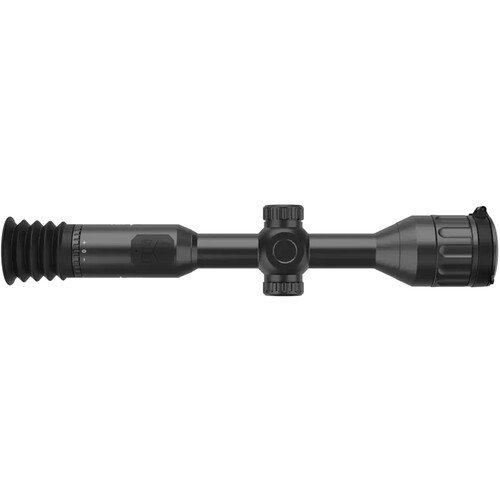
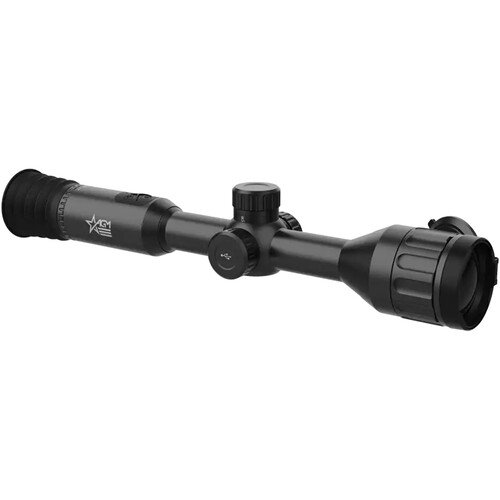
A 50 mm lens on a 384 sensor, and why that is a deliberate choice
Most manufacturers pair large objectives with high-resolution sensors and small objectives with lower-resolution ones. AGM offered all four combinations across the Adder range, and this is the one people ask about most.
The logic is that lens size and sensor resolution solve different problems. Resolution determines how much detail you can resolve on a target that is already visible. Lens size determines how much infrared energy reaches the sensor, which determines whether the target is visible at all and how much signal the detector has to work with.
A 50 mm objective on a 384 sensor gives you a longer usable range than a 35 mm on the same sensor and better image quality at any given distance, because the detector has more signal. What it does not give you is the fine detail a 640 sensor resolves. You will see something is there and see it further away, without necessarily being able to tell exactly what it is at that distance.
That suits observation-heavy shooting: property monitoring, long watches over open ground, and situations where detecting movement matters more than identifying species at maximum range.
Where it sits in your options
At €2,800.00, this model is the mid-price Gen 1 Adder. Two comparisons are worth making before you buy.
Our Adder TS35-384 at €2,250.00 uses the same sensor with a 35 mm lens, giving a wider field and up to 15 hours of runtime. It costs €350 less. If your shooting is within 250 m, this is the better buy.
Our Adder V2 LRF 35-384 at €2,750.00 uses the same sensor resolution at sub-15 mK instead of sub-35 mK, with a 2560×2560 display, an integrated 1,000-yard rangefinder, and a shutterless NUC. It costs €150 more. In wet conditions it is the better scope by a clear margin.
This model earns its place if you specifically need the 50 mm objective’s reach on a 384 budget. That is a narrower case than the other two, so be clear it describes you.
Display, recording, and power
A 1024×768 OLED display with five internal reticle options. 64 GB eMMC storage with Shot Activated Recording. Wi-Fi supports live streaming and app-side recording.
Two built-in 18650 rechargeable cells plus one replaceable CR123A lithium. USB-C accepts a 5V power bank for extended sessions.
Build and mount
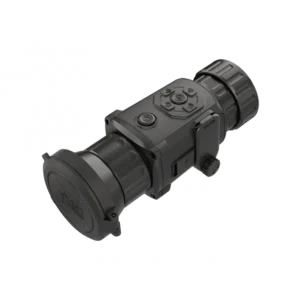
Conventional 30 mm tube, mounts in standard 30 mm rings. Built for round-the-clock operation across weather conditions.
Not sure this is right for your ground? Tell us your typical distance, terrain, and rifle, and we will point you at the correct model, including options outside the Adder range. See the full Adder range or our thermal scope buying guide.
Technical specifications
| Feature | Specification |
|---|---|
| Thermal resolution | 384×288 |
| Pixel pitch | 12 micron |
| NETD | Sub-35 mK |
| Lens size | 50 mm |
| Base magnification | |
| Field of view | |
| Detection range | |
| Display | 1024×768 OLED |
| Reticles | 5 internal options |
| Laser rangefinder | Not fitted |
| Storage | 64 GB eMMC |
| Battery | Two built-in 18650 rechargeable plus one replaceable CR123A lithium |
| External power | USB-C, 5V power bank |
| Housing | 30 mm tube |
| Recording | Video, Shot Activated Recording |
| Connectivity | Wi-Fi live streaming and app recording |
FAQ
Why would I choose a 50 mm lens with a 384 sensor?
Lens size and sensor resolution solve different problems. The 50 mm objective gathers more infrared energy, extending usable range and improving image quality at any distance by giving the detector more signal. The 384 sensor limits how much fine detail you can resolve. The combination suits detecting movement at distance more than identifying species at maximum range.
How does the Adder TS50-384 compare to the TS35-384?
Same 384×288 sub-35 mK sensor and 1024×768 display. The TS50-384 has a 50 mm objective for longer reach; the TS35-384 has 35 mm for a wider field of view, a confirmed 3× base magnification, and up to 15 hours of runtime. The TS35-384 is also €350 cheaper. Choose the 50 mm only if you specifically need the extra reach.
Does the Adder TS50-384 have a rangefinder?
No. No first-generation Adder TS model has a rangefinder. It was introduced with the Adder V2 generation. If range varies across your shooting, the omission matters, because distance estimation by eye is unreliable past roughly 200 m in the dark.
What is the difference between the Adder TS and Adder V2?
The V2 upgraded the sensor from sub-35 mK to sub-15 mK, the display from 1024×768 to 2560×2560, replaced the mechanical NUC shutter with a shutterless system, and added a 1,000-yard in-lens laser rangefinder with a five-profile ballistic calculator. The TS retains longer battery runtime through its dual power system with a replaceable CR123A backup.
Will the Adder TS50-384 fit my existing scope rings?
Yes, if they are 30 mm. The adder uses a conventional 30 mm tube housing specifically so it mounts in standard rings rather than requiring a proprietary bridge mount. Shooters moving across from day optics generally find both the mounting and the handling familiar.
Reviews
There are no reviews yet.