
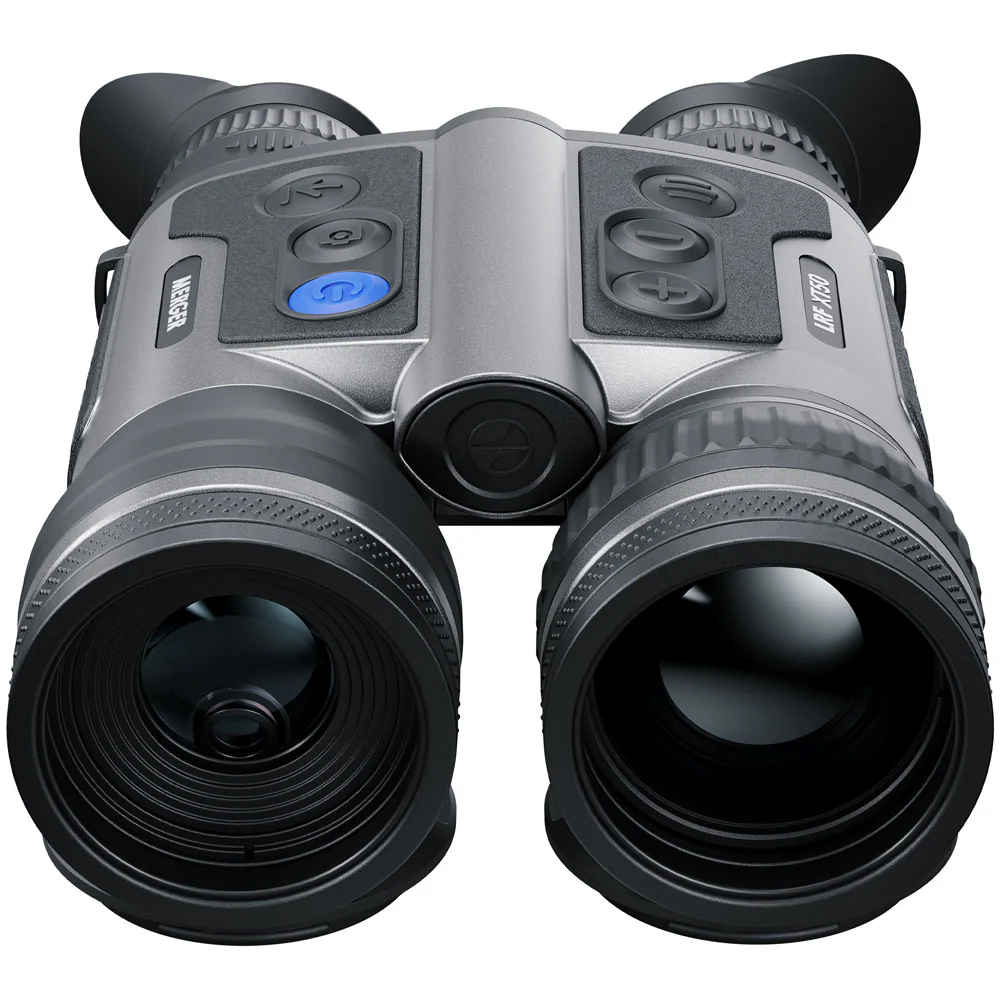
Pulsar Merger LRF XT50 comprehensive review
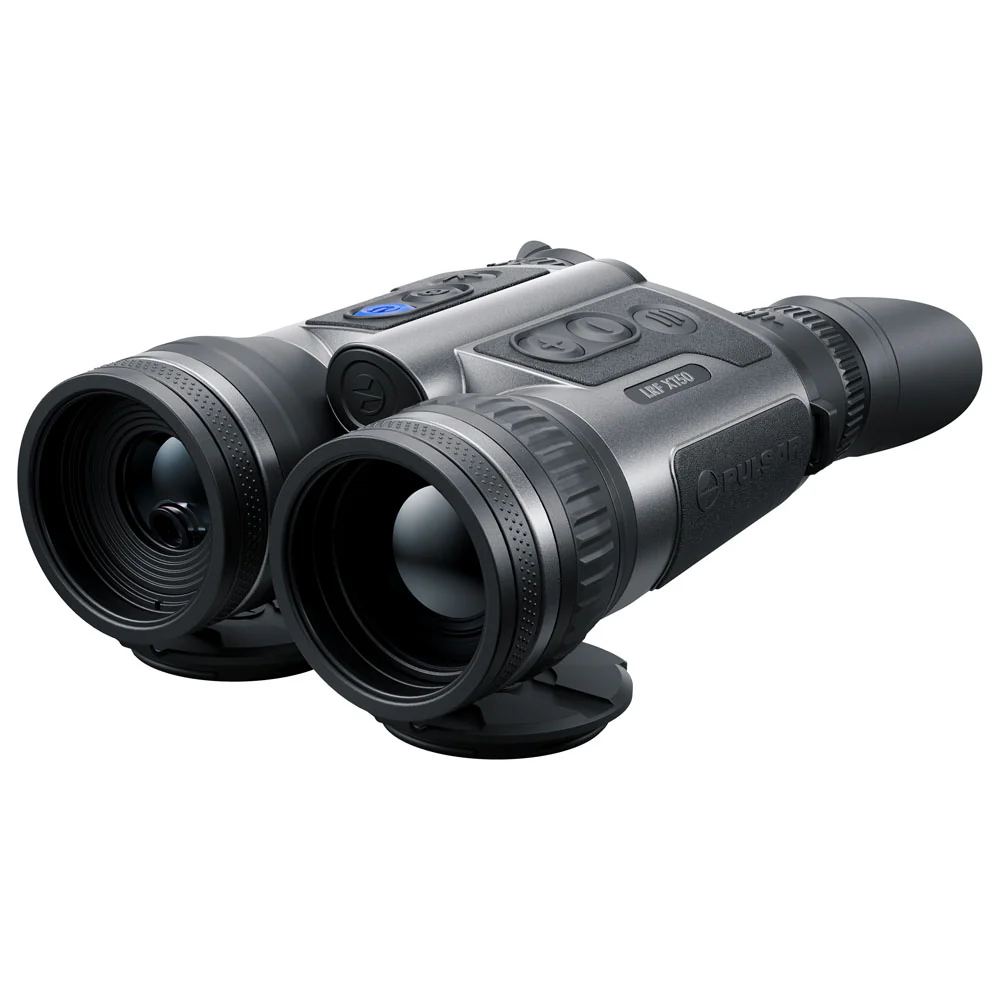
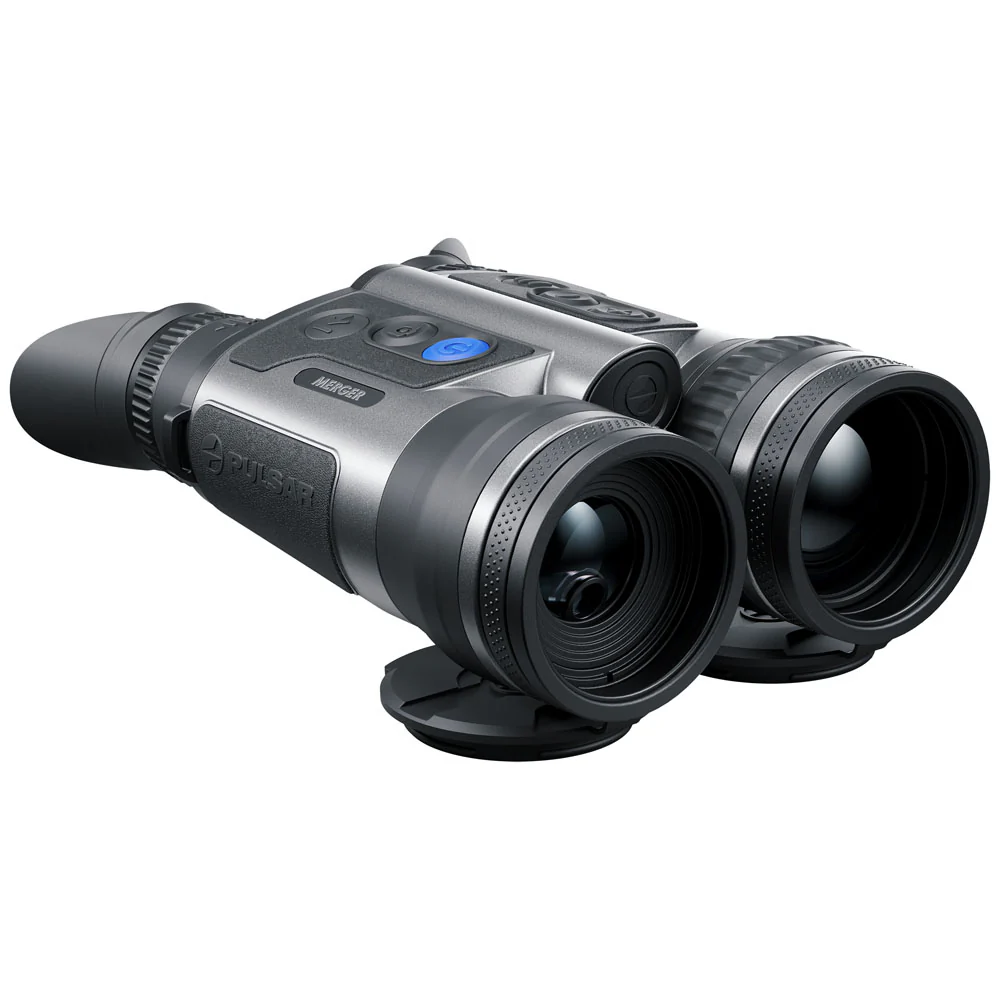
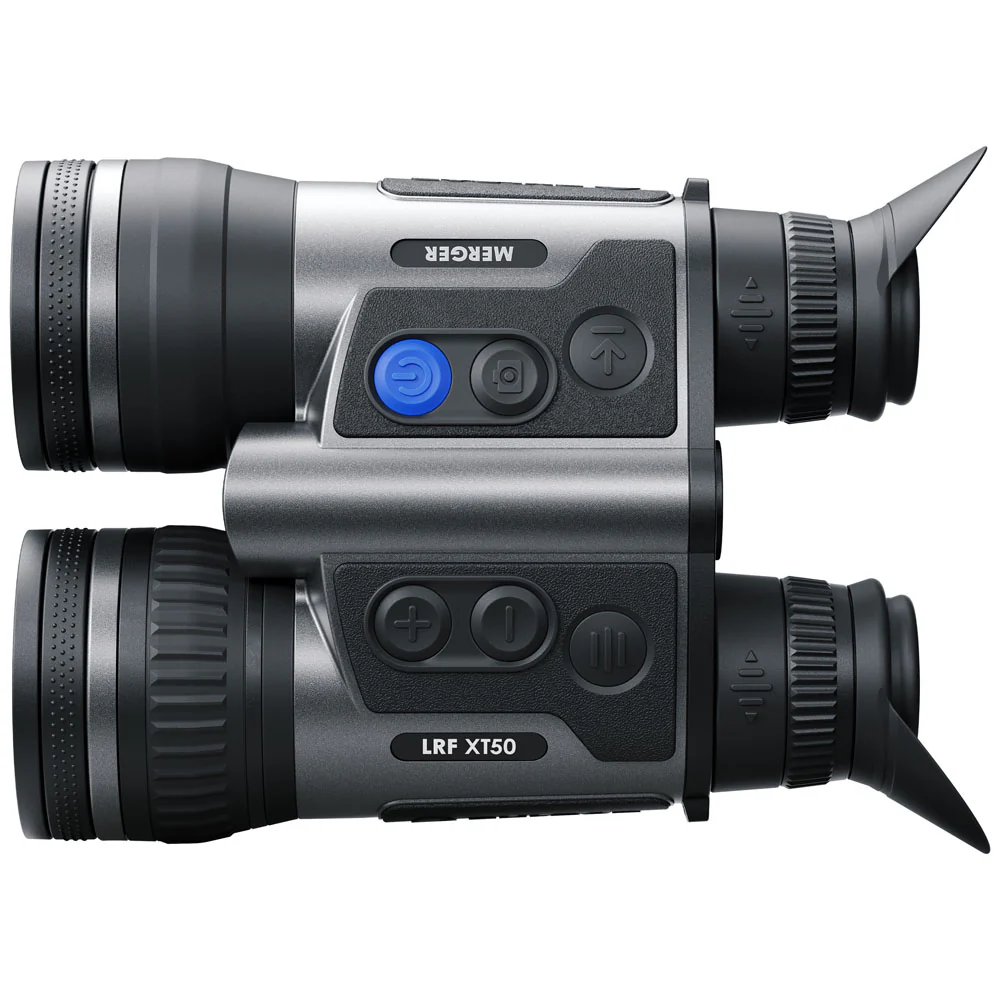
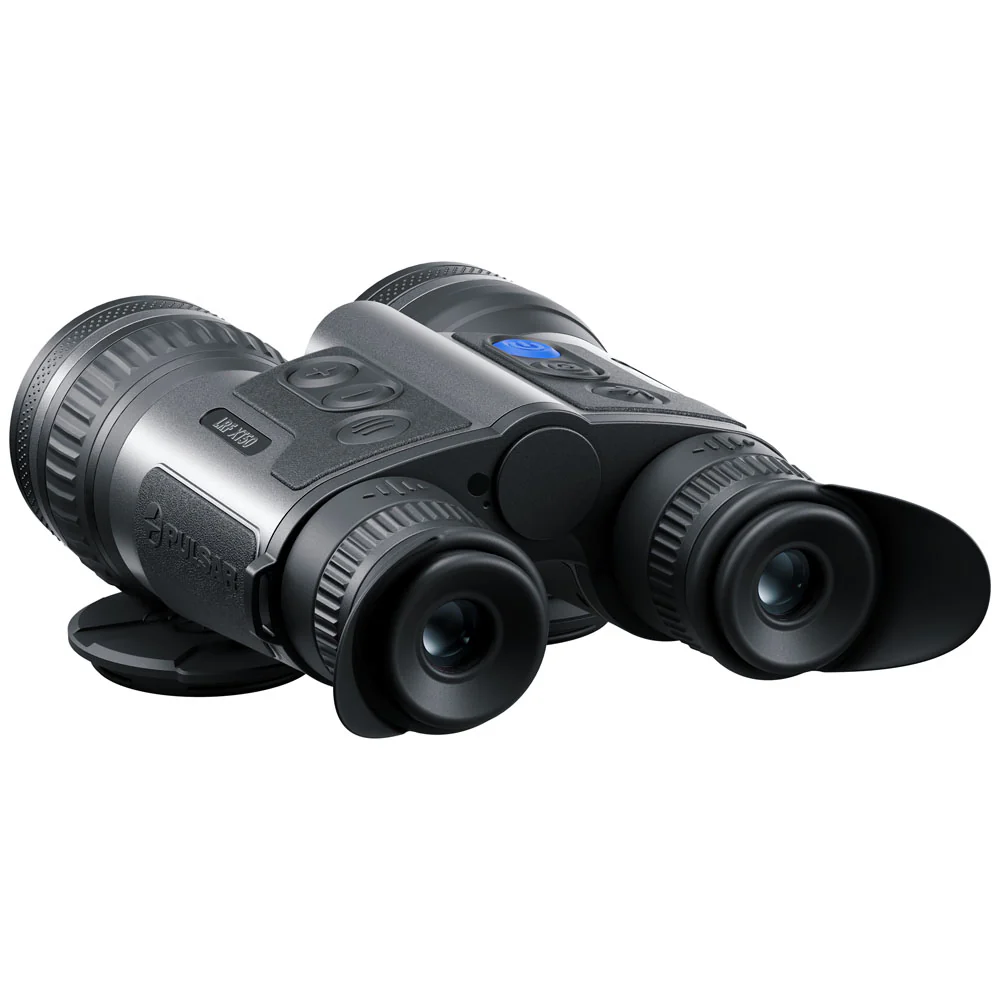
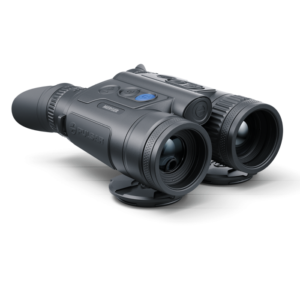
The Pulsar Merger LRF XT50 uses Pulsar’s highest-resolution thermal sensor in a classic two-eyed binocular body. That 1280×1024, 12-micron sensor gives extraordinary detail, so you not only detect a heat source but also read its shape at a distance. Two-eyed viewing reduces eye strain in long sessions, which matters when you scan for hours.
A wide 17.5-degree field of view and 2-16x magnification make finding and following game easy, and the large-format sensor keeps a strong field-of-view-to-zoom ratio even at 16x. Detection reaches 2,300 m. The European-made sensor holds a clean image in rain, fog, and humidity thanks to its sensitivity.
The built-in laser rangefinder reads beyond 1,500 m for quick distance calls, and a proximity sensor sleeps the unit when you lower it to save power. A dual battery system runs up to 8 hours; the 64 GB recorder captures photo and video; and the magnesium IPX7 housing shrugs off submersion. For serious spotting, the XT50 is the benchmark.
Key features and specifications
| Technical specification | Field performance value |
|---|---|
| Sensor resolution | 1280×1024, 12 microns (HD) |
| System NETD (thermal sensitivity) | Below 40 mK |
| Objective lens | 50 mm F/1.0 |
| Magnification | 2-16x |
| Field of view | 17.5 degrees (wide) |
| Detection range | Up to 2,300 m |
| Laser rangefinder | Built-in, over 1,500 m |
| Frame rate | 50 Hz |
| Battery life | Up to 8 hours (dual battery) |
| Protection | IPX7 waterproof |
Real-world hunting scenarios and use cases
On open fields at first light, the XT50 lets you sweep a wide area, pick up a fox or boar at range in HD, and range it in a second for the stalk. Its two-eyed comfort makes long watches easier than a monocular, which is why land managers and researchers use it for wildlife monitoring as well as hunting. Pair it with a thermal riflescope for the shot, since a binocular is for spotting, not aiming. (scan with a binocular, shoot with a scope)
What is the detection range of the Merger LRF XT50?
It detects a deer-sized heat source up to 2,300 m. That is detection, not identification, which happens closer. The HD 1280×1024 sensor stretches useful identification range further than lower-resolution binoculars, which is the main reason to choose the XT50 for long-range spotting.
Reviews
There are no reviews yet.