
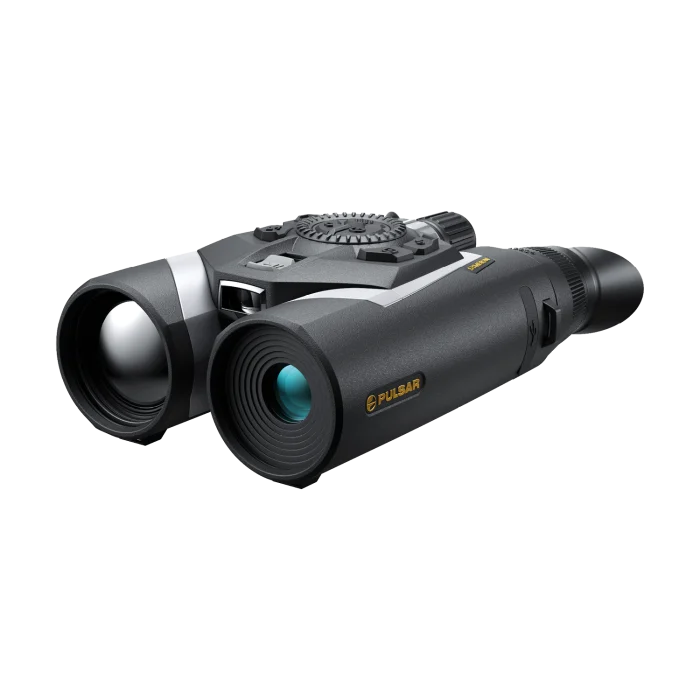
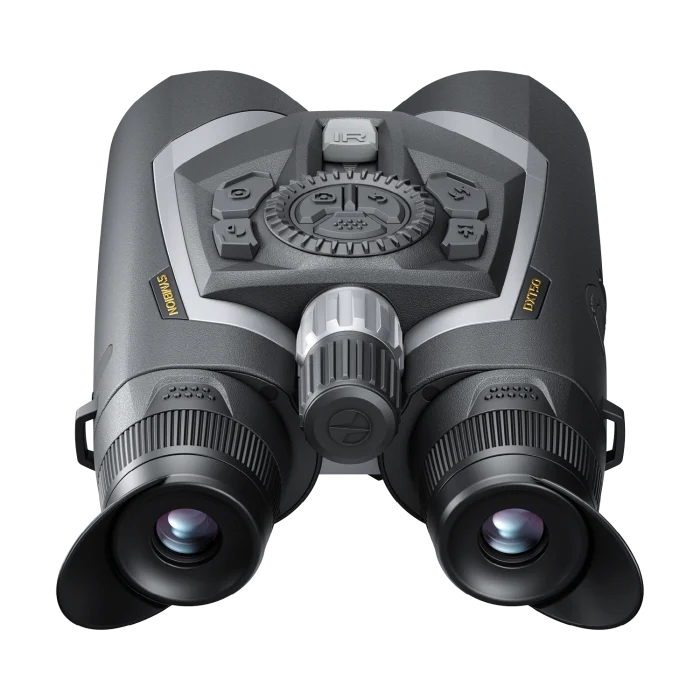
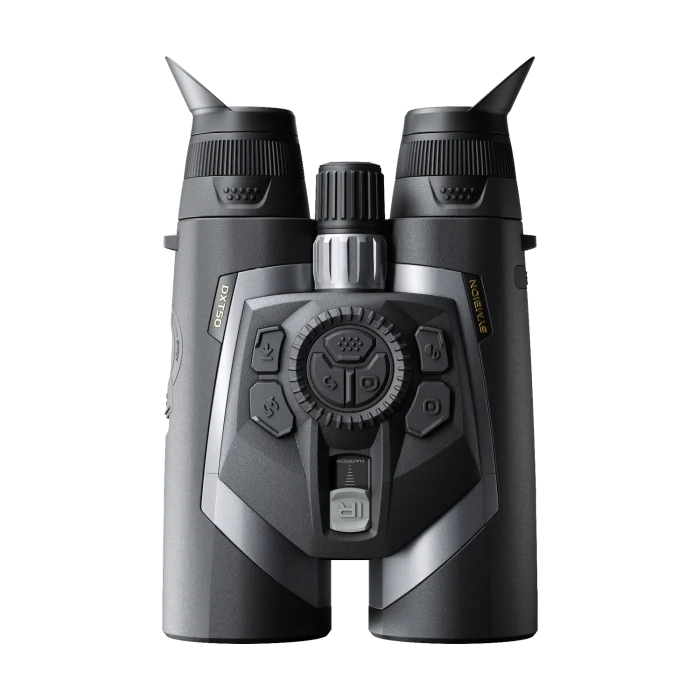
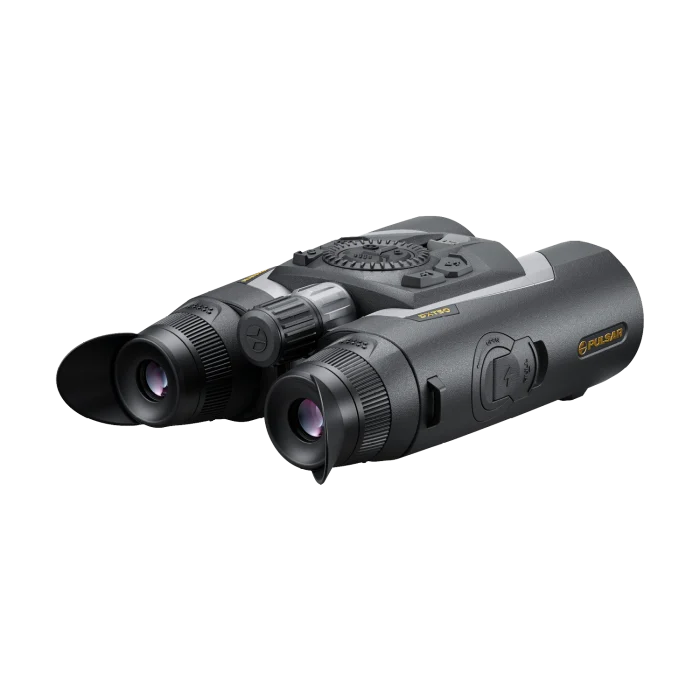
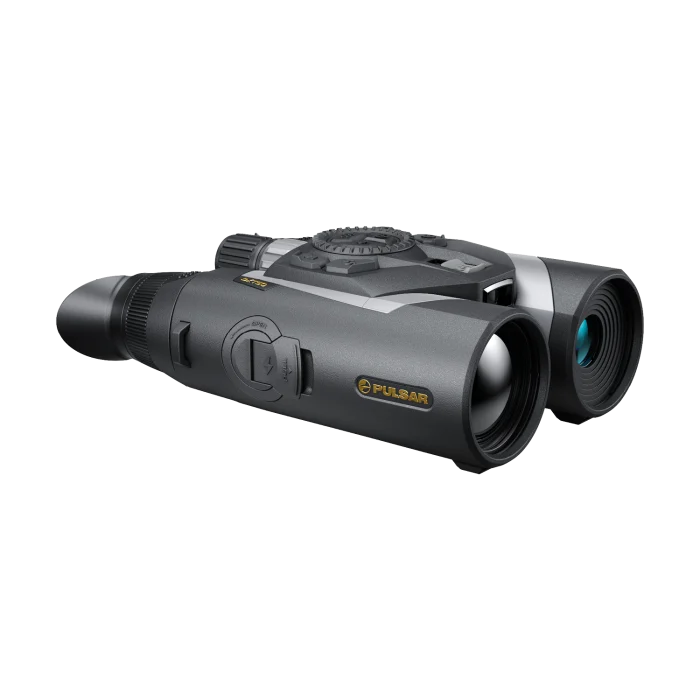
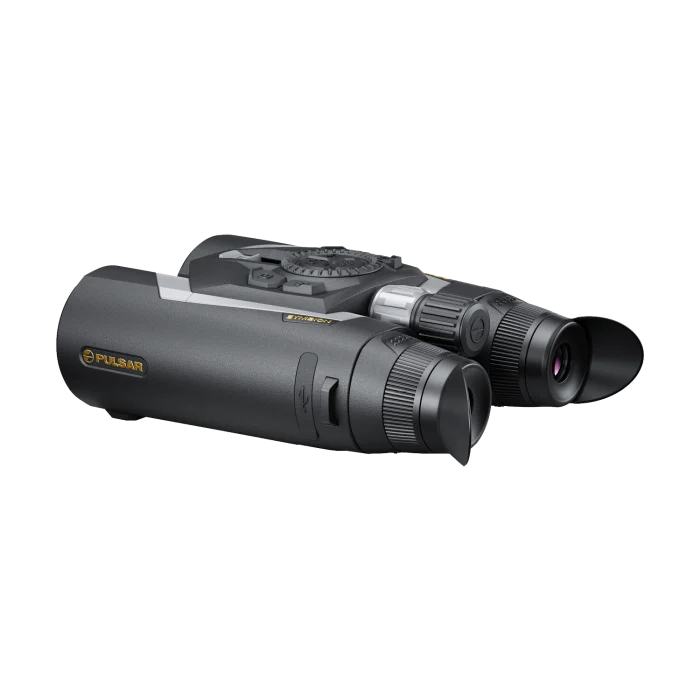
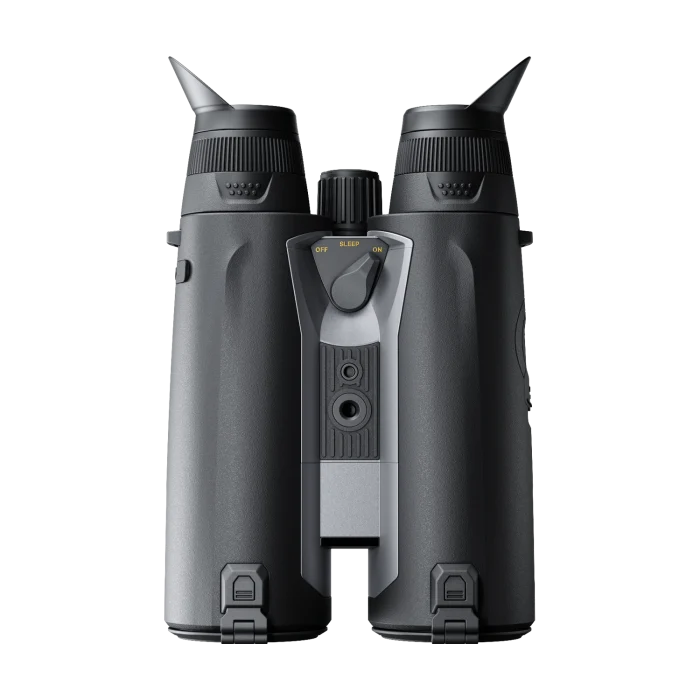
Pulsar Symbion LRF DXR50 comprehensive review
The Pulsar Symbion LRF DXR50 shares the Symbion multispectral platform but tunes it for reach and endurance. Its thermal channel uses a 640×480, 12 micron sensor with NETD below 35 mK, which favors clean thermal sensitivity in fog, rain, and dense vegetation. Where the DXT50 leads with HD resolution and a wide field, the DXR50 starts at 4x and zooms to 32x, putting you closer to distant targets from the first press.
The 4K digital channel and IR illuminator are still available, allowing you to confirm identity in color during the day and in clear black and white at night. The 905 nm laser rangefinder reads to 1,500 m with meter accuracy. Picture-in-Picture and multispectral overlay let you see heat and detail together.
The magnesium IP67 housing, AMOLED 1920×1080 display, 64 GB recorder, and dual APS5 batteries deliver slightly longer runtime than the DXT50, which is useful on long night sessions. For hunters and professionals whose work is long-range observation rather than wide scanning, the DXR50 is the smarter pick.
Key features and specifications
| Technical specification | Field performance value |
|---|---|
| Thermal sensor | 640×480, 12 microns |
| System NETD (thermal sensitivity) | Below 35 mK |
| Digital channel | 4K with IR illuminator |
| Objective lens | 50 mm F/1.0 |
| Thermal magnification | 4-32x (long-range) |
| Detection range | Up to ~2,300 m |
| Laser rangefinder | Built-in, up to 1,500 m (905 nm, ±1 m) |
| Frame rate | 50 Hz |
| Battery life | Up to ~8+ hours (2x APS5) |
| Protection | IP67, -25 to +50°C |
Real-world hunting scenarios and use cases
For long, patient observation over open ground, the DXR50 is the tool. Its 4-32x zoom and sensitive thermal sensor let you pick out and study a distant animal, while the digital channel confirms the species and the rangefinder pins the distance. Its longer runtime suits all-night watches for wildlife study, predator control at range, and security surveillance.
Should I choose the Symbion DXT50 or DXR50?
Choose the DXT50 for wide-field scanning and HD thermal detail at shorter to mid-range. Choose the DXR50 for long-range observation, higher zoom and longer battery life. Both are multispectral with the same 4K digital channel and 1,500 m range finder.
Reviews
There are no reviews yet.