
White Phosphor Night Vision: What It Actually Changes, and What It Does Not
White phosphor night vision uses a P45 phosphor screen that renders the intensified image in grayscale rather than the traditional green. It does not make the tube brighter, extend your range, or give you depth perception. What it does, reliably, is reduce eye fatigue across long sessions and let most users interpret shapes faster. Those are real benefits, and for many buyers they justify the cost. They are simply not the benefits the internet claims.
The confusion here is manufactured, and it is worth understanding why. White phosphor arrived in volume at the same time as a new class of high specification tube. Buyers compared a premium white tube against an older green tube, saw a dramatic difference, and credited the phosphor. Retailers repeated it. Now half the guides online tell you green resolves better detail, and the other half tell you white does, and neither side explains that they are describing different tubes rather than different screens.
This page separates the two variables. You will finish knowing exactly what the phosphor changes, what the tube changes, what the genuine price premium is on identical hardware, and which of the two suits how you actually operate. Every device referenced is stocked and ships from our Berlin warehouse, and we sell both phosphors in matched pairs, which is what lets us give you a straight answer.
Products by Category
-
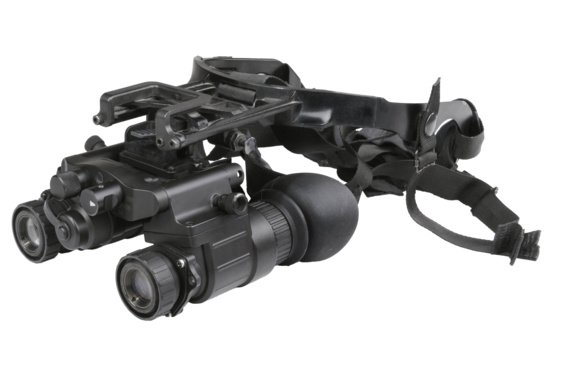
AGM 50 NW1 Dual-Tube Night Vision Goggle (NVG-50, Gen 2+ White)
$7 150.00 -
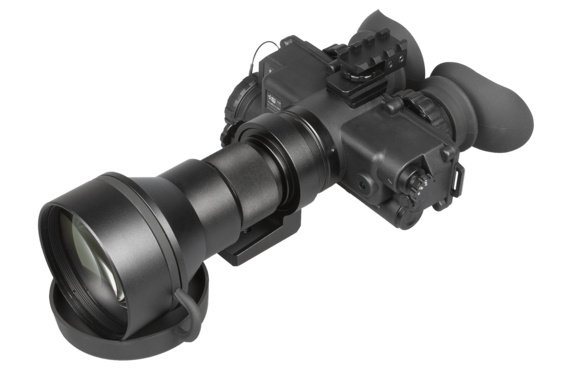
AGM Foxbat-5 NL1 Night Vision Binocular (Gen 2+ 5x, Green Phosphor)
$3 520.00 -
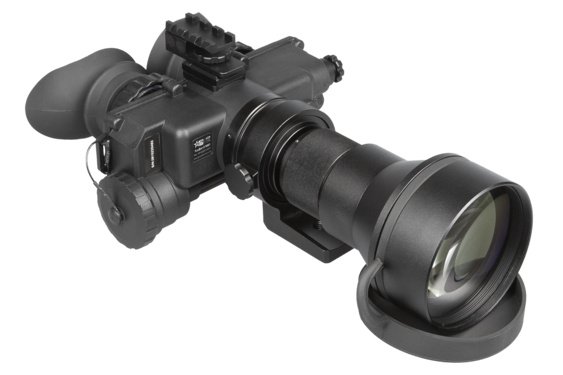
AGM Foxbat-5 NW1 Night Vision Binocular (Gen 2+ 5x, White Phosphor)
$3 630.00 -
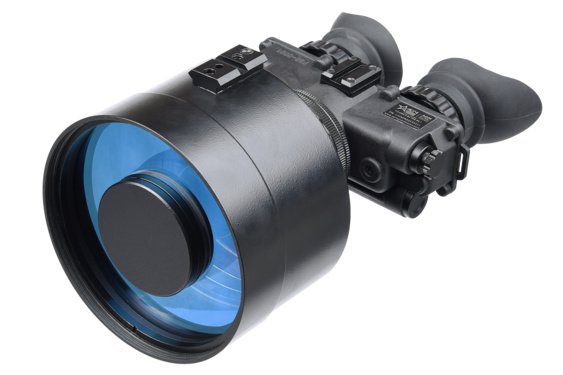
AGM Foxbat-8 NW1 Night Vision Binocular
$4 620.00 -
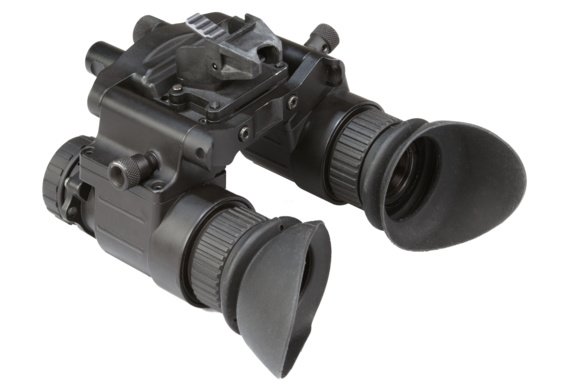
AGM NVG-50 AP Dual-Tube Night Vision Goggle (Gen 2+ Autogated Photonis)
$9 790.00 -
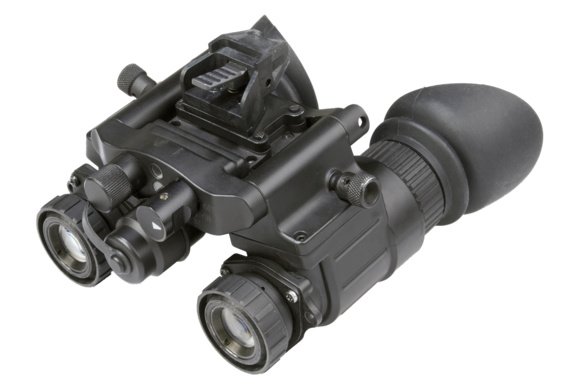
AGM NVG-50 APW Dual-Tube Night Vision Goggle (Gen 2+ Autogated Photonis White)
$10 560.00 -
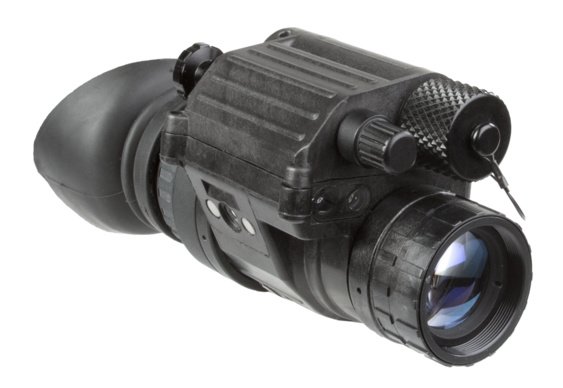
AGM PVS-14 NL1 Night Vision Monocular (Gen 2+ Level 1 Green, FOM 1400-1800)
$3 465.00 -
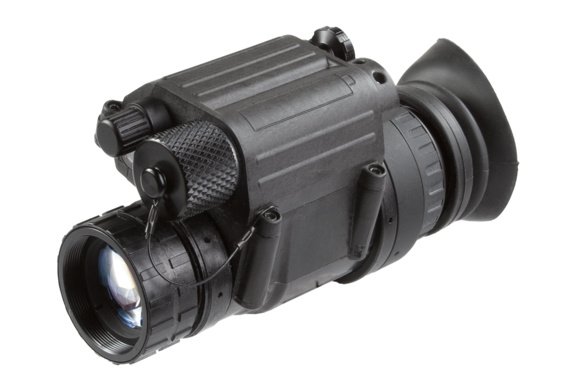
AGM PVS-14 NL2 Night Vision Monocular (Gen 2+ Level 2 Green)
$3 410.00 -
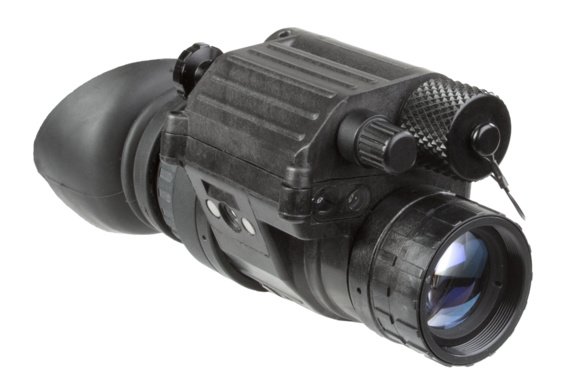
AGM PVS-14 NW1 Night Vision Monocular (Gen 2+ Level 1 White, FOM 1400-1800)
$3 685.00
What the Phosphor Screen Actually Does
The phosphor screen sits at the very end of the amplification chain. To see why that matters, follow the signal.
Ambient light enters the objective and strikes the photocathode, which emits electrons. Those electrons accelerate into the microchannel plate, where each one triggers a cascade that multiplies the signal by tens of thousands. The amplified electron cloud then strikes the phosphor screen, which converts electrons back into photons you can see.
Every gain in the system happens before the phosphor. By the time the electrons arrive, the amplification is finished. The screen’s only job is conversion, and the compound determines what color that conversion produces.
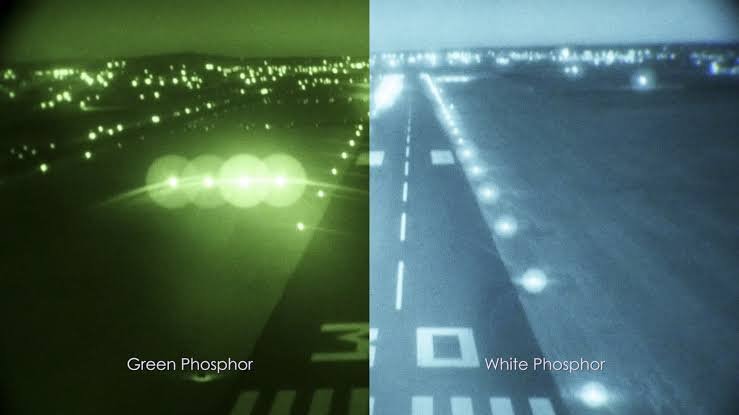
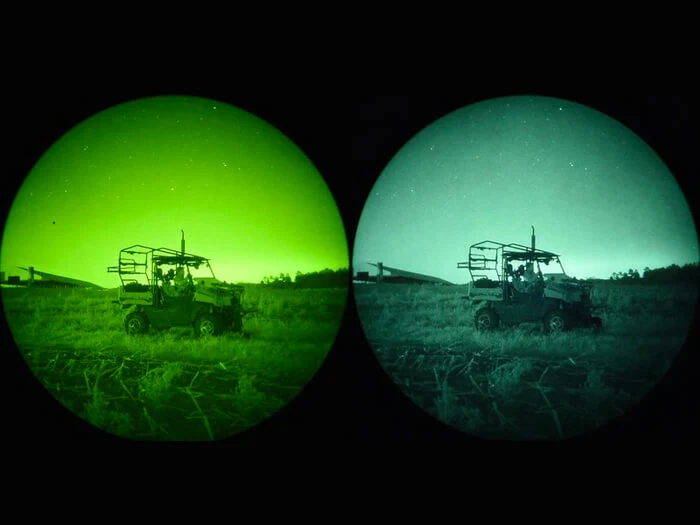
P43 green phosphor emits in a band near 555 nanometers, close to the peak of photopic human vision. This is the classic night vision image.
P45 white phosphor emits across a broader band, producing monochrome grayscale.
That is the entire mechanical difference. Anyone telling you the phosphor changes brightness, gain, battery consumption, or detection range is describing something the component does not do. If you want the full chain explained properly, our night vision systems guide walks through each stage.
The Claims, Tested
Here is every common claim about white phosphor, with a straight verdict.
| Claim | Verdict | Why |
|---|---|---|
| Brighter image | False | Brightness is set by plate gain before the screen |
| Longer detection range | False | Range is a function of photocathode sensitivity and objective aperture. |
| Better depth perception | False | Depth requires two tubes, not a different screen. |
| Uses less battery | False | Power is drawn by the photocathode and plate. |
| More natural looking image | True | Grayscale maps closer to how you read a daylight scene |
| Less eye fatigue over hours | True | Broadly reported and consistent across long sessions |
| Faster shape interpretation | True for most users | Monochrome edges read faster than green tonal shifts. |
| Green resolves the finest detail better. | Marginally true | Eye acuity peaks in green, though the margin is small. |
| White costs more. | True, but far less than claimed | On matched Gen 2+ pairs, the gap is roughly €100 to €250 |
The two “marginally true” and “true for most users” entries are where the honest debate lives. Everything above them is a myth that has been repeated until it sounds like consensus.
Why the Internet Cannot Agree
If you have read three guides and got three answers, this is why.
White phosphor screens became common in the same period that filmless high specification tubes reached the market. Those tubes carry substantially higher figures of merit than the previous generation, and manufacturers predominantly offered them in white.
So the comparison people actually ran was a modern high FOM white tube against an older lower FOM green tube. White won convincingly. The conclusion drawn was that white phosphor is sharper. The correct conclusion was that a 2,400 FOM tube outperforms a 1,600 FOM tube, which would have been true in any color.
You can still see this distinction in retailer listings today. A premium white phosphor monocular and a mid-grade green phosphor monocular are priced differently when placed side by side, and consumers interpret the price gap as a phosphor tax, even though most of it is due to tube grade.
The test that settles it: compare two devices at the same figure of merit, one green and one white. Do that and the difference collapses to comfort and interpretation speed. The comparison says nothing about range and nothing about brightness.
That comparison is difficult to run in most of the market because few retailers stock genuinely matched pairs. We do, across the range, which is the basis of the next section.
The Real Price Premium, on Matched Hardware
Every guide on this subject says white phosphor costs more. Almost none says how much, because doing so requires holding identical devices in both phosphors.
These are the same model, same generation, same figure of merit band of 1,400 to 1,800, differing only in phosphor.
| Model | Green | White | Difference |
|---|---|---|---|
| AGM Wolf-14 monocular | €2,100 | €2,200 | €100 |
| AGM Foxbat-5 binocular | $3,520 | $3,630 | |
| AGM Wolf-7 Pro goggle | €2,900 | €3,150 | €250 |
On like-for-like Gen 2+ hardware, white phosphor costs between €100 and €250. That is a comfort upgrade priced like a comfort upgrade, and for a device you may wear for hours, it is close to trivial compared to the base cost.
Where you do see thousands of differences, you are looking at a tube grade change, not a phosphor change. Read the figure of merit, not the color.
Our White Phosphor Range
Seven devices across three form factors, all genuine Gen 2+ image intensifier hardware with a figure of merit of 1,400 to 1,800.
White phosphor monoculars
The most versatile entry point. A single tube monocular can be hand-held, helmet-mounted, or placed behind a day scope on a rifle. One eye stays behind the tube while the other retains natural dark adaptation, which is a genuine operational advantage no goggle offers.
The AGM Wolf-14 NW1, at €2,200, is the affordable route into white phosphor. The AGM PVS-14 NW1 at $3,685 is the full specification version in the reference form factor, with the mounting ecosystem to match. Browse the full night vision monocular range.
White phosphor binoculars
Two tubes, magnification, and genuine depth perception make for a far less fatiguing experience over a long watch. The Foxbat-5 NW1 at 5x and the Foxbat-8 NW1 at 8x are for distance observation. Note the trade: magnification narrows the field of view and amplifies hand tremor, so 8x wants a rest. See the binocular range.
White phosphor goggles, including dual tube
Head worn, hands free, for moving rather than observing. Two configurations here, and the distinction matters more than the phosphor does.
The AGM Wolf-7 Pro NW1 at €3,150 is biocular: one tube split to two eyepieces. Comfortable two eyed viewing, no depth.
The AGM NVG-50 NW1 at $7,150 is a genuine white phosphor dual-tube goggle. Two independent tubes, one per eye, producing real stereoscopic depth. The NVG-50 APW at $10,560 adds autogated Photonis tubes for operating near artificial light.
If you are weighing dual tube against biocular, that decision deserves its treatment, and we have given it one: see dual tube night vision explained. The complete selection of night vision goggles covers both.
Where White Phosphor Genuinely Wins
Four scenarios where the grayscale image measurably helps.
Long sessions. Anything past about ninety minutes. Green tonal shifts fatigue. The eye, in a way, is monochrome, and the effect compounds across a night.
Reading terrain relief. Grayscale renders shadow and gradient closer to how you read a daylight scene, so ground contour is easier to interpret. This effect is what people mistake for depth perception. It is not depth, but it is genuinely useful.
New users. The learning curve is shorter. Most people interpret a monochrome image immediately, whereas green requires acclimatization.
Moving between device and naked eye. Recovery from a monochrome image is generally reported as quicker than from green.
Where Green Still Holds Up
Finest detail. Eye acuity peaks in the green band, so green tubes hold a slim edge on the very finest resolution. The margin is small enough that the figure of merit matters far more, but it is still real.
Very dark conditions. Some experienced users report that green holds usable contrast marginally better at the extreme. This issue is. This issue is contested and largely subjective.
Familiarity. If you have run green for years and read it fluently, switching costs you a period of relearning for a comfort benefit you may not need.
Cost: €100 to €250 across our matched pairs. Small, but not nothing.
Our green phosphor night vision devices carry the NL designation and sit alongside the white units in every category.
Choosing: A Working Method
Step one. Set your figure of merit floor first. Insist on a minimum of 1,400 m and a stated number. This decides performance. Refuse any listing that omits the fee.
Step two. Pick your form based on how you operate. Moving through terrain requires a dual-tube goggle. Static observation at a distance wants binoculars. Everything else, or if you’re undecided, will want a monocular.
Step three. Estimate your session length. Consistently going past ninety minutes points to white. Short scans either way.
Step four. Choose phosphor last, and treat it as comfort. White if you are new, if sessions run long, or if you want the shortest learning curve. Green if you already read it fluently or want the last fraction of fine detail.
Step five. Confirm export eligibility before ordering.
Notice that phosphor is step four of five. It is genuinely the least consequential decision on this list, contrary to the impression most of this market conveys.
For model level recommendations across the range, our night vision buying guide names specific units against specific uses.
A Note for European Buyers
Most writing on this subject is American, and it assumes access to Gen 3 filmless tubes from US manufacturers. That assumption does not hold here.
The US-made Gen 3 falls under export control and is, in practice, unavailable to most European civilian buyers. The live choice in Europe is between Gen 2+ green and Gen 2+ white, both of which we stock, both with a figure of merit of 1,400 to 1,800.
Gen 2+ image intensifier devices are themselves controlled goods in many jurisdictions. Our practice is to confirm we can lawfully ship to your destination before taking payment. If your country prohibits imports, we will inform you and will not process the order. Send us your country, and we will confirm within a working day: contact us.
Frequently Asked Questions
Is white phosphor night vision better than green?
Not in performance terms. Range, brightness, and resolution are set by the tube, not the phosphor. White is more comfortable over long sessions and faster to interpret for most users. Green holds a slim edge on the finest detail. Choose the figure of merit first and the phosphor last.
Why does white phosphor look sharper in comparisons?
Usually, this is because the white device has a higher figure of merit than the other tube. White phosphor became common at the same time as high specification filmless tubes, so buyers compare a premium white tube against an older green tube and credit the phosphor. Compare at matched FOM, and the difference is comfort, not capability.
Does white phosphor give better depth perception?
No. Depth perception requires two independent tubes producing binocular disparity. A monocular has no phosphor at all. What white improves is perceived contrast, which makes terrain relief easier to read. That gets mistaken for depth.
How much more does white phosphor cost?
On matched Gen 2+ hardware, the cost is roughly €100 to €250. Our Wolf-14 pair differs by €100, the Foxbat-5 pair by $110, and the Wolf-7 Pro pair by €250. Larger gaps you see elsewhere reflect tube grade rather than phosphor.
What is WPT night vision?
White phosphor technology is a retailer term for devices using a P45 white phosphor screen. It describes the screen compound, not a generation or a performance tier.
What is the difference between P43 and P45?
P43 is the green phosphor compound emitting near 555 nanometers. P45 is the white phosphor compound emitting across a broader band to produce grayscale. Both sit at the same point in the amplification chain, and neither affects gain.
Does white phosphor use more battery?
No. Power is consumed by the photocathode and the microchannel plate, both upstream of the screen. Phosphor choice has negligible effect on runtime.
Can I get white phosphor in a dual-tube goggle?
Yes. The AGM NVG-50 NW1 is a white phosphor dual-tube goggle, and the NVG-50 APW adds autogated Photonis tubes. Both provide genuine depth perception through two independent channels.
Should I switch from green to white?
Only if fatigue from long sessions is an actual problem for you. If you read green fluently, switching costs you a relearning period for a comfort benefit you may not need. If you are buying your first device, start with white.
Where to Go From Here
- Understand the technology: night vision systems explained
- Model recommendations: night vision buying guide
- Compare against thermal: thermal vs. night vision
- Browse: monoculars · binoculars · goggles · full Gen 2+ range · AGM Global Vision
Still unsure whether the phosphor premium is worth it for how you operate? Talk to us. We stock both in matched pairs, so we have no reason to push you toward either, and we verify every unit against its datasheet before it ships.