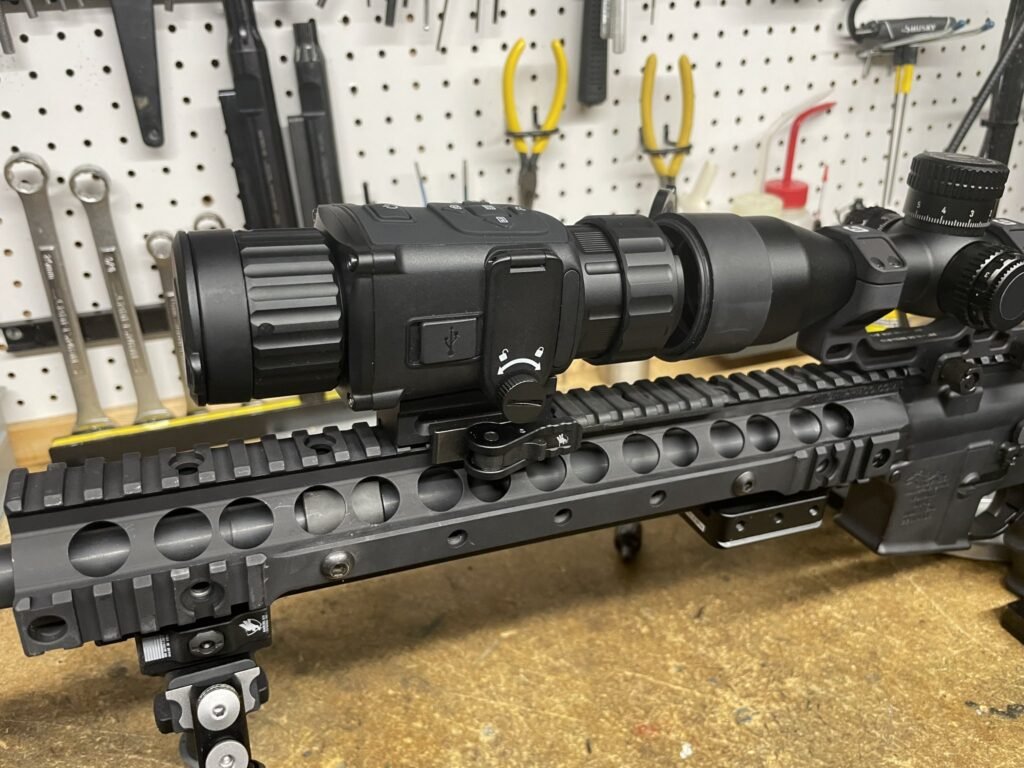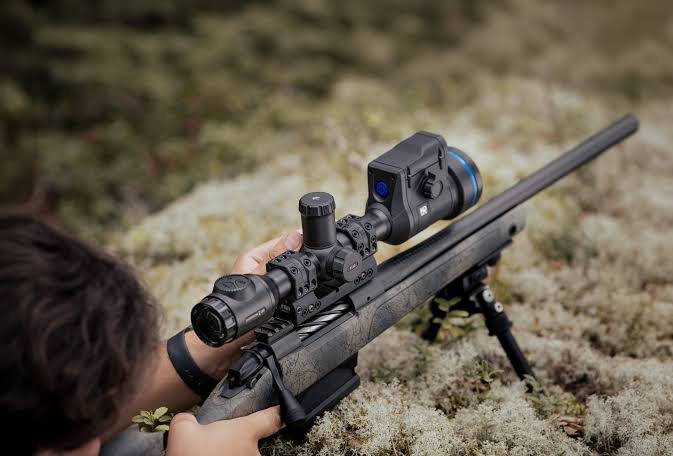
Thermal scope buying guide
Best Thermal Scope for the Money: complete guide (2026) The best thermal scope for the money is the one that gives you the sensor, sensitivity, and range for your actual shooting needs without paying a legacy brand’s markup for capability you will never use. Thermal sights run from about €1,500 to well past €10,000, and the gap between good value and wasted money is wider in this category than almost any other in optics. This guide explains what actually drives value, what each price band buys you, and how the ThermTec range compares. New to thermal? Start with the complete guide to thermal imaging for hunting. Otherwise, browse the thermal rifle scope range or the ThermTec brand page. What makes a thermal scope good value The best thermal scope for the money is neither the cheapest nor the one with the longest spec sheet. It is the closest match between what a scope does well and what you actually do at night. A cheap thermal rifle scope with a weak sensor costs you in missed opportunities and misjudged shots, which is expensive in a way that never appears on the receipt. An expensive scope loaded with features you never touch is money that would have bought a better monocular or a season’s worth of ammunition. The sweet spot sits where the core specifications match your typical distance and quarry, from a manufacturer that prices honestly. That last point matters more than buyers expect. Two scopes with near-identical sensors, lenses, and displays can differ by €1,500 purely on brand. ThermTec has built its position by putting 12µm sensors, low NETD, and integrated rangefinders into scopes priced well below the established names, which is why they dominate any serious answer to the best thermal scope for the money question. How to choose a thermal scope Seven specifications determine whether a scope is the best thermal scope for your specific needs. These specifications are roughly ordered by how much they affect your night: Sensor resolution Resolution determines how far out you can place a shot with confidence rather than merely see that something is there. A 384×288 sensor handles mid-range work well and keeps the price honest. A 640×512 sensor roughly doubles linear detail, which shows when you need to confirm what you are looking at before committing. Our explainer on 384 versus 640 thermal sensors covers the trade in detail. Spend here before anywhere else. Thermal sensitivity (NETD) NETD is the smallest temperature difference the sensor can resolve, in millikelvins. Lower is better: under 20mK is strong, under 15mK is pro-grade. It governs image quality in fog, drizzle, and humidity, which describes a large share of the European hunting season. On a wet night, a sub-15mK 384 sensor will frequently outperform a 640 sensor with mediocre sensitivity. Rangefinder and ballistics A built-in laser rangefinder gives you exact distance, and a ballistic calculator converts that into a corrected aim point for bullet drop. Beyond your comfortable holdover range, that combination makes an ethical shot possible rather than merely a lucky one. If all your shooting happens at short, known distances, a thermal scope with a laser rangefinder is a feature you can skip and save several hundred euros. Field of view and magnification A wider field helps you find and follow game; higher magnification helps you identify and aim at a distance. They pull against each other, which is why dual-field-of-view scopes exist. Do not over-magnify: a smaller field makes tracking a moving animal genuinely harder, and digital zoom beyond the sensor’s resolution adds size without adding information. Recoil rating A thermal scope must hold zero under recoil, or it is worthless. Check the rating against your caliber. ThermTec’s current scopes are rated to 6,000 J, which covers common centerfire cartridges comfortably. Display quality The sensor captures detail; the display decides whether you see it. A 1024×768 AMOLED is solid. The 2560×2560 OLED on the Oryx is a genuine step up, and over a long session it reduces eye fatigue in a way that is difficult to appreciate from a spec sheet. Battery life All-night sessions need endurance. Look for around 18 hours, ideally with replaceable packs so you can swap in the field rather than stopping to charge. What each price band buys you Band Price What you get ThermTec models Entry €1,690-2,290 384 or 640 sensors, ~18 mK, basic or no ranging Ares 2.0 360, Ibex 335L Mid €2,290-2,690 640 sensors, ~18 mK, 1,000-1,200 m LRF Ares 2.0 660L, Vidar 2.0 650 Premium €2,690-3,690 640 at ≤15mK, high-res display, ranging, shutterless Vidar 2.0 650L, Oryx If you are hunting for the best thermal scope for the money, the steepest value curve is between entry and mid. Moving from a 384 sensor without ranging to a 640 with a rangefinder is roughly €600 and transforms what the scope can do. The step from mid to premium buys real quality, particularly in low contrast, but the improvement per euro is smaller. The ThermTec thermal scope range compared Model Sensor NETD Lens LRF Display Price Ibex 335L 384×288 <18 mK 35 mm 1,000 m 1600×1200 €2,290 Ares 2.0 384 / 640 ≤18 mK Dual 20/60 mm 1,000 m (L) 1024×768 €1,690-2,690 Vidar 2.0 640×512 ≤18 mK 50 mm 1,200 m (L) 1024×768 €1,990-2,990 Oryx 640×512 ≤15 mK 35 / 50 mm F0.9 1,200 m 2560×2560 €2,990-3,690 Lightweight value: ThermTec Ibex 335L The Ibex 335L is the quiet value pick. At roughly 700 g, it handles like a day scope, which makes it the easiest transition for anyone moving to thermal for the first time, and it still carries a sub-18 mK sensor, a 1,000 m rangefinder, and a 1600 x 1200 display. For hunters who walk their ground, low weight is worth more than an extra 200 m of detection range. Versatile mid-range: ThermTec Ares 2.0 The Ares 2.0 is built around a dual 20/60 mm field of view, so one scope scans wide and engages narrow. That flexibility suits anyone who moves