
Thermal vs Night Vision: Which One Do You Actually Need?
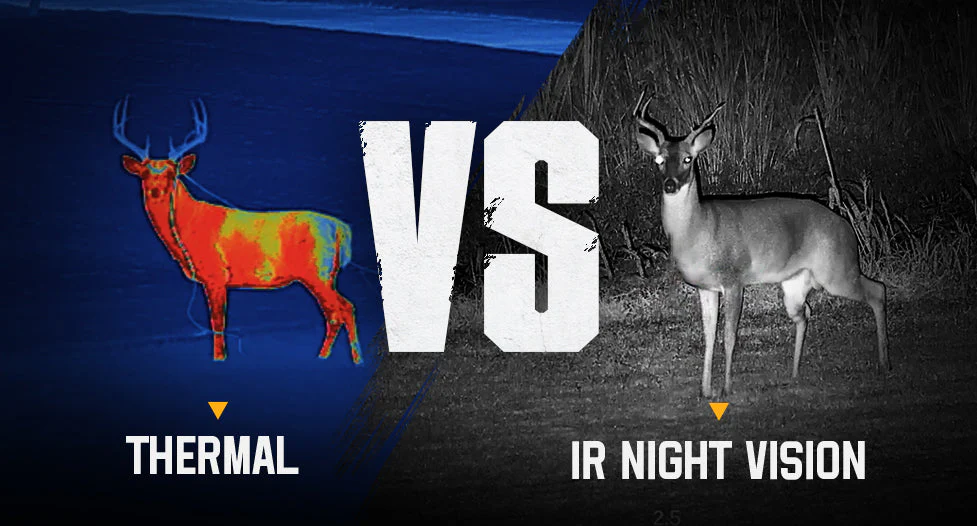
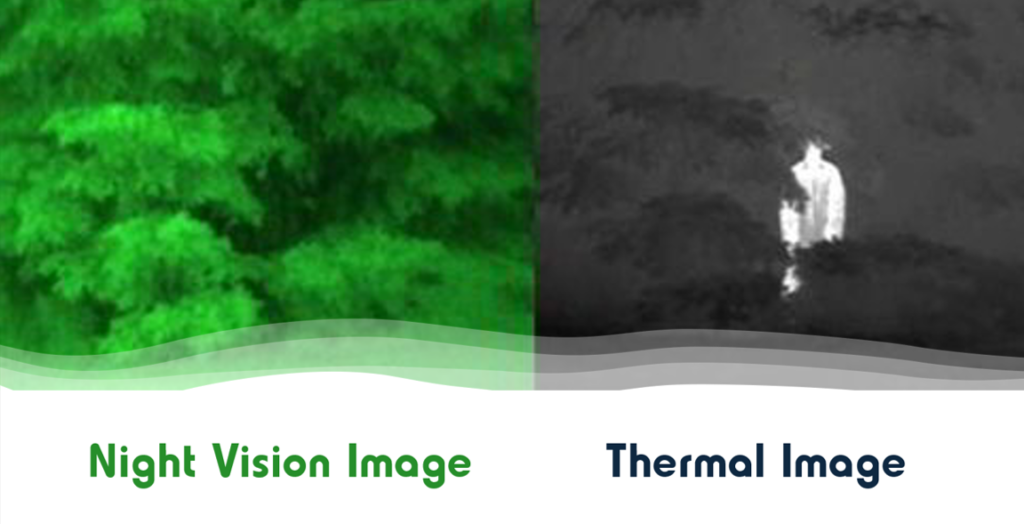
Thermal imaging detects heat, while night vision amplifies light. That single difference decides everything else: thermal finds game in complete darkness, and night vision gives you a more detailed, natural image when there is some light to work with. If you only remember one thing about thermal vs night vision, remember that thermal is the better tool for finding an animal and night vision is the better tool for identifying it.
This guide explains how each one works, where each wins, and which you should buy first. For the wider picture, see our complete guide to thermal imaging for hunting.
What is the difference between thermal and night vision?
The difference comes down to what each device uses to build an image. Thermal reads the heat that warm bodies give off, so it needs no light at all. Night vision collects and amplifies the small amount of light already in a scene, so it needs at least some starlight, moonlight, or infrared light to work.
How thermal imaging works
A thermal optic uses a sensor that detects infrared radiation, the heat emitted by animals, people, and machinery, and turns temperature differences into a picture. A warm boar stands out brightly against cool ground, even in pitch dark, fog, or light cover. Thermal cannot be blinded by a bright lamp, and it works in daylight too. What it does not provide you is fine visual detail, so it shows a clear heat shape rather than the exact markings of an animal.
How night vision works
Night vision uses an image intensifier tube that takes faint ambient light, multiplies it many thousands of times, and shows it on a small screen as a bright green or white-gray image. The result looks natural and detailed, close to looking at the world through a dim window, which makes recognizing an animal or a precise aiming point easier. The catch is that it needs some light. On a truly dark, overcast night, it relies on an infrared illuminator, and a bright light source can wash out or damage the tube.
Thermal vs night vision: side-by-side comparison
| Feature | Thermal imaging | Night vision |
|---|---|---|
| Source of image | Heat (infrared radiation) | Amplified ambient light |
| Works in total darkness | Yes, needs no light | Needs some light or an IR illuminator |
| Finds hidden or camouflaged game | Excellent | Limited |
| Image detail for identification | Heat shapes, less detail | Natural and detailed |
| Sees through light fog and smoke | Yes | No |
| Daytime use | Yes | No, bright light can damage tubes |
| Best role | Detection | Identification |
| Typical entry price | From around €420 | From around €2,000 for quality tubes |
When thermal wins
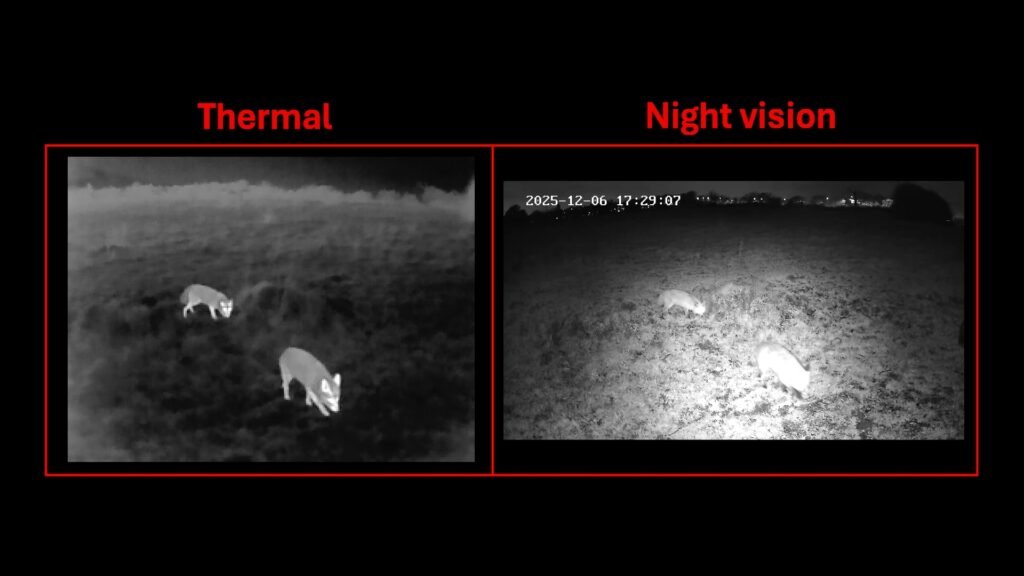
Thermal wins whenever finding the animal is the hard part. It shows heat through darkness, light brush, long grass, and reeds, so a boar you would walk straight past appears as a bright shape on the screen. It lets you sweep a whole field in seconds, works in fog and drizzle, and throws no light to spook wary game. For night hunting where detection comes first, thermal is the stronger choice, which is why most hunters reach for a thermal monocular first.
When night vision wins
Night vision wins when you need a natural, detailed image to identify or confirm a target. It shows you an animal much as your eye would in low light, so you can read antlers, distinguish a fox from a cat, or place a precise shot. It also tends to give a more relaxed, true-to-life view for moving through terrain. On nights with moon or starlight, a quality night vision device such as a Gen 2+ AGM PVS-14 gives detail that thermal cannot match.
Which should you buy first for hunting?
Buy thermal first. Finding game is the hardest part of night hunting, and thermal solves it better than anything else at a lower entry price than quality night vision. A 384 thermal monocular detects and begins to identify game at realistic ranges and works on any rifle setup. Add night vision later if your hunting needs the extra identification detail in the dark or if local law favors it.
This is our honest view after years of selling both. Hunters who buy night vision first often come back for thermal once they realize how much game they were missing. Hunters who start with thermal rarely regret it.
Can you use thermal and night vision together?
Yes, and the best night-hunting setups often use both. A common approach is to scan with a thermal monocular to find game, then shoot with a night vision or day scope once you have identified the target. Some hunters run a thermal clip-on on the rifle and carry a night vision monocular for navigation. Combining the two gives you thermal’s detection and night vision’s detail in one workflow. We explain the wider device choice in thermal monocular vs scope vs clip-on.
What about digital night vision?
Digital night vision is a third option that sits between the two. Instead of an image-intensifier tube, it uses a digital sensor to capture low light, usually paired with an infrared illuminator for dark nights. It costs less than quality tube night vision and can record video, but it does not match good analog night vision in the darkest conditions, and like all night vision, it cannot read heat through cover the way thermal can. For a hunter on a budget who wants a detailed image, digital night vision is worth knowing about, but it does not replace thermal for finding game.
Frequently asked questions
Is thermal better than night vision?
Neither is simply better; they do different jobs. Thermal is better at detecting game because it reads heat through darkness and cover and needs no light. Night vision is better at identifying game because it gives a natural, detailed image. For finding animals at night, thermal wins. When it comes to confirming exactly what you are looking at, night vision often wins. Many serious hunters own both and use them together.
Can thermal imaging work in daylight?
Yes. Thermal reads heat, not light, so it works day or night, and sunlight will not damage the sensor. Contrast is lower in the heat of the day when the ground warms up, so the strongest thermal images come at dawn, dusk, and through the night. Night vision, by contrast, cannot be used in daylight because bright light can damage the tube.
Does night vision work in complete darkness?
Only with help. Night vision needs some light, so on a truly dark night under heavy cloud cover, it relies on an infrared illuminator, which lights the scene with light the tube can see but the eye cannot. Thermal needs no illuminator at all, which is one of its biggest advantages in genuinely dark conditions.
Which is cheaper, thermal or night vision?
Entry-level thermal is cheaper to get into, starting from around €420 for a basic model, while high-quality night vision usually starts from around €2,000. At the top end, both can run into the thousands. For most hunters, a capable thermal is less expensive than night vision of equivalent quality.
Quick facts: thermal vs night vision
| Thermal uses | Heat (infrared) – needs no light |
|---|---|
| Night vision uses | Amplified ambient light or IR |
| Thermal is best for | Detecting and finding game |
| Night vision is best for | Identifying and confirming targets |
| Total darkness | Thermal, yes; night vision needs IR |
| Daytime | Thermal yes, night vision no |
| Buy first for hunting | Thermal, usually a 384 monocular |