The Best Thermal Scope for Hunting: How to Choose.
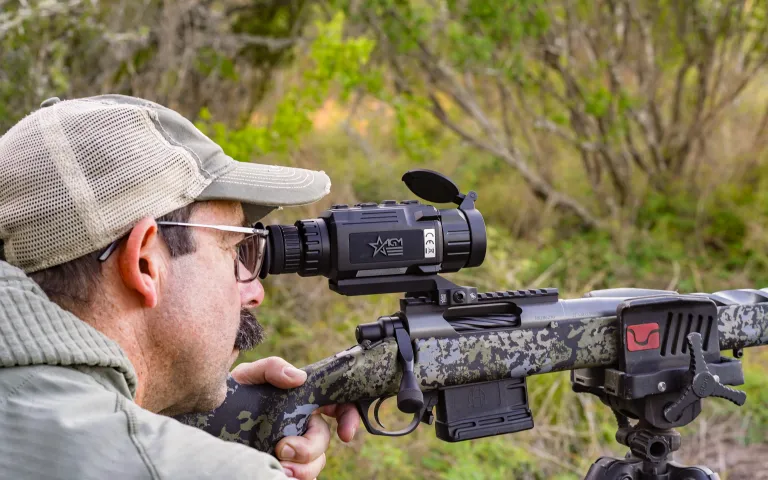
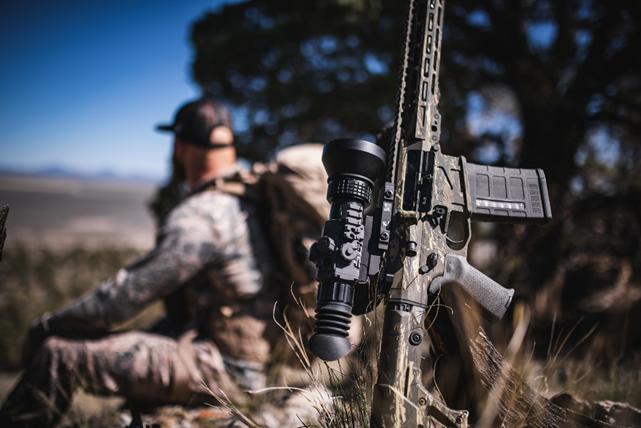
The best thermal scope for hunting is the one whose sensor, magnification, and detection range match your quarry, your ground, and your budget. There is no single winner, but for most European hunters a 384 or 640 thermal riflescope, ideally with a rangefinder, covers boar, fox, and deer at realistic ranges. This guide shows you how to choose the right one rather than just naming a model, because the best scope for a woodland boar hunter is not the best scope for someone foxing across open stubble.
It is part of our complete guide to thermal imaging for hunting. If you are still deciding between device types, start with thermal monocular vs scope vs clip-on.
What makes the best thermal scope for hunting?
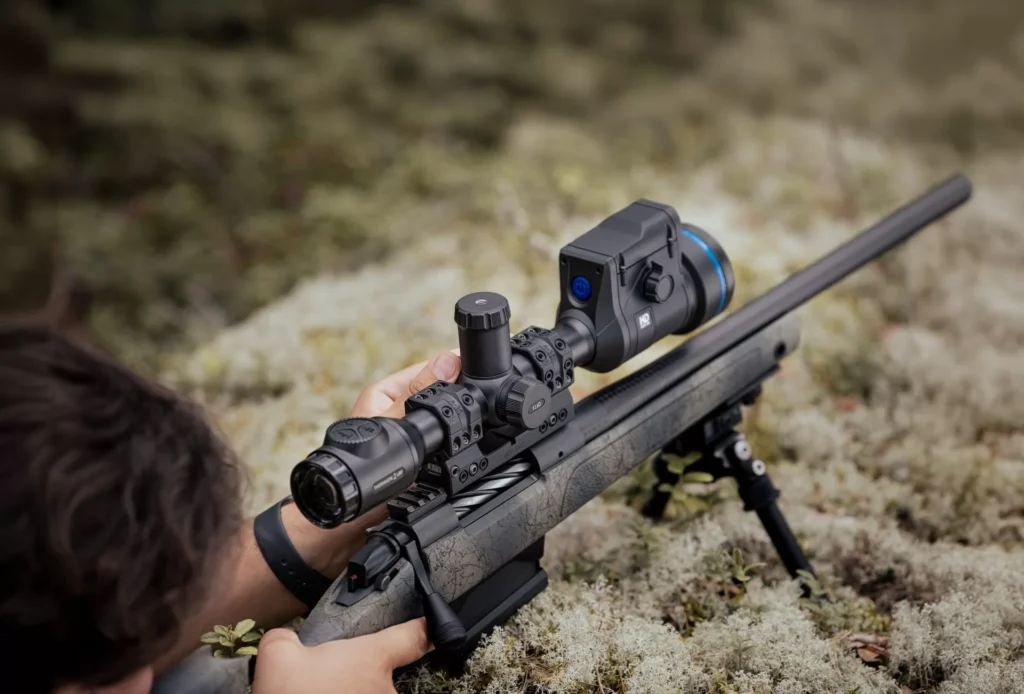
A great hunting thermal scope gets five things right: sensor resolution, thermal sensitivity, detection range, a smooth image, and rugged reliability. Resolution (256, 384, or 640) drives how far you can identify a game. A low NETD, ideally below 20 mK, keeps the image clear in damp weather. A 50 Hz refresh rate keeps moving targets sharp. And a recoil rating that suits your caliber, plus a weatherproof body, means it holds zero and keeps working. A built-in laser rangefinder and ballistic calculator, as found on scopes like the Pulsar Thermion 2 LRF, turn a good scope into a confident long-range tool.
Best thermal scope by use case
Match the scope to your hunting style. Here is the quick version.
| You hunt | Look for | Sensor |
|---|---|---|
| Boars in woodland and field edges | Wide field of view, 384 sensor, mid magnification | 384 |
| Fox and predators at distance | Higher resolution, longer lens, rangefinder | 384 or 640 |
| Deer management | Clear identification, moderate range | 384 |
| Open hill and long range | 640 sensor, LRF, ballistic calculator | 640 |
| Tight budget, close range | Compact 384 scope, shorter lens | 384 |
Thermal scopes we recommend right now
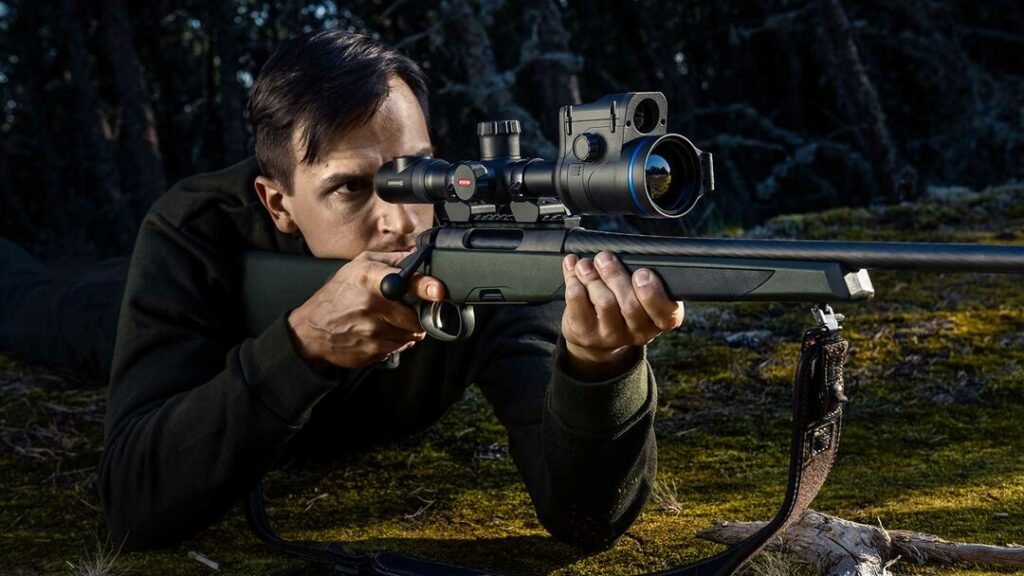
These are strong options we currently stock, from value to flagship. We update this list as new models arrive.
- Best all-round with rangefinder: the Pulsar Thermion 2 LRF combines a high-sensitivity sensor, a built-in 800 m rangefinder, and a ballistic calculator, with sensor options up to HD.
- Best classic-design value: the Pulsar Thermion 2 gives the same familiar handling without the built-in rangefinder for less.
- Best long-range flagship: the ThermTec Ares 650 LRF pairs a 640 sensor with a 1,000 m rangefinder for open-country shooting.
- Best accessible entry: the AGM Rattler TS35-384 offers genuine capability at a lower price for newer night hunters.
Compare the full range on the thermal riflescopes page.
Dedicated scope or clip-on?
Before you buy a dedicated scope, decide whether a clip-on suits you better. A clip-on mounts in front of your day scope and keeps its zero, so one rifle works day and night, while a dedicated thermal scope gives a slightly cleaner, more integrated night image. We compare them fully in thermal clip-on vs dedicated scope.
How to choose your thermal scope
Work in this order. Set your maximum realistic shooting range and your budget first. Then choose the highest sensor resolution you can afford, because resolution matters more than magnification; see 384 vs 640 thermal. Then pick the lens for your distance, a shorter lens for woodland and a longer one for open ground. Finally, decide whether you want a built-in rangefinder and ballistic calculator, which are worth it if you shoot at longer ranges. Tell us how you hunt, and we will match a scope to it.
Frequently asked questions (FAQ)
What is the best thermal scope for wild boar?
For boar in typical European conditions, a 384 thermal scope with a 35 mm lens and mid magnification is the practical sweet spot. Boar are large, warm and often shot at moderate range in or near cover, so you want a wide enough field of view to pick them up quickly and enough resolution to identify them clearly. A rangefinder helps on more open ground.
Do I need a 640 scope, or is 384 enough?
For most hunting, a 384 scope is enough and better value. It identifies game well at the ranges most boar, fox, and deer are shot. A 640 scope earns its extra cost when you hunt open ground at long range or need to identify targets far away. Spend on a 640 only if your hunting genuinely needs the reach.
Is a thermal scope better than a thermal clip-on?
Neither is simply better. A dedicated scope gives the cleanest, most integrated night image on a rifle set up for night work. A clip-on keeps your day scope at zero, so one rifle covers day and night. Choose based on whether you want a dedicated night rifle or one flexible setup.
How much should I spend on a thermal scope?
Most hunters spend between €1,500 and €3,000 for a capable thermal scope that lasts for years, with flagships running higher. Entry scopes start around €1,000. See our full breakdown in how much does a thermal scope cost.
How much magnification do you need?
Less than you might think. Thermal magnification is mostly digital, so pushing high zoom on a small sensor just enlarges pixels and blurs detail. What matters is the base optical magnification and the sensor behind it. For woodland and field-edge boar, a base magnification around 2x to 3x with a wide field of view lets you find and follow game easily. For open-ground fox work, a higher base magnification and a longer lens help you identify at distance. Choose the sensor and lens first, and let the useful magnification follow from them rather than chasing the biggest zoom number on the box.
Quick facts: best thermal scope for hunting
| Best all-round sensor | 384×288 for most hunting |
|---|---|
| Best long-range sensor | 640×512 |
| Ideal refresh rate | 50 Hz |
| Worth having | Built-in rangefinder and ballistic calculator |
| Typical spend | €1,500 to €3,000 |
| Choose by | Quarry, range and budget |