
What the 35 mm lens and 384 sensor actually get you in the field
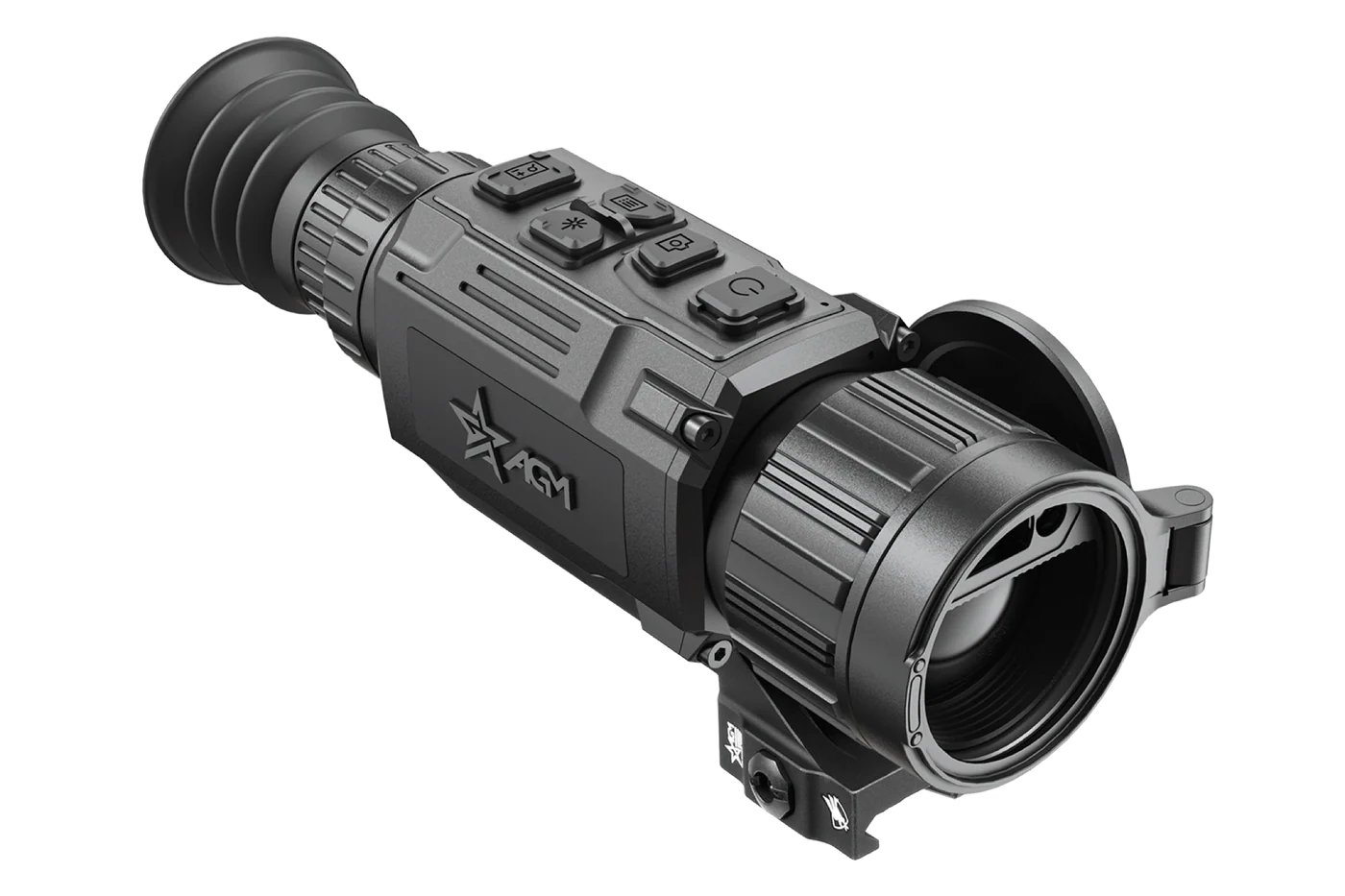
The 35-384 sits in the Rattler V3 range where sensor resolution stops being the limiting factor and glass becomes the limiting factor. A 384×288 detector behind a 35 mm F/1.0 germanium lens gives you a 7.5° by 4.5° field of view at 3.5x base magnification. In practice that means confident identification of a fox-sized target out to roughly 400 m and a deer-sized target well past 600 m in conditions where the animal is only a few degrees warmer than the ground.
That last part is where the sub-15 mK sensitivity really earns its keep. NETD measures the smallest temperature difference the sensor can resolve. Below 15 mK is at the sensitive end of what is commercially available, and it matters most in exactly the conditions European hunting throws at you: wet autumn mornings, ground fog, drizzle, and the low thermal contrast of a damp field at first light. A less sensitive 640 sensor will show you more pixels of a grey blur. This one shows you an outline you can identify.
If you hunt woodland under 200 m, you are paying for range you won’t use. Consider the Rattler V3 25-384 instead and apply the difference toward a thermal monocular for scanning.
The in-lens rangefinder changes how you take the shot.
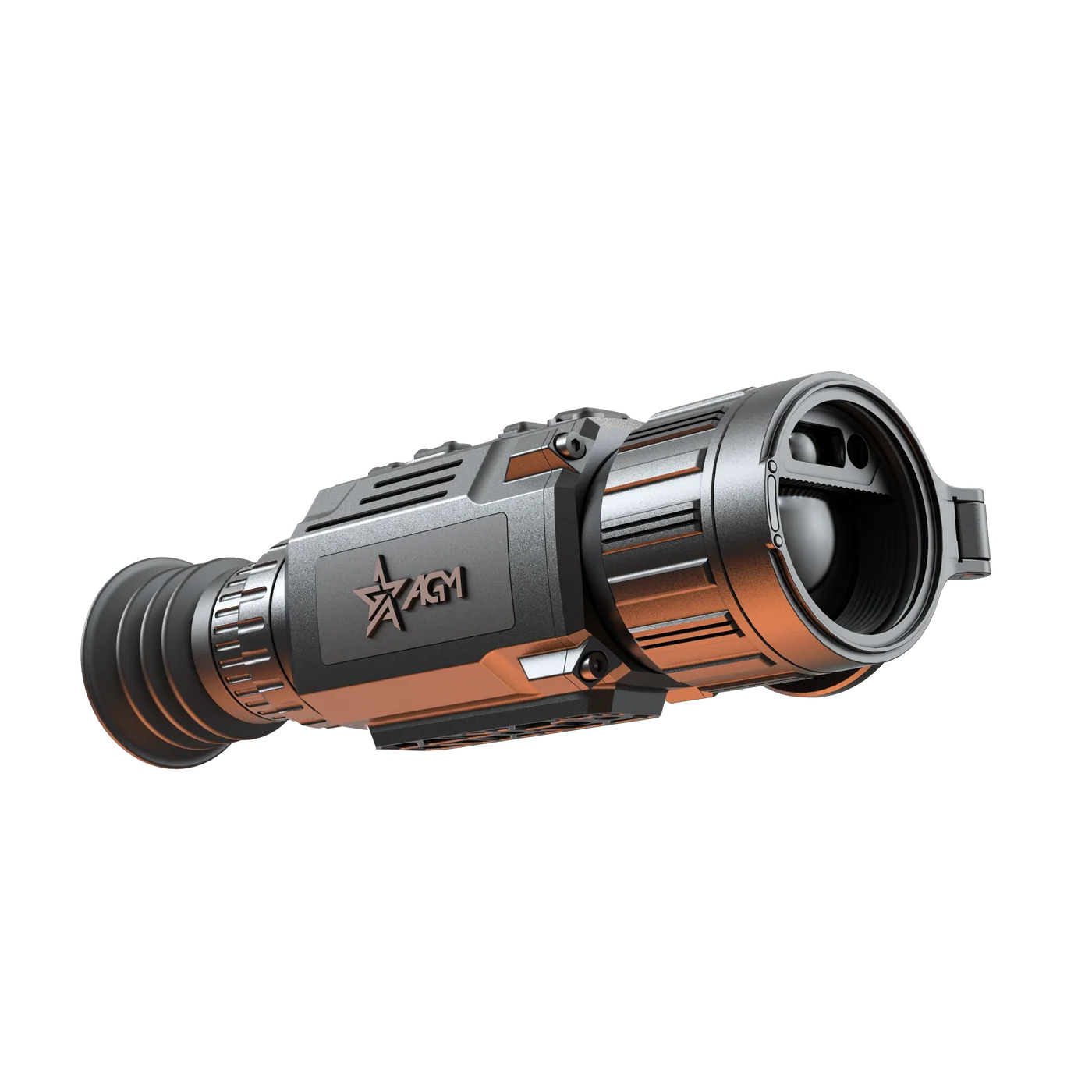
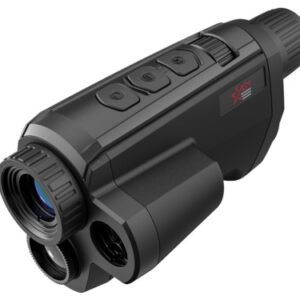
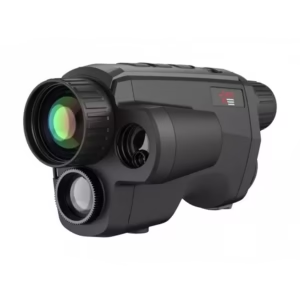
Every previous compact Rattler required you to estimate distance or carry a separate rangefinder. The V3 LRF generation puts a 1,000 m laser inside the objective assembly, on the same optical axis as the thermal channel. Dual-axis alignment means the laser hits what the reticle is on, not a point offset by however far the emitter sits from the lens.
The practical consequence is speed. You range; the onboard ballistic calculator converts that range into a corrected point of impact using your stored profile, and the reticle shifts digitally. There is no holdover arithmetic in the dark and no dialling turrets by feel. At a field edge, the same coyote can appear at 180 m and then at 340 m within thirty seconds, making the difference between a justifiable shot and one that should not be taken.
The calculator is only as good as the profile you load, so spend the time entering real muzzle velocity for your actual load rather than the box figure. The scope stores multiple zeroing profiles, making it practical to move one optic between two rifles.
Shutterless NUC and what it fixes
Traditional thermal sensors drift and need periodic non-uniformity correction. On most scopes, that means a mechanical shutter closes, the image freezes for a fraction of a second, and you hear a click. It happens on its own schedule, which is reliably the moment something walks into the frame.
The V3 is the first Rattler with shutterless NUC. Calibration happens algorithmically while the image stays live. No freeze, no click, nothing to spook animals at close range. Combined with AGM’s Image Boost 2.0 processing, the image holds edge definition through the correction rather than washing out and recovering.
The 1920×1080 OLED display is the other half of that. It is bright enough to read ballistic data against a hot background and high enough resolution that digital zoom past 3.5x degrades gracefully rather than turning to blocks. Ten brightness and ten contrast steps, multiple palettes including white-hot, black-hot, and the red and green monochrome modes.
Build, mounting and power
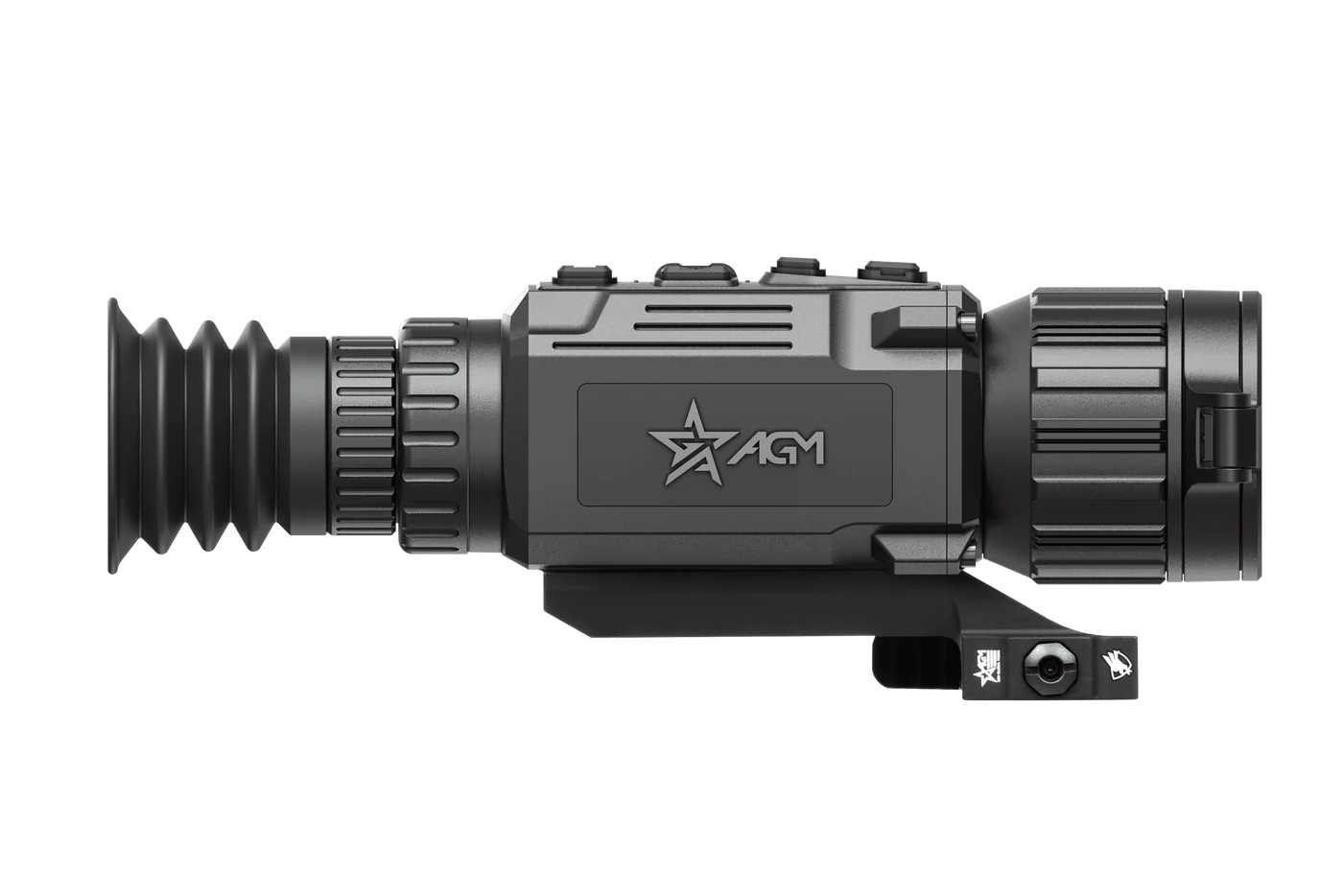
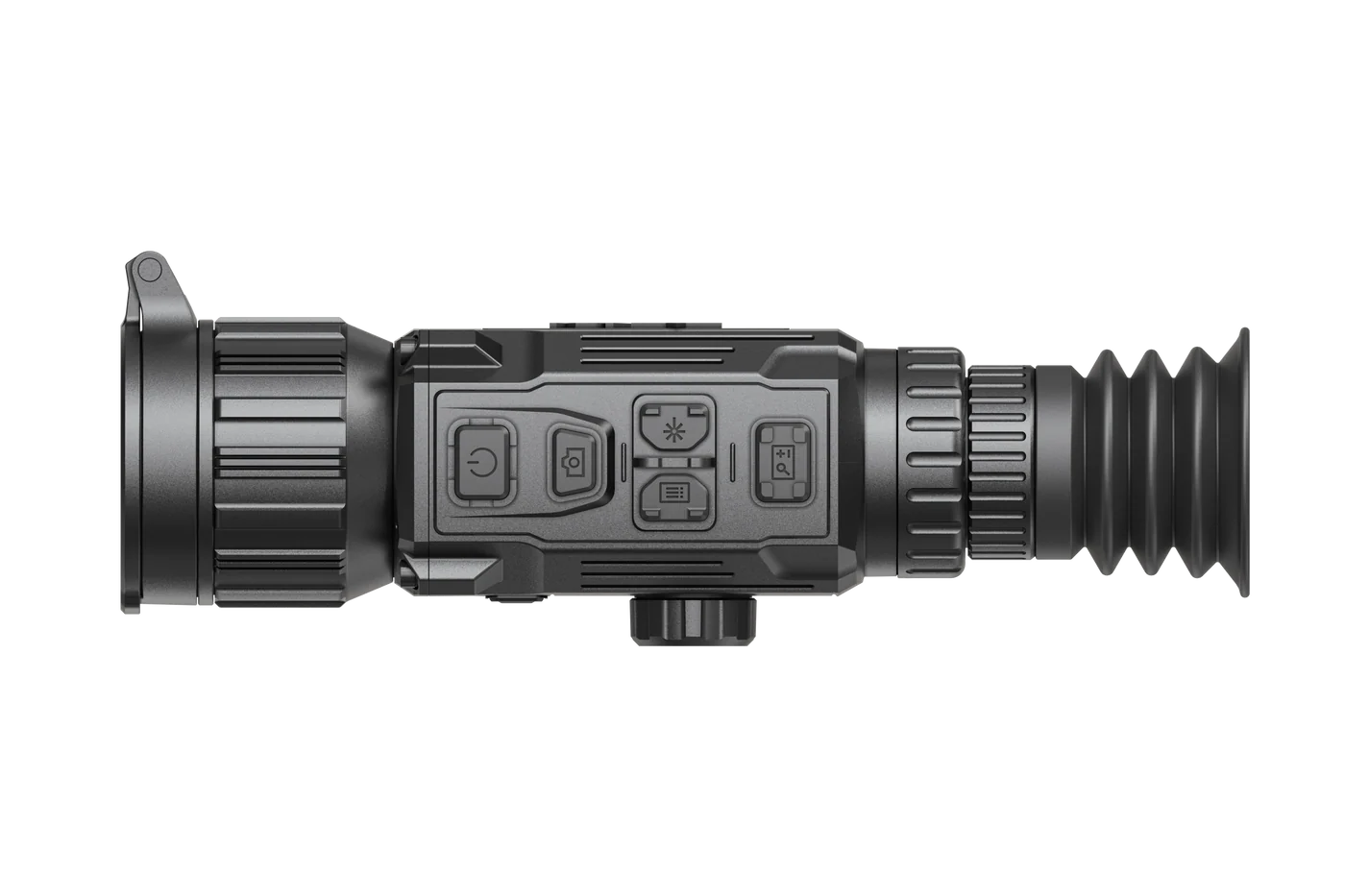
The magnesium alloy housing is IP67 rated and recoil rated to 1000 g at 0.4 ms. That covers standard centerfire up to and including magnum calibers, so .308, .300 Win Mag, and .338 Lapua are all inside spec.
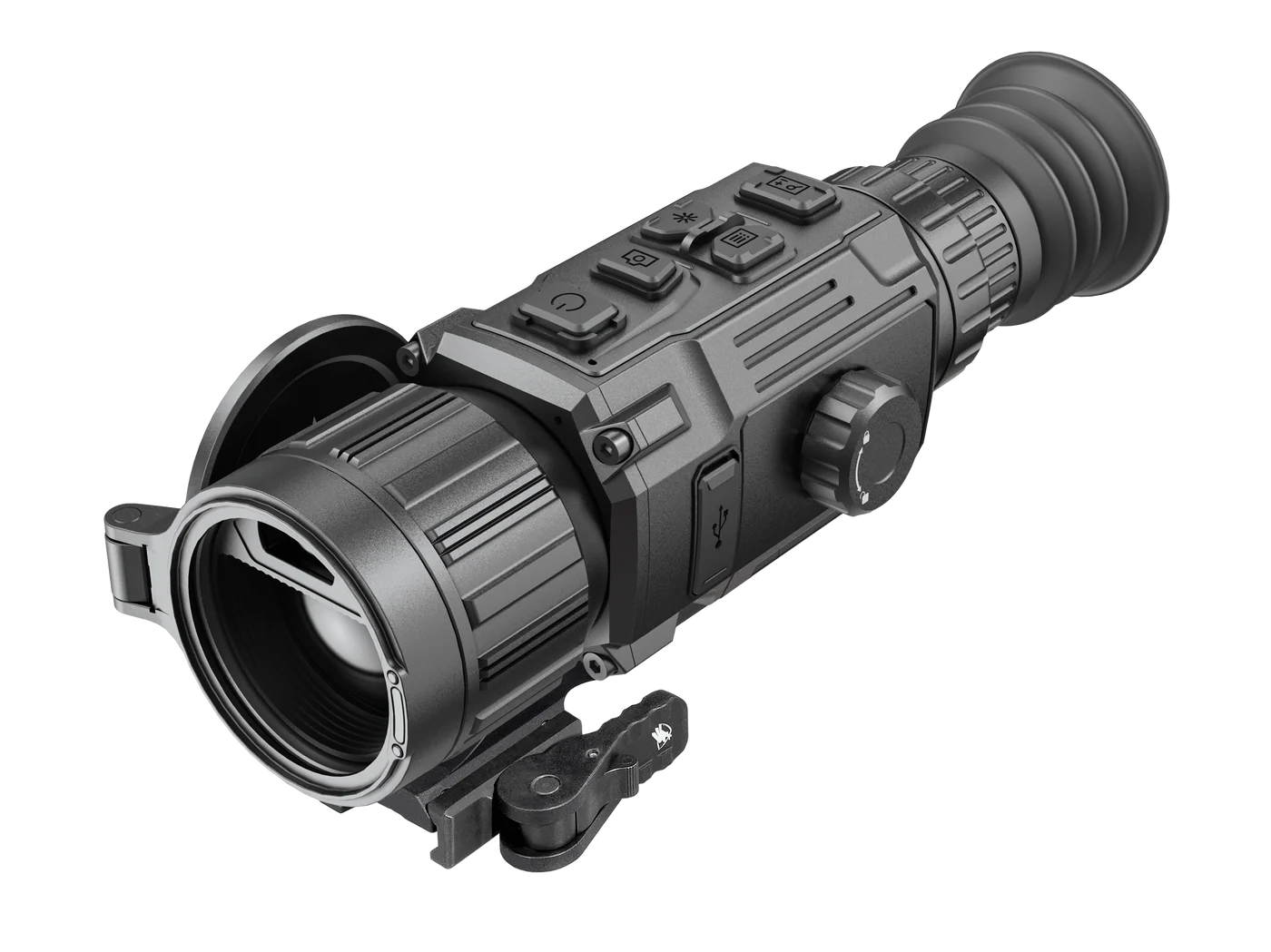
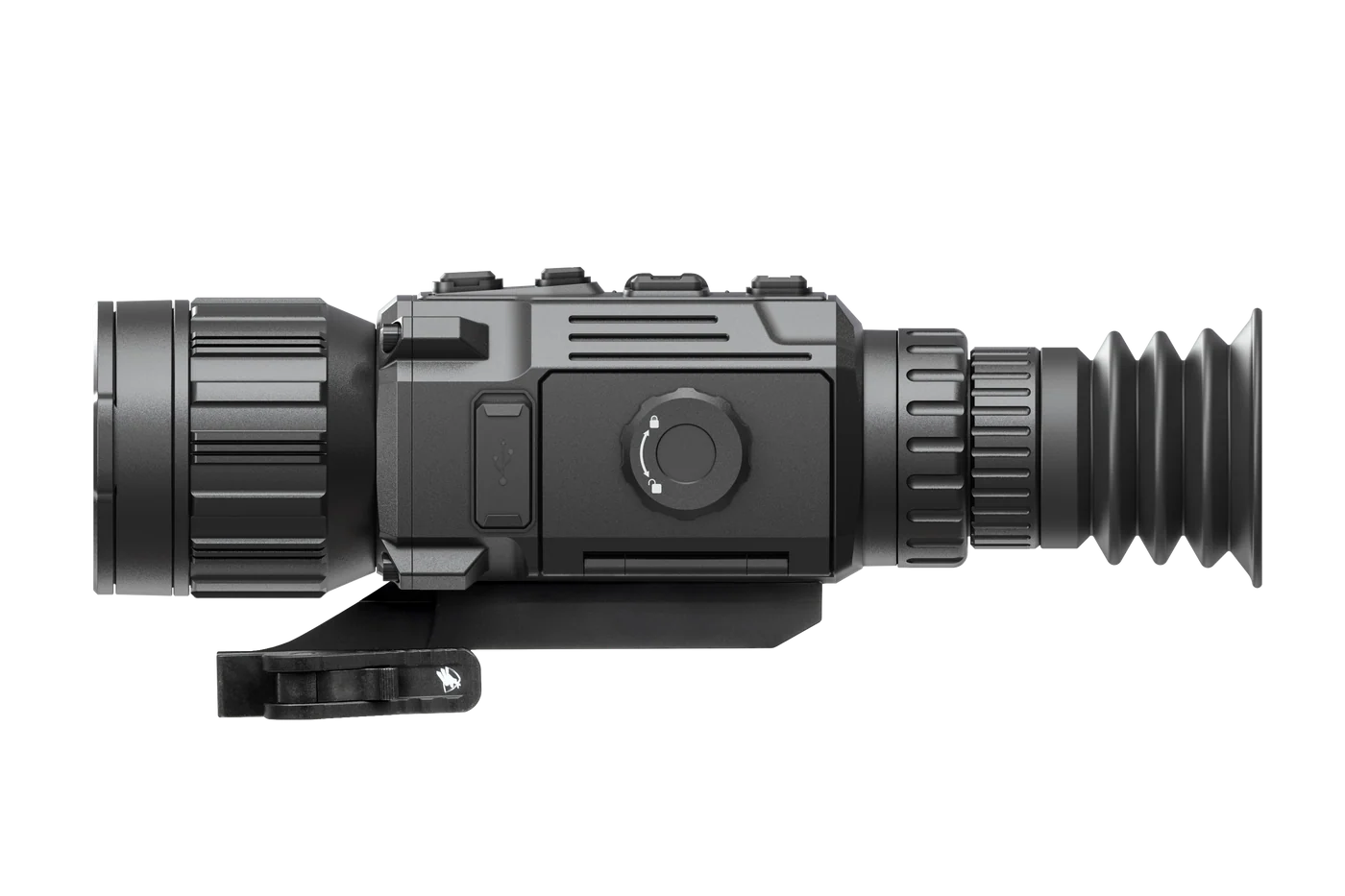
It ships with an American Defense Manufacturing quick-detach mount for MIL-STD 1913 rails, which holds zero across detach and reattach cycles. Buttons are oversized and tactile for gloved operation, and the focus ring is knurled deep enough to turn with cold hands.
Power comes from the removable NE-4400 rechargeable pack, rated at over 7 hours continuous. Carry one spare, and you have coverage for a full two-night trip. USB-C external power is supported for static positions. 64 GB of onboard storage handles video and audio recording, including shot-activated recording that captures the seconds either side of the trigger break.
For a full comparison against Pulsar, ThermTec, and Hikmicro at this price, see our best thermal scope buying guide.
Technical specifications
| Feature | Specification |
|---|---|
| Detector | 384×288, 12 µm VOx uncooled FPA |
| NETD | Below 15 mK (@25°C, F/1.0) |
| Frame rate | 50 Hz |
| Lens | 35 mm, F/1.0 germanium |
| Focus | Manual focus ring |
| Magnification | 3.5x to 28x |
| Field of view | 7.5° x 4.5° |
| Detection range | 2,480 m (2,710 yd) |
| Display | 1920×1080 OLED |
| Laser rangefinder | 1,000 m in-lens, 905 nm |
| Ballistic calculator | Onboard, multiple profiles |
| NUC | Shutterless |
| Image processing | Image Boost 2.0 |
| Recoil rating | 1000 g / 0.4 ms |
| Housing | Magnesium alloy, IP67 |
| Battery | NE-4400 removable, 7+ hours |
| External power | USB-C |
| Storage | 64 GB eMMC |
| Recording | Video with audio, shot-activated |
| Connectivity | Wi-Fi hotspot |
| Mount | ADM quick-detach, MIL-STD 1913 |
Reviews
There are no reviews yet.