WHITE PHOSPHOR NIGHT VISION
White Phosphor Night Vision: What It Actually Changes, and What It Does…
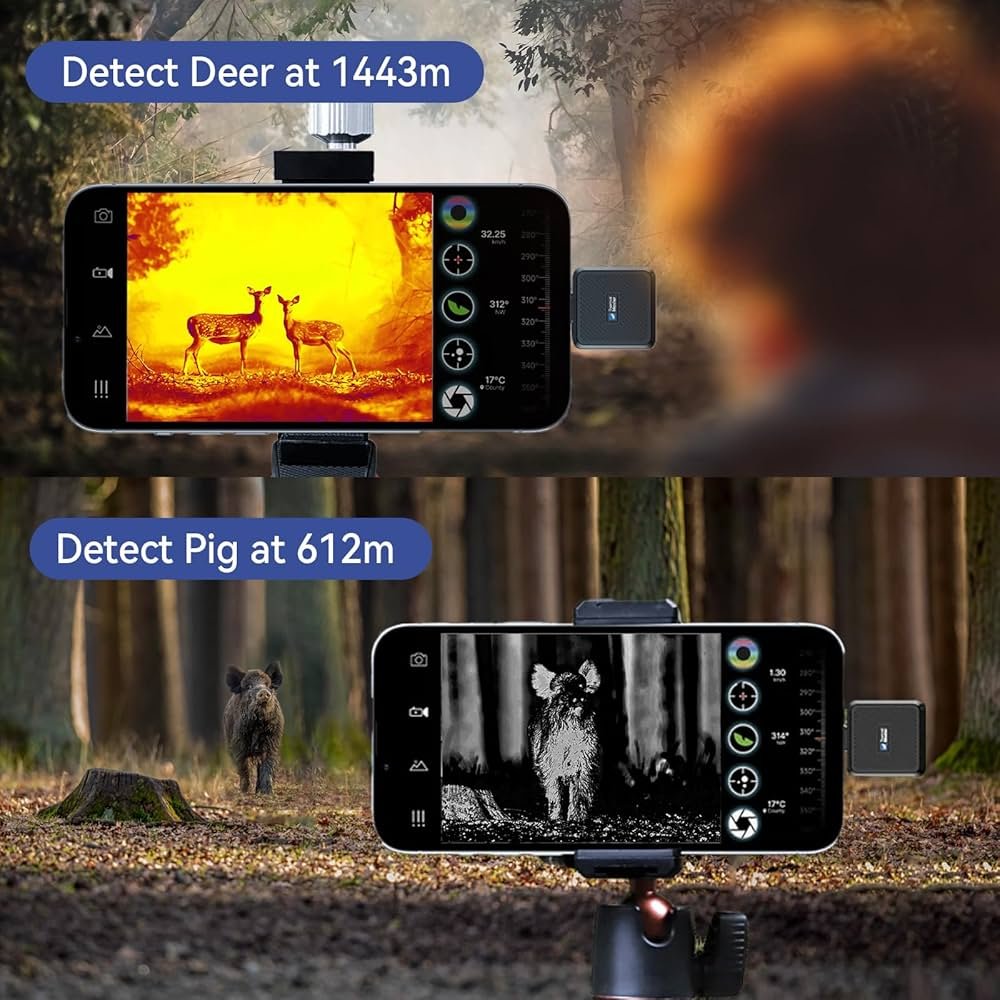
A thermal monocular can detect a person-sized heat source from around 250 m on an entry model to over 2,600 m on a flagship 640 unit. But detection is not identification. The distance at which you can actually tell what an animal is sits much closer, usually a third to a half of the quoted detection range. Understanding that gap is the key to knowing how far a thermal monocular really sees.
This guide explains the real numbers, what the marketing figures mean, and what affects your range in the field. It is part of our complete guide to thermal imaging for hunting.
Range depends almost entirely on two things: the sensor resolution and the lens. A bigger sensor and a longer lens see farther. As a rough guide, entry 160 and 256 units detect heat at 250 m to 460 m, mid-range 384 models reach 650 m to 1,600 m, and high-resolution 640 units with a large lens detect out to around 2,600 m. Those are detection figures, the distance at which you can tell something warm is there.
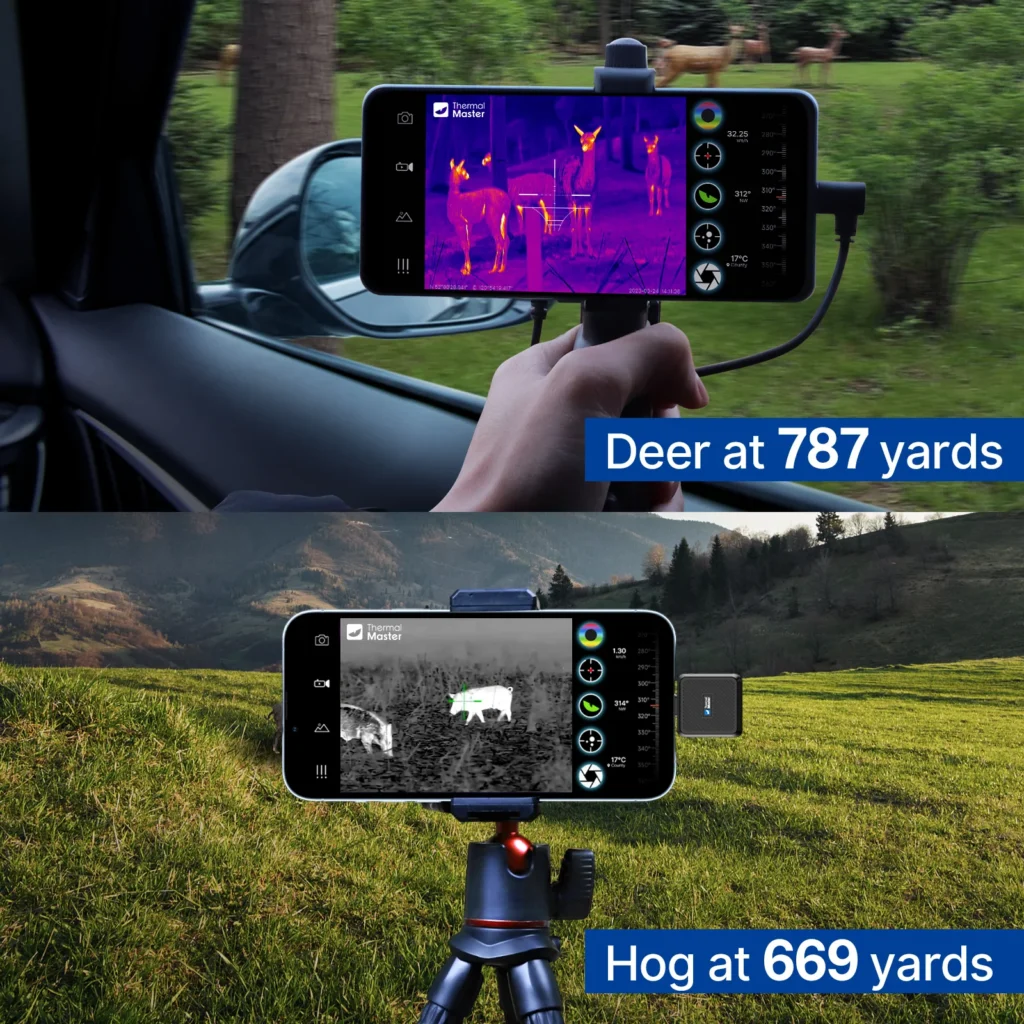
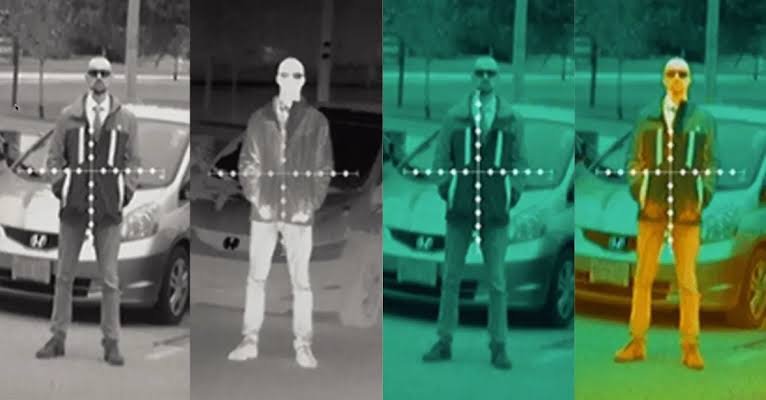
The single most important thing to understand is that a thermal monocular sees a heat source much further than it lets you identify one. The industry splits range into three stages, known as DRI.
| Stage | What you can tell | Relative distance |
|---|---|---|
| Detection | Something warm is there | Furthest (the quoted figure) |
| Recognition | It is an animal, and roughly what type | Around half of detection |
| Identification | Exactly what it is, and a precise aiming point | Roughly a third of detection |
So a monocular with a 2,000 m detection range might let you recognize an animal at about 1,000 m and identify it at around 600 m, depending on the device and conditions. When you compare models, treat the big detection number as a marketing-friendly ceiling, not a working distance. We cover the topic in more depth in what DRI range really means.
Several factors change your real-world range, and most are in the spec sheet if you know where to look.
Here is how detection range scales across the catalog, using real models so you can see the pattern.
| Model | Sensor | Lens | Detection range |
|---|---|---|---|
| AGM Asp-Micro TM-160 | 160×120 | 6.2 mm | ~250 m |
| AGM Taipan TM15-256 | 256×192 | 15 mm | ~458 m |
| AGM Taipan TM25-384 | 384×288 | 25 mm | ~1,180 m |
| AGM Sidewinder TM35-640 | 640×512 | 35 mm | ~1,650 m |
| AGM Sidewinder TM50-640 | 640×512 | 50 mm | ~2,600 m |
Notice how the lens drives detection as much as the sensor: the two 640 units differ only by lens, and the 50 mm reaches farther. Browse the full range of thermal monoculars to compare.
You can squeeze the best range out of any device with a few simple habits. Scan slowly and let the image settle rather than sweeping fast. Hunt in the cooler hours, since dawn, dusk, and night give the strongest heat contrast. Keep the lens clean, because grime scatters infrared. And use the lowest digital zoom that lets you work, because it enlarges pixels without adding real detail. If long range matters to you, put your budget into sensor resolution and lens rather than zoom; see 384 vs 640 thermal.
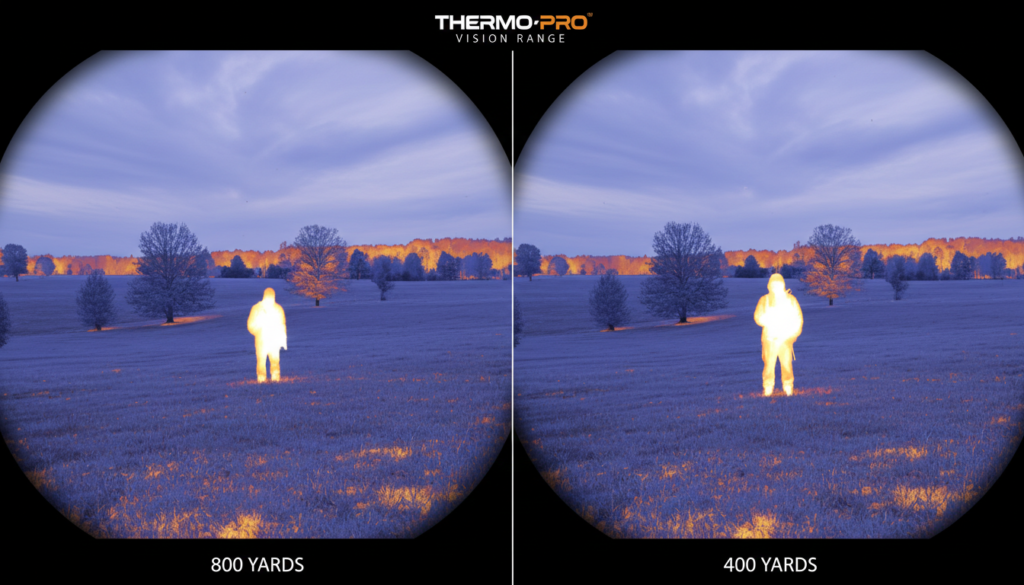
A thermal monocular can detect a human-sized heat source from around 250 m on an entry unit to over 2,600 m on a flagship 640 model with a large lens. Detecting a person is similar to detecting a deer or boar, since all are warm and roughly that size. Identifying the person clearly, rather than just spotting heat, happens much closer, often within a third of that detection distance.
Yes, many can detect heat at 1,000 m or more. A mid-range 384 monocular with a 25 to 35 mm lens detects a large animal at around 1,000 m, and 640 units reach well beyond it. Just remember that detecting at 1,000 m does not mean identifying at 1,000 m, which will be closer.
This is because identification needs detail, and detail fades with distance faster than a heat blob range. A warm animal is just a bright shape enough to know something is there but not enough to tell a fox from a cat or place a shot. As it gets closer, more pixels fall on the target, and the image sharpens, which is why the identification range is roughly a third of the detection range.
Yes. Heavy rain, snow, and dense fog absorb infrared and shorten range noticeably. Light mist and drizzle have little effect, and thermal still beats the naked eye in poor weather. A low-NETD sensor copes better with marginal conditions than a less sensitive one.
No. Digital zoom enlarges the image you already have without adding real detail or range, so a heavily zoomed picture from a small sensor just looks bigger and blockier. Reach comes from the lens and the sensor, not from zoom. To see further, choose a longer lens and a higher-resolution sensor rather than relying on digital magnification.
Roughly, yes. Detection figures are based on a person-sized heat source, and a deer or boar is a similar size and warmth, so the numbers transfer well to common quarry. A smaller, cooler animal such as a fox shows at a somewhat shorter range, and a large, warm animal slightly further.
| Entry (160/256) detection | ~250 m to 460 m |
|---|---|
| Mid-range (384) detection | ~650 m to 1,600 m |
| High-end (640) detection | ~1,650 m to 2,600 m |
| Identification range | Roughly a third of detection |
| Biggest range factors | Sensor resolution and lens length |
| Weather effect | Heavy rain and fog cut range |