
Why 640 resolution changes the identification distance
The step from 384×288 to 640×512 more than doubles the pixel count on target. At 400 m a 384 sensor provides you a shape and a rough size class. A 640 sensor at the same distance provides you posture, leg separation and enough outline detail to distinguish a boar from a large dog. That distinction is the whole argument for this scope over the 35-384.
Pair that with a 50 mm objective, and you achieve light-gathering to match the sensor. The F/1.0 germanium lens transmits more infrared energy than the 35 mm assembly, allowing the 640 detector to run at sub-15 mK rather than the higher NETD figures typical of 640 sensors in cheaper builds. Most 640 scopes in this price range sit between 20 and 40 mK. That gap is visible on any damp night.
Base magnification is 3.5x, up from 2.5x on the V2 50-640, with a field of view of about 8.7°. AGM made that change specifically for open-country predator work where engagements start longer. If you hunt dense woodland the narrower field is a real cost and the 25-384 or a wider-field model will serve you better.
The 2560×2560 display and why it matters over eight hours
The V3 50-640 carries a 2560×2560 OLED panel with close to double the pixel density of the previous generation and around 80 percent more viewable area. On a spec sheet, this improvement reads as a nice-to-have. Over a long session, it makes the difference between finishing the night sharp and finishing it squinting.
Eye fatigue on thermal optics comes from the brain compensating for a low-resolution image, not from brightness. A denser panel reduces that load. If you are out two or three nights a week through the season, or working a paid pest control contract, the display is doing as much for your hit rate at housensorthe sensor is.
The panel also supports switching between rectangular and semi-circular display formats, plus the red and green monochrome palettes that were not available on V2 hardware. It offers ten brightness and ten contrast steps, as well as white-hot, black-hot, and full colour palettes.
Rangefinding and ballistics at 640 distances
The 1,000 m in-lens laser is the same unit as the rest of the V3 LRF range, which means that at this sensor resolution the rangefinder becomes the limiting factor rather than the optic. You can identify targets well beyond the range at which the laser will return a reliable reading on soft targets.
In practice, the laser is dependable to around 600 to 700 m on animal-sized targets and stretches further on hard reflective surfaces. Beyond that, you are back to estimating, so know where your own confidence ends. Multiple ranging modes, including single and continuous scanning, cover the common cases.
The onboard ballistic calculator applies range to your stored profile and corrects point of impact digitally. It does not account for incline angle or wind, which you still have to read yourself. Anyone who tells you a thermal ballistic calculator makes a 700 m shot automatic is selling something.
Build, recording and power
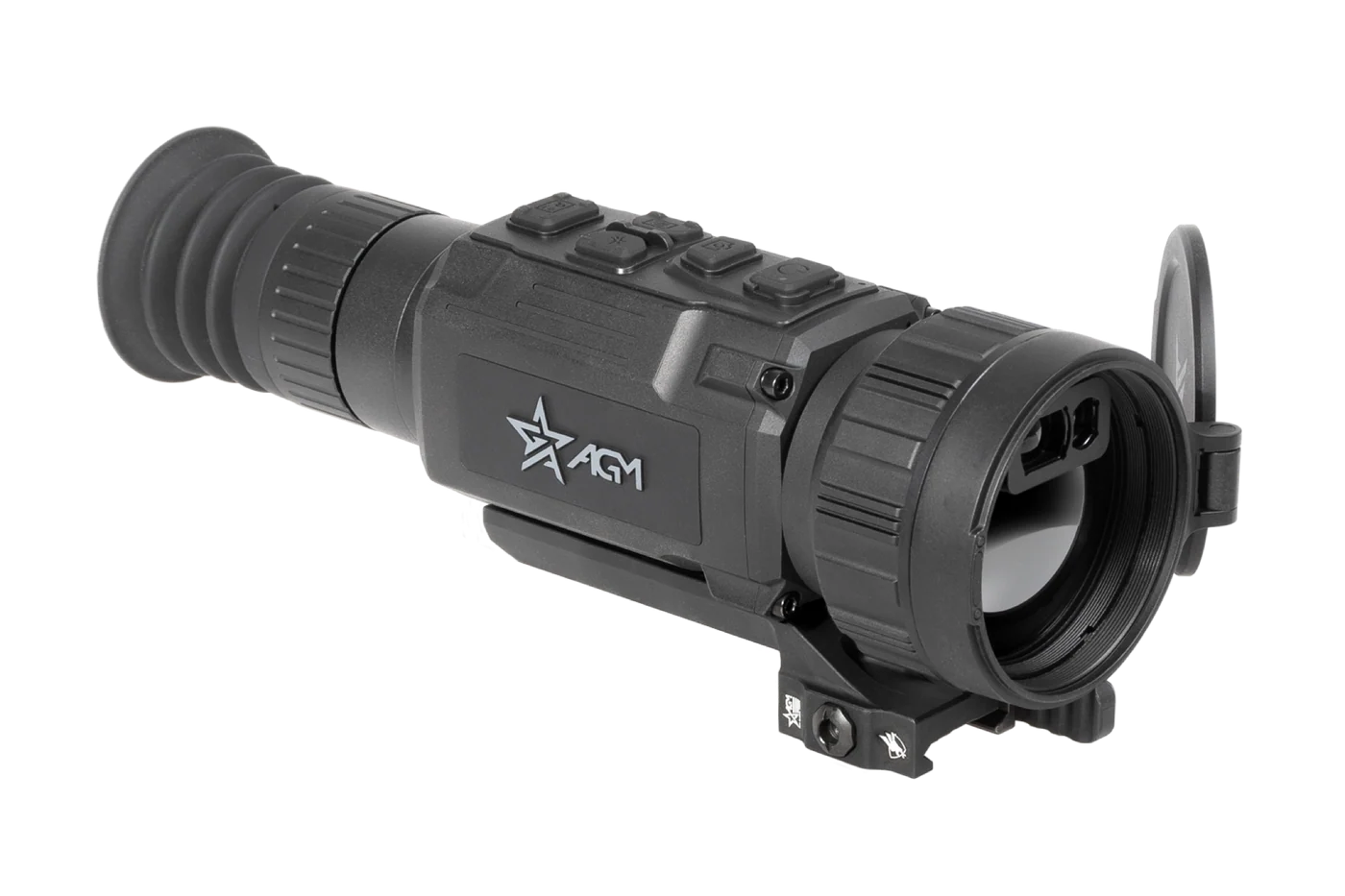
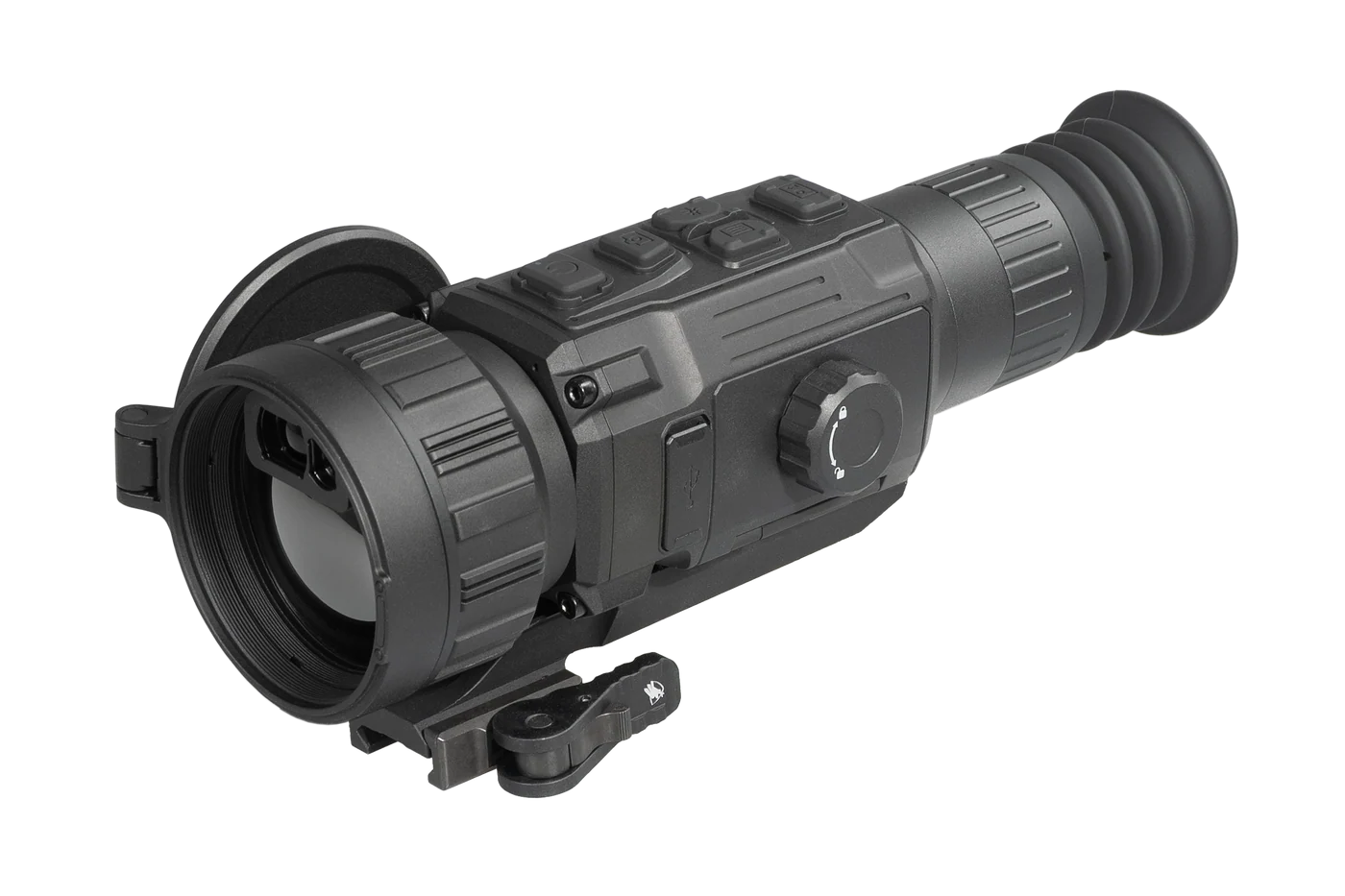
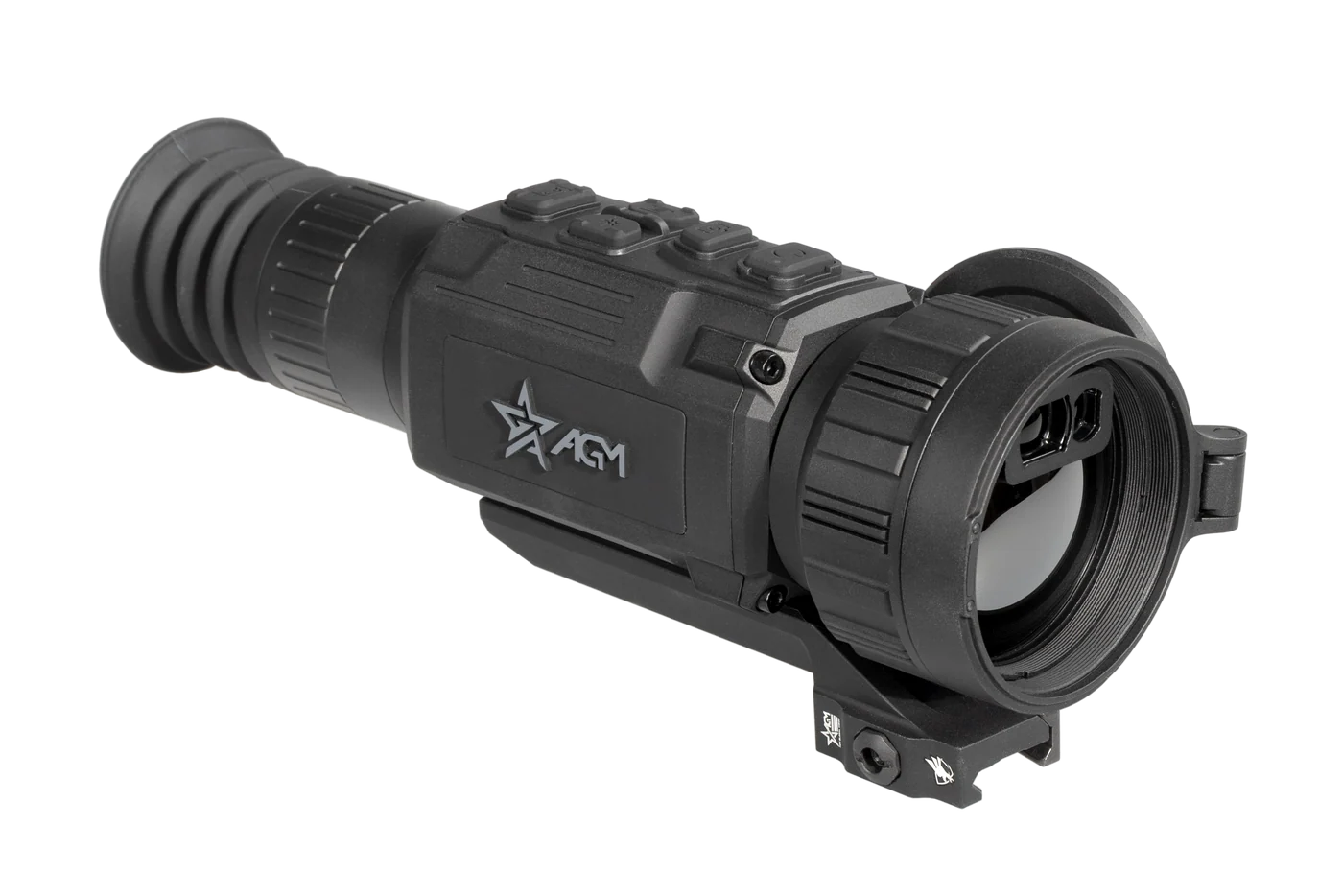
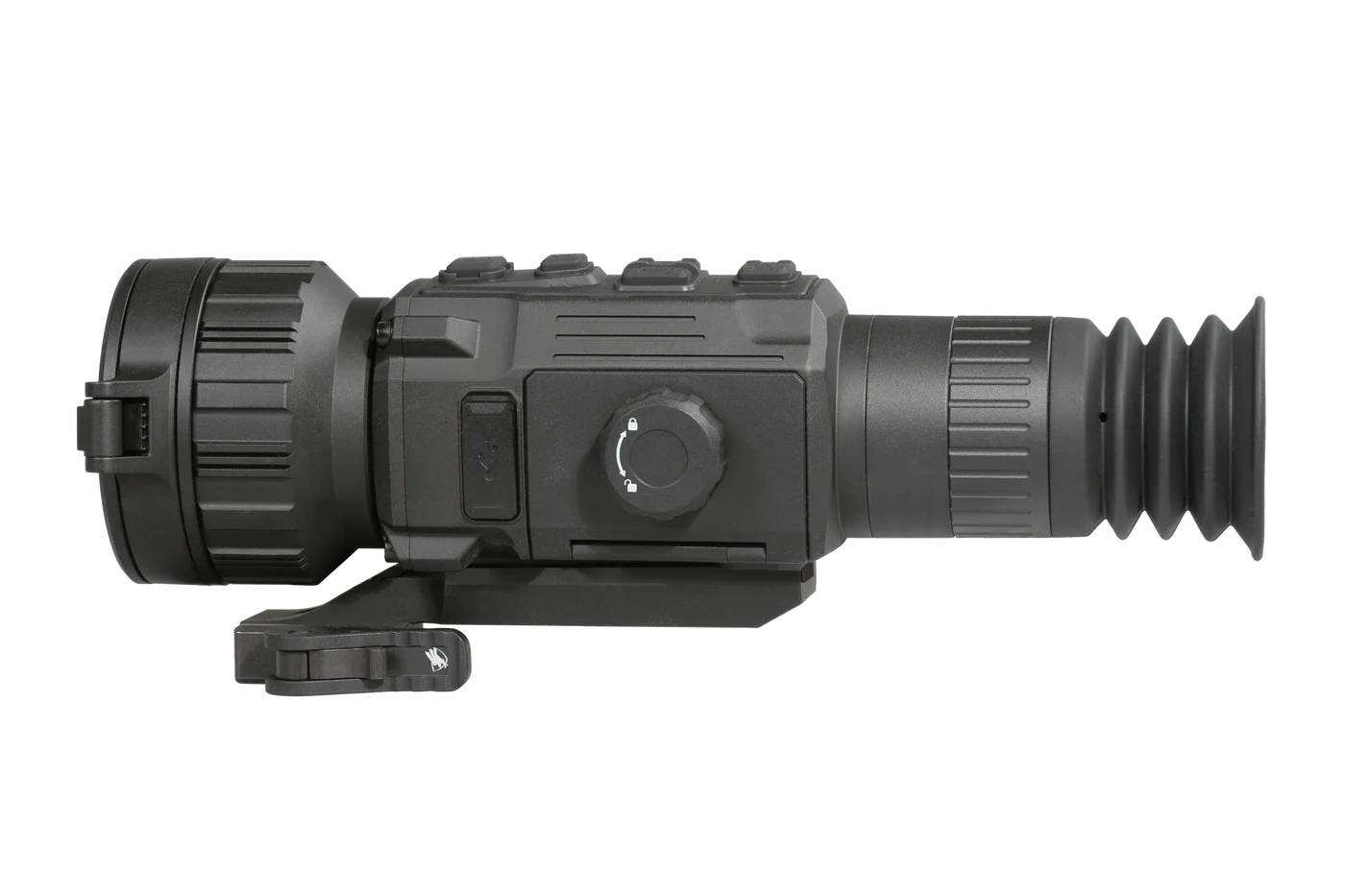
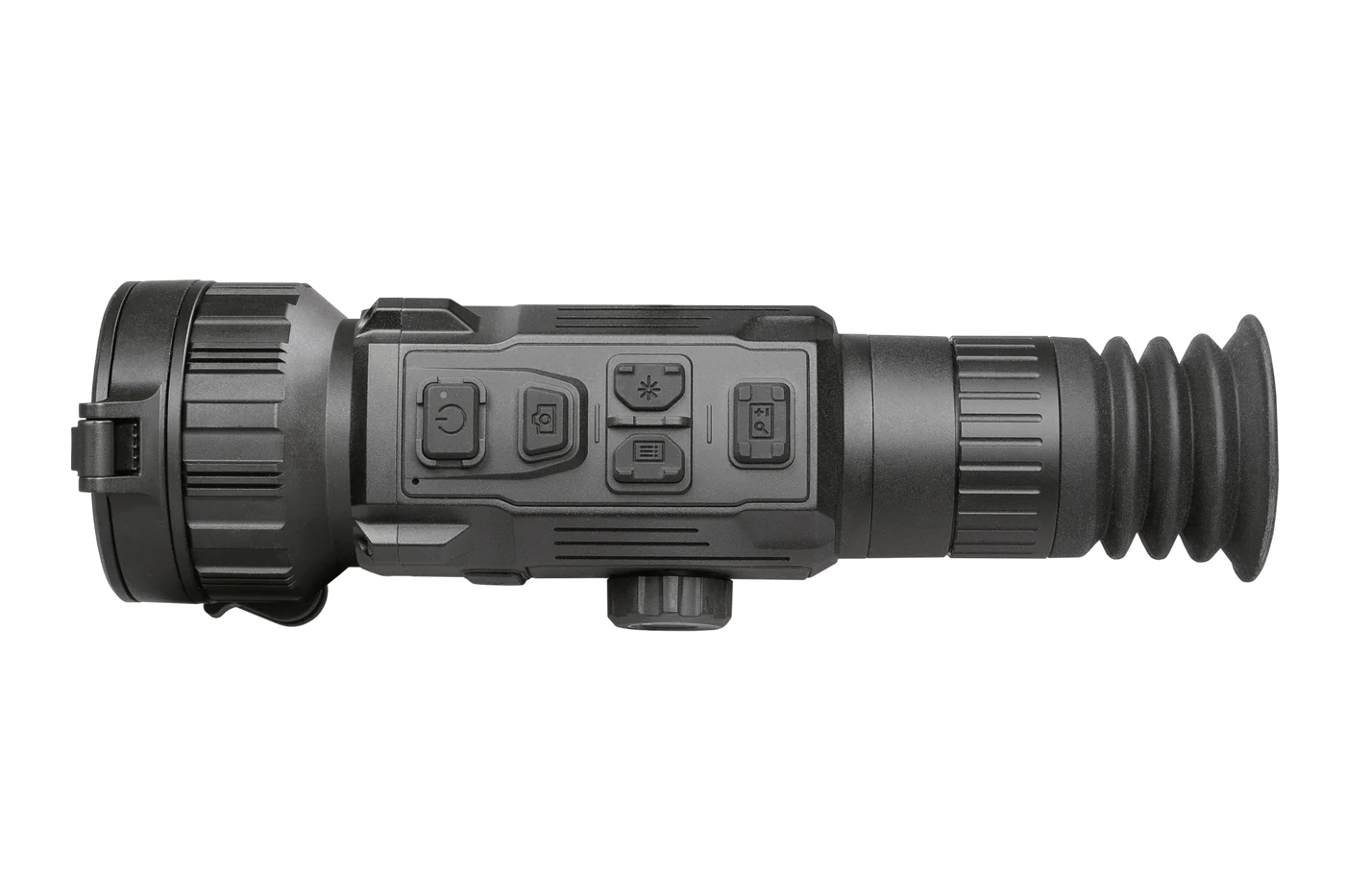
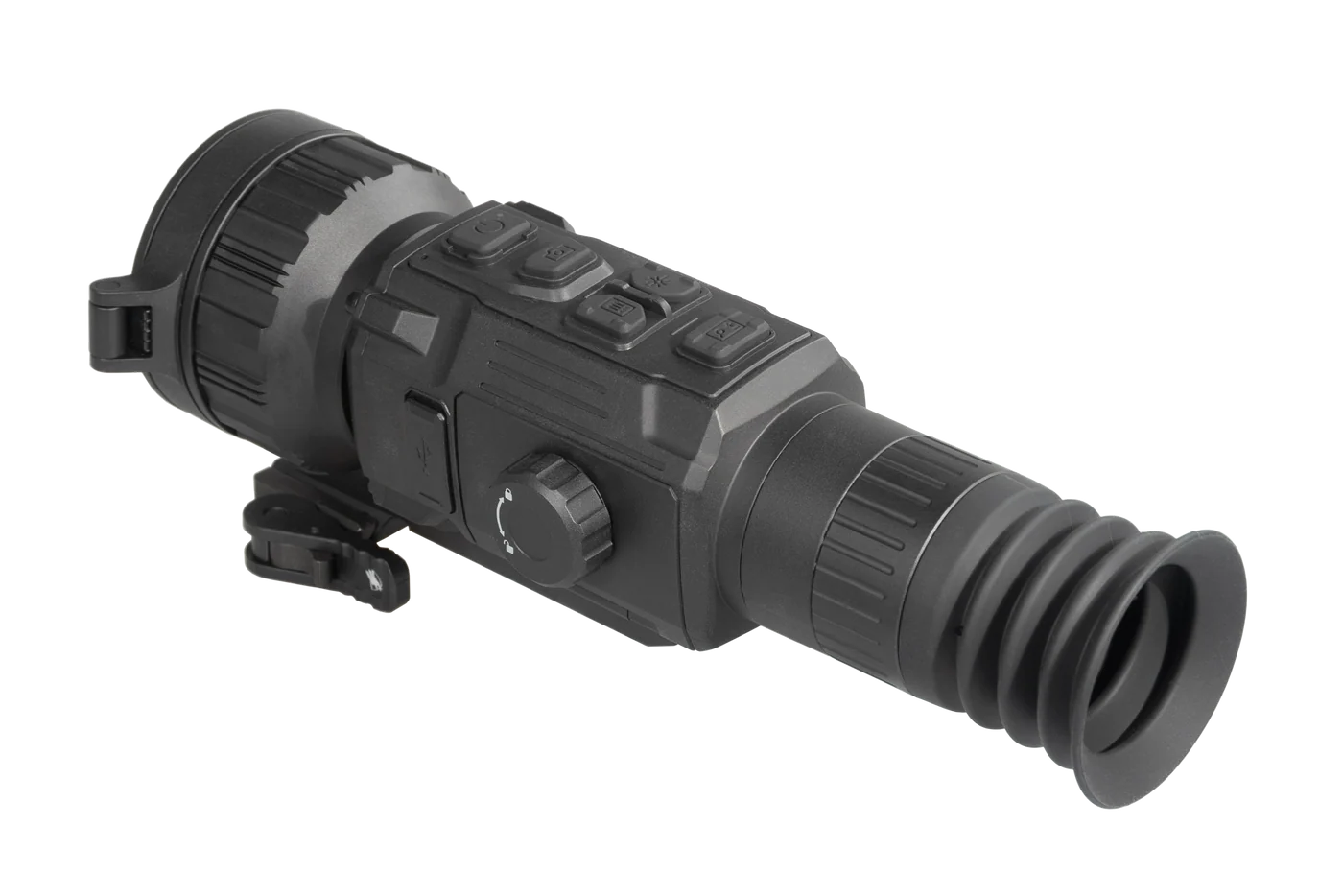
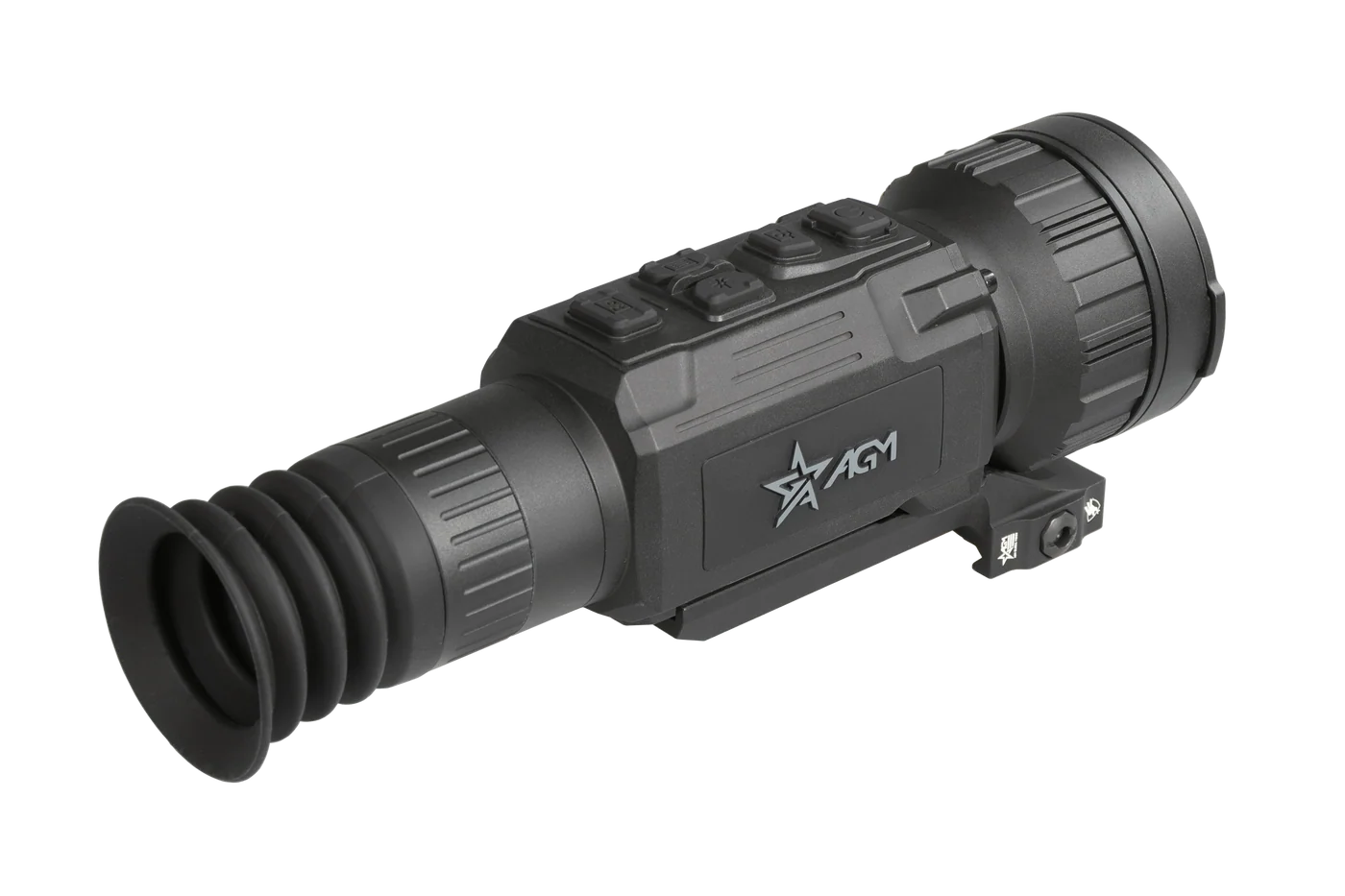
Magnesium alloy housing, IP67, recoil rated to 1000 g at 0.4 ms. Dimensions are 232 x 83 x 70 mm. Shutterless NUC and Image Boost 2.0 carry across the whole V3 range, so no calibration freeze and no shutter click.
64 GB onboard storage with video and audio recording plus shot-activated recording. The V3 generation added on-device playback, so you can review footage through the eyepiece rather than exporting to the AGM Connect app first. Wi-Fi hotspot and USB-C export both work.
Removable NE-4400 battery pack. The runtime on the 640 with the larger display runs shorter than the 384 models, so plan on a spare for anything past a single night.
Ships with the ADM quick-detach mount. Cross-shop the 50-640 against the Adder series if you prefer a 30 mm tube design, and see our thermal scope buying guide for how it compares against Pulsar and ThermTec at this price.
Technical specifications
| Feature | Specification |
|---|---|
| Detector | 640×512, 12 µm VOx uncooled FPA |
| NETD | Below 15 mK (@25°C, F/1.0) |
| Frame rate | 50 Hz |
| Lens | 50 mm, F/1.0 germanium |
| Magnification | 3.5x base, 1x to 8x digital |
| Field of view | Approx. 8.7° |
| Detection range | 2.2 miles / approx. 3,500 m |
| Display | 2560×2560 OLED |
| Display formats | Rectangular or semi-circular |
| Laser rangefinder | 1,000 m in-lens, 905 nm |
| Ballistic calculator | Onboard, multiple profiles |
| NUC | Shutterless |
| Image processing | Image Boost 2.0 |
| Recoil rating | 1000 g / 0.4 ms |
| Dimensions | 232 x 83 x 70 mm |
| Housing | Magnesium alloy, IP67 |
| Battery | NE-4400 removable |
| Storage | 64 GB eMMC |
| Recording | Video with audio, shot-activated, on-device playback |
| Connectivity | Wi-Fi hotspot, USB-C |
| Mount | ADM quick-detach, MIL-STD 1913 |
Reviews
There are no reviews yet.