
Thermal Monocular for Sale: What to Check Before You Buy (2026)
Buying a thermal monocular in 2026 is a very different exercise than it was even three years ago. Prices now start around €329 and run to roughly €3,700, sensors have improved fast, and a device that cost €3,000 in 2019 has an equivalent today under €1,200. That is encouraging news, but it also means a lot of older advice, and a lot of older stock still on sale, is actively misleading.
This guide is the complete version: it covers what things actually cost today, the handful of specifications that decide whether a device performs, how to read a listing without being caught by the two traps that catch most first-time buyers, whether buying used is worth the risk, and how to match the right device to your budget and your ground. When you are ready to shop, browse current stock and euro prices on our thermal monocular range. If you want the shorter “how to choose” version, see our how to choose a thermal monocular guide, and for the full technical picture, start with the complete thermal monocular guide.
Products by Category
-
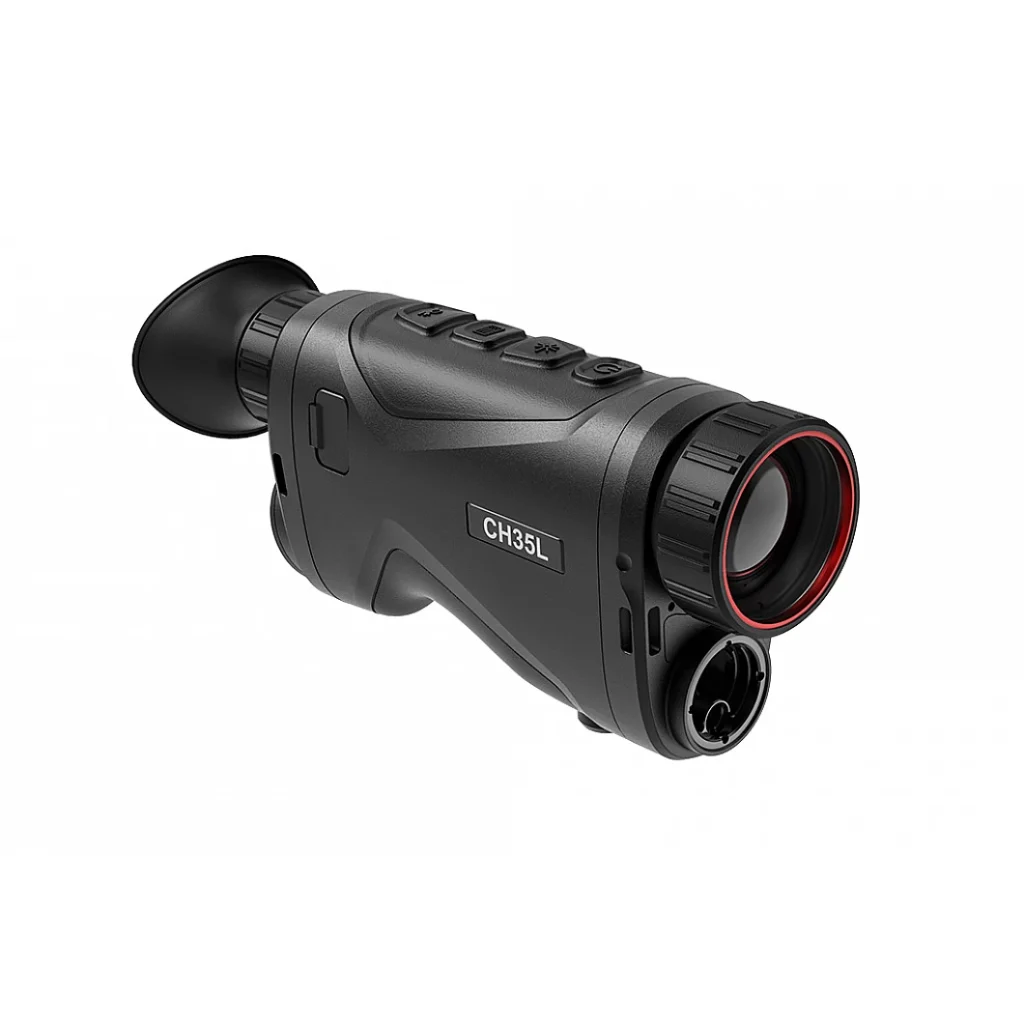
HIKMICRO CONDOR LRF Thermal Monocular
Price range: $1 980.00 through $2 970.00 -
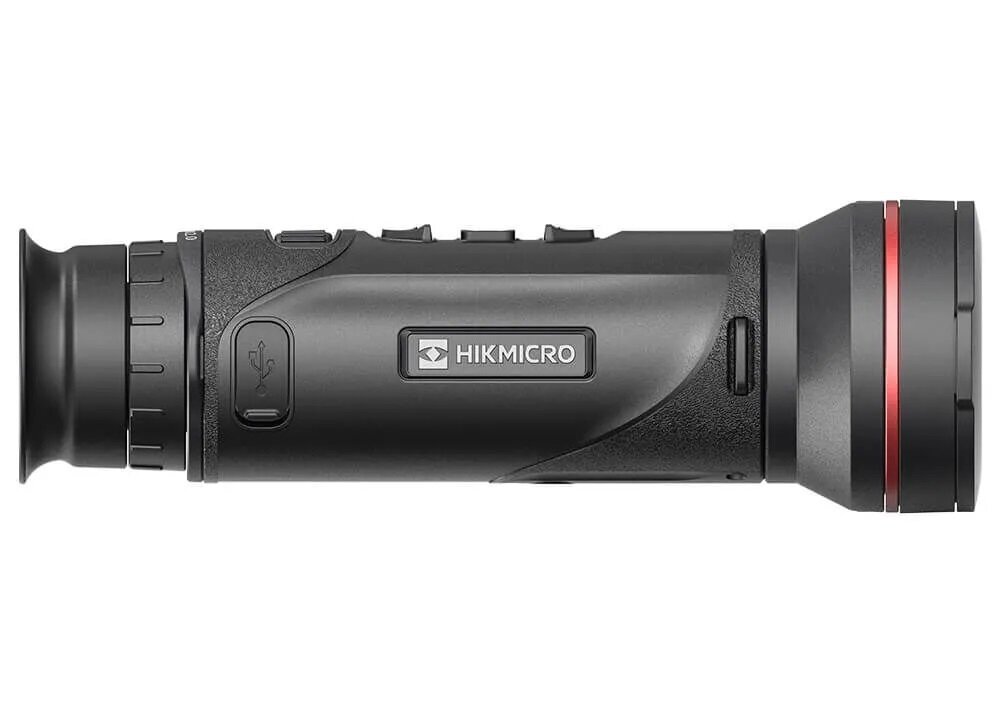
HIKMICRO FALCON Thermal Monocular
Price range: $1 650.00 through $3 190.00 -
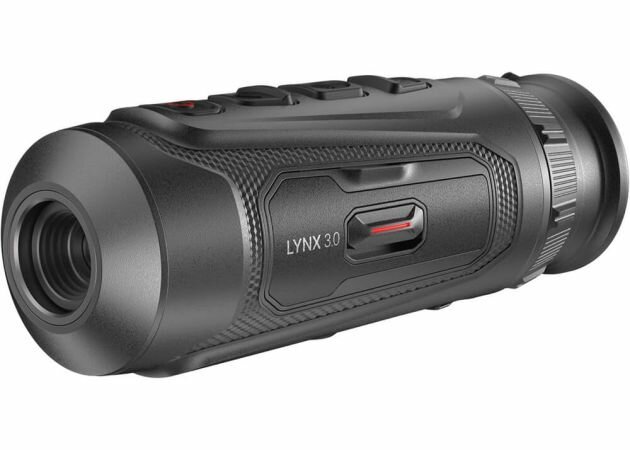
HIKMICRO LYNX 3.0 Thermal Monocular
Price range: $363.00 through $1 320.00 -
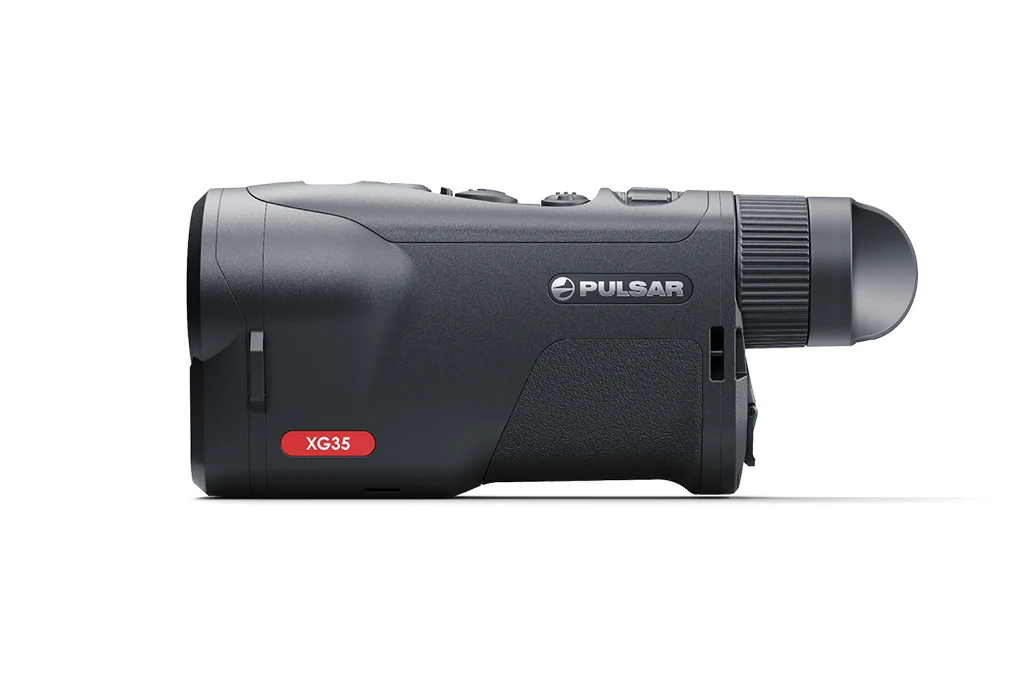
Pulsar Oryx LRF XG35 Thermal Imaging Monocular
$2 200.00 -
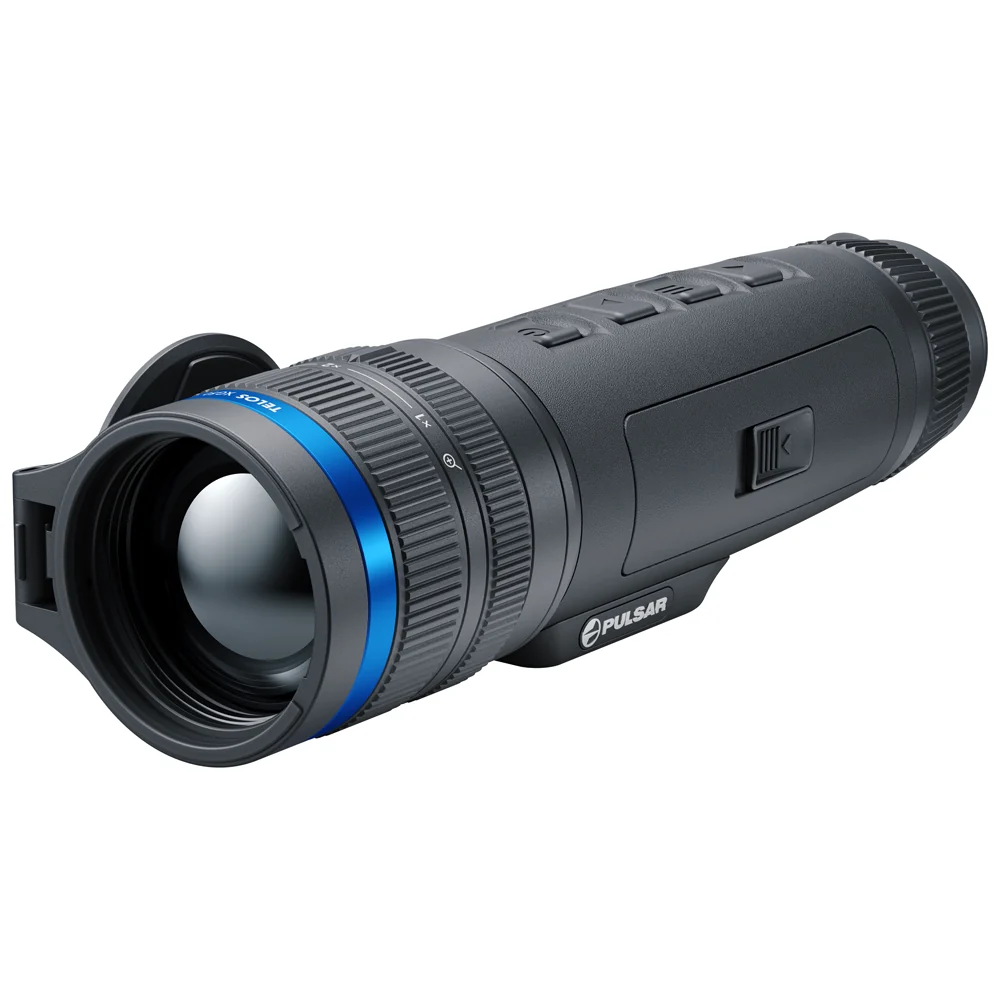
Pulsar Telos XG50 Thermal Imaging Monocular
$2 530.00 -
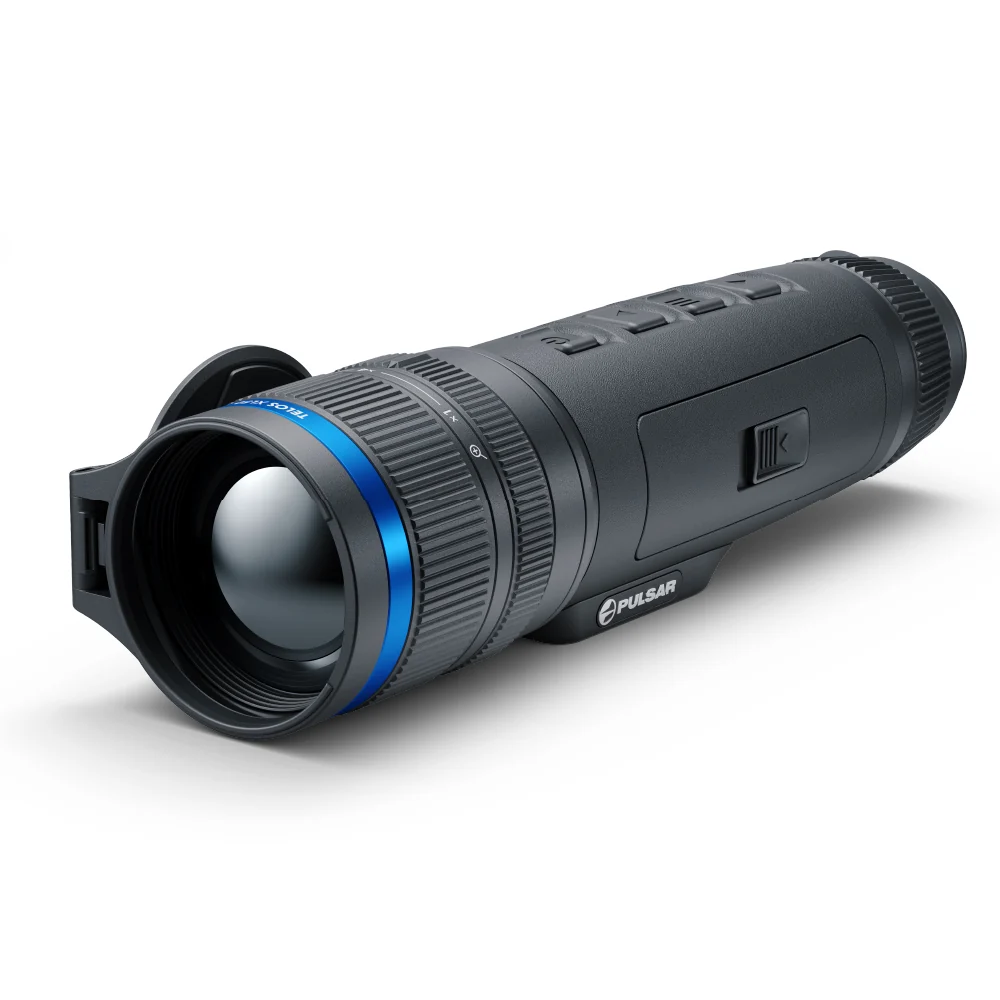
Pulsar Telos XL50 Thermal Imaging Monocular
$4 070.00 -
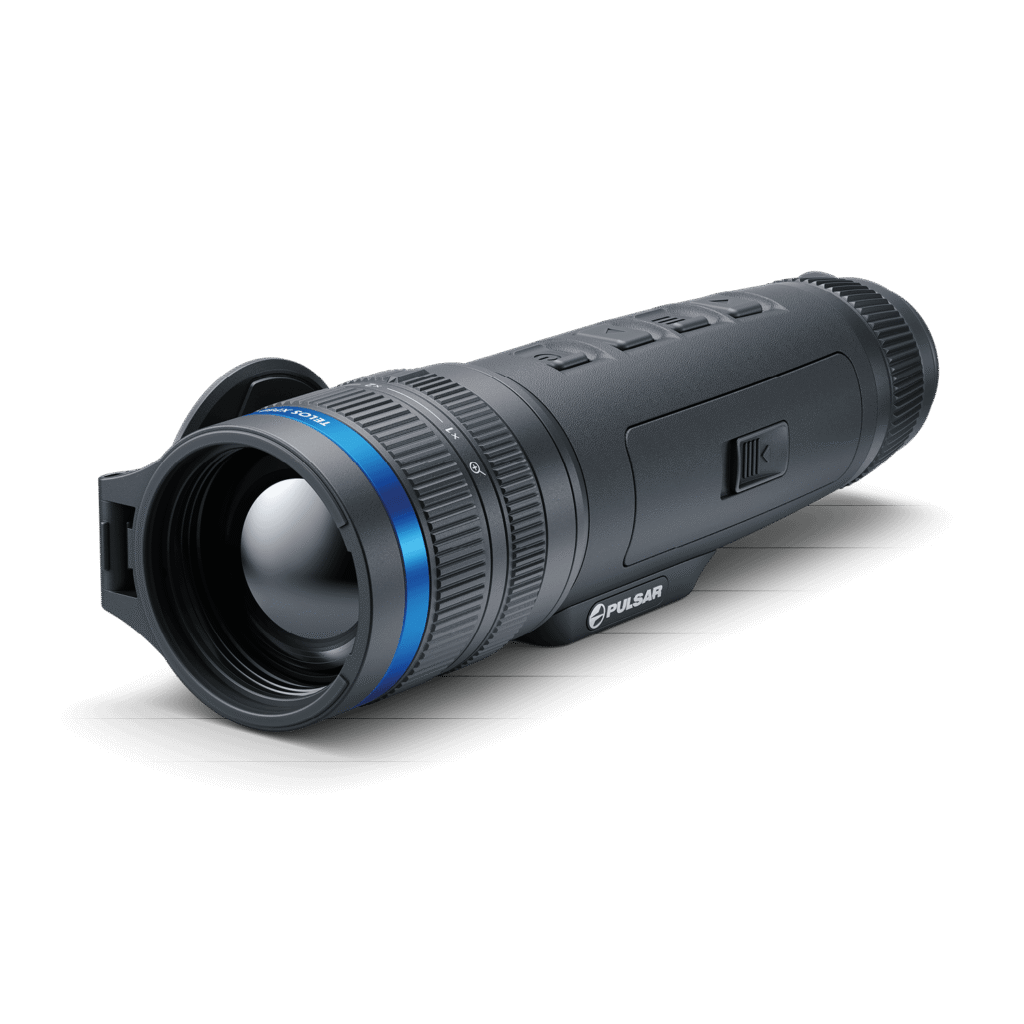
Pulsar Telos XP50 Thermal Imaging Monocular
$2 860.00 -
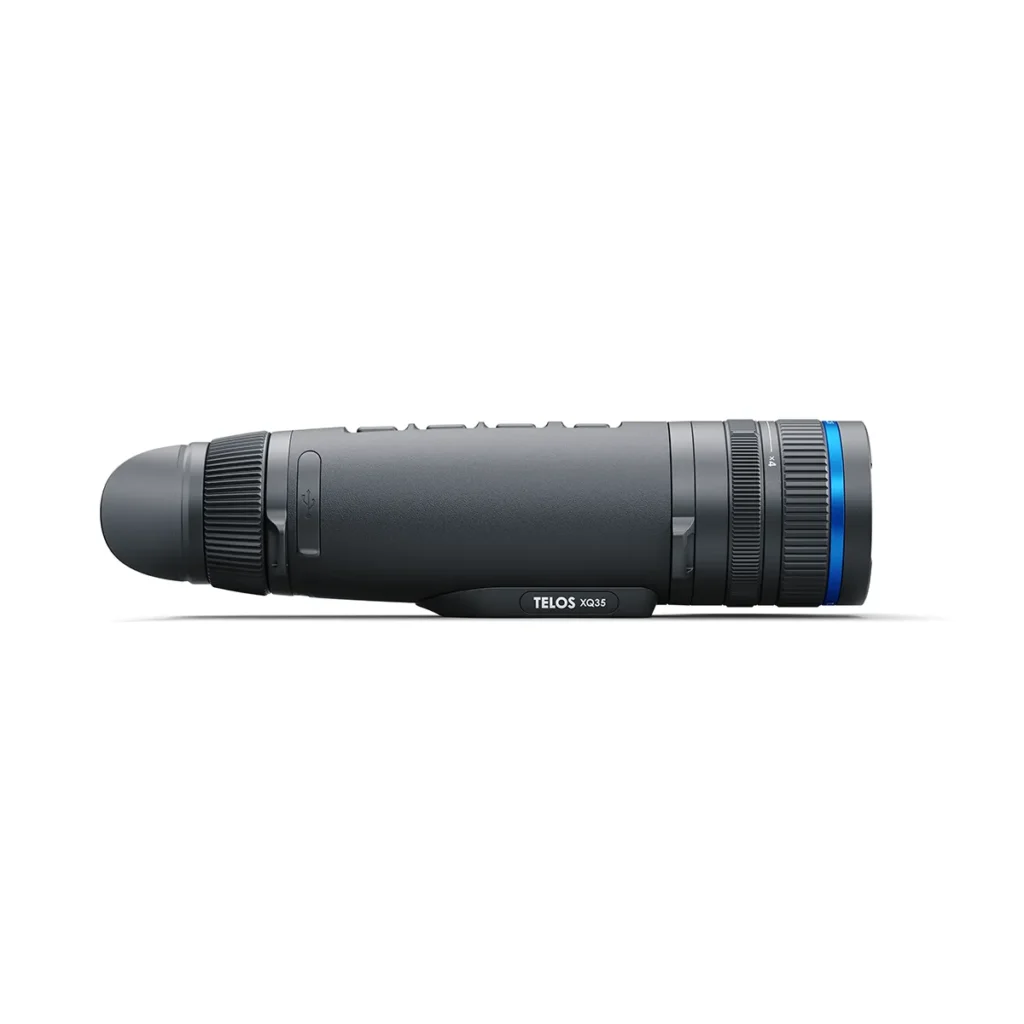
Pulsar Telos XQ35 Thermal Imaging Monocular
$1 650.00 -
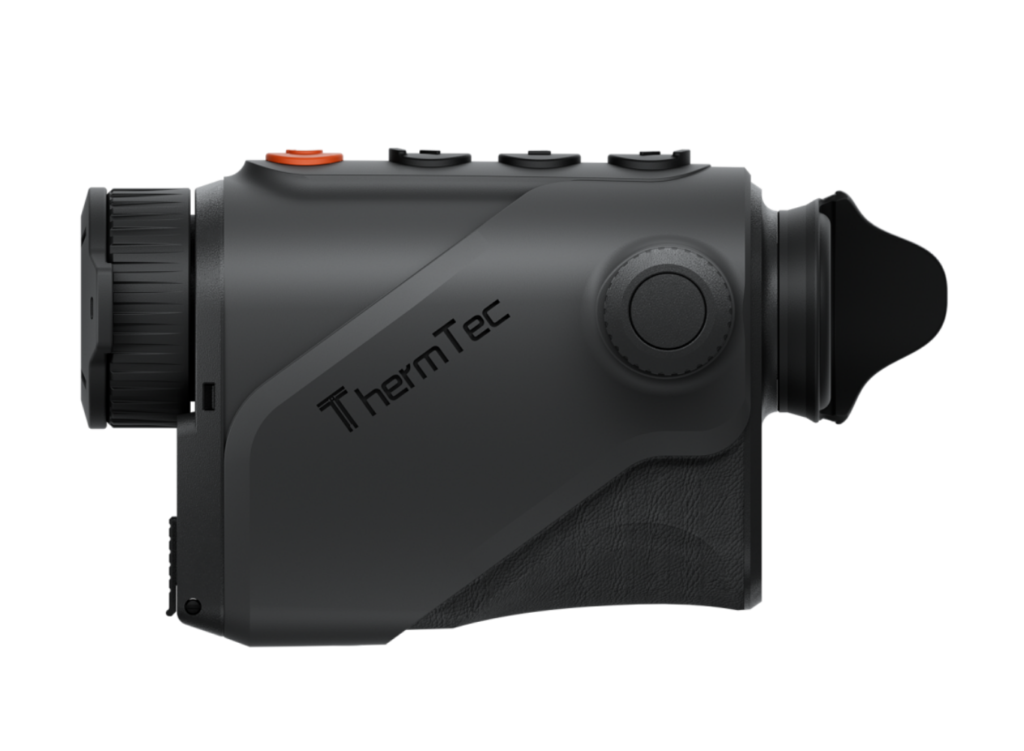
ThermTec Cyclone Compact Thermal Monocular
Price range: $935.00 through $1 595.00
What a thermal monocular actually is
Before the buying advice, a quick grounding: understanding the technology protects you from marketing.
A thermal monocular is a handheld thermographic camera built into a single-eye viewing device. It does not amplify light the way night vision does. Instead, it detects infrared radiation, the heat every object emits, and converts differences in temperature into a visible image. That is why it works in total darkness, through light fog, and in daylight alike: it is reading heat, not light.
The sensor at its heart is almost always an uncooled microbolometer, a grid of tiny elements that change resistance as infrared warms them. The lens is not glass but germanium, one of the few materials transparent to long-wave infrared, which is part of why thermal optics cost what they do. None of the information is essential to memorize, but knowing that you are buying a heat camera with a germanium lens and a microbolometer sensor makes the specifications below far easier to judge.
Our thermal imaging for hunting guide provides a fuller explanation of how the technology works in the field, using plain language.
What a thermal monocular costs in 2026
Prices have fallen hard, driven by 12 µm sensors and manufacturing scale from HIKMICRO, AGM, and ThermTec. Here is the current landscape.
| Band | Price | Sensor | NETD | Suits | Example |
|---|---|---|---|---|---|
| Budget | €329-700 | 256 or 384 | 25-40 mK | Farm, security, first thermal | HIKMICRO Lynx 3.0 |
| Entry | €700-1,100 | 384 or 640 | 18-25 mK | Real hunting | ThermTec Cyclone €899 |
| Mid | €1,100-1,800 | 384 or 640 | 15-25 mK | All-round night hunting | Cyclops 3.0 |
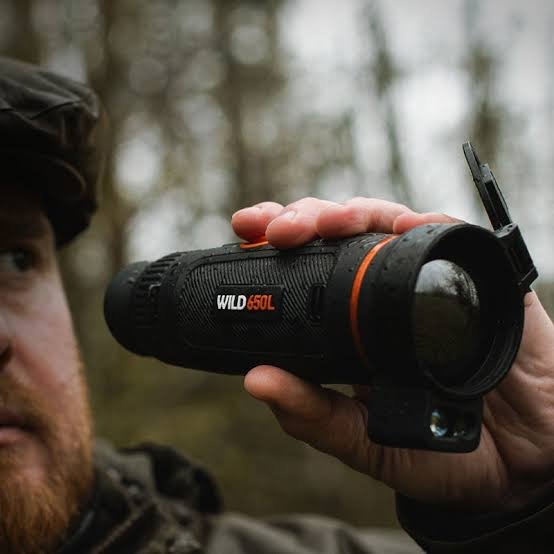
| Premium | €1,800-2,900 | 640 | 15-20 mK | Long range, poor weather | Wild Pro €2,890 |
| Flagship | €2,900+ | 640 or HD | 15-40 mK | Maximum capability | Pulsar Telos |
Where the value sits. The jump from budget to entry buys more capability per euro than any other step in the market. Around €899 the ThermTec Cyclone gives a 640 sensor at under 20 mK with roughly 20 hours of battery in a 255 g body, which two years ago was an €1,800 specification. If you can reach this band, do; it is the single best-value decision in thermal.
For the full pricing picture across scopes and monoculars, see how much a thermal scope costs.
Thermal monoculars by budget: what each band actually buys
“Under €500” and “under €1,000” describe very different devices. Here is what your money actually gets.
Under €500
You get a 256×192 or entry 384×288 sensor, a short lens, and sensitivity between 25 and 40 mK. You get detection of a large animal at a few hundred meters, with identification considerably closer. Battery life is usually decent because a small sensor draws little power.
What it does well: checking fields and gardens, finding livestock, general observation, and learning whether thermal suits you at all. Where it disappoints: damp nights, long distances, and any situation where you need to see exactly what you are looking at rather than just that something warm is there. The honest entry point is the HIKMICRO Lynx, starting at around €329.
€700 to €1,100
This is the most important step in the whole market. Around €899 you move to a 640×512 sensor at under 20 mK, which roughly doubles the linear detail and transforms wet-weather performance at the same time. What it does well: genuine hunting at practical ranges, land management, identification rather than just detection, and all-night sessions. The jump in capability from the band below is larger than the jump in price. The ThermTec Cyclone at €899 defines this band.
€1,100 to €1,800
Longer lenses provide real reach, better sensitivity, and dual-field-of-view options that switch between a wide scanning view and a narrow identification view. What it does well: open country, mixed terrain, longer identification, semi-professional use. The ThermTec Cyclops 3.0 and Cyclops-D sit here.
€1,800 to €2,900
Sub-15 mK sensitivity, high-resolution displays, and integrated laser rangefinders. This section is where image quality in genuinely bad conditions becomes the point. What it does well: low contrast, rain, fog, long range, and judging distance without a second device. Be honest with yourself, though: the improvement here is real but incremental. Most buyers get more from spending €899 well than €2,900 badly. The ThermTec Wild Pro at €2,890 leads this band.
The specifications that actually matter
Most disappointed buyers felt misled by the wrong number. Here are the specifications that decide performance, in order of importance.
Sensor resolution: identification, not just detection
Resolution is the number every listing leads with, and it matters for a specific reason: it drives how far you can identify game, not just detect it. A 256-sensor suit is best for short- to medium-range scanning and first thermal. A 384 sensor is the best all-round choice. A 640 sensor gives the cleanest, longest-range image. As a rule, spend on resolution before magnification, because a higher-resolution sensor at a modest zoom beats a low-resolution sensor pushed hard every time. The full side-by-side is in 384 vs 640 thermal.
NETD: the number that decides wet nights
NETD, noise-equivalent temperature difference, measures how small a temperature difference the sensor can detect in millikelvin, and the lower is better. It is the specification brochures bury and buyers overlook, and it matters enormously. Under 20 mK is strong, under 15 mK is professional grade, and above 40 mK struggles in damp conditions. Two devices with identical resolution can perform completely differently if their NETD differs. If a listing does not state NETD, that is usually because the figure is not flattering. Ask, and treat reluctance as an answer.
Here is the principle worth remembering: resolution sells devices, but sensitivity finds animals. On a wet European night, a lower NETD does more for your image than extra pixels do.
Detection range vs. identification range
This figure is the single most misunderstood number in thermal. Detection range means knowing something warm is there. Identification means knowing what it is, and it occurs at roughly a quarter to a third of the quoted distance, following the logic of the Johnson criteria that underpins all sensor-range modelling. A device advertised at 2,600 m detection may only identify a fox at 300 m. Published figures assume large, warm targets in clear, cold conditions; rain and humidity cut them further. Our guide on how far a thermal monocular can see explains the mechanism in full. Never buy based on detection range alone.
Lens and field of view
The objective lens sets your reach and your field of view, and the two pull against each other. A longer lens (35 mm, 50 mm) reaches further and magnifies more but shows less ground; a shorter lens gives a wide view for quick scanning. Choose short for woodland and close cover, and long for open fields and hillsides. Most buyers scan more than they reach, so do not default to the biggest lens.
Weight
You will hold this one-handed for hours. Models run from 255 g to over 650 g, a difference that is enormous in practice and invisible in a spec comparison. Buying a heavy long-lens device for ground where you mostly scan is a common and expensive mistake. Our handheld thermal monocular guide covers ergonomics in detail.
Battery: replaceable beats big
Runtime figures matter less than whether you can swap a cell in the field. A device using standard 18650 cells never ends your night, because you carry spares. A sealed internal battery caps your session at the runtime figure, whatever the marketing says.
Before you buy: seven things to check on any listing
None of these are obvious from a product page, and each catches buyers regularly.
1. Is the seller an authorized dealer? Thermal warranties are usually honored only through authorized channels. A grey-market unit may have no warranty support in your country, which on a €2,000 device is a serious exposure. A legitimate dealer will confirm their status without hesitation.
2. Where is it shipping from, and what will you pay on arrival? This is the trap that catches most bargain hunters. A device advertised cheaply from outside your customs union can attract import duty, VAT, and a handling fee on arrival, frequently adding 25 to 35 percent to what you thought you were paying. Buy from within your customs area, or confirm the landed cost in writing first. The mechanics of import duty and VAT are worth understanding before you order from abroad.
3. What is the actual warranty term, and where is service done? Warranty periods vary from two years to AGM’s five-year transferable cover. Ask where service is carried out, because a device that must cross a continent for repair costs you a season regardless of the term on paper.
4. Is it the current generation? Older and current models from the same brand sit side by side at similar prices with very different specifications. AGM’s older Asp runs a 17 µm sensor at under 35 mK, while the current Sidewinder uses 12 µm at 20 mK. Please check the exact model designation, not just the family name.
5. What is the NETD figure? Covered above, but worth repeating as a buying check: if the listing hides it, ask.
6. Does it include a spare battery? The single most useful accessory is often excluded. A listing that looks €80 cheaper is not cheaper if it omits the spare.
7. Is it legal where you intend to use it? Handheld thermal for observation is widely permitted across Europe and treated far more permissively than rifle-mounted thermal, but rules differ by country and sometimes region. Confirm with your national or regional hunting authority before ordering, especially if you cross borders.
New, used, or ex-demo?
There is a genuine market for used thermal, and it is worth understanding before you either buy or dismiss it.
New. Full warranty, current firmware, current generation. The right answer is at the budget and mid ranges, where generational change is fastest.
Ex-demonstration. Often genuinely excellent value. These have been handled rather than used, usually carry a full or near-full warranty, and are current stock. Ask whether the warranty runs from your purchase date or the original one.
Used private sale. Cheapest and riskiest. The bright side news: thermal devices have no consumable parts, no cooling system, and nothing that wears out in normal use, so a well-kept three-year-old unit performs as it did new. The germanium lens and microbolometer sensor do not degrade. The risks: warranty is often non-transferable, water ingress from a failed seal is invisible until it is not, firmware support for discontinued models eventually stops, and the brisk market means a three-year-old device may be two generations behind on sensitivity for not much less than a current entry model.
What to check on a used unit. Look through it in a cold, damp environment rather than a warm shop, because that is where a worn sensor shows. Check the battery holds its rated runtime first, since that is the most common problem. Examine the lens for scratches and the housing seams for damage. Confirm the model still receives firmware support, and ask for the original purchase documentation if a warranty might apply.
Our honest view. At the budget end, buy new: a current €329 device beats a five-year-old €400 one on every measure. At the premium end, a used current-generation Pulsar or ThermTec from a trusted source can be a sensible choice, provided you inspect it properly. Pulsar in particular holds value, which cuts both ways: used Pulsars are not especially cheap, but yours will resell well.
Buying by brand: what to expect
We carry every major thermal brand, so the focus is about matching you to the right maker, not clearing stock.
| Brand | Strength | Warranty | Buying note |
|---|---|---|---|
| ThermTec | Best spec per euro | Manufacturer | Low brand recognition means less price inflation. |
| Pulsar | Build, software, resale | Manufacturer | Check Axion vs. Axion 2 carefully. |
| HIKMICRO | Widest range, owns budget end | Manufacturer | Many variants; check the exact code. |
| AGM | Sensitivity, longest warranty | 5 yr transferable | Old and current gens sold side by side |
| ATN | Features, smart tools | Manufacturer |
A note on ThermTec pricing. Because the brand carries less name recognition than Pulsar, its devices are priced on specification rather than reputation. That is why a Cyclone at €899 out-specifies devices costing considerably more. If you buy based on capability rather than badge, that is where the value lies.
Our complete thermal monocular guide covers every range, providing a full brand-by-brand comparison.
Buy the right format, not just the right price.
A monocular is not always the answer, and buying the wrong format is pricier than buying the wrong model.
| Format | Job | Browse |
|---|---|---|
| Monocular | Find and identify | Range |
| Riflescope | Take the shot. | Range |
| Clip-on | Convert a day scope. | Range |
| Binocular | Long observation | Range |
Buy a monocular first, almost without exception. It is the safest, most versatile, and usually cheapest thermal device, and you will use it every time you go out. Scanning with a rifle-mounted optic means pointing a firearm at everything you want to identify, which is why a monocular is not optional even if you also buy a thermal scope. If you already own a day scope, you shoot well; a thermal clip-on converts it for night use without re-zeroing. Thermal binoculars eliminate the eye strain that builds up with a monocular, especially if you glass for hours instead of just minutes. Our monocular vs. scope vs. clip-on guide covers the full decision.
Matching the monocular to your quarry
The right specification shifts with what you actually hunt or observe, so it is worth buying for your quarry rather than for a spec sheet.
Coyotes, foxes, and predators. Shot at distance across open ground, often on the move, so reach and a fast, clean image are important. A 640 sensor with a 35 to 50 mm lens and low NETD is best, as a predator’s coat against cold ground is a low-contrast target. This animal is the quarry where buyers most often overspend on detection range and underspend on sensitivity.
Hog and wild boar. They move in groups and stay in cover, so a wide field of view helps you find and track the whole sounder. A 384 or 640 with a 25 to 35 mm lens is ideal, and hogs give off strong heat signatures, making them the easiest quarry to learn thermal on and a forgiving first purchase.
Deer management and stalking. You need to identify species and often sex before a cull decision, so resolution and a clean image matter more than raw range. A 640 monocular earns its cost here, as it is used to locate and count before you confirm with the monocular’s best image or a day optic. Remember that thermal shows body size, posture, and movement, not fine detail: it will not count tines for you.
Small nocturnal game. For rabbits, coons, and similar quarry, you work at a shorter range, often in cover, so a wide field of view and a light, handy body beat long reach. An entry of 256 or 384 monoculars is genuinely enough.
The pattern across the quarry: big, open-ground animals want reach and resolution; small, close, in-cover game wants a wide field and a light body. Our best thermal monocular for hunting guides gives quarry-specific picks across every brand.
Five mistakes that cost buyers money
Certain errors recur often enough to be worth naming directly, because each one wastes real money.
Buying based on the detection-range number. It is the most quoted figure and the least useful. It assumes a large, warm target in ideal conditions, and the distance at which you can actually identify an animal is a fraction of it. Buyers routinely pay a premium for headline reach they will never use in practice.
Chasing magnification over sensor quality. High digital zoom on a small sensor produces a bigger, blockier image, not a better one. The base sensor resolution and NETD set your real image quality; zoom cannot add detail the sensor never captured.
Ignoring NETD entirely. Two monoculars with the same resolution and price can look entirely different in the field if their thermal sensitivity differs. In a damp climate, this factor is often the single biggest determinant of whether you are satisfied, and it is the number buyers most often skip.
Buying a scope before a monocular. For most people the monocular is the safer, more versatile first purchase. Scanning with a rifle-mounted optic means pointing a firearm at whatever you want to identify, which is unsafe and impractical. See monocular vs. scope vs. clip-on.
Letting a discount choose the model. A genuine sale saves 10 to 15 percent. Buying the wrong device because it happened to be discounted costs the entire purchase. First, decide on the right model, then look for the best price on it.
Looking after a thermal monocular
Thermal optics are precision electronics, and a little care protects a significant investment and its resale value.
Let it acclimatize. Moving a warm device into cold, damp air fogs the image until temperatures settle. Allow it a few minutes rather than assuming a fault. This is normal physics, not a defect.
Protect the germanium lens. The germanium objective is softer than glass and carries a delicate anti-reflective coating. Keep it capped when not in use, clean it only with a cloth made for coated optics, and never use household glass cleaner, which can strip the coating.
Manage the battery. Store lithium cells partly charged rather than flat or full for long periods, and carry spares in a way that cannot short the terminals. Devices using standard cells are far cheaper to keep running over years than those tied to proprietary packs.
Keep firmware current. Manufacturers push image processing and stability improvements through firmware. Keeping a current model updated genuinely improves it over its life and confirms the device is still supported, which is relevant for resale.
Store it dry. Even weather-sealed devices should be stored dry and capped. A failed seal that lets in moisture is the most common way a used thermal device fails, and it is invisible until it happens.
When cared for this way, a quality thermal monocular retains both its performance and a good share of its value across many seasons, making the initial spend easier to justify.
What comes in the box, and what to add?
Advertised prices rarely include everything you need.
Usually included: the device, a wrist lanyard, a soft case, a charging cable, and a lens cloth. A spare battery, a tripod adapter, a chest harness, or a hard case are often not included.
Worth adding at purchase:
- A spare battery is always worth having, ideally one that uses standard 18650 cells.
- A lanyard or chest harness, since you hold an expensive item one-handed in the dark over wet ground.
- A sturdy case, because germanium lenses are softer than glass and costly to replace.
- A proper lens cloth for coated optics, never household glass cleaner.
- A tripod adapter if you do static observation.
- A helmet mount if you want hands-free; check compatibility and keep head-mounted weight under about 400 g.
When are thermal monoculars cheapest?
Autumn. The season runs from roughly September, and manufacturers’ time launches to it, so discounting is least likely just as demand peaks. Black Friday and late November. Genuine reductions appear, but so do inflated “was” prices, so please note the price of anything you are considering a month beforehand. End of season, February to April. Retailers clear stock: less choice, better prices. When a generation changes. The moment a Mark 2 is announced, the Mark 1 becomes good value and often loses little in real-world performance.
Buying at the wrong moment costs perhaps 10 to 15 percent. Buying the wrong device can ruin the whole purchase, so do not let a deal decide the model.
Buying the right one, not just the cheapest one
Three decisions do most of the work. Sensitivity over resolution in a wet climate: NETD under 20 mK does more on a damp night than extra pixels. Field of view overreach for most people: most buyers scan more than they reach. Replaceable battery over headline runtime: a spare cell removes the problem permanently.
When you are ready, browse the full thermal monocular range for live stock and euro prices, or tell us your budget and ground, and we will shortlist across every brand we carry.
Frequently asked questions
How much does a thermal monocular cost?
Prices range from around €329 for an entry-level HIKMICRO Lynx to roughly €3,700 for a flagship model. The best value is around €899, with the ThermTec Cyclone offering a 640 sensor at under 20 mK and 20 hours of battery life. Serious hunting devices run €1,100 to €2,900.
What is the best thermal monocular for the money?
The ThermTec Cyclone at €899, which combines a 640×512 sensor at under 20 mK with a 255 g body and roughly 20 hours of battery. For a larger budget, the Wild Pro has a thermal sensitivity of under 15 mK. For a smaller one, HIKMICRO’s Lynx ranges from €329.
What is the most important spec in a thermal monocular?
Sensor resolution decides how far you can identify the game, and NETD decides how clean the image stays in bad weather. Between them, they matter more than magnification or headline detection range. Under 20 mK, NETD is the quality bar; a 384 sensor is the all-round sweet spot.
Should I buy a used thermal monocular?
It can be sensible, because sensors and germanium lenses do not degrade with normal use. Check battery health, lens condition, and the specific model’s NETD before buying. At the budget end, a new current-generation device beats an older used one; at the premium end, a recent used Pulsar or ThermTec from a trusted source can be excellent value.
Do I have to pay import duty on a thermal monocular?
If it ships from outside your customs union, usually yes, plus VAT and a handling fee, which frequently adds 25 to 35 percent to the advertised price. This is the most common unpleasant surprise for bargain hunters. Buy within your customs area or get the landed cost confirmed in writing.
When is the best time to buy a thermal monocular?
The best times to buy are late November for Black Friday, February to April for end-of-season clearance, and whenever a replacement generation is announced and the outgoing model drops. Note prices a month in advance so you can recognize a genuine reduction. Timing saves perhaps 10 to 15 percent; buying the wrong model costs everything.
Is a thermal monocular legal to own?
In most of Europe, handheld thermal devices used for observation are widely permitted and treated far more permissively than thermal devices mounted on a firearm. Rules differ by country and sometimes region, and hunting use is more regulated than general observation. Check with your local authority before ordering.
What warranty comes with a thermal monocular?
The warranty lasts between two and five years, depending on the brand. AGM offers five years and transfers it to a second owner. Ask where servicing is performed as well as how long it lasts, since a device that must travel far for repair costs you a season.
Which brand should I buy?
It depends on budget. HIKMICRO has the entry level starting at €329. ThermTec offers the best specification per euro in the middle. Pulsar leads on build, software, and resale at a premium. AGM offers strong sensitivity and the longest warranty. Our complete thermal monocular guide compares all of them.
Do thermal monoculars hold their value?
Pulsar holds value best by a clear margin, which matters if you upgrade every few seasons since the effective cost of ownership is lower than the sticker suggests. Other brands depreciate faster, partly because the market moves quickly and partly because brand recognition drives the used market as much as specification does.
What accessories do I need with a thermal monocular?
A spare battery above all, since it removes any limit on your night. Then a lanyard or harness, a sturdy case, and a proper lens cloth for coated optics. A tripod adapter if you do static observation, and a helmet mount if you want both hands free.
Ready to buy? Browse the full thermal monocular range across ThermTec, Pulsar, HIKMICRO, and AGM. Still deciding? Read how to choose a thermal monocular, the complete thermal monocular guide, or compare thermal vs. night vision. Tell us your budget and the type of ground you’ll be using it on, and we’ll shortlist options from every brand we carry.