
Best Thermal Scope for the Money: complete guide (2026)
The best thermal scope for the money is the one that gives you the sensor, sensitivity, and range for your actual shooting needs without paying a legacy brand’s markup for capability you will never use. Thermal sights run from about €1,500 to well past €10,000, and the gap between good value and wasted money is wider in this category than almost any other in optics. This guide explains what actually drives value, what each price band buys you, and how the ThermTec range compares.
New to thermal? Start with the complete guide to thermal imaging for hunting. Otherwise, browse the thermal rifle scope range or the ThermTec brand page.
What makes a thermal scope good value
The best thermal scope for the money is neither the cheapest nor the one with the longest spec sheet. It is the closest match between what a scope does well and what you actually do at night.
A cheap thermal rifle scope with a weak sensor costs you in missed opportunities and misjudged shots, which is expensive in a way that never appears on the receipt. An expensive scope loaded with features you never touch is money that would have bought a better monocular or a season’s worth of ammunition. The sweet spot sits where the core specifications match your typical distance and quarry, from a manufacturer that prices honestly.
That last point matters more than buyers expect. Two scopes with near-identical sensors, lenses, and displays can differ by €1,500 purely on brand. ThermTec has built its position by putting 12µm sensors, low NETD, and integrated rangefinders into scopes priced well below the established names, which is why they dominate any serious answer to the best thermal scope for the money question.
How to choose a thermal scope
Seven specifications determine whether a scope is the best thermal scope for your specific needs. These specifications are roughly ordered by how much they affect your night:
Sensor resolution
Resolution determines how far out you can place a shot with confidence rather than merely see that something is there. A 384×288 sensor handles mid-range work well and keeps the price honest. A 640×512 sensor roughly doubles linear detail, which shows when you need to confirm what you are looking at before committing. Our explainer on 384 versus 640 thermal sensors covers the trade in detail.
Spend here before anywhere else.
Thermal sensitivity (NETD)
NETD is the smallest temperature difference the sensor can resolve, in millikelvins. Lower is better: under 20mK is strong, under 15mK is pro-grade. It governs image quality in fog, drizzle, and humidity, which describes a large share of the European hunting season. On a wet night, a sub-15mK 384 sensor will frequently outperform a 640 sensor with mediocre sensitivity.
Rangefinder and ballistics
A built-in laser rangefinder gives you exact distance, and a ballistic calculator converts that into a corrected aim point for bullet drop. Beyond your comfortable holdover range, that combination makes an ethical shot possible rather than merely a lucky one. If all your shooting happens at short, known distances, a thermal scope with a laser rangefinder is a feature you can skip and save several hundred euros.
Field of view and magnification
A wider field helps you find and follow game; higher magnification helps you identify and aim at a distance. They pull against each other, which is why dual-field-of-view scopes exist. Do not over-magnify: a smaller field makes tracking a moving animal genuinely harder, and digital zoom beyond the sensor’s resolution adds size without adding information.
Recoil rating
A thermal scope must hold zero under recoil, or it is worthless. Check the rating against your caliber. ThermTec’s current scopes are rated to 6,000 J, which covers common centerfire cartridges comfortably.
Display quality
The sensor captures detail; the display decides whether you see it. A 1024×768 AMOLED is solid. The 2560×2560 OLED on the Oryx is a genuine step up, and over a long session it reduces eye fatigue in a way that is difficult to appreciate from a spec sheet.
Battery life
All-night sessions need endurance. Look for around 18 hours, ideally with replaceable packs so you can swap in the field rather than stopping to charge.
What each price band buys you
| Band | Price | What you get | ThermTec models |
|---|---|---|---|
| Entry | €1,690-2,290 | 384 or 640 sensors, ~18 mK, basic or no ranging | Ares 2.0 360, Ibex 335L |
| Mid | €2,290-2,690 | 640 sensors, ~18 mK, 1,000-1,200 m LRF | Ares 2.0 660L, Vidar 2.0 650 |
| Premium | €2,690-3,690 | 640 at ≤15mK, high-res display, ranging, shutterless | Vidar 2.0 650L, Oryx |
Products by Category
-
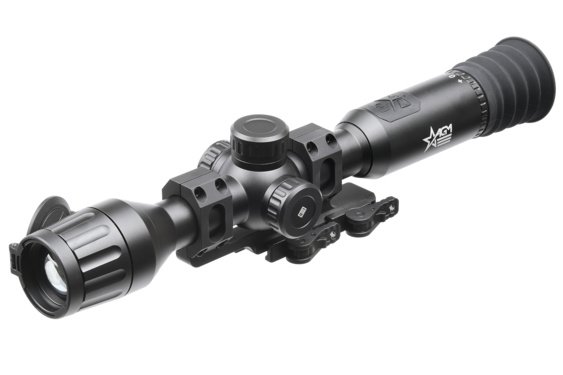
AGM Adder TS35-384 Thermal Imaging Riflescope
-
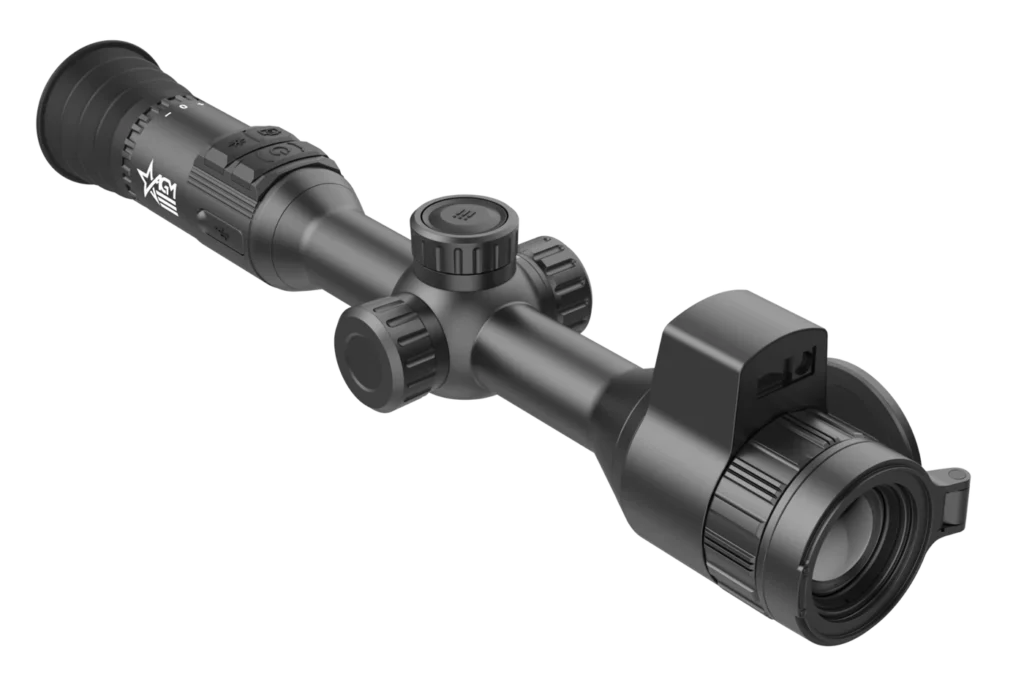
AGM Adder TS35-640 Thermal Imaging Riflescope
-
AGM Adder TS50-384 Thermal Imaging Riflescope
-
AGM Adder TS50-640 Thermal Imaging Riflescope
-
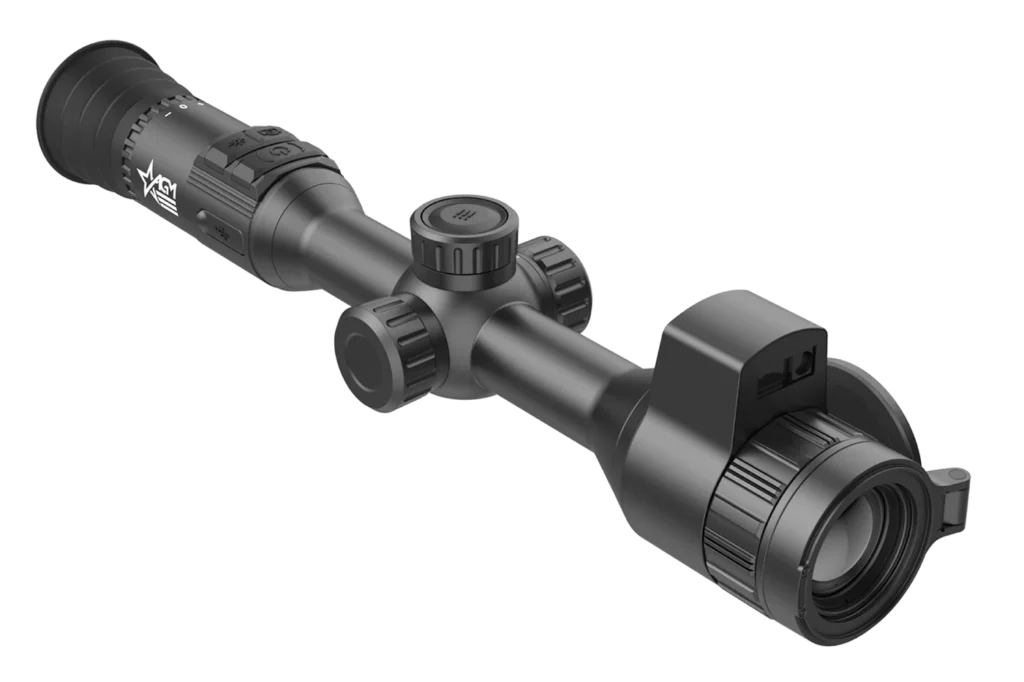
AGM Adder V2 LRF 35-384 Thermal Scope | Sub-15 mK, LRF
-
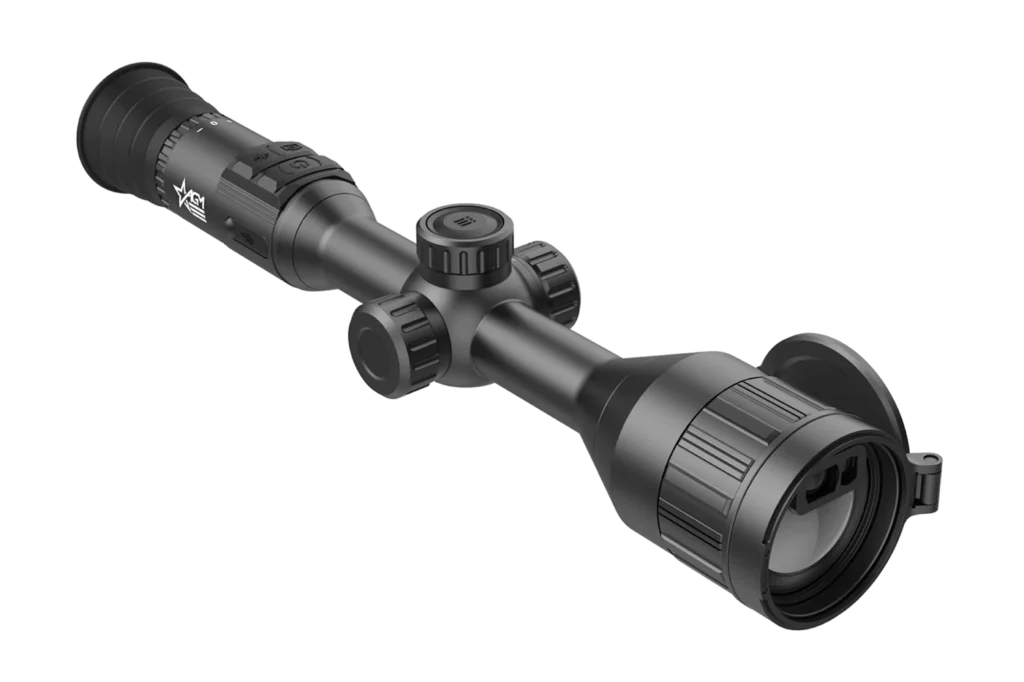
AGM Adder V2 LRF 50-640 Thermal Imaging Riflescope
-
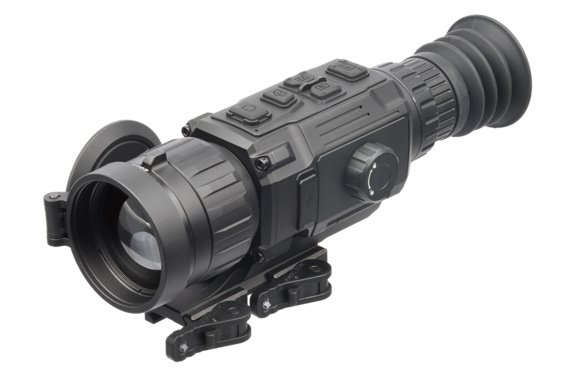
AGM Clarion 384 Dual Focus Thermal Imaging Riflescope
-
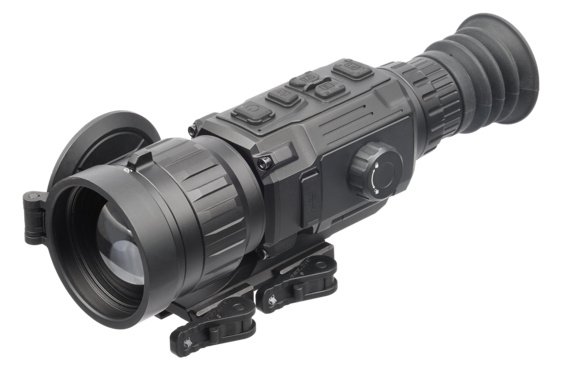
AGM Clarion 640 Dual Focus Thermal Imaging Riflescope
-
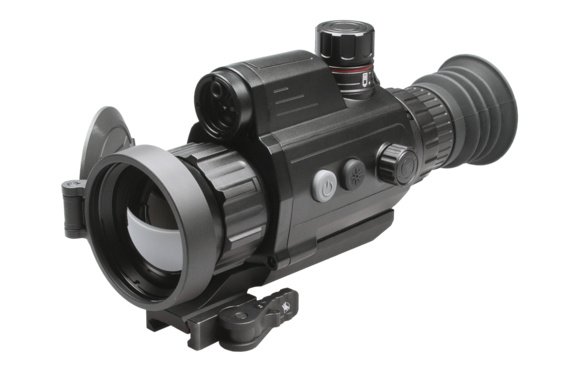
AGM Evolver LRF 1280 Thermal Imaging Riflescope
If you are hunting for the best thermal scope for the money, the steepest value curve is between entry and mid. Moving from a 384 sensor without ranging to a 640 with a rangefinder is roughly €600 and transforms what the scope can do. The step from mid to premium buys real quality, particularly in low contrast, but the improvement per euro is smaller.
The ThermTec thermal scope range compared
| Model | Sensor | NETD | Lens | LRF | Display | Price |
|---|---|---|---|---|---|---|
| Ibex 335L | 384×288 | <18 mK | 35 mm | 1,000 m | 1600×1200 | €2,290 |
| Ares 2.0 | 384 / 640 | ≤18 mK | Dual 20/60 mm | 1,000 m (L) | 1024×768 | €1,690-2,690 |
| Vidar 2.0 | 640×512 | ≤18 mK | 50 mm | 1,200 m (L) | 1024×768 | €1,990-2,990 |
| Oryx | 640×512 | ≤15 mK | 35 / 50 mm F0.9 | 1,200 m | 2560×2560 | €2,990-3,690 |
Lightweight value: ThermTec Ibex 335L
The Ibex 335L is the quiet value pick. At roughly 700 g, it handles like a day scope, which makes it the easiest transition for anyone moving to thermal for the first time, and it still carries a sub-18 mK sensor, a 1,000 m rangefinder, and a 1600 x 1200 display. For hunters who walk their ground, low weight is worth more than an extra 200 m of detection range.
Versatile mid-range: ThermTec Ares 2.0
The Ares 2.0 is built around a dual 20/60 mm field of view, so one scope scans wide and engages narrow. That flexibility suits anyone who moves between woodland and open ground in a single outing, and the L models add 1,000 m of range with ballistics. It is the strongest all-rounder in the range.
Lightweight long range: ThermTec Vidar 2.0
The Vidar 2.0 has a light tube profile, a 640 sensor, sub-18 mK sensitivity, and a 50 mm lens for 2,600 m detection, with a 1,200 m rangefinder on L models. For open-field and hill hunting where you carry the rifle a long way and shoot at distance, it is the better-judged choice than a heavier scope.
Flagship: ThermTec Oryx
The Oryx is the long-range flagship: sub-15 mK sensor, 2560×2560 OLED, 50 mm F0.9 germanium lens, 1,200 m ranging, shutterless imaging, and the AutoSight system that returns to base magnification after a shot. It is not the value pick and does not pretend to be. It is what you buy when image quality at distance is the priority.
How ThermTec compares to Pulsar, AGM, and HIKMICRO
We sell every major thermal brand, so we have no reason to push one. If you are genuinely asking which is the best thermal scope for the money, the honest answer is to compare across manufacturers rather than within one catalog.
| Brand | Origin | Positioning | Scope price band | Strongest at |
|---|---|---|---|---|
| Pulsar | Lithuania | Premium, most established | €2,500-6,000 | Build, software, resale |
| ThermTec | China | Spec-per-euro leader | €1,690-3,690 | Sensor and ranging for the price |
| HIKMICRO | China | Large-scale manufacturer | €1,800-4,300 | Consistency, wide range |
| AGM | USA | Aggressive value | €1,200-3,000 | Entry pricing |
| ATN | USA | Feature-led | €1,000-3,500 | Ballistics, streaming, video |
Pulsar is the benchmark, and its prices reflect that. The Thermion 2 LRF line and the Talion series are exceptionally well built, the Stream Vision app ecosystem is the most polished in the category, and Pulsar holds resale value better than anything else here. You pay roughly 30 to 50 percent more for that. If you intend to keep a scope for a decade or sell it on, that premium is defensible.
HIKMICRO’s enormous manufacturing scale shows up in its consistency rather than in its headline specifications. The Stellar SQ50L 3.0 is a genuinely capable shutterless 640 thermal rifle scope, and the wider range covers more price points than most competitors.
AGM competes hard at the entry end. The Rattler line in particular put usable thermal into the hands of buyers who could not previously afford it, and it remains one of the sensible answers to anyone shopping for a cheap thermal scope that is not simply terrible. Software and interface polish trail the leaders.
ATN loads its ThOR scopes with features, including onboard ballistic calculators and video recording and streaming. Buyers who want the technology package rate them highly; those who care mainly about raw image quality per euro often prefer alternatives.
Warranty and support are part of the price. Comparing sticker prices alone misses the point. Warranty periods, European service arrangements, and firmware support all differ meaningfully between these manufacturers, and a scope that has to cross a continent for repair costs you a season regardless of what you paid. Before you commit to any brand, ask about the warranty term and where they carry out service.
Where ThermTec sits. ThermTec’s argument is straightforward: 12 µm sensors, sub-15 mK NETD on the upper models, and integrated laser rangefinders at prices that undercut Pulsar substantially. On specification per euro, nothing in the current market beats it, which is why it recurs throughout this guide.
The honest qualification is that Pulsar’s decade of software refinement, accessory ecosystem, and resale strength are real advantages that no spec sheet captures. If you want the most capability for your money today, choose ThermTec. If you want the most refined ownership experience and the strongest resale in three years, Pulsar. Both are defensible, and anyone telling you only one answer exists is selling you something.
Browse the full thermal rifle scope range to compare brands side by side, or tell us your budget and quarry, and we will shortlist across all of them.
Mounting and zeroing a thermal scope
A thermal scope is only as good as its mount, and the mounting stage is where otherwise sensible budgets get cut.
Rings or rail. ThermTec scopes take either 30 mm rings or a Picatinny/Weaver mount, depending on the model. Confirm which your rifle’s rail accepts before ordering, and buy the mount at the same time rather than improvising later.
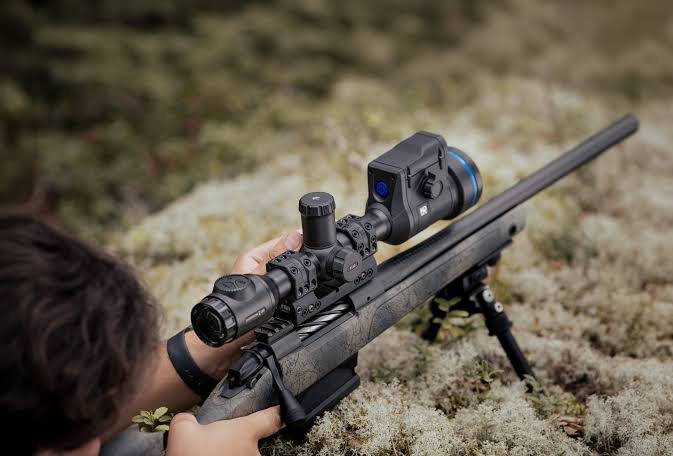
Quick-detach or fixed. A QD mount lets you swap between a day scope and a thermal scope on the same rifle, returning close to zero each time. It is worth the premium if the rifle does double duty. If the thermal stays on permanently, a fixed mount is simpler and marginally more rigid.
Zeroing. Thermal scopes are zeroed much like day optics, but you need a target the sensor can actually see. A hand warmer, a heated plate, or foil taped to a card gives you a clear aiming point on a cold range. Zero at the distance you actually shoot rather than a default 100 m, and save the profile. ThermTec scopes store multiple zeroing profiles, so one scope can serve two rifles or two loads.
Recoil. Check the rating against your caliber before mounting. The 6,000 J rating on current ThermTec scopes covers common centerfire cartridges, but a scope that shifts under recoil will cost you far more than the scope did.
What about the older ThermTec models?
You will still find the first-generation Ares, Ares LRF and Vidar listed at lower prices. They remain capable sights, and where the discount is real, they can represent the best thermal scope for the money at a tight budget.
Be clear about what you give up, though. The 2.0 generations added AI self-learning calibration for a more stable image, refined controls, and substantially longer battery life, and those are daily-use improvements rather than marketing points. If the price gap is small, buy current. If it is large and you shoot at moderate range, the older units still do the job.
Scope, monocular, or clip-on?
A common and expensive mistake is buying a thermal scope to do a monocular’s job.
A rifle scope is for shooting. Scanning with one means pointing a firearm at everything you want to identify, which is an unacceptable practice whatever the optic. The standard setup is to find and identify game with a thermal monocular, then bring the rifle up for the shot.
If you already own a day scope and shoot well, consider a thermal clip-on instead. It converts your existing optic for night use with no re-zeroing, keeps full-day capability, and typically costs less. Our full comparison of monocular, scope and clip-on sets out where each belongs, and thermal versus night vision covers the more fundamental choice.
Thermal scope for hog hunting
Hogs are the strongest single case for thermals. They are overwhelmingly nocturnal, they move in groups, they run warm, and they cause enough damage that landowners want them dealt with year-round.
Two things are especially important for a hog rig. First, field of view: hogs arrive as a sounder rather than singly, and a wide view helps you track which animal is which. The dual-FOV Ares 2.0 suits this well. Second, ranging: hog shooting involves very close encounters and longer field shots, so a thermal scope with a laser rangefinder quickly earns its cost.
For most hog hunters, the Ares 2.0 660L at €2,690 is the sensible answer, with the Oryx for those taking longer shots in open country.
Legality: confirm before you buy
Rules on thermal sights vary widely across Europe and change periodically. Many jurisdictions treat handheld thermal observation devices quite differently from thermal mounted on a firearm, and some allow rifle-mounted thermal only for certain species or under specific permissions.
We sell optics; we do not give legal advice. Check the current position with your national or regional hunting authority before ordering, especially if you hunt across borders.
Mistakes worth avoiding
Buying within the detection range. It is the most quoted figure and the least predictive. Identification range is a fraction of it, and weather cuts both ways.
Under-buying sensitivity. In damp climates, NETD does more for your image than resolution does.
Skipping the monocular. A scope-only setup means scanning with a rifle. Budget for both.
Ignoring weight. A scope you carry all night matters more than one that wins a spec comparison.
Which thermal scope should you choose?
For mixed terrain on a mid-range budget, the Ares 2.0. For lightweight long-range work, the Vidar 2.0. For the lightest handling and easiest transition from day optics, the Ibex 335L. For the clearest image at a distance, the Oryx.
And pair whichever you choose with a handheld for scanning. That combination, rather than any single scope, is what genuinely represents the best thermal scope for the money.
Frequently asked questions
What is the best thermal scope for the money?
For most hunters, the ThermTec Ares 2.0 660L at €2,690, which pairs a 640 sensor, dual field of view, and 1,000 m ranging at a price well below equivalent legacy-brand scopes. If you need less, the Ibex 335L at €2,290 is excellent value; if you need more, the Oryx delivers flagship imaging for €3,690.
Is a thermal scope effective for hog hunting?
Very. Hogs are nocturnal, warm, and gregarious, so they present strongly on thermal against cooler ground. Choose a wide or dual field of view to keep track of a moving sounder and a rangefinder for the longer field shots, which makes the Ares 2.0 660L the usual recommendation.
Do I need a rangefinder on a thermal scope?
Yes, a rangefinder is helpful if you are comfortable shooting beyond the holdover distance. The rangefinder plus ballistic calculator gives a corrected aim point rather than an educated guess. For close, known distances, you can skip it and save several hundred euros.
What NETD rating is ideal for a high-quality thermal scope?
A good thermal scope should have a NETD below 20mK for strong performance and below 15mK for pro-grade clarity. Lower NETD resolves smaller temperature differences, which matters most in fog, drizzle, and humidity, precisely when a shot decision is hardest.
How much should I spend on a thermal scope?
Entry runs €1,690 to €2,290, mid €2,290 to €2,690, and premium €2,690 to €3,690. The best value step is from entry to mid, where roughly €600 buys a 640 sensor and integrated ranging. Beyond that, you are paying for image quality in difficult conditions.
Can I use a thermal scope during the day?
Yes. Thermal reads heat rather than light, so it works in daylight, though contrast is often lower when ground and animals have both warmed. It will not damage the sensor the way pointing a night-vision tube at the sun would.
Which brand makes the best thermal scope?
There is no single answer, which is why we stock several. Pulsar leads on build quality, software, and resale value at a premium price. ThermTec leads on specifications per euro, particularly sensor sensitivity and integrated ranging. HIKMICRO offers strong consistency across a wide range, and AGM competes hardest at the entry level. Match the brand to whether you are optimizing for cost, longevity, or features.
Is a cheap thermal scope worth buying?
A well-specified entry scope from an honest manufacturer, yes. A genuinely cheap scope with an unnamed sensor and vague NETD figures, no. The false economy shows in poor weather, which is when you most need the scope to work.
Ready to choose? Browse the ThermTec thermal scope range, pair it with a thermal monocular for scanning, or consider a thermal clip-on if you already own a day scope you shoot well.