
Analog Night Vision vs Digital: Where Digital Stops Working
Analog night vision uses an image intensifier tube to amplify existing light optically, with no sensor, no processor, and no screen in the chain. Digital night vision uses a CMOS sensor and a display, the same way a camera does. The practical difference is that analog keeps producing a usable image as light falls toward zero, while digital reaches a point where the picture does not just degrade but disappears.
Where that point sits is the question everyone asks and almost nobody answers. This page answers it.
You will finish knowing where digital stops working in terms you can check before you leave the house, why the infrared illuminator most digital devices depend on is a liability rather than a feature, why a 4K sensor specification does not mean what it appears to mean, and what each technology genuinely costs. We stock devices on both sides, so there is no reason for us to argue one out of existence.
Products by Category
-
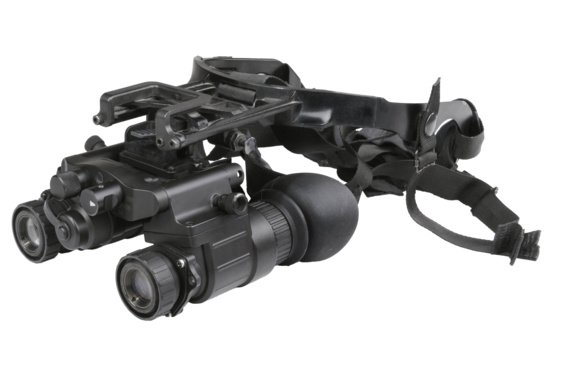
AGM 50 NW1 Dual-Tube Night Vision Goggle (NVG-50, Gen 2+ White)
-
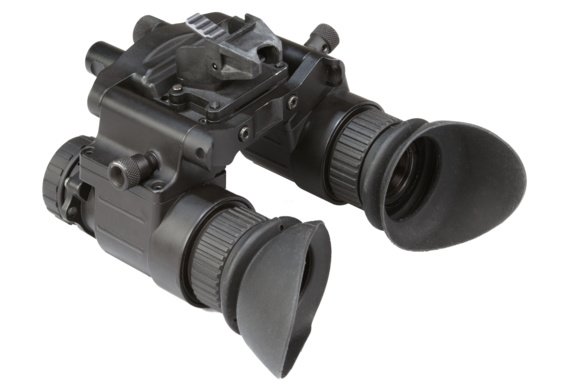
AGM NVG-50 AP Dual-Tube Night Vision Goggle (Gen 2+ Autogated Photonis)
-
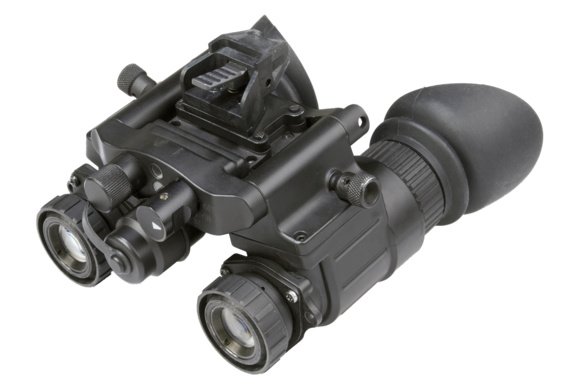
AGM NVG-50 APW Dual-Tube Night Vision Goggle (Gen 2+ Autogated Photonis White)
-
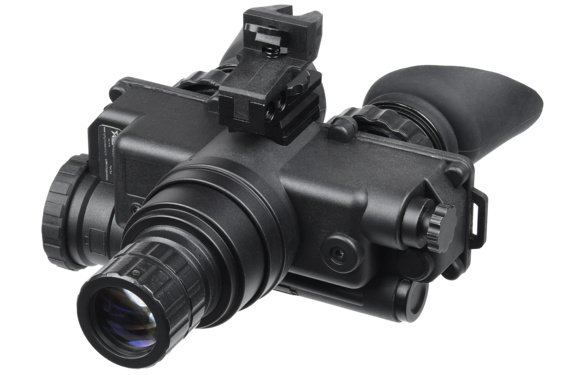
AGM Wolf-7 Pro NL1 Night Vision Goggle (Gen 2+ Bi-Ocular, Green)
-
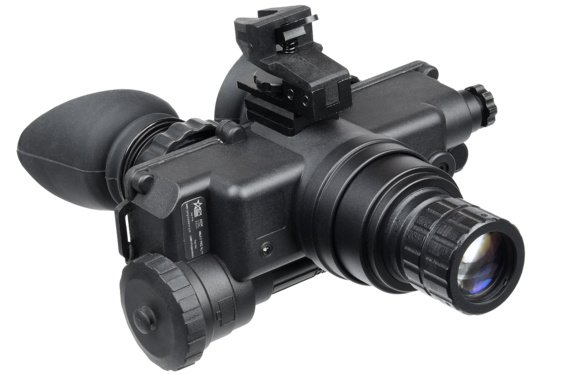
AGM Wolf-7 Pro NW1 Night Vision Goggle (Gen 2+ Bi-Ocular, White)
What Makes Night Vision Analog
The word “analog” describes the signal path. Nothing in an image intensifier tube is ever converted into data.
Light enters the objective lens and strikes the photocathode, which emits electrons. Those electrons accelerate into a microchannel plate, a glass wafer with millions of angled channels, where each electron triggers a cascade that multiplies the signal by tens of thousands. The amplified electron cloud strikes a phosphor screen, which converts it back into photons you can see.
The whole chain is continuous and physical. There is no frame rate, because there are no frames. There is no processing, so there is no delay. What reaches your eye is happening now.
An analog NVG is simply a head worn device built around that chain. Our full explanation of each stage sits in the night vision systems guide.
Digital works on an entirely different principle. A CMOS sensor captures the scene, a processor cleans and amplifies the signal, and a small display shows you the result. It is a video camera you wear.
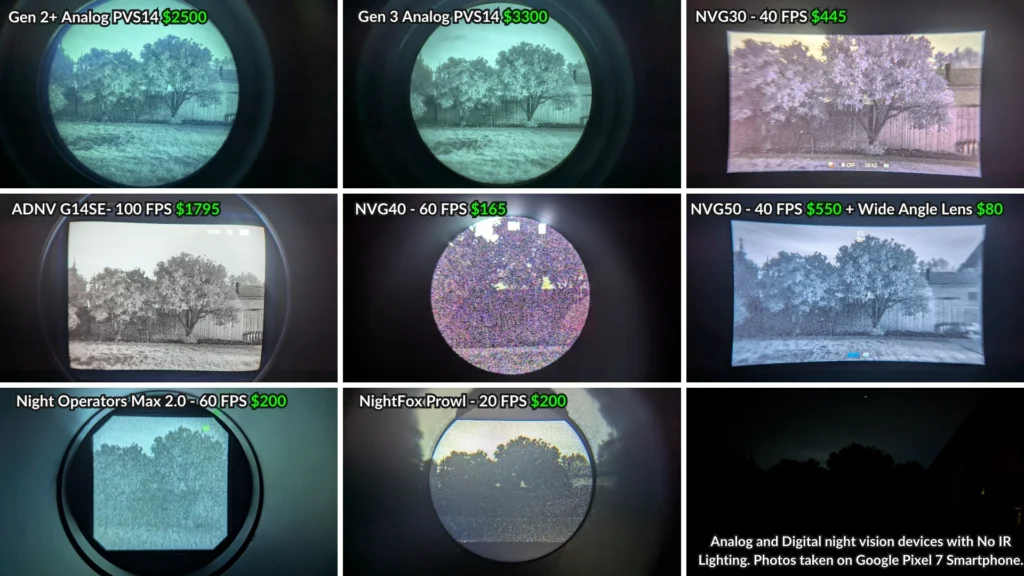
Analog vs. Digital: The Comparison
| Analog (tube) | Digital (sensor) | |
|---|---|---|
| Core component | Image intensifier tube | CMOS sensor and display |
| Image formation | Optical, continuous | Captured, processed, displayed |
| Latency | None | Perceptible when moving |
| Performance in Starlight | Grainy but usable | Typically unusable |
| Performance below starlight | Usable with IR | Requires IR |
| Needs IR illuminator | Rarely | Usually |
| Detectable by others running NV | Only if IR is on | Usually yes |
| Daylight exposure | Destroys the tube | Harmless |
| Video recording | No | Yes |
| Power draw | Very low | High |
| Typical runtime | All night on one cell | Hours |
| Field of view | Wide circular | Narrower, screen bound |
| Export controlled | Yes. | Usually not |
| Entry price | Around €2,100 | Around €400 to €600 |
Products by Category
-
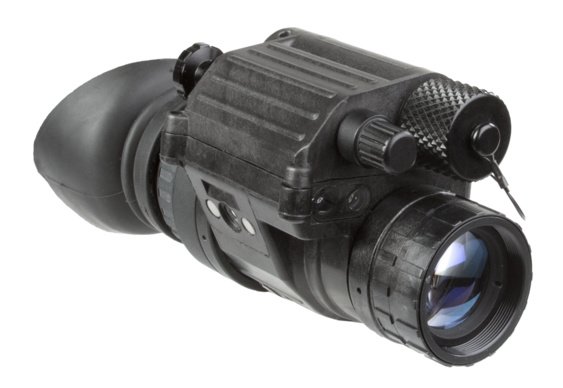
AGM PVS-14 NL1 Night Vision Monocular (Gen 2+ Level 1 Green, FOM 1400-1800)
$3 465.00 -
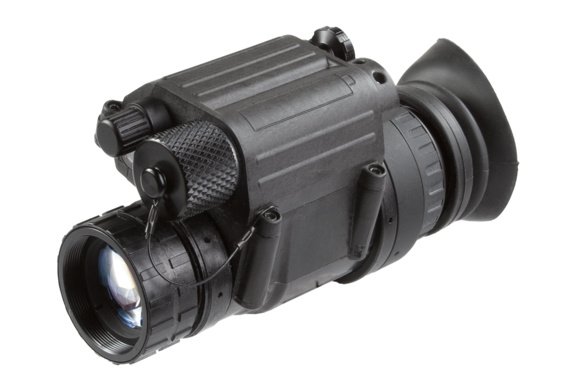
AGM PVS-14 NL2 Night Vision Monocular (Gen 2+ Level 2 Green)
$3 410.00 -
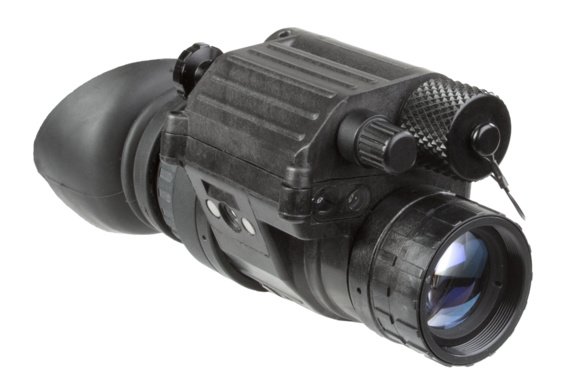
AGM PVS-14 NW1 Night Vision Monocular (Gen 2+ Level 1 White, FOM 1400-1800)
$3 685.00 -
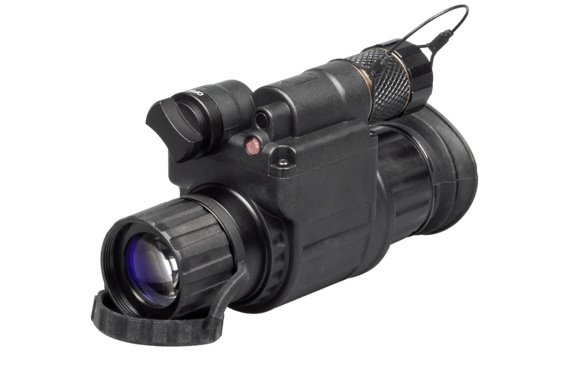
AGM Wolf-14 NL1 Night Vision Monocular (Gen 2+ Green Phosphor)
$2 310.00 -
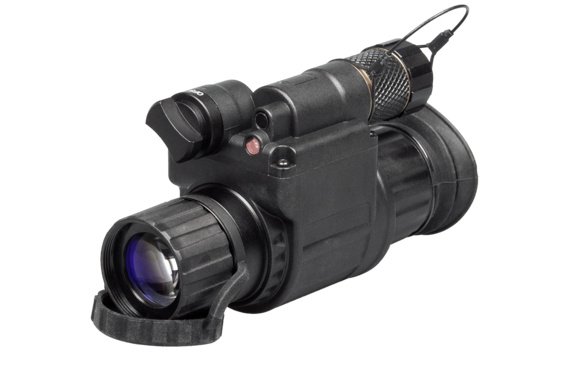
AGM Wolf-14 NW1 Night Vision Monocular (Gen 2+ White Phosphor)
$2 420.00
Read that table, and the shape of the decision becomes obvious. Digital wins on cost, daylight tolerance, recording, and regulation. Analog wins on the one thing night vision exists to do, which is work when it is dark.
Where Does Digital Night Vision Actually Stop Working?
Every guide says digital fails in low light. Here is the part they leave out.
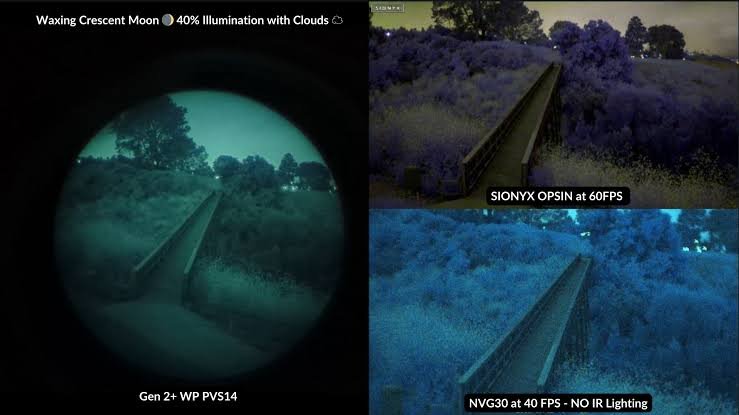
Digital performance tracks available illumination closely, and the practical thresholds line up with moon phase and cloud cover well enough to plan around.
| Conditions | Digital | Analog Gen 2+ |
|---|---|---|
| Dusk, residual daylight | Excellent, often sharper than a tube | Do not power on |
| Full moon, clear | Good | Excellent |
| Half moon, clear | Usable, softening | Excellent |
| Quarter moon | Degrading fast | Good |
| Starlight, no moon | Generally unusable without IR | Usable, grainy |
| Overcast, no moon | Nothing without IR | Marginal, IR helps. |
| Under dense canopy | Nothing without IR | Marginal, IR helps. |
The crossover sits at roughly a quarter moon. Above it, a good digital unit is genuinely competitive, and in the dusk window, it can look sharper than a Gen 2+ tube. Below it, digital falls off a cliff while analog carries on degrading gently.
This is the whole decision. If you hunt or observe in the hour after sunset, on open ground, under a decent moon, digital may be all you need, and the money saved is real. If you are out at two in the morning under cloud, digital will not get you home.
The honest test is to look at when you actually go out rather than when you imagine you might.
The IR Illuminator Problem Nobody Mentions
Most digital devices ship with an infrared illuminator, and the marketing treats it as a feature that lets the device work in total darkness. It does. There is a cost that no retailer article on this subject discusses.
US patent 11,550,140, covering intensifier tube manufacture, states the position directly: digital systems typically require external illumination outside the visible spectrum, which makes the user readily detectable by anyone else operating night vision, because all such devices are sensitive to the same wavelengths. The same document notes that analog systems draw ultra-low power by comparison and generally achieve higher limiting resolution.
In plain terms, an IR illuminator is invisible to the naked eye and a floodlight to anyone else running a tube. On shared ground, on an estate with other guns out, or anywhere you would rather not advertise your position, that matters.
An analog device does not need one under most conditions, because it amplifies what is already there. It operates passively. That is a genuine operational property, not a marketing claim, and it is the reason military and law enforcement procurement has never moved to digital for primary night operations.
Why 4K Does Not Mean What You Think
This is where specification sheets mislead people badly.
A digital night vision device advertises 1080p or 4K. A tube is specified in line pairs per millimeter, typically 64 to 72 on a good Gen 2+ unit. Set those numbers side by side, and the digital looks like it resolves several times better.
It does not, and the reason is that the two figures describe different things under different conditions.
Sensor resolution is a fixed pixel count measured in ideal light. As illumination falls, the sensor’s signal-to-noise ratio collapses and the processor starts guessing. You keep the pixel count and lose the information inside it, which is why a digital image at midnight looks smeared rather than merely dark.
Tube resolution is optical. It is limited by the photocathode, the channel geometry of the plate, and the phosphor grain, and it holds far closer to specification across the light range. A tube at starlight resolves close to what it resolves under the moon.
The practical rule: compare resolution figures only at the light level you actually operate in. A 4K sensor at dusk beats a Gen 2+ tube. The same sensor at Starlidoes not produce 4K resolutionhing.
For tubes, the number to compare is the figure of merit, which folds resolution and signal to noise into one value. Every tube device we ship carries a figure of merit of 1,400 to 1,800.
What Each One Actually Costs
night goggles price is one of the most searched questions in this space, and most retailers answer it in adjectives. Here are numbers from our own stock.
Digital
| Device | Type | Price |
|---|---|---|
| ATN X-Sight 4K Pro 3-14x | Day and night riflescope, ex display | €550 |
Analog, Gen 2+ image intensifier
| Device | Type | Price |
|---|---|---|
| AGM Wolf-14 NL1 | Monocular, green | €2,100 |
| AGM Wolf-14 NW1 | Monocular, white | €2,200 |
| AGM Wolf-7 Pro NL1 | Biocular goggle | €2,900 |
| AGM PVS-14 NL2 | Monocular, benchmark form factor | $3,410 |
| AGM Foxbat-5 NL1 | Binocular, 5x | $3,520 |
| AGM NVG-50 NW1 | Dual-tube goggle | $7,150 |
Products by Category
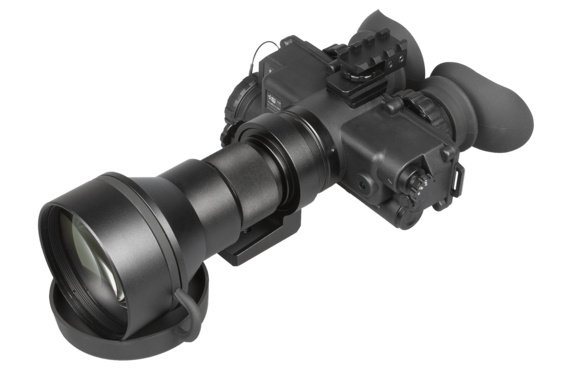
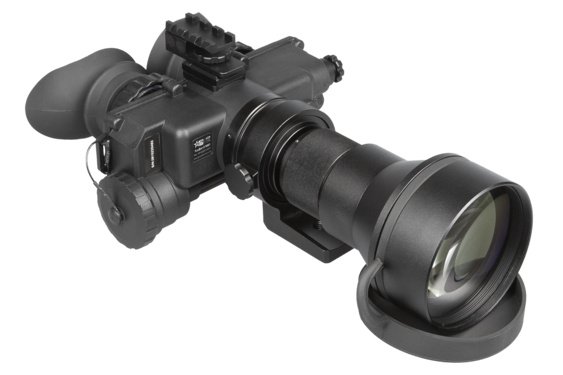
The gap between the cheapest digital option and the cheapest genuine tube device is roughly €1,550, and it is worth being clear about what that money buys. It does not buy a sharper picture at dusk. It buys an image that still exists at two in the morning under a cloud, without switching on a light that tells everyone else where you are.
Whether that is worth €1,550 depends entirely on when you go out. Browse the full Gen 2+ range to see the whole ladder.
When Digital Is the Right Answer
We sell tube devices, and we would still tell you to buy digital in these cases.
Your budget is under €1,000. There is no genuine analog device at that price. A €400 digital unit is a real device; a €400 tube device is a Gen 1 with a thousand hour life and heavy edge distortion. Buy the digital.
You need to record. Tubes produce no data. If documentation matters, digital or nothing.
You operate mostly at dusk. In the residual light window, a good sensor is genuinely competitive.
Daylight exposure is likely. Bright light destroys an intensifier tube permanently. If the device will be handled by people who might switch it on at the wrong moment, digital removes that risk entirely.
Export control blocks you. Gen 2+ is controlled in many jurisdictions. Digital usually is not. If we cannot lawfully ship you a tube device, digital is the available answer.
When You Need Analog
You operate in genuine darkness. Below the quarter moon, this stops being a preference.
You need to stay unseen. Passive operation without an illuminator is the decisive advantage.
You move. Latency is tolerable when you are static and a real problem when you are walking or shooting.
You need all-night runtime. A tube device runs a full night on a single cell. Digital burns power on the sensor, the screen, and the illuminator together.
You want the device to last. A Gen 2+ tube is rated 5,000 to 10,000 hours. Consumer digital electronics are not built to that horizon.
For most people arriving at this question, the answer is an analog night vision monocular, because it holds hands, has helmet mounts, and sits behind a day scope. Our buying guide names specific models against specific uses.
Analog Night Vision Goggles and Scopes
Two form factor notes, since both are searched separately.
Analog night vision goggles are head worn and hands-free for moving rather than observing. The distinction that matters more than any specification is biocular versus dual tube. One tube split to two eyepieces gives no depth perception; two independent tubes do. We cover it properly in the dual-tube night vision explained, and both configurations sit in the goggle range.
Night vision scopes that use analog technology are the one area where digital has a genuine structural advantage. A tube cannot survive daylight, so a dedicated analog riflescope is a night-only optic. The standard analog solution is a monocular mounted behind an existing day scope, which keeps your zero and your reticle and comes off in daylight. A device like the ATN X-Sight 4K Pro uses a digital sensor precisely so it can serve both.
A Note for European Buyers
Most writing on this subject is American and compares digital against Gen 3. The US-made Gen 3 falls under export control and is largely unavailable to European civilian buyers, so the live comparison here is digital against Gen 2+.
That narrows the gap somewhat. Gen 2+ does not reach as deep into darkness as Gen 3. It still comfortably outperforms digital below the quarter moon, which is the threshold that decides this.
Gen 2+ devices are themselves controlled goods in many jurisdictions. We confirm we can lawfully ship to your destination before taking payment. Send us your country, and we will confirm within a working day: contact us.
Frequently Asked Questions
What is analog night vision?
A device that amplifies existing light optically through an image intensifier tube, with no sensor, processor, or screen. Light strikes a photocathode, electrons multiply through a microchannel plate, and a phosphor screen converts them back into a visible image. The process is continuous, so there is no lag.
Is analog night vision better than digital?
In darkness, yes and decisively. Above the quarter moon, the gap narrows, and at dusk digital can look sharper. Digital also wins on cost, daylight tolerance, and recording and export regulation. Choose based on when you actually operate.
At what point does digital night vision fail?
Around the quarter moon. Above it, digital is competitive. Below it, the image degrades quickly, and under starlight or cloud, it generally becomes unusable without an infrared illuminator.
Why do people say analog is better even though digital has higher resolution?
Because sensor resolution is measured in ideal light and collapses into noise as light falls off. Tube resolution is optical and holds far closer to specification across the range. Compare resolution only at the light level you actually operate in.
Does analog night vision need an IR illuminator?
Usually not. It amplifies available light and operates passively. That matters, because an IR illuminator is invisible to the naked eye but plainly visible to anyone else running night vision.
What does analog night vision cost?
Genuine Gen 2+ tube devices start around €2,100 for a monocular and run to roughly $10,560 for an autogated dual tube goggle. Digital starts around €400 to €600. There are no real analog devices for less than €2,000.
Can I use analog night vision in daylight?
No. Bright light permanently damages an image intensifier tube. Digital devices are unaffected, which is their clearest practical advantage.
How long does an analog device run on batteries?
A full night on a single cell is normal, because a tube draws very little power. Digital devices run for hours rather than nights, since the sensor, display, and illuminator all consume power.
Is analog night vision export controlled?
Gen 2+ and above are generally controlled in most jurisdictions. Digital usually is not analog. We verify legality for your destination before accepting payment.
Where to Go From Here
- How the technology works: night vision systems explained
- Depth perception and form factor: dual tube night vision
- Green or white image: white phosphor night vision
- Model recommendations: night vision buying guide
- Detection rather than identification: thermal vs night vision
- Browse: monoculars · goggles · binoculars · full range · AGM Global Vision
Not sure whether your ground sits above or below the crossover? Tell us when you go out and what the cover is like, and we will tell you honestly whether you need to spend the €1,550. Talk to us.