
Thermal Monocular for Hunting: The Complete 2026 Buyer’s Guide
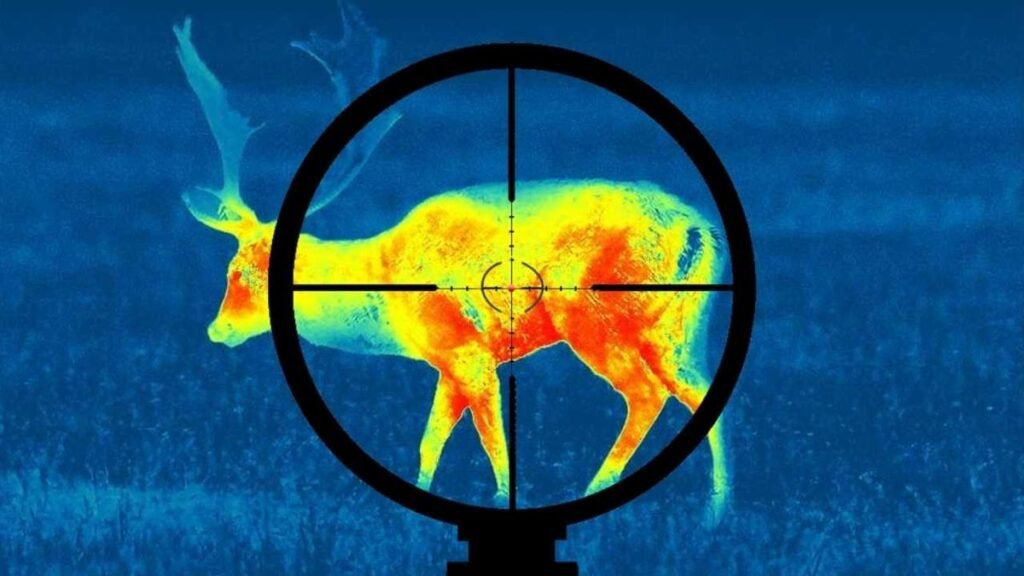
A thermal monocular for hunting is a handheld device that detects the body heat of game, so you can find and identify animals in complete darkness, fog, and cover. It is the single most useful thermal tool for night hunting, because it solves the hardest part of the job: locating your quarry before you ever raise a rifle.
This guide covers how to choose one, the best picks by budget and by quarry, and an honest comparison of every major brand. We stock them all, so unlike the manufacturer guides you will compare these models against; we have no reason to push one make.
A hunter’s perspective: why thermal changed the game
Field notes from Mathew Petr, our lead optics reviewer, with 15+ years of night hunting
A few years back, deer hunting ended the moment the light started to fade. If you wanted to squeeze out those last critical minutes before dusk, your only option was dropping two or three thousand euros on high-end glass. Even then, telling a young buck from a cull animal in deep shadow was a nerve-wracking guessing game.
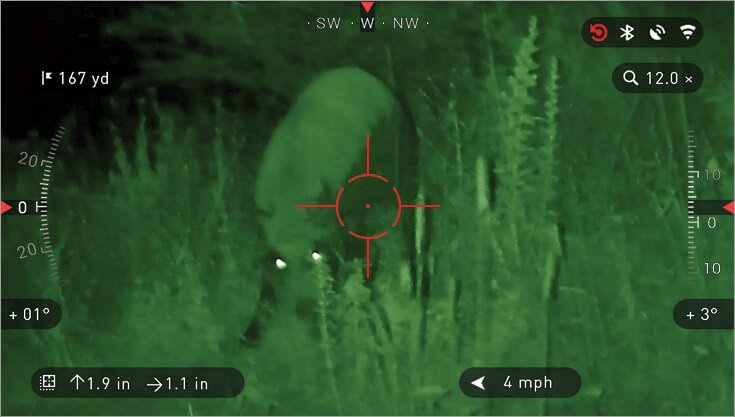
Thermal technology changed that. A solid thermal monocular provides you clarity in low light that standard optical glass simply cannot. Instead of staring into dark woods hoping for a silhouette, you get an immediate read on an animal’s body size, posture, and movement, the cues that drive a cull decision, and a clear heat signature you can then confirm before you ever raise the rifle. Thermal won’t count tines; that fine detail still belongs to a day optic or night vision, but it tells you an animal is there, roughly what it is, and where, long before your eye could.
Using a monocular rather than a binocular keeps your non-dominant eye fully adjusted to the dark. You get clear thermal target identification without blowing out your natural night vision, which is one of the quiet reasons experienced hunters reach for a handheld monocular first.
Beyond finding and assessing game, thermal brings a real safety upgrade to every hunt. When you can pick up a heat signature past a kilometer away, you know instantly whether your backstop is safe and your shooting lane is clear before you take the shot.
New to thermal entirely? Start with our complete guide to thermal imaging for hunting, then come back here for the monocular-specific detail. You can browse the full thermal monocular range any time.
Quick answer: the best thermal monocular for hunting
Short on time? Here are the picks most hunters should consider.
- Best all-round value: ThermTec Cyclone, a 640 sensor under 20 mK at €899.
- Best on a budget: HIKMICRO Lynx, a real thermal from around €329.
- Best for long range and open ground: ThermTec Wild Pro or a 640 Pulsar Axion.
- Best build and software: Pulsar Axion 2 line.
- Buy a monocular first, not a scope. You scan far more than you shoot, and a handheld finds game safely without pointing a rifle at it.
- Spec that matters most: NETD (thermal sensitivity). Aim for under 20 mK.
Now the full guide.
Best thermal monocular for hunting: our picks by category
We stock every brand, so these are the picks we would actually make, not just the ones we happen to build.
| Category | Pick | Sensor | NETD | Price |
|---|---|---|---|---|
| Best overall value | ThermTec Cyclone | 640 12 µm | <20 mK | €899 |
| Best on a budget | HIKMICRO Lynx 3.0 | 256/384 | model-dependent | from €329 |
| Best all-rounder | ThermTec Cyclops 3.0 | 640 12 µm | ≤25 mK | €1,190-1,390 |
| Best image quality | ThermTec Wild Pro | 640 12 µm | <15 mK | €2,890 |
| Best build & software | Pulsar Axion 2 | 384/640 | <25-40 mK | POA |
| Best for mixed terrain | ThermTec Cyclops-D | 640 12 µm | ≤25 mK | €1,890 |
| Longest warranty | AGM Sidewinder | 384 12 µm | ≤20 mK | POA |
Tested in the field by Mathew Petr, our lead optics reviewer, with 15+ years of night hunting. The hands-on notes throughout this guide are his, based on real nights behind each device. [Add a short author bio + photo here for E-E-A-T; link to an author page if you have one.]
Why a thermal monocular is the first thermal you should buy
A monocular is a handheld, one-device scanner, not a rifle-mounted sight. That makes it the safest and most versatile way to get into thermal imaging. You use it to scan fields and woods, spot a fox or hog by its heat, and confirm what it is before deciding what to do.
A monocular also works for tracking wounded game and recovering downed animals, jobs a scope cannot do safely. Many hunters run a monocular alongside a day scope or a thermal scope, scanning with the handheld and shooting with the rifle.
Monocular, scope, clip-on, or binocular?
Four device types, four jobs. Buying the wrong thermal device is the most expensive mistake you can make.
| Thermal monocular | Thermal scope | Thermal clip-on | Thermal binocular | |
|---|---|---|---|---|
| Purpose | Find and identify | Take the shot. | Convert a day scope. | Long observation |
| Rifle mounted | No | Yes. | Yes. | No |
| Both eyes | No | No | No | Yes. |
| Typical price | €899-2,890 | €1,690-3,690 | €1,490-2,690 | €2,990-3,690 |
| Buy first? | Usually yes. | After a monocular | If you own a day scope | If you glass for hours |
Products by Category
-
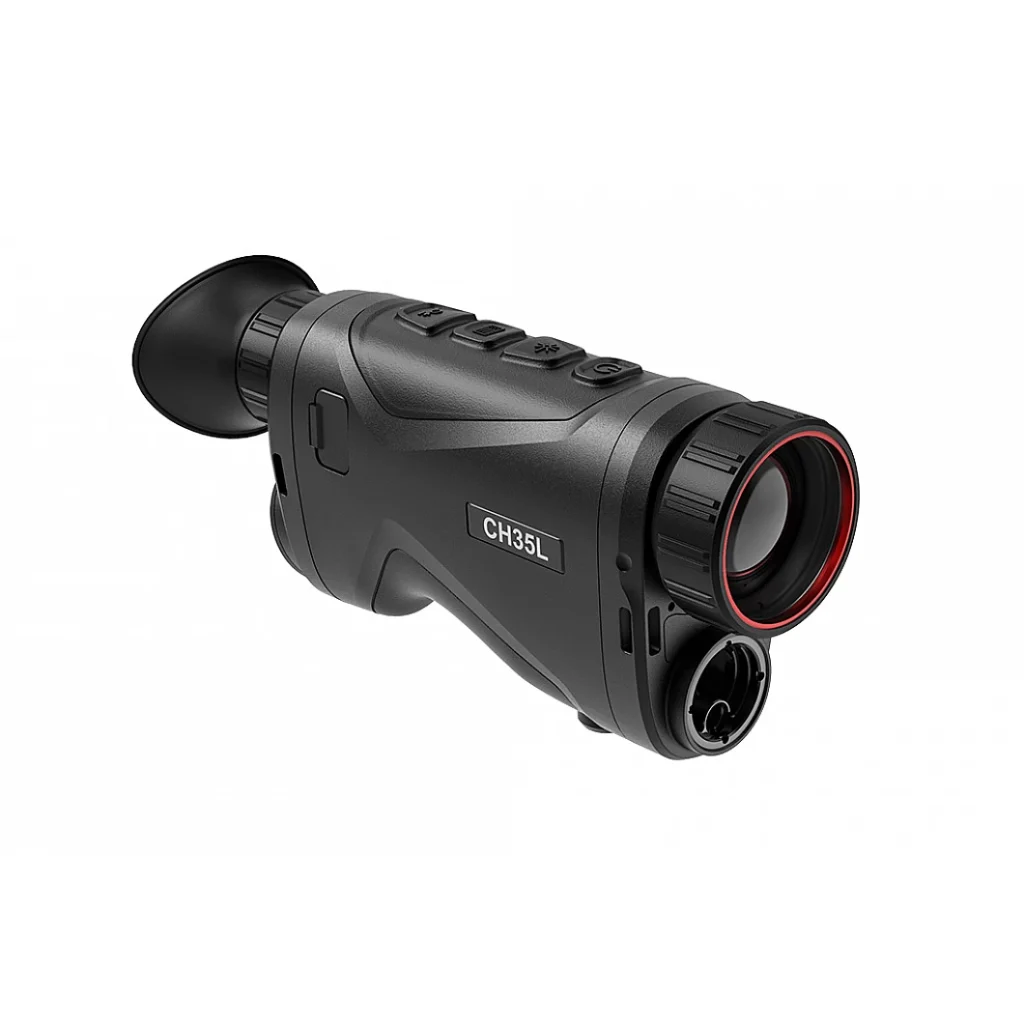
HIKMICRO CONDOR LRF Thermal Monocular
-
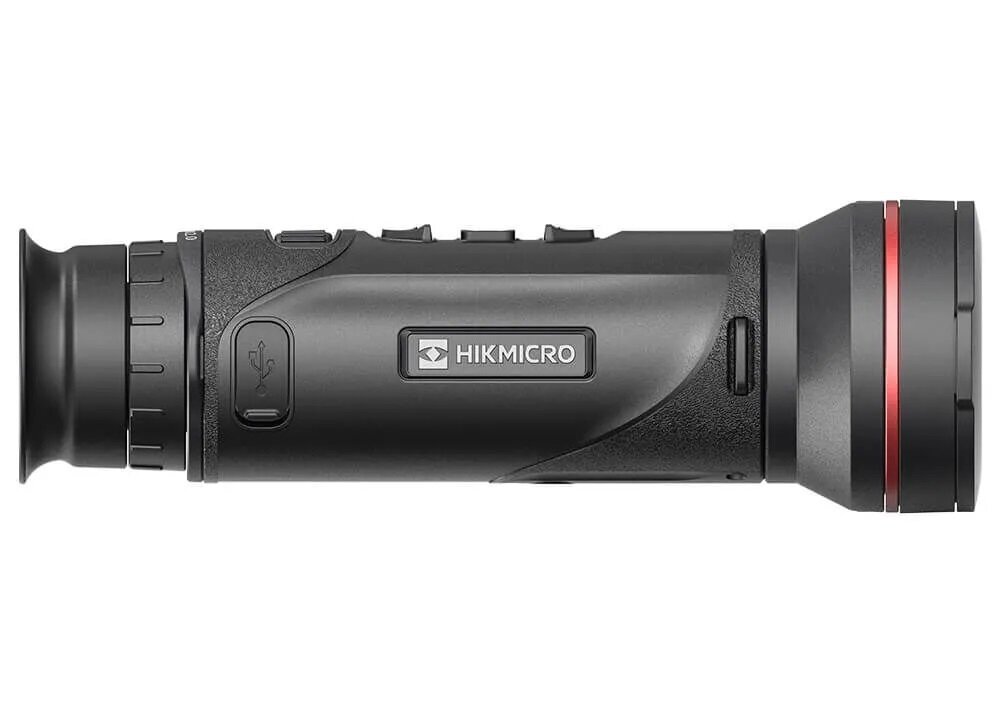
HIKMICRO FALCON Thermal Monocular
-
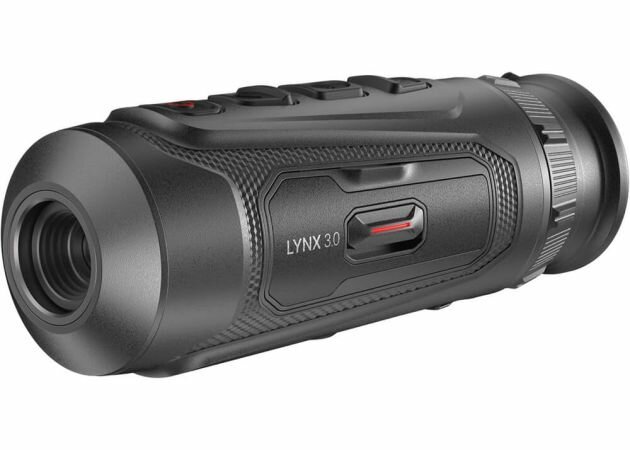
HIKMICRO LYNX 3.0 Thermal Monocular
-
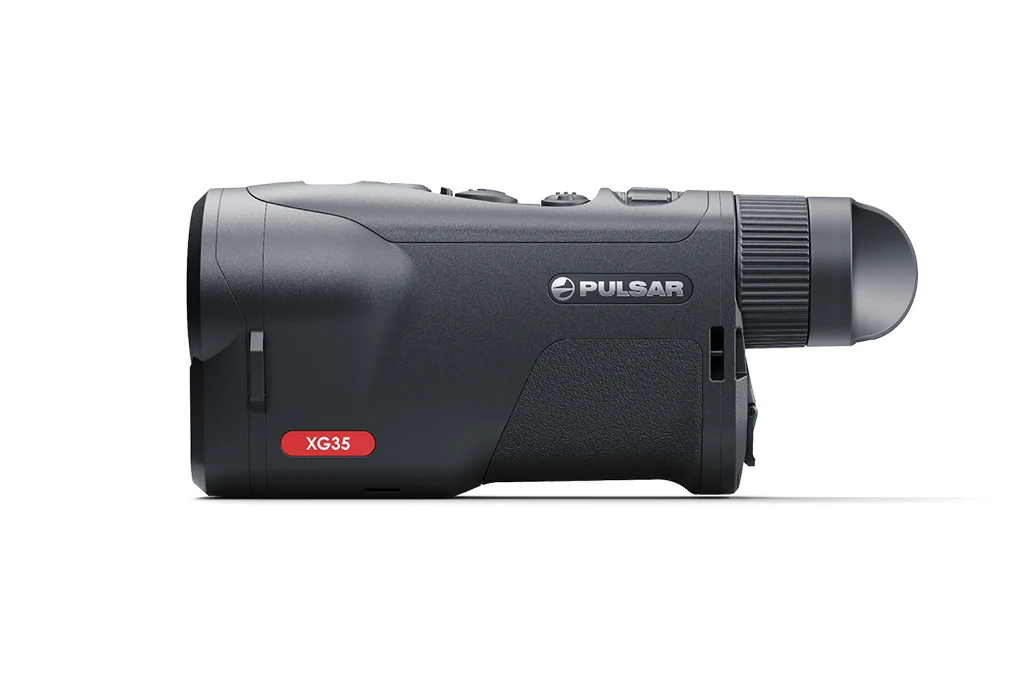
Pulsar Oryx LRF XG35 Thermal Imaging Monocular
-
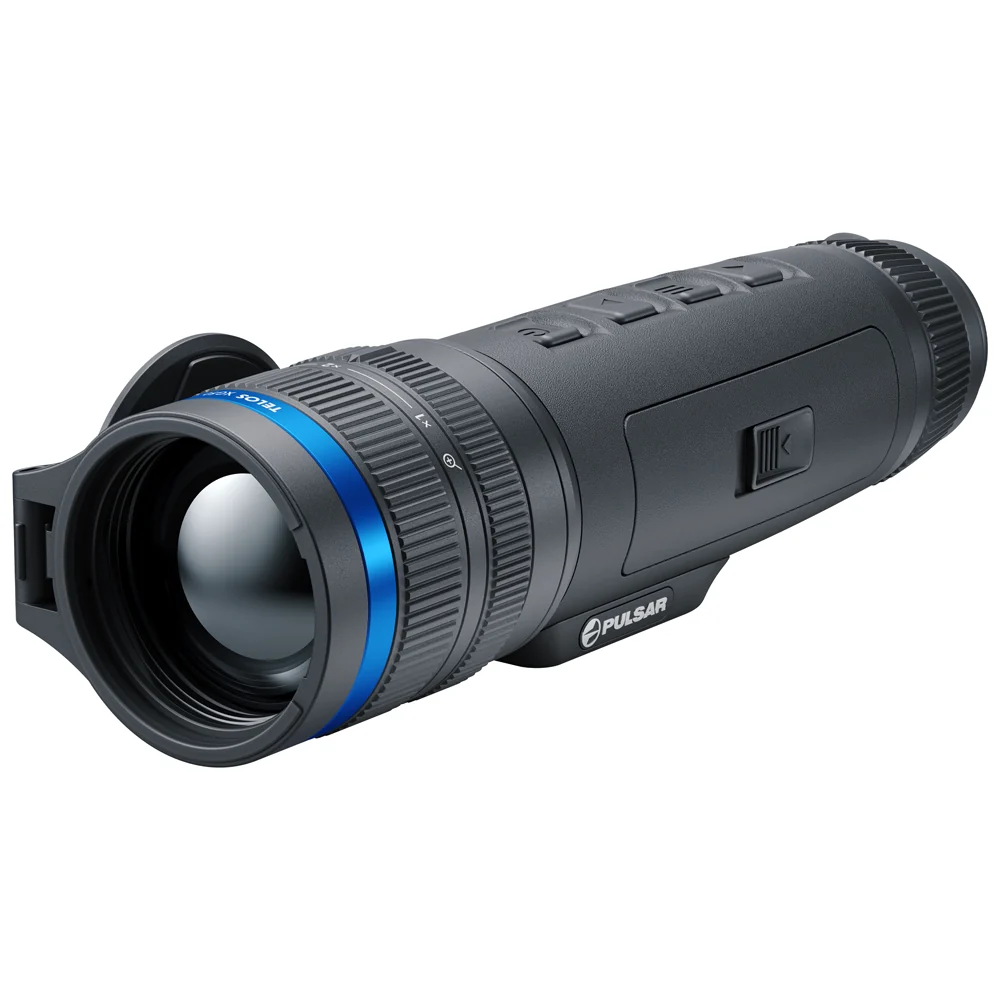
Pulsar Telos XG50 Thermal Imaging Monocular
-
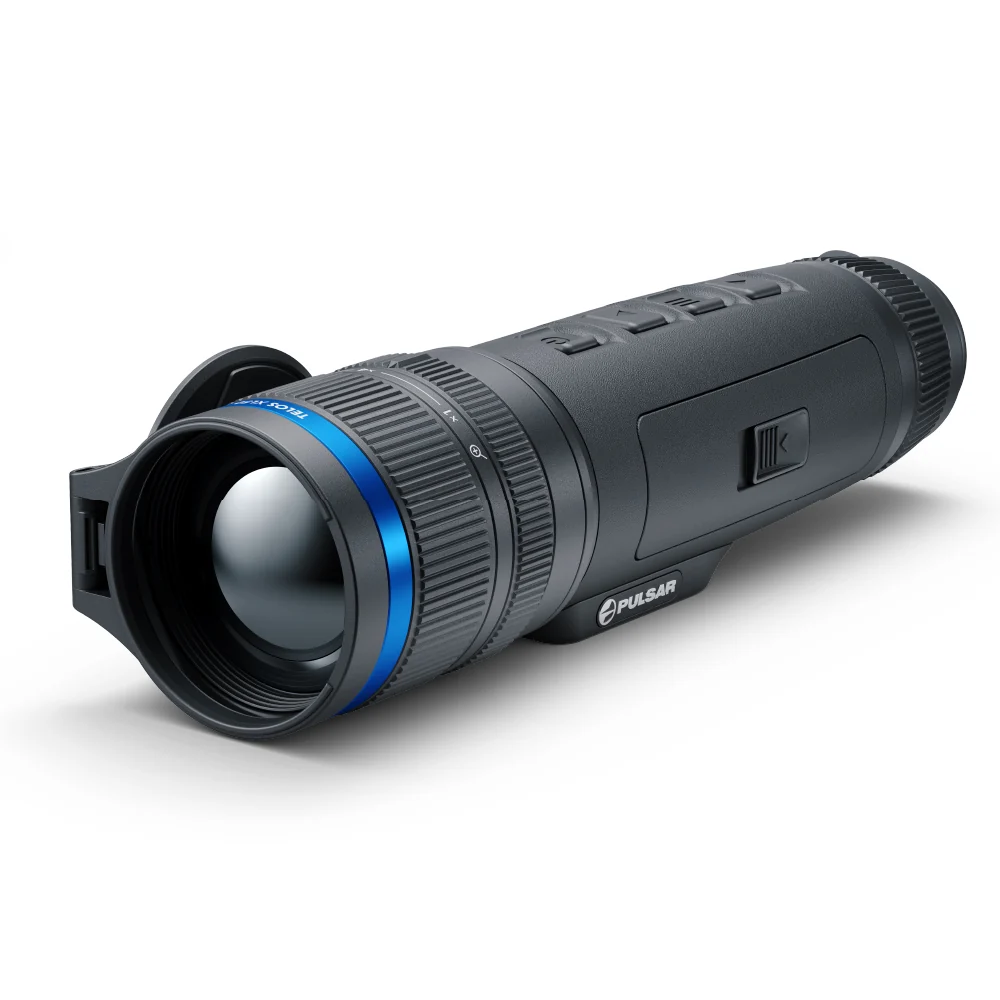
Pulsar Telos XL50 Thermal Imaging Monocular
-
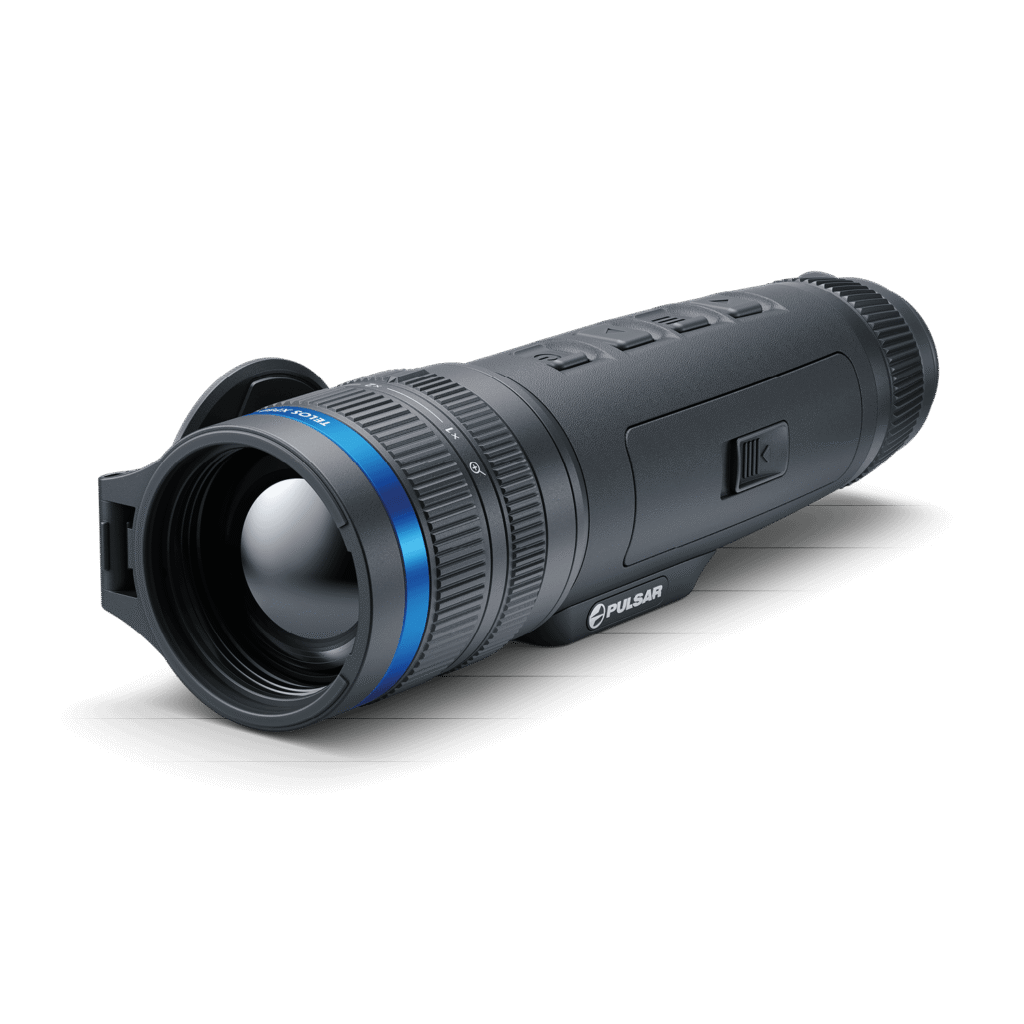
Pulsar Telos XP50 Thermal Imaging Monocular
-
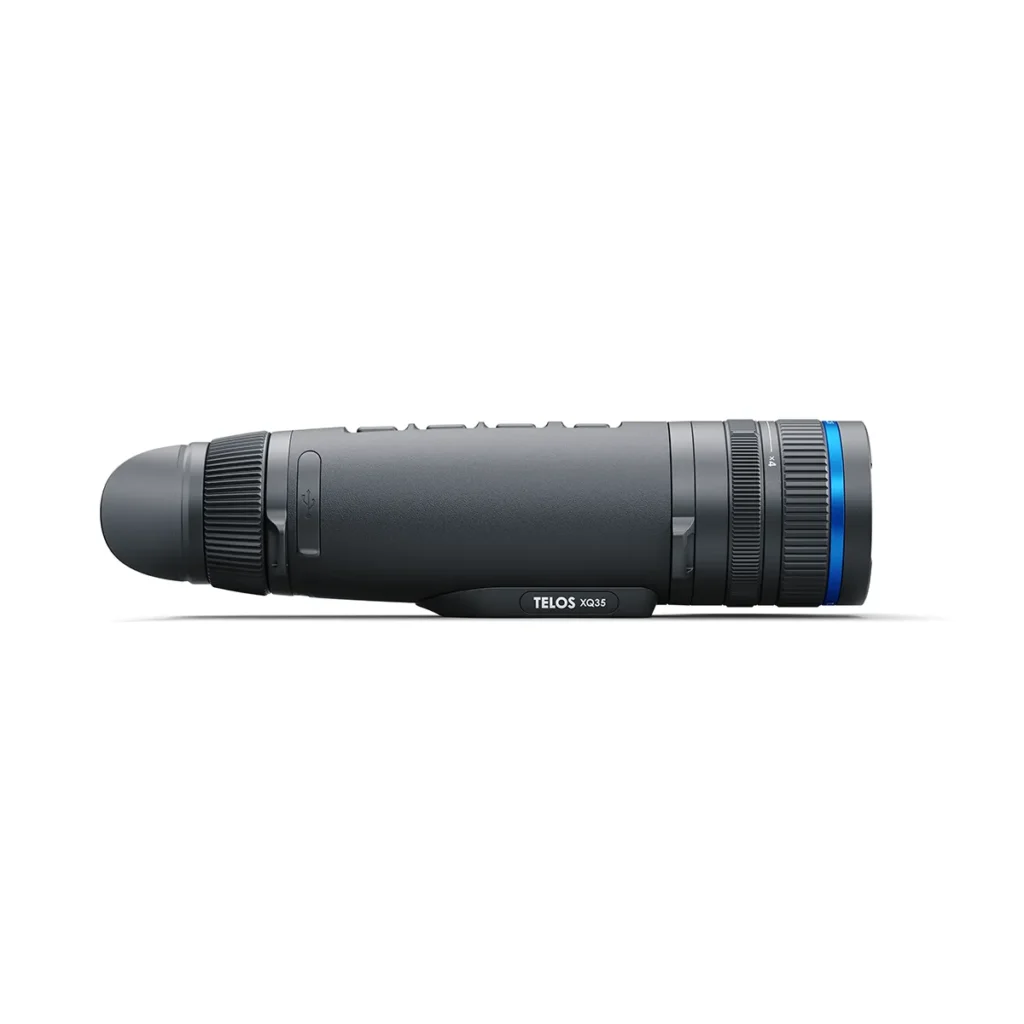
Pulsar Telos XQ35 Thermal Imaging Monocular
-
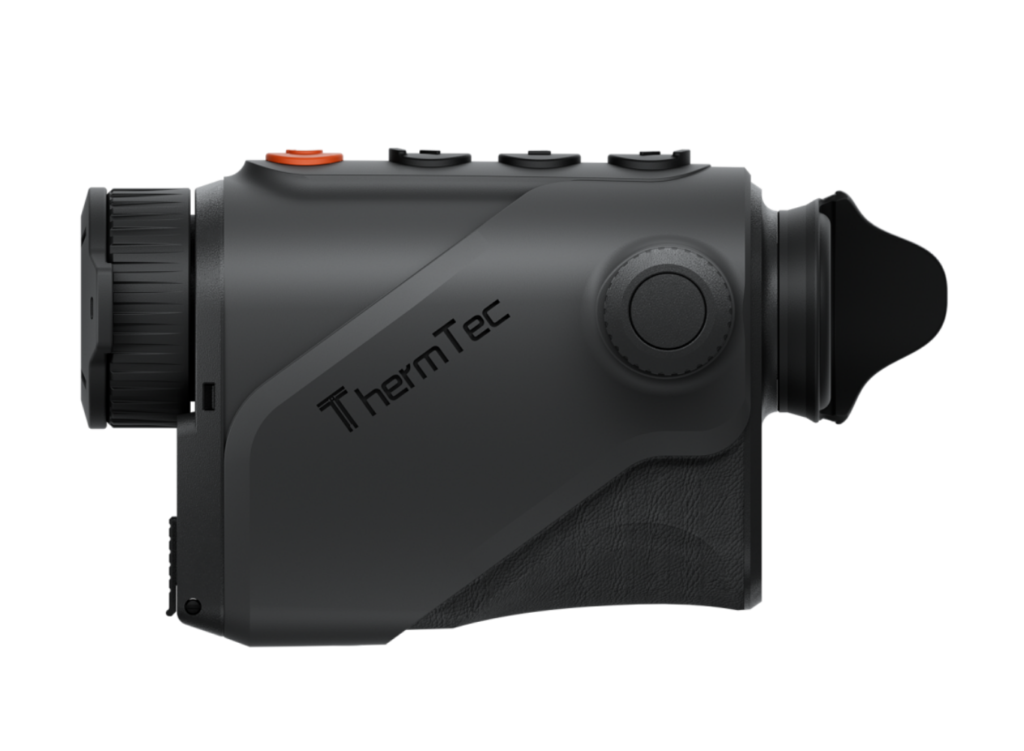
ThermTec Cyclone Compact Thermal Monocular
The rule that matters: a monocular finds a game; a rifle-mounted device shoots it. Scanning with a scope means pointing a firearm at everything you want to identify, which is unacceptable regardless of how effective the optic is. That is why most experienced thermal hunters own a monocular even when they also own a thermal scope or a thermal clip-on.
If you glass for hours at a stretch rather than in bursts, look at thermal binoculars instead, where two-eye viewing removes the fatigue a monocular builds up. Our full comparison of monocular, scope, and clip-on covers the decision in more depth, and thermal versus night vision covers the more basic choice.
How to choose a thermal monocular for hunting
Four specifications decide how a handheld thermal monocular performs in the field. Get these right, and everything else follows.
Sensor resolution
Resolution is the biggest driver of how far you can identify game, not just detect it. A 384×288 sensor handles close to mid-range work and keeps the price down. A 640×512 sensor adds detail and reach, so you distinguish a fox from a hare or antlers from brush further out. If your budget allows, a 640 sensor is the better long-term buy. Full details on 384 vs 640 thermal performance.
Thermal sensitivity (NETD)
NETD measures the smallest temperature difference the sensor can detect, in millikelvins, and lower is better. It decides how clean the image stays in fog, rain, and humidity, which is exactly when a warm animal barely stands out from wet ground. A sensor rated below 20 mK is strong, and below 15 mK is pro-grade. On damp nights, NETD often matters more than raw resolution.
Lens size and detection range
The objective lens sets the reach and field of view. A short 25 mm lens gives a wide view for quick scanning at closer range, while a 50 mm lens reaches further with a tighter view. This variation is why two monoculars with the same sensor can have completely unique detection ranges. Match the lens to your ground: woodland and close cover want a wide view; open fields and hill country want reach.
Rangefinder and battery life
A built-in laser rangefinder measures the exact distance to your target, useful before a stalk or a shot. If you only scan, you can skip it; if you also range for a shot, it is worth having. Battery life is relevant for all-night sessions, and replaceable batteries let you swap in the field rather than waiting to recharge.
Detection range vs. identification: the DRI truth
One thing every spec sheet glosses over: the advertised detection range is not how far you can tell what an animal is. Detection means “something warm is there.” Identification, telling a coyote from a fox or a legal boar from a sow, happens at roughly an eighth of the detection figure in the conservative reading, and weather shortens it further.
| Advertised detection | Realistic recognition (~25%) | Realistic identification (~12.5%) |
|---|---|---|
| 1,300 m | ~325 m | ~160 m |
| 1,800 m | ~450 m | ~225 m |
| 2,600 m | ~650 m | ~325 m |
So, never buy based on the detection number alone. Sensor resolution and NETD drive real identification distance, which is what matters for an ethical shot. More in how far a thermal monocular really sees.
The best thermal monocular for hunting by quarry
The right thermal monocular changes with what you hunt. Here is how to match the device to your quarry.
Coyote and predator hunting. Coyotes are shot at distance across open ground, often on the move, so reach and a quick, smooth image matter. A 640 sensor with a 35 to 50 mm lens lets you spot a coyote early and read its behavior before it closes or breaks. Sensitivity matters too, because a coyote’s coat against cold stubble can be low-contrast. For long-range predator work, look at the ThermTec Wild or a 640 Pulsar Axion. This group is also the quarry where “predator hunting long range” buyers most often over-spend on detection range and under-spend on NETD.
Hog and wild boar hunting. Hogs move in groups in darkness and hold tight in cover, so a wide field of view helps you find the sounder and identify which animal is which. A 384 or 640 monocular with a 25 to 35 mm lens is ideal. For a beginner starting on hogs, the ThermTec Cyclone at €899 gives a 640 sensor and a wide, forgiving image without a four-figure spend. Hogs give off strong heat signatures, so they are the easiest quarry to learn thermal imaging on.
Deer management and stalking. For deer, you need to identify the species and often the sex before a cull decision, so resolution and a clean image matter more than raw range. A 640 monocular earns its cost here. Use it to locate and count deer, then confirm with the monocular or a day optic before the shot. A dual-field-of-view device like the Cyclops-D suits deer ground that mixes woodland edges and open fields.
Coon and small nocturnal game. For coon (raccoon) and similar small quarry, you are working at a shorter range, often in trees and thick cover, so a wide field of view and a light, handy body beat long reach. An entry 256 or 384 monocular, such as the HIKMICRO Lynx, is genuinely enough, and the lower price suits a quarry you may hunt casually.
Squirrel and daytime small game. Thermal helps locate squirrels in the canopy where they are difficult to spot by eye. The range is short and the target small, so prioritize a wide field and good sensitivity over reach. An affordable compact monocular does the job.
Fox control. Foxes are smaller and faster than coyotes and often move through cover, so a balance of sensitivity and field of view beats pure range. A 384 or 640 monocular with a 25 to 35 mm lens works well, and the wide-ish field helps you follow a fox that is quartering across the ground.
The pattern across the quarry: big, open-ground predators want reach and resolution; small, close, or in-cover game wants a wide field and a light body. Match the lens to the distance you actually shoot, not the highest number on the box.
The ThermTec thermal monocular range
ThermTec is one of several brands we carry, and it builds a wide monocular range around 12 µm sensors, low NETD, and AI calibration. Here is how the series lines up for hunting.
Entry: ThermTec Cyclone. The ThermTec Cyclone is an affordable, compact starting point, with a 640 sensor and NETD below 20 mK in a body that weighs just 255 g. It is the best choice for a first thermal or a lightweight second scanner.
Value: ThermTec Cyclops SE. The ThermTec Cyclops SE pairs a low-NETD 384 sensor with a 35 mm lens for 1,800 m detection, giving strong reach at an affordable price.
All-round: ThermTec Cyclops and Cyclops 3.0. The ThermTec Cyclops Pro and Cyclops 3.0 offer dependable 640 performance, 2,500 m detection, and 12-14-hour runtime. The 3.0 adds AI calibration; the Pro adds target outline mode.
Flexible: ThermTec Cyclops-D and Wild-D. The dual-field-of-view Cyclops-D and Wild-D switch between a wide detection lens and a narrow identification lens, which suits hunters who move between woodland and open ground.
Pro-grade: ThermTec Wild and Wild Pro. The ThermTec Wild steps up to a NETD below 18 mK and a rugged magnesium body, while the Wild Pro goes further with sub-15 mK sensitivity and a built-in rangefinder. These are the picks for serious long-range and low-contrast work.
What a thermal monocular costs
| Band | Price | What you get | Example |
|---|---|---|---|
| Entry | €329-899 | 256 or 384 sensors, short range, basic features | HIKMICRO Lynx, ThermTec Cyclone |
| Mid | €1,100-1,500 | 384 or 640, better NETD, longer range | Cyclops SE, Cyclops 3.0 |
| Premium | €1,800-2,890 | 640 at ≤18 mK, long range, often LRF | Wild, Wild Pro |
Best budget thermal monocular for hunting
If money is tight, the honest entry point is a HIKMICRO Lynx from around €329. It is a real, usable thermal monocular for finding game at close to moderate range, and for coon, fox, or casual hog work, it is genuinely enough.
If you can stretch to €899, the ThermTec Cyclone is the better buy by a clear margin, with a 640 sensor at under 20 mK and 20 hours of battery life, a step up you will notice every night. The best value move in thermal is entry to mid: roughly €400 more buys meaningfully better sensitivity and range. Below about €300, thermal devices tend to disappoint in the very damp conditions you bought them for.
Using a thermal monocular well
A few habits separate people who find game from people who own a thermal.
Scan slowly, in overlapping bands. The instinct is to sweep. Thermal rewards the opposite. Work across your ground in strips and pause at the edges of cover, where a head or a flank may be the only warm patch showing.
Use two palettes. White-hot is fastest for detection because your eye catches bright shapes quickly. Switch to black-hot to pick out details on an animal you have already located. Most experienced users scan with one and identify with the other.
Let it acclimatize. Bringing a warm device out of a heated vehicle into cold air degrades the image until temperatures settle. Give it a few minutes.
Watch the wind and the ground. Wet vegetation, recently ploughed soil, and sun-warmed rock all hold heat and produce false positives. Learning your ground’s thermal behavior matters as much as the specification.
Expect less rain. Heavy precipitation degrades every thermal device. Low NETD helps; nothing eliminates it.
Mistakes worth avoiding
Buying on detection range. The headline figure assumes a large, warm target in ideal conditions. The identification range is only a fraction of the detection range.
Ignoring NETD. In damp climates, sensitivity often does more for your image than resolution does.
Over-zooming. Digital zoom past the sensor’s resolution makes the picture bigger, not better.
Buying a scope first. A monocular is the safer, more versatile first purchase for almost everyone.
Legality: confirm before you buy.
Rules on thermal devices vary across the US and Europe and change periodically. In the US, thermal is widely legal for hogs and coyotes but often restricted for big game and at night, and it varies by state. In Europe, handheld thermal for observation is broadly permitted and treated more permissively than thermal mounted on a firearm, but the detail differs by country and region.
We sell optics, not legal advice. Check the current position with your state or national hunting authority before ordering, particularly if you hunt across borders.
How the brands compare: ThermTec, Pulsar, HIKMICRO, and AGM
We stock every major thermal brand, so we have no reason to push one. Monoculars are the most crowded category in thermal imaging, and manufacturers make the most relevant comparisons.
| Model | Sensor | NETD | Detection | LRF | Notes |
|---|---|---|---|---|---|
| ThermTec Cyclone | 640 12 µm | <20 mK | Short | No | 255 g, 20 h, €899 |
| ThermTec Wild | 640 12 µm | ≤18 mK | 2,600 m | No | 50 mm F0.9, 10 h |
| ThermTec Wild Pro | 640 12 µm | <15 mK | Long | 1,000 m | 1600×1200, 653 g |
| Pulsar Axion 2 XQ35 Pro | 384 17 µm | <25 mK | ~1,300 m | 1,000 m | 11 h, pocket size |
| Pulsar Axion 2 XG35 | 640 12 µm | <40 mK | 1,750 m | 1,000 m | 380 g, 7 h |
| AGM Sidewinder TM35-384 | 384 12 µm | ≤20 mK | Mid | No | 64 GB, IP67 |
| AGM Taipan V2 | 384 12 µm | <20-35 mK | to 1,250 m | No | 18650, tilt sensor |
| HIKMICRO Lynx 3.0 | 256 / 384 | Model-dependent | Short | No | From €329 |
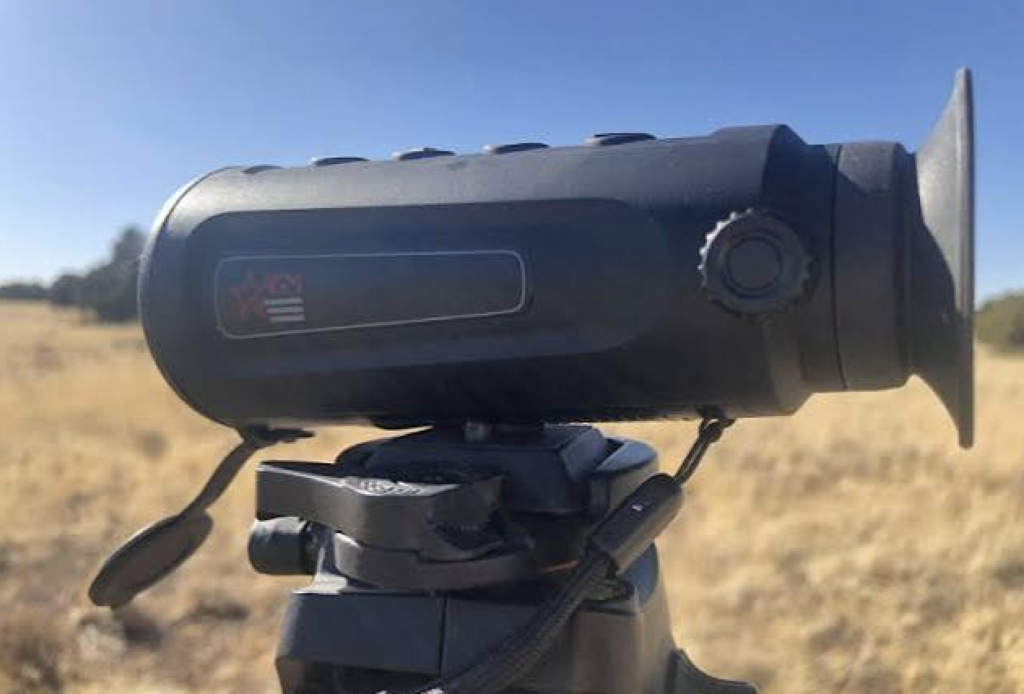
Pulsar: the benchmark, with a caveat
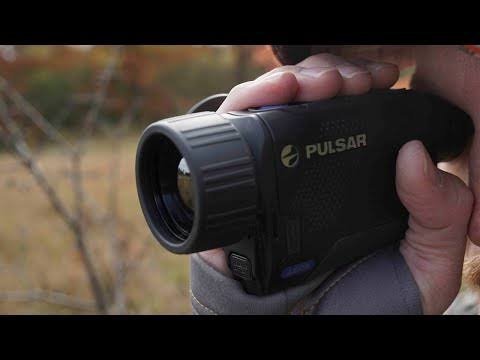
The Axion 2 line is the most respected compact thermal monocular on the market, and the build justifies it: magnesium alloy, IPX7, a quick-swap APS5 battery giving up to 11 hours, and the Stream Vision 2 app, which remains the best software in thermal. The Telos LRF XP50 sits above it and has been called the best thermal monocular available by reviewers who test these for a living.
The caveat is the same one that appears across Pulsar’s range. The 640-sensor Axion 2 XG35 carries a NETD of <40 mK, against ≤18 mK on the ThermTec Wild and <15 mK on the Wild Pro. Curiously, Pulsar’s lower-resolution XQ35 Pro is more sensitive at <25 mK than its flagship compact. Pulsar’s optics and processing compensate to a degree, and in hand the Axion produces a good picture. On a wet, low-contrast November night, that specification gap is really working against the Axion.
HIKMICRO: the widest ladder
HIKMICRO covers more price points than anyone. The Lynx 3.0 range starts around €329, far below ThermTec’s entry Cyclone at €899, and puts a usable thermal monocular within reach of buyers who cannot spend four figures. Falcon 2.0 covers the middle at €1,499 to €2,899, while Condor LRF 2.0 covers the premium end with integrated ranging at €1,799 to €2,699.
If your budget is tight, HIKMICRO is the first place to look; we’d rather tell you that than sell you something you can’t afford.
AGM: sensitivity at sensible money
AGM has improved sharply. The older Asp TM35-384 ran a 17 µm sensor at <35 mK; the current Sidewinder line uses a 12 µm detector at ≤20 mK, which is genuinely competitive, paired with a 1024×768 OLED, 64 GB of memory, and IP67 sealing. Taipan V2 adds a removable 18650 battery and a tilt sensor that blanks the display to save power. AGM’s five-year warranty remains the longest in the category.
Check the generation carefully when cross-shopping, since older and current AGM models sit side by side at very different sensitivity figures.
Where ThermTec sits
ThermTec’s case is sensitivity and endurance per euro. The Wild at ≤18 mK and the Wild Pro at <15 mK are the most sensitive figures here; the Cyclone offers a 640 sensor at €899 in a 255 g body with 20 hours of battery, and the dual field of view Cyclops-D and Wild-D have no direct equivalent at the price. What ThermTec lacks is Pulsar’s software maturity and resale strength and HIKMICRO’s sub-€500 entry point.
The pattern worth noticing
Across scopes, clip-ons, binoculars, and now monoculars, the same thing recurs: Pulsar’s 640 12 µm sensors consistently sit around <40 mK, while ThermTec, AGM’s current line, and HIKMICRO’s upper range run between <15 mK and ≤20 mK.
Resolution sells devices. Sensitivity finds animals. Check both numbers on anything you consider, including ours.
Which thermal monocular should you choose?
Match the model to your hunting and budget. For your first thermal on a budget, consider the Cyclone or a HIKMICRO Lynx. For all-round night hunting, the Cyclops 3.0. For mixed terrain, consider the dual-FOV Cyclops-D or Wild-D. For the best image and integrated ranging, the Wild Pro. For building and software, the Pulsar Axion is the best choice. Remember that a monocular is for finding game and a thermal scope is for the shot, so many hunters run both.
Frequently asked questions
What is the best thermal monocular for hunting?
It depends on your budget, range, and quarry. For value, the ThermTec Cyclone at €899 is a good choice, featuring 640 sensors. If you’re on a budget, the HIKMICRO Lynx is priced at around €329. For all-round use, the Cyclops 3.0. For pro-grade image quality and built-in ranging, the Wild Pro. For build quality and software, the Pulsar Axion 2 is a solid choice. The best choice is the one whose sensor, lens, and NETD match how and where you hunt.
What is the best budget thermal monocular for hunting?
A HIKMICRO Lynx, priced around €329, is the honest budget pick and a real, usable device for finding game at close to moderate range. If you can reach €899, the ThermTec Cyclone gives you a 640 sensor and 20 hours of battery life for a step up you will feel. Thermal devices tend to disappoint in the damp conditions you bought them for, especially below about €300.
Is a thermal monocular worth it for hunting?
Yes, for most night hunters, it is the most useful piece of kit, because finding game in the dark is the hardest part, and thermal solves it. It also tracks wounded game and recovers downed animals, jobs a lamp or scope cannot do well. If you hunt hogs, coyotes, or foxes or manage deer at night, a monocular pays for itself in found and recovered game.
Can you use a thermal monocular for hunting?
Yes, and it is the most common thermal device hunters own. You use it to scan, find, and identify a game, then take the shot with a rifle using a day scope or thermal scope. You do not aim or shoot with the monocular itself. Whether thermal is legal for your quarry and location is a separate question, so check local rules.
Is a thermal monocular enough for hunting, or do I need a scope?
A monocular is enough for finding, identifying, tracking, and recovering game, and many hunters start with nothing else. To take the shot at night, you need a thermal scope or a day scope. The common setup is to scan with a monocular and shoot with the rifle.
What sensor resolution do I need in a thermal monocular?
A 384×288 sensor suits close-to-mid-range hunting and a tighter budget. A 640×512 sensor adds detail and identification range for open ground and long-range predator work. Spend on resolution before magnification, since a higher-resolution sensor gives a clearer image at every distance.
Which thermal monocular is best for coyote hunting?
Coyotes are shot at distance on open ground, so a 640 sensor with a 35 to 50 mm lens for reach, plus low NETD for low-contrast coats against cold ground, is the right combination. The ThermTec Wild or a 640 Pulsar Axion is best for long-range predator work. Prioritise sensitivity and resolution over the biggest detection number.
Which thermal monocular is best for hog hunting?
Hogs move in groups and hold in cover, so a wide field of view helps you find and track the sounder. A 384 or 640 monocular with a 25 to 35 mm lens is ideal. For a beginner on hogs, the ThermTec Cyclone provides a forgiving wide image and a 640 sensor without a four-figure price tag. Hogs show up strongly on thermal, making them the easiest quarry to learn on.
How far can a thermal monocular detect a game?
Detection depends on the sensor and lens. Entry units detect large heat sources up to around 1,300 m, mid-range models up to 1,800 to 2,500 m, and long-lens units beyond that. Identification, where you confirm what the target is, always happens at a fraction of the detection distance, often an eighth of it, and weather shortens it further.
Do I need a rangefinder on a thermal monocular?
Only if you also shoot at ranges where drop matters. For pure scanning, finding, and tracking, a rangefinder adds cost you will not use. If you want to judge whether a shot is on before you bring the rifle up, models like the ThermTec Wild Pro or Pulsar’s LRF variants earn their premium.
How long do thermal monocular batteries last?
They last between about 7 and 20 hours, depending on the model. The ThermTec Cyclone reaches around 20 hours, and the Wild about 10; Pulsar’s Axion 2 XG35 manages roughly 7 hours, and the XQ35 Pro around 11. Replaceable batteries matter more than headline runtime, since you can swap in the field rather than stopping.
Can a thermal monocular be used for search and rescue?
Yes. The same heat-detection that finds a game finds a person in darkness or undergrowth, and a warm body stands out clearly against cool ground. Many hunters and volunteers use handheld thermal for exactly this purpose. Prioritize low NETD, since a partly hidden person in wet ground is a low-contrast target.
Ready to choose? Browse the full thermal monocular range across ThermTec, Pulsar, HIKMICRO, and AGM, or compare with thermal scopes, clip-ons, and binoculars. New to thermal? Start with the complete thermal imaging for the hunting guide or compare thermal vs night vision. Not sure what suits your ground? Let us know your budget and quarry, and we will shortlist options from every brand we carry.