
Thermal Monocular: The Complete Buying Guide (2026)
A thermal monocular is a handheld device that sees body heat instead of light, so it finds animals and people in complete darkness, through fog, and in thick cover where your eyes and a torch show you nothing. It is the single most useful piece of night equipment most hunters, land managers, and outdoor professionals will ever buy, and it is the device we recommend people buy first.
This guide covers everything: how a thermal monocular works, the specifications that matter and the ones that do not, what you should expect to pay, and an honest comparison of every major brand we carry. We sell all of them, so we have no reason to push one.
Jump to the thermal monoculars for sale whenever you want current stock and euro prices.
What is a thermal monocular?
A thermal monocular, also sold as a thermal imaging monocular or a thermal vision monocular, is a single-eyepiece handheld device. You hold it up, look through it, and see a picture built from heat rather than light.
Everything warmer than absolute zero gives off infrared radiation. A living animal runs considerably warmer than the grass, soil, and trees around it, and a thermal camera reads that difference and turns it into a visible image. A deer standing motionless in a hedge is invisible to your eye at night. On thermal, it appears as a bright shape that you cannot miss.
The word “monocular” simply means one eyepiece, rather than binoculars with two. That keeps a thermal monocular small, light, and affordable compared with every other kind of thermal device.
Three things it is not, however. It is not night vision, which amplifies existing light and needs some to work with. It is not a rifle sight and should never be used as one. And it is not an X-ray: thermal cannot see through walls, glass, or dense foliage, only through the gaps in cover where heat escapes.
How a thermal monocular works
Understanding the basics makes every specification below make sense.
The sensor. At the heart of every thermal imaging monocular sits a microbolometer, a grid of tiny elements that each change electrical resistance when infrared energy lands on them. The device measures those changes thousands of times a second and builds an image. More elements in the grid means more detail, which is what “640×512” or “384×288” describes.
Pixel pitch. This is the physical spacing between those elements, measured in micrometers. Modern sensors use 12µm; older ones use 17µm. A smaller pitch means more sensors packed into a smaller, cheaper lens, which is why 12 µm devices tend to be more compact for the same performance.
The lens. Ordinary glass blocks infrared, so thermal lenses are made from germanium, a semiconducting metalloid that is transparent to the wavelengths thermal uses. Germanium is expensive, and it is the main reason a bigger lens costs so much more.
The display. The processed image is shown on a small OLED or AMOLED screen inside the eyepiece. A superb sensor behind a poor display is wasted, which is why display resolution belongs in your comparison.
Calibration. Thermal sensors drift as they warm up, so most devices periodically re-reference themselves. On older units you hear a click and the image freezes for a moment. Newer shutterless designs largely remove that interruption.
Thermal monocular vs the alternatives
This area is where most money gets wasted, so it is worth being precise.
| Thermal monocular | Thermal binocular | Thermal scope | Thermal clip-on | Night vision | |
|---|---|---|---|---|---|
| Job | Find and identify | Long observation | Take the shot | Convert a day scope | See in low light |
| Eyes used | One | Two | One | One | One or two |
| Rifle mounted | No | No | Yes | Yes | Sometimes |
| Works in zero light | Yes | Yes | Yes | Yes | No |
| Sees through fog | Well | Well | Well | Well | Poorly |
| Shows colour or detail | No | Some models | No | No | Yes |
| Typical price | €329-2,900 | €2,990-3,690 | €1,690-3,690 | €1,490-2,690 | €200-2,000 |
| Buy first? | Yes | If you glass for hours | After a monocular | If you own a day scope, | Rarely, now |
Products by Category
-
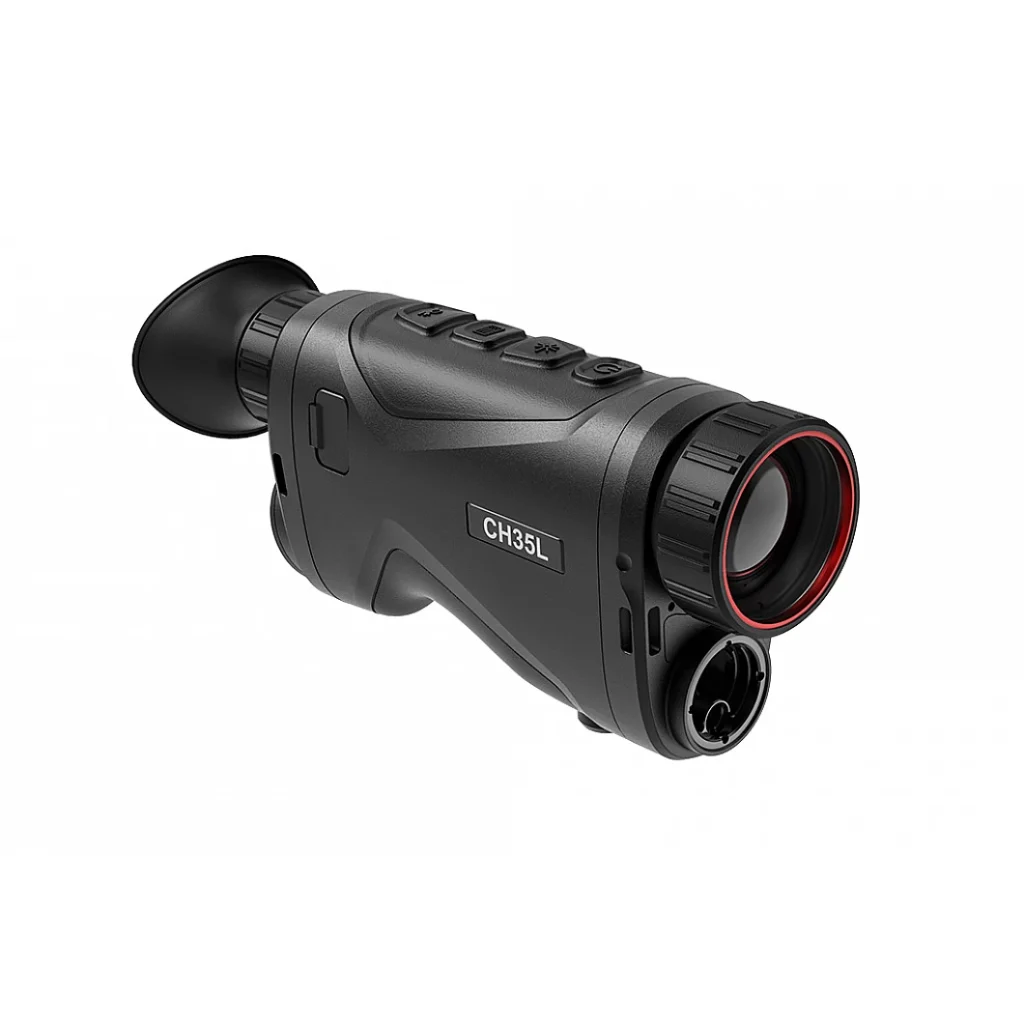
HIKMICRO CONDOR LRF Thermal Monocular
-
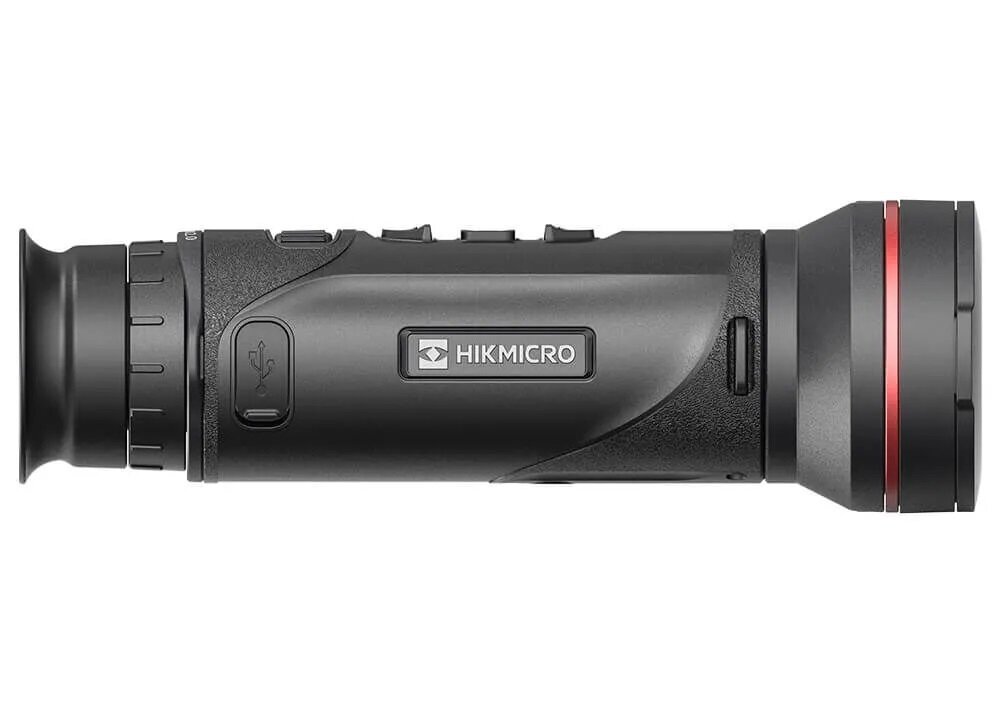
HIKMICRO FALCON Thermal Monocular
-
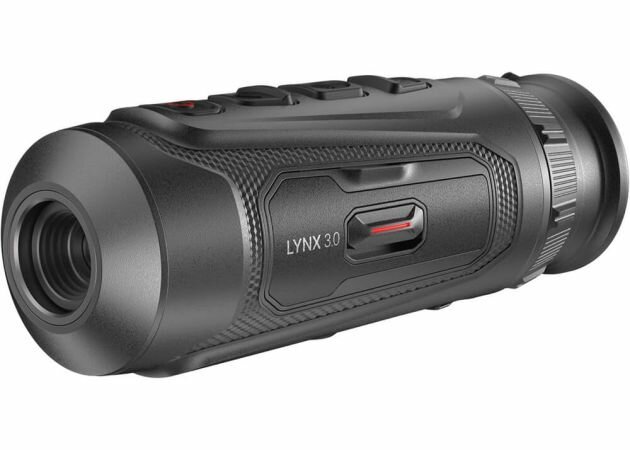
HIKMICRO LYNX 3.0 Thermal Monocular
-
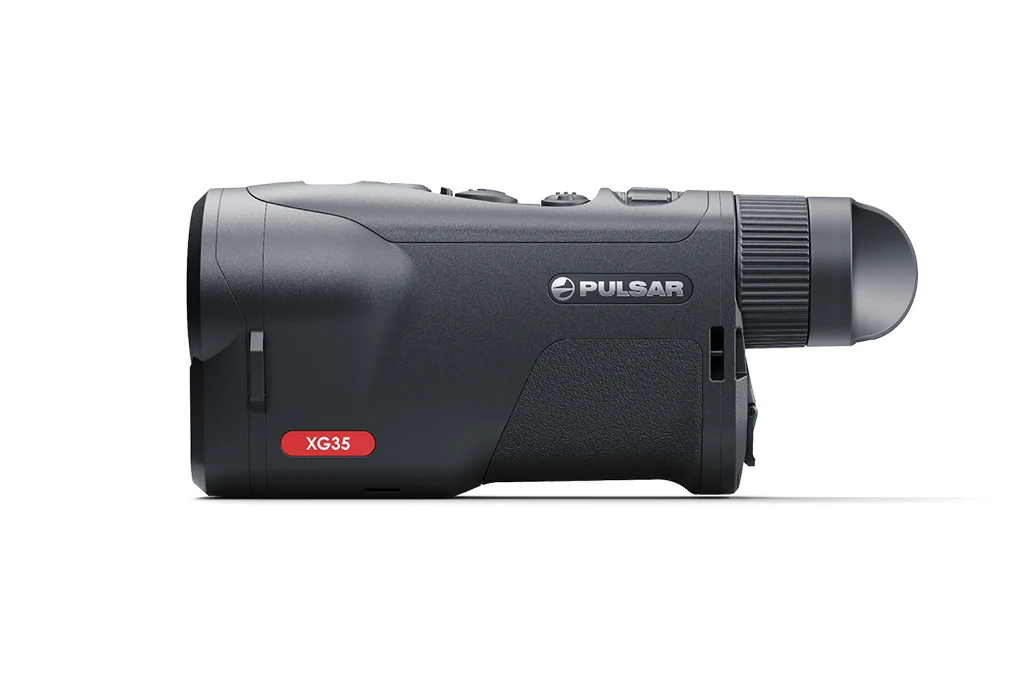
Pulsar Oryx LRF XG35 Thermal Imaging Monocular
-
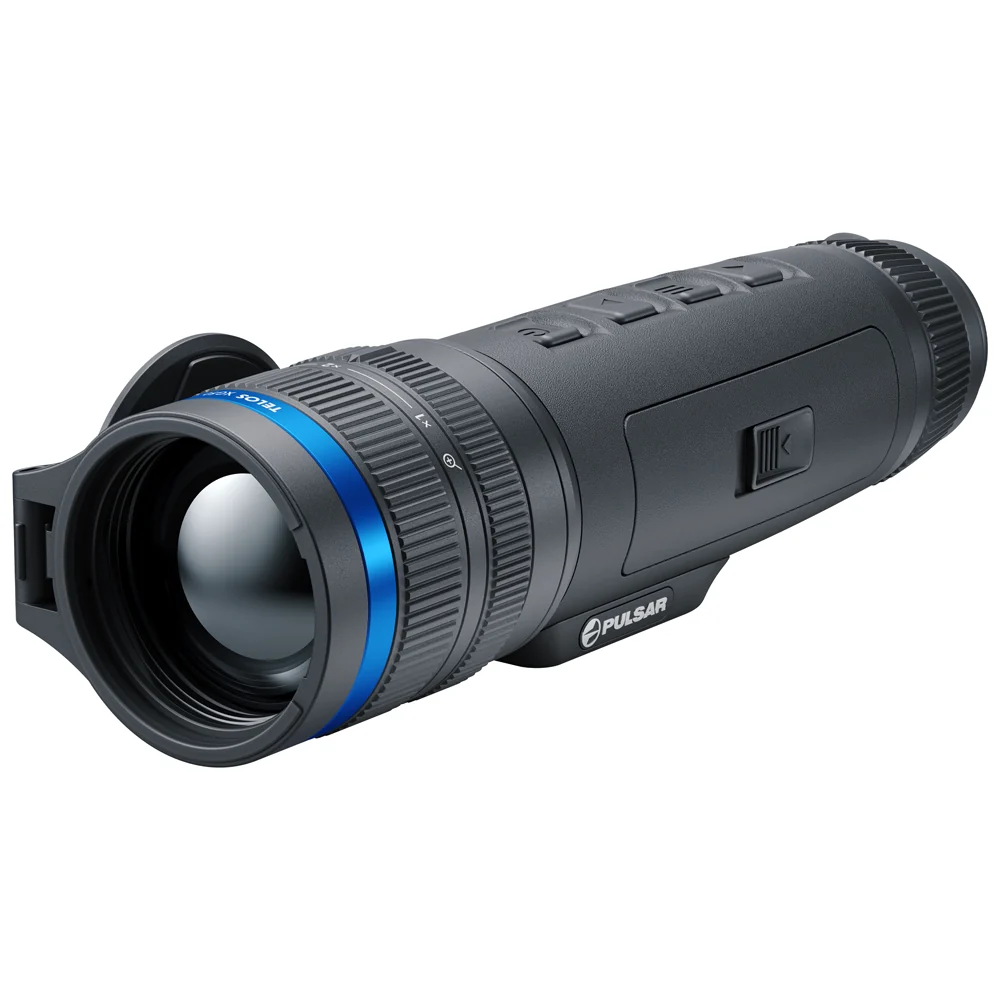
Pulsar Telos XG50 Thermal Imaging Monocular
-
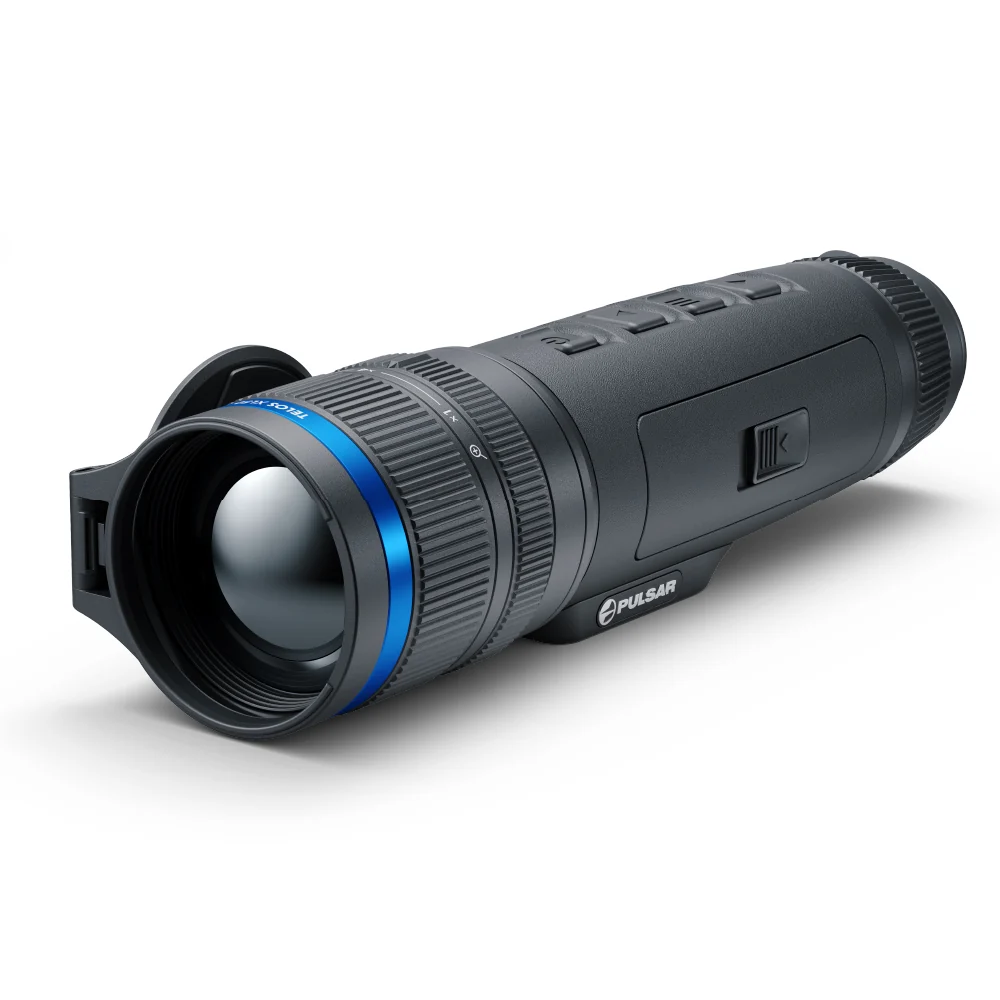
Pulsar Telos XL50 Thermal Imaging Monocular
-
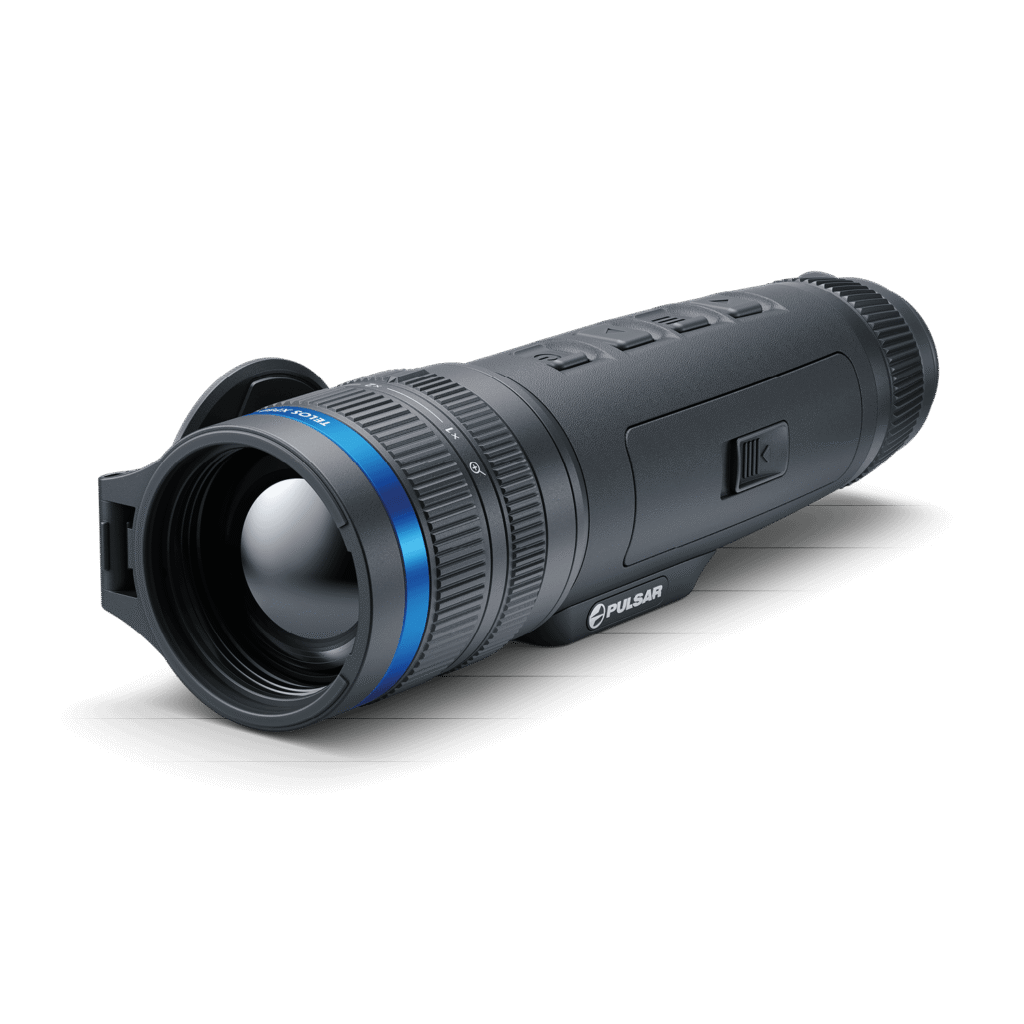
Pulsar Telos XP50 Thermal Imaging Monocular
-
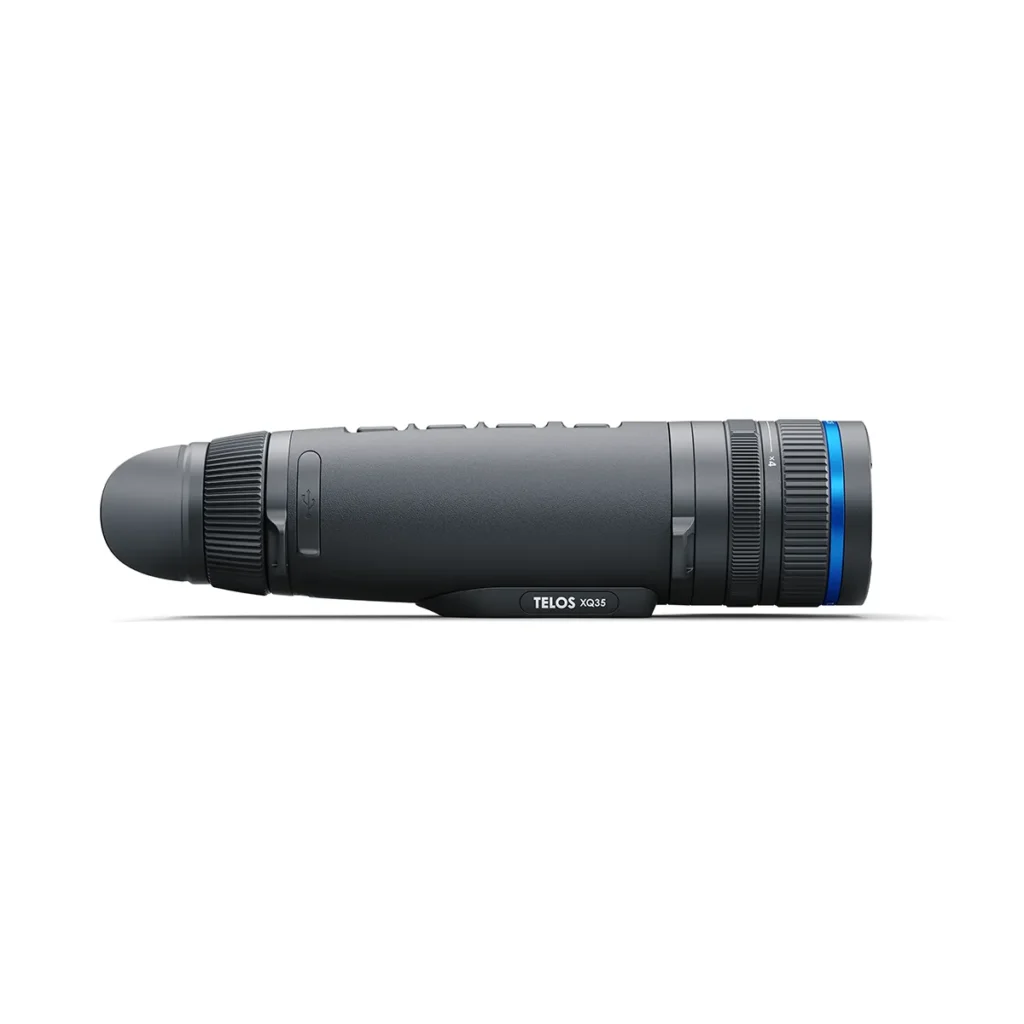
Pulsar Telos XQ35 Thermal Imaging Monocular
-
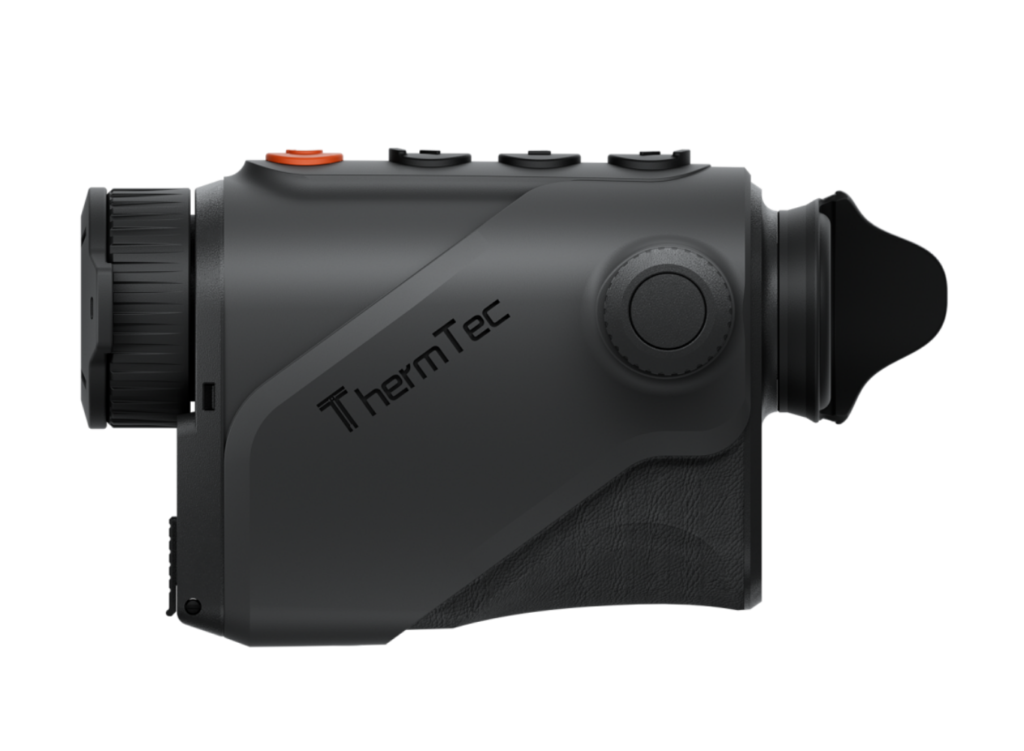
ThermTec Cyclone Compact Thermal Monocular
Thermal monocular vs binocular
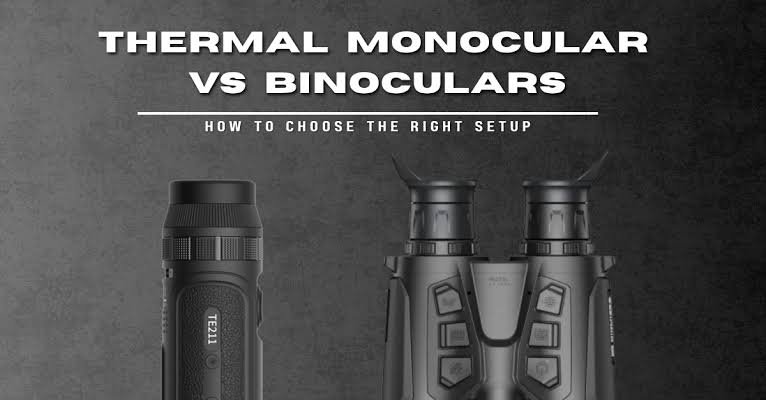
A thermal binocular uses both eyes, which is much less tiring across a long session and gives a steadier, more natural image. It also costs two to three times as much and weighs more. If you scan in short bursts and move a lot, a monocular is the better tool. If you sit and watch the ground for hours, binoculars earn the difference.
Thermal monocular vs scope
A thermal scope mounts on a rifle and exists to aim. A monocular exists to search. The distinction is a safety rule, not a preference: scanning with a scope means pointing a loaded firearm at every warm object you want to identify, including dog walkers, livestock, and other hunters. Buy the monocular first, and use the rifle only once you know what you are looking at.
Thermal monocular vs clip-on
A thermal clip-on fits in front of an existing day scope and converts it for night use without re-zeroing. It is a shooting device, not a searching one, though several models double as handheld monoculars when removed. If you already own a day scope and you shoot well, a clip-on plus a cheap monocular is often better value than a dedicated thermal scope.
Thermal monocular vs night vision
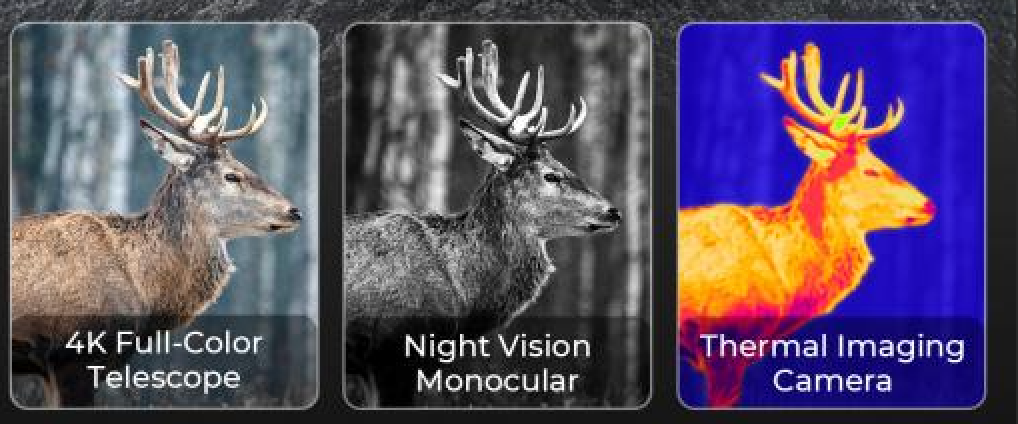
Night vision amplifies the small amount of visible light around you. It shows recognizable detail, which thermal cannot, but it needs light to amplify and it is blinded by a torch or a headlight. Thermal needs nothing at all and cuts through haze. For finding warm animals in the dark, thermal wins decisively, which is why it has largely replaced night vision for hunting. Our guide on thermal versus night vision covers the full comparison.
How to choose a thermal monocular
Eight specifications decide whether you will be happy. They are listed in the order they affect your night, not in the order that manufacturers list them.
1. Sensor resolution
On any thermal imaging monocular, resolution is how many heat-sensing elements the sensor has, and it drives how far away a warm shape becomes something you can identify rather than just detect.
- 256×192 is entry-level. Fine for close work, spotting animals in a field, or checking a garden or a yard. Expect identification only at short range.
- 384×288 is the sensible middle. It handles the majority of hunting and land management at practical distances, and it keeps the price sane.
- 640×512 roughly doubles the linear detail of a 384-sensor. This model is what you want for open country, longer identification, and any professional use.
- 1024×768 and above exist but is rare, expensive, and, as you will see below, not automatically better.
Our detailed explainer on 384 versus 640 sensors covers the math. The short version: buy the highest resolution your budget allows after you have satisfied the next point.
2. Thermal sensitivity (NETD)
If you read only one specification, read this one.
NETD stands for noise-equivalent temperature difference, measured in millikelvins (mK). It describes the smallest temperature difference the sensor can distinguish from its own electronic noise. Lower is better.
- Above 40mK: weak. The image goes flat and mushy in damp conditions.
- 20-40K: acceptable in dry, cold, high-contrast weather.
- Under 20mK: strong.
- Under 15mK: professional grade.
Why it matters so much in practice: on a wet November night, a deer’s wet flank may be only a degree or two warmer than the soaked bracken behind it. A sensitive sensor separates them. An insensitive one shows you grey soup. In most of Europe, that describes half the season.
Resolution sells devices. Sensitivity finds animals.
3. Lens size and field of view
The objective lens sets both how far you can see and how much you can see, and those two pull against each other.
- 19-25mm: wide field, short reach. Best for woodland, close cover, and fast scanning.
- 35mm: the all-round compromise most buyers should choose.
- 50mm and above: long reach, narrow field. Best for open fields, hilly ground, and moorland.
A narrow field is genuinely harder to use. Finding an animal through a tight field of view is like searching a dark room through a toilet roll tube, and following a running fox is harder still. Do not automatically buy the biggest lens.
Some devices offer a dual field of view, switching between a wide lens and a narrow one. That gives you the best of both worlds, but it comes at a price.
4. Detection range versus identification range
Manufacturers quote a detection range, and it is close to useless as a prediction of your night.
Detection means you can tell something warm is there. Recognition means you can tell it is an animal rather than a rock. Identification means you can tell it is a roe deer rather than a fox. Identification typically happens at a quarter to a third of the quoted detection distance, sometimes less.
Published figures also assume a large, warm target in clear, cold conditions. Rain, humidity, fog, and a warm ground temperature all cut them down. Use detection range to compare two devices against each other, never as a promise. Our guide on how far thermal really sees goes into detail.
5. Display quality
The sensor gathers detail; the display decides whether you see it. A 1024×768 AMOLED is a good standard. Some otherwise excellent devices have a small or low-resolution screen, and reviewers have flagged this issue on more than one popular model. Check the display specification, not just the sensor.
6. Rangefinder
A built-in laser rangefinder tells you the exact distance to what you are looking at. For pure scanning, it is a luxury. If you also shoot, or you need to judge whether a stock is worth starting, it is worth the several hundred euro premium. Look for models with LRF or L in the name.
7. Battery life and battery type
Runtimes vary from about 6 hours to over 20. More important than the headline number is whether the battery is replaceable. A device with swappable cells never ends your night; a sealed internal battery does. Devices using standard 18650 cells are cheap to keep running.
8. Weight, build and waterproofing
You will hold a handheld thermal monocular one-handed for hours. Weight ranges from around 250g to over 650g, and you notice the difference. Look for magnesium alloy housing and an IP67 or IPX7 rating so that rain and the occasional drop into wet grass are not a problem.
What does a thermal monocular cost?
Thermal vision monocular prices have fallen hard over the last five years. A device that cost €3,000 in 2019 now costs under €1,200.
| Band | Price | Sensor | NETD | What it does well | Example |
|---|---|---|---|---|---|
| Budget | €329-700 | 256 or 384 | 25-40 mK | Close-range, garden and field checks; first thermal | HIKMICRO Lynx 3.0 |
| Entry | €700-1,100 | 384 or 640 | 18-25 mK | Real hunting at practical ranges | ThermTec Cyclone |
| Mid | €1,100-1,800 | 384 or 640 | 15-25 mK | All-round night hunting, better weather performance | ThermTec Cyclops SE, HIKMICRO Falcon |
| Premium | €1,800-2,900 | 640 | 15-20 mK | Long range, low contrast, often with rangefinder | ThermTec Wild, Pulsar Axion 2 |
| Flagship | €2,900+ | 640 or 1024 | 15-40 mK | Maximum reach and features | ThermTec Wild Pro, Pulsar Telos |
Is a cheap thermal monocular worth buying?
A budget thermal monocular from a real manufacturer, yes. Something unbranded from a marketplace listing, no. Something unbranded at €150, no.
The honest position on cheap thermal is this: below roughly €300 you get a small sensor, poor sensitivity, and a display that undoes whatever the sensor achieved. It will work in a cold, dry field on a high-contrast night, and it will disappoint you in drizzle, which is when you actually wanted it. If your budget ceiling is €329, the entry-level HIKMICRO Lynx is a genuine device and a reasonable buy. If you can stretch to about €900, the jump in capability is larger than the jump in price.
Best budget thermal monocular under €500
At this level you are choosing between a 256 sensor with decent sensitivity and a 384 sensor with poor sensitivity. Take the sensitivity. A cleaner image at shorter range beats a grainy one at longer range every time. HIKMICRO’s Lynx line is where most of the sensible options at this price sit.
Best thermal monocular under €1,000
This price range is the sweet spot of the whole market and where we would point most first-time buyers. For around €899, the ThermTec Cyclone gives you a 640 sensor at under 20mK in a 255g body with roughly 20 hours of battery life, which two years ago would have cost double. HIKMICRO’s mid-range Falcon models and AGM’s current Taipan line also compete here.
Best thermal monocular: our picks by category
We stock every brand below and have no incentive to favor one. These are the picks we would actually make.
| Category | Pick | Why | Price |
|---|---|---|---|
| Best overall value | ThermTec Cyclone | 640 sensor, <20 mK, 255 g, 20 h battery | €899 |
| Best on a tight budget | HIKMICRO Lynx 3.0 | Genuine thermal from €329 | From €329 |
| Best all-rounder | ThermTec Cyclops 3.0 | 640, 2,500m, AI calibration, ~14h | €1,190-1,390 |
| Best image quality | ThermTec Wild Pro | <15mK, 1600×1200 display, built-in LRF | €2,890 |
| Best build and software | Pulsar Axion 2 | Magnesium, IPX7, Stream Vision 2, 11h | POA |
| Best for mixed terrain | ThermTec Cyclops-D | Dual field of view in one device | €1,890 |
| Longest warranty | AGM Sidewinder | ≤20mK, 64GB, five-year cover | POA |
Every ThermTec thermal monocular compared
ThermTec builds the widest 12 µm thermal imaging monocular range at the price, with consistently low NETD figures. Here is the whole lineup.
| Model | Sensor | NETD | Lens | Detection | Battery | Weight | Price |
|---|---|---|---|---|---|---|---|
| Cyclone | 640×512 | <20 mK | 25 mm | Short | 20 h | 255 g | €899 |
| Cyclops SE | 384×288 | <20 mK | 35 mm | 1,800 m | 16 h | 522 g | €1,190-1,390 |
| Cyclops 3.0 | 640×512 | ≤25 mK | 35 mm | 2,500 m | ~14 h | – | €1,190-1,390 |
| Cyclops Pro | 640×512 | ≤25 mK | 35 mm | 2,500 m | 12 h | – | €1,490 |
| Cyclops-D | 640×512 | ≤25 mK | Dual to 70 mm | to 3,500 m | 12 h | – | €1,890 |
| Wild | 640×512 | ≤18 mK | 50 mm F0.9 | 2,600 m | 10 h | – | €1,299-2,290 |
| Wild-D | 640×512 | ≤18 mK | Dual 25/50 mm | 1,300 / 2,600 m | 20 h | – | €2,290 |
| Wild Pro | 640×512 | <15 mK | 50 mm | Long, 1,000 m LRF | – | 653 g | €2,890 |
Cyclone. The entry point and, for most people, the smartest buy in the range. A 640 sensor at under 20mK in a 255g body is remarkable at €899, and 20 hours of battery means it simply does not run out. It has a short lens, making it a scanner rather than a long-range spotter.
Cyclops SE. Trades to a 384 sensor but adds a 35mm lens for 1,800m detection. Good value if reach matters more to you than resolution.
Cyclops 3.0 and Cyclops Pro. The all-rounders: 640 sensors, 2,500 m detection, 12 to 14 hours. The 3.0 adds AI calibration for a steadier picture; the Pro adds target outline mode. Either is a sensible main device.
Cyclops-D and Wild-D offer a dual field of view, allowing you to switch between a wide scanning lens and a narrow identification lens. If you hunt woodland and open ground in the same night, this model solves a real problem that no single-lens device can.
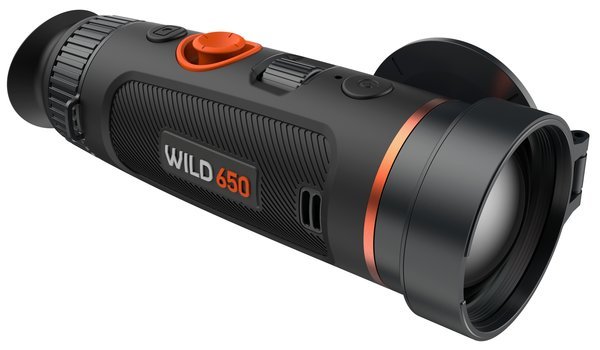
Wild and Wild Pro. The serious end. The Wild’s ≤18mK sensor behind a fast 50mm F0.9 lens reaches 2,600m, and the Wild Pro drops to under 15mK with a 1600×1200 display and a built-in 1,000m rangefinder. These compete with devices costing considerably more.
Full detail in our ThermTec monocular guide, or browse the ThermTec brand page.
Pulsar thermal monoculars compared
Pulsar is the most established name in European thermals, and the build quality justifies the reputation. Magnesium alloy housings, IPX7 sealing, quick-swap APS5 batteries, and Stream Vision 2, which remains the best software anyone in thermal has written. Pulsar also holds resale value better than any competitor, which matters if you upgrade every few years.
Axion 2 XQ35 and XQ35 Pro: A 384×288 17µm sensor. The Pro version runs NETD under 25 mK with roughly 1,300 m detection and up to 11 hours from its APS5 pack. Genuinely pocket-sized. Reviewers have criticized the 640×400 display as the weak link on an otherwise excellent device.
Axion 2 XG35 and LRF XG35. It features a 640×480 12µm Lynred sensor with a fast F35/1.0 germanium lens, 1,750m detection range, a 1024×768 AMOLED display, 2.5-20x magnification, and weighs roughly 380g. The LRF version adds a 1,000m rangefinder. Battery drops to about 7 hours.
Telos LRF XP50. Pulsar’s premium handheld, and reviewers who test thermals professionally have called it the best thermal monocular on the market.
The caveat is worth knowing. The 640-sensor Axion 2 XG35 carries an NETD of under 40 mK, against under 20 mK on the ThermTec Cyclone at a similar price and under 15 mK on the Wild Pro. Stranger still, Pulsar’s own lower-resolution XQ35 Pro is more sensitive at under 25mK than its 640 flagship. Pulsar’s optics and image processing partly compensate, and in hand, an Axion produces a good picture. On a wet, low-contrast night, that gap is working against it.
HIKMICRO thermal monoculars compared
HIKMICRO covers more price points than anyone else, and it owns the bottom of the market outright.
Lynx 3.0. Starting at around €329, this is the most affordable budget thermal monocular we stock. The models run from a 256 sensor with a short lens up to 384 sensors with 35mm optics. This is the cheapest genuinely usable thermal we are willing to sell, and it puts a real device in the hands of buyers who cannot spend four figures. If your budget is tight, start here rather than stretching.
Falcon 2.0. €1,499-2,899. The middle and upper middle of the range, moving to 384 and 640 sensors with longer lenses. Competes directly with ThermTec’s Cyclops line.
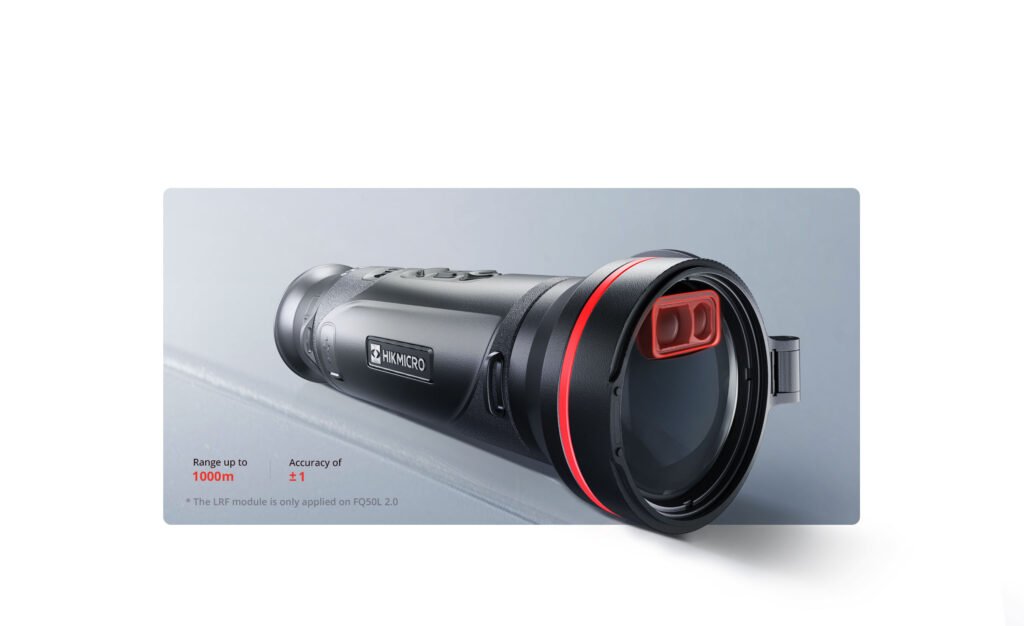
Condor LRF 2.0: €1,799-2,699. The premium tier, with integrated laser ranging across 384 and 640 models and lenses from 25 mm to 50 mm.
HIKMICRO’s advantage is manufacturing scale, which shows up as consistency and as an enormous ladder of options rather than as headline specifications. Their mounting standards have also become something close to an industry default, which matters if you later add accessories.
AGM thermal monoculars compared
AGM has improved dramatically, and it carries the largest brand search demand in this category by some distance.
Asp TM35-384. The older generation is running a 17µm sensor at under 35mK with a 35mm lens. Still sold, still capable in good conditions, but now superseded.
The Taipan V2 moves to a 12µm 384 sensor, detecting up to roughly 1,250m, a removable 18650 battery, and a tilt sensor that blanks the display to save power. Sensitivity varies by model between roughly 20 and 35mK, so check the specific variant.
Sidewinder TM25-384 and TM35-384. AGM’s premium handheld is the one to pay attention to. A 12µm 384 detector at ≤20mK, a 1024×768 OLED display, 64GB of memory, a 50Hz refresh rate, and IP67 sealing. That is a competitive package.
Fuzion. AGM’s fusion line blends thermal with a visible channel rather than switching between them.
AGM backs everything with a five-year transferable warranty, the longest in the category. When cross-shopping, check the generation carefully, because older sub-35mK models and current sub-20mK models sit side by side at very different prices.
ATN, FLIR, and the rest
ATN has the second-largest brand demand in this category and holds the number one organic position for the head term. Their thermal engine offers sensor options from 256 up to 640 with sensitivity as low as ≤15 mK on the upper models, and the range is heavy on features: onboard recording, streaming, app control, and long battery life. Buyers who want the whole technology package rate them well. Buyers focused narrowly on optical quality per euro often prefer alternatives.
FLIR effectively withdrew from the consumer hunting market in 2020, which reshaped the category and opened the door for AGM, HIKMICRO, and others. FLIR’s current focus is industrial, professional, and marine, where its Ocean Scout handhelds remain excellent. If you are searching for a FLIR thermal monocular for hunting, the practical answer today is one of the brands above.
Others worth knowing. InfiRay, NOCPIX, Pixfra, and Armasight all have a real presence and appear frequently in search results. Specifications change quickly in this part of the market, so please ask us for current comparisons instead of relying on a review from two seasons ago.
Cross-brand comparison
| Model | Sensor | NETD | Detection | LRF | Standout |
|---|---|---|---|---|---|
| ThermTec Cyclone | 640 12µm | <20 mK | Short | No | 255 g, 20 h, €899 |
| ThermTec Wild | 640 12µm | ≤18 mK | 2,600 m | No | 50 mm F0.9 |
| ThermTec Wild Pro | 640 12µm | <15 mK | Long | 1,000 m | Most sensitive here |
| Pulsar Axion 2 XQ35 Pro | 384 17µm | <25 mK | ~1,300 m | 1,000 m | 11 h, pocket size |
| Pulsar Axion 2 XG35 | 640 12µm | <40 mK | 1,750 m | 1,000 m | Build and software |
| AGM Sidewinder TM35-384 | 384 12µm | ≤20 mK | Mid | No | 64 GB, 5-yr warranty |
| AGM Taipan V2 | 384 12µm | 20-35 mK | to 1,250 m | No | 18650, tilt sensor |
| HIKMICRO Lynx 3.0 | 256 / 384 | Varies | Short | No | From €329 |
| HIKMICRO Condor LRF | 384 / 640 | Varies | Mid-long | Yes | €1,799-2,699 |
The pattern nobody advertises
Line up the sensitivity figures, and something consistent appears. Pulsar’s 640 12µm sensors sit around under 40mK, while ThermTec, AGM’s current Sidewinder line and HIKMICRO’s upper range run between under 15mK and 20mK. The same pattern holds across Pulsar’s scopes, clip-ons, and binoculars, not just monoculars.
That does not make Pulsar a bad choice. Their glass, processing, software, and build are genuinely better, and a well-processed 40mK image can outperform a poorly processed 20mK one. But it does mean the specification that decides your image on a wet night is not the one being advertised on the box.
Read resolution and sensitivity together on every brand, including the ones we sell most of.
Thermal monocular for hunting
Hunting is what most people buy a thermal monocular for, and it is where the device changes the most.
Finding game. This is the core job. A handheld thermal monocular turns a black field into a map of every warm body in it. You will see animals you have walked past for years. Most people are genuinely surprised the first few nights by how much is out there.
Identifying before you commit. Thermal shows heat and shape, so at sensible range you can tell a fox from a hare, a deer from a sheep, and a person from an animal. That last one matters more than any other feature on this page.
Tracking and recovery. A wounded animal leaves a warm trail, and a downed animal stays warm for a long time. Recovering game in thick cover at night is a job a monocular does and a rifle scope cannot do safely.
Counting and surveying. Land managers use thermal imaging to census deer, locate active setts and earths, and check stock without disturbing anything.
By quarry
Deer and boar. They are large and warm, and they usually inhabit open or semi-open ground. A 384 sensor handles this well; a 640 gives you earlier identification. Reach matters more than field of view on open ground.
Fox and coyote. Smaller, faster, and often moving through cover. Sensitivity and field of view matter more than raw reach here, since you need to locate and follow a moving animal rather than spot a stationary one at distance.
Rabbit and small vermin. Close range, high volume. A compact thermal monocular with a wide lens beats everything else. This scenario is where an entry device is genuinely enough.
Hogs. Nocturnal, gregarious, and warm. They present strongly on thermal, and because they arrive as a group, a wider field helps you keep track of which animal is which.
For the full hunting-specific breakdown, see our dedicated guide on thermal monoculars for hunting and our complete guide to thermal imaging for hunting if you are new to the whole category.
Can you use a thermal monocular with a rifle scope?
Yes, and it is the standard setup. You scan and identify with the monocular, then bring the rifle up once you know what you are looking at and have decided to take the shot. Never reverse those roles.
If you want thermal on the rifle as well, you have two routes: a dedicated thermal scope, or a thermal clip on that converts your existing day scope without re-zeroing. Our comparison of monocular, scope and clip-ons covers which combination suits which hunter.
Helmet-mounted thermal monoculars
Helmet mounting is a fast-growing use, and it solves a real problem: a handheld device occupies a hand you may need for a rifle, a dog lead, a gate, or a torch.
How it works. The monocular attaches to a helmet-mounted arm, usually through a standard bridge and shroud arrangement borrowed from night vision. You flip it down in front of one eye and up when you do not need it, keeping both hands free.
What to look for. Three things. First, weight, which matters far more on your head than in your hand; anything over about 400g becomes tiring and needs a counterweight. Second, a compatible mounting interface, since not every monocular has a threaded socket or a bridge adapter. Third, a short lens, because a narrow field of view is disorienting when you are walking with it in front of your eyes.
The honest caveat. Viewing the world through a monochrome thermal image with one eye while walking takes practice, and depth perception suffers. Start on flat, familiar ground. Many people who buy a helmet use end up using the device handheld most of the time.
Ask us about mount compatibility for any specific model before ordering, since the adapter is often a separate part.
Other uses for a thermal monocular
Wildlife observation and birding. A compact thermal monocular is ideal for finding nocturnal mammals, roosting birds, and active nests without a torch and without disturbing anything. Badgers, deer, and owls are all far easier to locate with thermal than by any other method.
Security and property. You can check a yard, a perimeter, or a farm at night with a handheld thermal monocular. Thermal cannot be defeated by darkness and is not blinded by security lighting.
Livestock and farming. Locating animals in a large field, checking for a ewe lambing in a far corner, or finding a calf that has separated from the herd is also a task for thermal.
Search and rescue. A person lying still in cover is nearly invisible to a torch and obvious on thermal. Many volunteer teams now carry handheld thermals as standard.
Building and maintenance. Spotting heat loss, insulation gaps, and overheating electrics. A hunting monocular is not a calibrated inspection tool, but it will show you an obvious problem.
Marine. For boats, look at purpose-built handhelds rather than hunting devices. Our marine night vision guide covers those separately.
How to use a thermal monocular well
The gap between people who find animals and people who own a thermal is technique, not equipment.
Scan slowly, in overlapping strips. The instinct is to sweep the device across a field like a torch. Thermal rewards the opposite. Work in bands, overlapping each pass slightly, and pause at the edges of cover. Often only a head or a flank is showing, and a quick sweep goes straight past it.
Learn two palettes. White-hot is the fastest for detection because your eye catches bright shapes quickly. Black-hot frequently shows more detail on an animal you have already found. Most experienced users scan with one setting and identify with the other. Red-hot and similar palettes help isolate a warm body against a cluttered background.
Let the device settle. Bringing a warm monocular from a heated vehicle into cold air degrades the image until temperatures equalize. Please allow a few minutes before making a judgment.
Learn your ground’s thermal behavior. Sun-warmed rock, recently plowed soil, wet vegetation, compost heaps, and standing water all produce heat signatures that are not animals. Every piece of ground has its own false positives, and you learn them quickly.
Watch the weather. Cold, dry, still nights are excellent. Heavy rain, dense fog, and warm humid nights all reduce performance. A wet animal reads cooler than a dry one because evaporation cools its surface.
Use it before you need it. Spend a few evenings just looking at familiar terrain with familiar animals. Understanding what a fox looks like at 200m on your specific device is worth more than any specification.
What a thermal monocular cannot do:
Managing expectations properly prevents most disappointment and most returns.
It cannot see through walls. Thermal reads surface temperature. A wall between you and a warm body blocks it completely. You may see a warm patch where something has been leaning, which is not the same thing.
It cannot see through glass. Ordinary glass is opaque to the wavelengths used for thermal imaging. You will see a reflection of yourself in a window, not the room behind it.
It cannot see through dense foliage. Thermal sees heat escaping through gaps in the cover, which is why an animal in a hedge often shows up. Solid, thick vegetation blocks it like a wall.
It cannot read details. No color, no markings, no antler counting at a distance, no faces. That is a physical limitation of the technology, not a shortcoming of any particular device.
It will not identify targets at the quoted detection range. This is worth repeating because it is the single most common misunderstanding in thermal buying.
Is a thermal monocular legal?
Rules vary considerably across Europe and change periodically.
The general pattern is that handheld thermal devices used for observation are widely permitted and treated far more permissively than thermal devices mounted on a firearm. Several countries that restrict or prohibit rifle-mounted thermals allow carrying a handheld monocular. Some restrict use by species, some by permission type, and some by region within the same country.
Because a monocular is handheld and not a sight, it is usually the least restricted thermal device you can own. That is not a guarantee, and it is not legal advice.
We sell optics. Confirm the current position with your national or regional hunting authority before you order, and check separately if you intend to travel or hunt across a border with the device.
Mistakes worth avoiding
Buying within the detection range. The most quoted figure and the least useful. The identification range is a fraction of it.
Ignoring NETD. In a damp climate, sensitivity does more for your image than resolution does. Two devices at the same resolution can perform completely differently.
Buying too many lenses. A narrow field of view is genuinely harder to use, and most people scan more than they reach.
Buying a rifle scope instead. A monocular is safer, more versatile, and usually cheaper. Buy it first.
Forgetting the display. A superb sensor is wasted behind a small, low-resolution screen.
Assuming a sealed battery is fine, it is, until the night it is not. It is until the night it is not. Replaceable cells solve the problem for good.
Comparing generations by price. Older and current models from the same brand sit side by side for similar money with very different sensitivities. Check the specification, not the badge.
Thermal monocular glossary
| Term | What it means |
|---|---|
| NETD | Noise-equivalent temperature difference, in millikelvins. The smallest temperature difference the sensor can resolve. Lower is better. |
| Microbolometer | The uncooled sensor type used in all consumer thermal devices. |
| Pixel pitch | Physical spacing between sensor elements, in micrometers. 12 µm is current; 17 µm is older. |
| Germanium | The metalloid thermal lenses are made from this material, because glass blocks infrared. |
| Detection range | Distance at which you can tell something warm is present. Not identification. |
| Identification range | Distance at which you can tell what the animal actually is. This is typically a quarter to a third of the detection range. |
| LRF | Laser rangefinder. Models with ranging usually carry L or LRF in the name. |
| Palette | The color scheme used to display heat. White-hot, black-hot, red-hot, and others. |
| Shutterless | A design that reduces or removes the periodic image freeze during recalibration. |
| Refresh rate | The refresh rate is how many times per second the image updates, measured in Hz. A standard refresh rate is 50 Hz, which is important for tracking moving animals. |
| Base magnification | The device’s true optical magnification. Digital zoom beyond this enlarges without adding detail. |
| IP67 / IPX7 | Sealing ratings. Both mean the device survives rain and brief immersion. |
Frequently asked questions
What is a thermal monocular?
A thermal monocular is a handheld, single-eyepiece device that builds an image from heat rather than light. It detects the infrared radiation given off by anything warmer than its surroundings, which means it finds animals and people in total darkness, through fog and in cover. Unlike night vision, it needs no ambient light at all.
What is the best thermal monocular?
There is no single best, because the right device depends on your budget and your ground. For overall value, we would point most buyers to the ThermTec Cyclone at €899, which has a 640 sensor at under 20mK and 20 hours of battery. For the best image quality, the ThermTec Wild Pro is at under 15 mK. For the best build and software, Pulsar’s Axion 2 line. On a tight budget, HIKMICRO’s Lynx is from around €329.
What is the best thermal monocular for the money?
The ThermTec Cyclone, priced at €899, is our value pick, as a 640 sensor with sub-20 mK sensitivity at that price was not available at all two years ago. If you can only spend half that, HIKMICRO’s Lynx range is the honest answer rather than stretching to something you cannot afford.
Can you use a thermal monocular in daylight?
Yes. Thermal reads heat, not light, so a thermal monocular works perfectly well during the day and will not be damaged by daylight the way an image-intensifier night vision tube would be. Performance is often lower in bright sun because the ground, rocks, and vegetation warm up and reduce the temperature contrast between an animal and its background. Early morning, dusk, and overcast days give better daytime results than midday sun.
Can you use a thermal monocular for hunting?
Yes, and it is the most common use. A monocular finds and identifies game, tracks wounded animals, and helps recover downed ones. Whether it is legal where you hunt is a separate question: handheld thermal is widely permitted across Europe, but rules differ by country and region, so check with your local authority.
Can you use a thermal monocular with a scope?
Yes, and this is the recommended setup. Scan and identify with the handheld monocular, then use the rifle only once you know what you are looking at. Never scan with a rifle-mounted device, because that means pointing a firearm at everything you want to identify. If you want thermal on the rifle too, a dedicated thermal scope does that job.
How far can a thermal monocular see?
Entry devices detect a large warm animal to roughly 800 to 1,300 m, mid-range models to about 1,800 to 2,500 m, and long-lens units beyond that. Those are detection figures, meaning you can tell something warm is there. Identifying what the animal actually is happens at a quarter to a third of that distance, and rain, humidity, and warm ground all reduce both numbers.
What is the difference between 384 thermal and 640 thermal?
The numbers describe how many heat-sensing elements the sensor has. A 640×512 sensor has roughly 2.4 times the pixels of a 384×288 one, which translates into about 1.5 times the linear detail. In practice, you can identify animals meaningfully further out with a 640. A 384 remains entirely adequate for close and mid-range work and costs considerably less.
What is a good NETD for a thermal monocular?
Under 20mK is strong, and under 15mK is professional grade. Between 20 and 40mK is acceptable in cold, dry, high-contrast conditions. Above 40 mK, the image degrades noticeably in damp weather. NETD often matters more than resolution in European conditions, and it is the specification manufacturers advertise least.
Do I need a rangefinder on a thermal monocular?
Only if you also need distance. For pure scanning, finding, and tracking, a rangefinder is a luxury that adds several hundred euros. If you shoot, or you want to judge whether a stalk is worth starting before you commit to it, models with LRF in the name earn their premium.
What is the cheapest usable thermal monocular?
The HIKMICRO Lynx is priced at around €329, making it the most affordable budget thermal monocular we stock and the lowest price at which we are willing to sell something we would actually use. Below roughly €300 you tend to get a small sensor, weak sensitivity, and a poor display, and the result disappoints in exactly the damp conditions you bought it for.
Is a thermal monocular better than a thermal binocular?
For most people, yes, because it is lighter, cheaper, and easier to carry. Binoculars become the better choice when you glass for hours at a stretch, since two-eye viewing removes the eye strain a monocular builds up, and premium models add stabilization and occasionally a daytime color channel. The deciding question is how long you spend looking in one go.
Can a thermal monocular see through walls?
No. Thermal reads the surface temperature of whatever is in front of it, and a wall blocks that completely. You may occasionally see a warm patch on a wall where something has been resting against it, but you cannot see the room or the person behind it. The same applies to glass, which is opaque to thermal wavelengths.
Can a thermal monocular see through fog and rain?
It works better than your eyes and better than a torch, but not perfectly. Thermal uses longer wavelengths than visible light and penetrates haze and light fog well. Heavy rain and dense fog do degrade it, and a wet animal reads cooler than a dry one because evaporation cools its surface. Low NETD helps in these conditions more than anything else.
Can you mount a thermal monocular on a helmet?
Many can be helmet-mounted using a bridge and shroud arrangement borrowed from night vision, which frees both hands. Look for a device under about 400g with a compatible mounting interface and a relatively short lens, since a narrow field of view is disorienting when walking. Check adapter compatibility for your specific model before ordering, because the mount is usually a separate part.
How long do thermal monocular batteries last?
Battery life typically ranges from about 6 to 20 hours, depending on the model. The ThermTec Cyclone reaches about 20 hours, and Pulsar’s Axion 2 XG35 around 7. More important than the headline figure is whether the battery is replaceable, since swappable cells mean the device never ends your night.
Which brand makes the best thermal monocular?
No brand wins outright. Pulsar leads on build quality, software, and resale value, though its 640 sensors run a less sensitive sub-40 mK figure. ThermTec leads on sensitivity per euro, with 18 and 15 mK. AGM’s current Sidewinder line is competitive at 20 mK with a five-year warranty. HIKMICRO owns the budget end, starting at €329. ATN offers the deepest feature set. Match the brand to your budget and to whether image quality in challenging weather or long-term ownership matters more.
How do I choose a thermal imaging monocular?
Work through five questions in order. What is your budget? How far do you need to identify, rather than just detect? Is your climate wet, which pushes you toward lower NETD? Do you scan wide ground or reach across open country, which determines lens size? And do you need ranging? Answer those questions, and your shortlist will usually narrow to two or three devices.
Is a handheld thermal monocular worth it?
If you spend meaningful time outdoors at night, it is the single piece of equipment that changes most. People are consistently surprised by how much is moving on ground they thought they knew. As a safety tool for identifying what you are looking at before a rifle is involved, it is difficult to argue against.
What should I buy first, a monocular or a thermal scope?
A monocular is almost always the best choice. It is safer, more versatile, and usually cheaper, and it is the device you will use on every outing regardless of whether you are carrying a rifle. Add a scope or a clip-on afterwards once you know how to hunt with thermal.
Where to start
If you are buying your first thermal monocular, the shortlist is short. On a tight budget, a HIKMICRO Lynx is around €329. For the best balance of price and capability, the ThermTec Cyclone at €899. For a serious all-around device, the Cyclops 3.0. For the best image available at sensible money, try the Wild Pro. For build quality and software above everything, Pulsar.
Whatever you choose, read the NETD figure alongside the resolution, be realistic about identification range, and buy the field of view that suits your ground rather than the highest number on the box.
Browse the full thermal monocular range across ThermTec, Pulsar, HIKMICRO, AGM, and ATN. Going further? Compare thermal scopes, thermal clip-ons, and thermal binoculars, or read the complete guide to thermal imaging for hunting. Not sure what suits your ground and budget? Tell us where and what you hunt, and we will shortlist across every brand we carry.