
Fusion Night Vision: Is It Worth It, or Do You Need Two Devices?
Fusion night vision combines an intensified image with a thermal image so you see both at once: terrain and heat signatures in a single view. Thermal finds the warm body; intensification tells you what it is and what ground it is standing on. Done properly, it is the most capable night observation technology in existence.
It is also, for almost every European civilian buyer, the wrong thing to spend money on. True fusion hardware is export controlled, priced from several thousand to five figures, and in several notable cases discontinued. Meanwhile, two separate devices, one thermal and one tube, deliver most of the same capability for less money and with no regulatory obstacle.
This page explains how fusion actually works, why granted patents document a clutter problem that no retailer mentions, where the cheap clip-on approach falls down, and what the two-device alternative genuinely costs from live stock. We stock both technologies separately, so we have a reason to be straight with you about the one we do not.
Products by Category
-
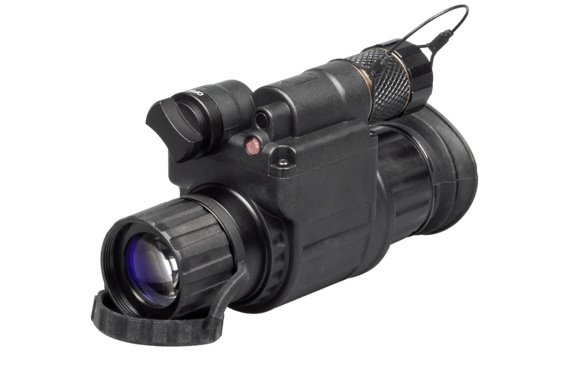
AGM Wolf-14 NL1 Night Vision Monocular (Gen 2+ Green Phosphor)
-
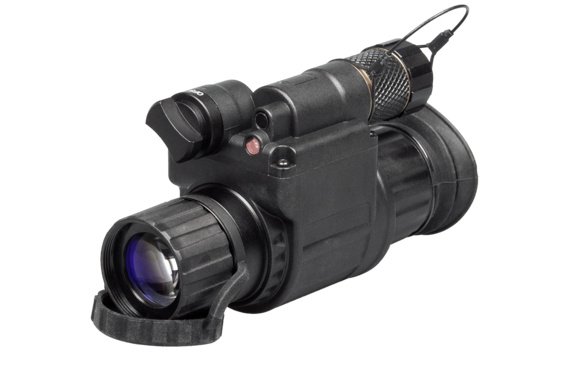
AGM Wolf-14 NW1 Night Vision Monocular (Gen 2+ White Phosphor)
-
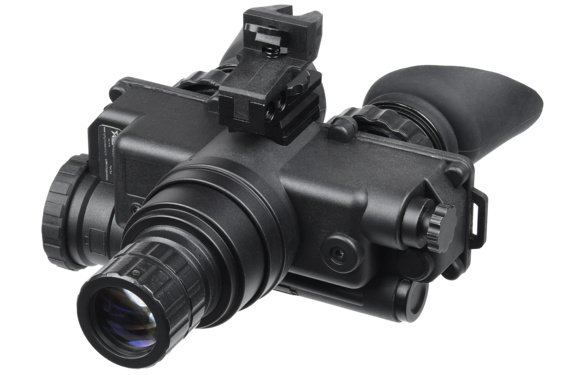
AGM Wolf-7 Pro NL1 Night Vision Goggle (Gen 2+ Bi-Ocular, Green)
-
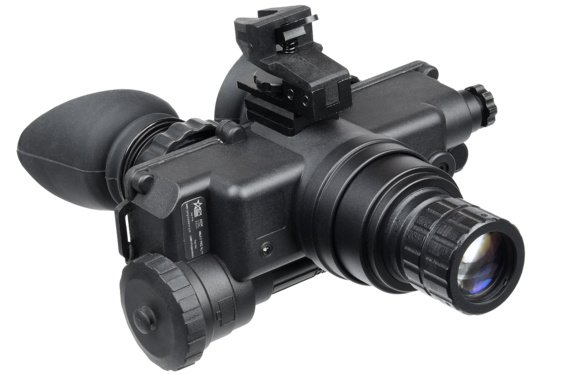
AGM Wolf-7 Pro NW1 Night Vision Goggle (Gen 2+ Bi-Ocular, White)
-
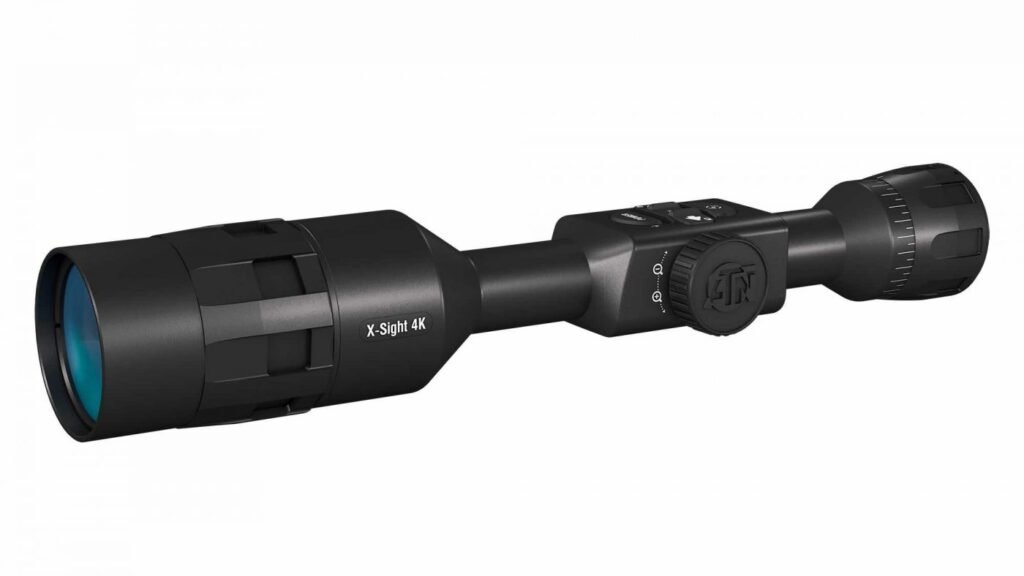
ATN X-Sight 4K Pro 3-14x Day/Night Riflescope (Ex-Display)
What Is Fusion Night Vision?
A fusion device runs two sensors and merges their output into one image.
The first is an image intensifier tube, which amplifies available light optically and gives you a sharp, spatially coherent picture of terrain. The second is a long-wave infrared sensor, which reads heat and finds anything warmer than its surroundings regardless of light. A processor combines the two feeds so heat signatures appear inside the intensified scene.
The result answers both questions at once. Thermal alone tells you something warm is there and almost nothing about what it is or what lies between you and it. Intensification alone renders the scene beautiful and cannot find an animal you have not already spotted. Fused, you get detection and context together.
Both underlying technologies are covered properly elsewhere on this site. The night vision systems guide explains image intensification stage by stage, and the thermal vs. night vision sets out where each one wins on its own.
How Is the Fusion Actually Done?
Three approaches, and the differences matter more than the marketing suggests.
Ocular side fusion, done internally
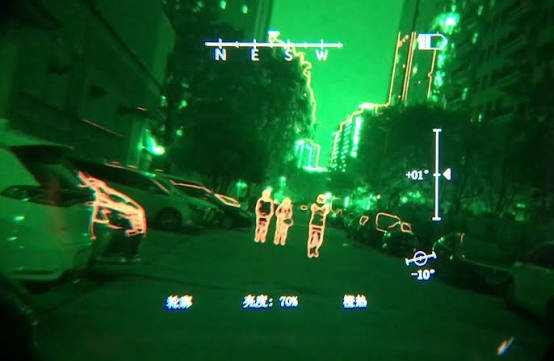
The two feeds are combined electronically and presented at the eyepiece. This is true fusion, and it is what military ENVG-B class devices do. Because the merge happens inside the device after both sensors have been read, ambient light cannot interfere with it.
Objective side fusion, using a clip on
A clip-on thermal imager, sometimes called a COTI, mounts in front of an existing night vision device and projects its thermal output into the host optic from outside. Cheaper, modular, and it works with a tube device you already own.
There is a limitation that almost nobody publishes. Because the overlay is projected externally, it washes out when ambient light exceeds what the clip-on can put out. At true darkness it works. At dusk, or near artificial light, the thermal layer fades into the brighter intensified image, and you lose the benefit precisely when the scene gets complicated.
If you are considering a clip-on route, that single fact should shape your expectations.
Bridge fusion, done by your brain
Thermal on one eye, night vision on the other, mounted side by side. No electronics merge anything. Your visual system does the work.
This method is genuinely effective, and it costs a fraction of true fusion. The trade is that the two images are not geometrically registered, so a heat signature does not sit precisely outlined on the animal the way an electronic overlay draws it. Most people adapt within a few nights. A minority find two very different images in two eyes tiring and never quite settle.
The Problem Nobody Selling Fusion Mentions
Every commercial page on this subject presents fusion as pure gain. The patent record disagrees, and it is worth knowing why before you spend five figures.
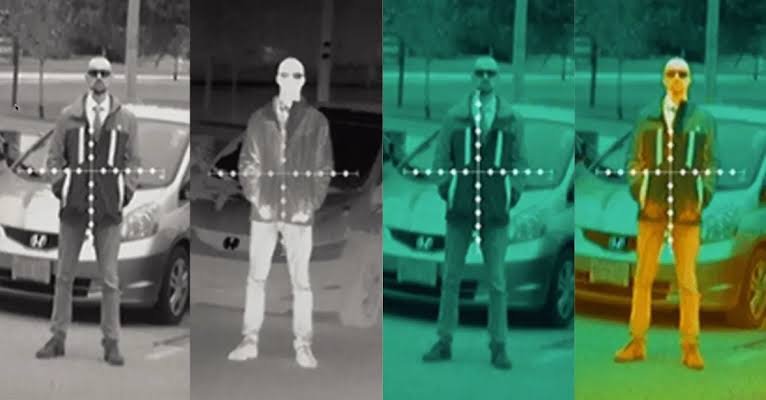
US patent 8,824,828 describes the issue directly. In a fused display, the intensified image and the thermal image compete for visual space on every single pixel. Typically the intensified channel renders in green and the thermal in amber. The patent states that this can produce a cluttered image in which the viewer cannot distinguish important detail from one sensor because it is drowned out by the other. The entire invention exists to reduce that clutter.
US patent 7,158,296 raises a second problem specific to binocular fusion. Some systems put the fused image in one eyepiece and unfused intensification or thermal in the other. The patent notes that having different information in the two eyes can make the scene harder for the operator to comprehend rather than easier.
Neither of these is a reason to dismiss fusion. They are a reason to be skeptical of the claim that more information on the display automatically means better situational awareness. Engineers have spent years and multiple patents working on exactly that problem, which tells you it is real.
The two-device approach sidesteps it entirely. Each image stays clean, and you choose which one you are looking at.
Can You Actually Buy Fusion in Europe?
Mostly, no, and this is the part the American guides skip.
True ocular side fusion is ENVG-B class hardware. It is export controlled, and US-manufactured units are in practice unavailable to European civilian buyers. Pricing, where it exists at all, runs from several thousand into five figures. One of the most technically respected fusion goggles on the market, the Infiray JerryFB, is now discontinued.
What is realistically available to you here is either a clip-on thermal over a tube device or two separate devices used together.
We do not stock true fusion goggles, and we would rather say so than sell you an approximation of one. What we do stock is quality on both sides of the pairing, which is the configuration we would actually recommend at these price points.
The Two Device Alternative, Priced
Here is what the honest alternative costs from live stock. In each pairing, the thermal device finds and the tube device identifies.
Entry pairing
| Role | Device | Price |
|---|---|---|
| Find | Pulsar Telos XQ35 thermal monocular | $1,650 |
| Identify | AGM Wolf-14 NL1 Gen 2+ monocular | €2,100 |
Mid-pairing
| Role | Device | Price |
|---|---|---|
| Find | Pulsar Telos XG50 thermal monocular | $2,530 |
| Identify | AGM PVS-14 NL2 Gen 2+ monocular | $3,410 |
Serious pairing
| Role | Device | Price |
|---|---|---|
| Find | Pulsar Telos XP50 thermal monocular | $2,860 |
| Identify and move | AGM NVG-50 NW1 dual tube goggle | $7,150 |
Rifle pairing
| Role | Device | Price |
|---|---|---|
| Find and shoot | ThermTec Hunt Pro thermal clip-on, 15 mK | $1,870 |
| Identify | AGM PVS-14 NW1 behind the day scope | $3,685 |
Compare those totals against true fusion pricing. The entry pairing lands well under what a single fused goggle costs, and it gives you two devices you can deploy independently, replace independently, and lend independently.
Browse the thermal monocular range and the Gen 2+ night vision range to build your own pairing.
How Do You Actually Use Two Devices Together?
The workflow is simple, and it becomes automatic quickly.
Scan wide with thermal. Sweep the ground from a vantage point. Thermal finds everything warm in seconds regardless of moon, fog, or cover. You are not looking for detail here, only for heat.
Mark and switch. Note where the signature is. Put the thermal down and bring up the tube device.
Identify with intensification. The tube provides you the animal, its condition, its angle, and the terrain between you and it. This is the decision you cannot make from a thermal image.
Move with intensification. Never walk on thermal. It shows heat, not ground, and it will put you in a ditch.
That interrupt and answer loop is what fusion automates. Doing it manually costs you a couple of seconds per contact and saves you several thousand euros.
For the detection side of the workflow, our thermal imaging for hunting guides covers ranges and sensor choice in detail.
What About a Fusion Scope?
Fusion scope usually means one of two different things, and it is worth separating them.
Sometimes it refers to a genuine fused riflescope combining thermal and intensified channels. Rare, expensive, and export restricted.
More often it refers to a thermal clip-on mounted ahead of a day scope, which is the practical and widely available version. Your zero is retained, your reticle is your own, and the rifle handles as it always has. The ThermTec Hunt at $1,650, the Hunt Pro at $1,870 with a 15 mK sensor, and the Hunt LRF with integrated rangefinding all work this way.
That is thermal over a day optic rather than thermal fused with intensification, but for shooting it does the job that matters, and our best thermal scope guide compares the options by budget.
For multi-spectrum observation in one unit, the ThermTec Ventus binocular with integrated rangefinder is the closest thing in our range to a single device answer.
When Fusion Genuinely Is the Right Answer
We would rather be useful than dogmatic. Fusion earns its cost in these cases.
You are a professional operator with a budget to match. Search and rescue, security, or any role where a two second switch between devices is a genuine liability.
You must move fast through complex ground with unknown heat sources present. This is the scenario fusion was built for, and nothing else does it as well.
You already own quality on both sides and have hit the limits of switching. If the manual workflow is genuinely costing you contacts, upgrading is rational.
For everyone else, and that is most people reading this, two devices are the better use of the money.
A Note on Export Control
Gen 2+ image intensifier devices are controlled goods in many jurisdictions, and fusion hardware more so. Thermal is regulated far more permissively across the EU.
That asymmetry is another quiet argument for the two-device approach. A thermal monocular usually ships without difficulty. The tube device is the one that needs checking, and we confirm we can lawfully ship to your destination before taking payment. Send us your country, and we will confirm within a working day: contact us.
Frequently Asked Questions
What is fusion night vision?
A device that merges an intensified image with a thermal image so you see terrain detail and heat signatures in one view. Thermal finds warm bodies in any condition; intensification supplies the context and detail needed to identify them.
What is thermal fusion night vision?
The same thing. Thermal fusion is when long-wave infrared and image intensification are combined, either electronically inside the device or, in cheaper setups, by running the two technologies side by side and letting your brain merge them.
Is fusion night vision worth the money?
For most civilian buyers, no. True fusion is export controlled and runs from several thousand to five figures, while two separate devices deliver most of the capability for less. Fusion is worth it when a two second switch between devices is a genuine operational liability.
Does fusion make the image cluttered?
It can, and the patent record documents it. US patent 8,824,828 describes both sensors competing for space on every pixel, producing images where detail from one channel is drowned out by the other. Good implementations manage this issue. Cheap ones do not.
What is a COTI, or clip-on thermal overlay?
A thermal imager that mounts in front of a night vision device and projects its output into the host optic. Cheaper and modular, but because the overlay is projected externally, it washes out when ambient light exceeds what the clip-on emits, which limits it at dusk and near artificial light.
Can I buy fusion night vision in Europe?
True ocular side fusion is largely unavailable to European civilians due to export control, and some of the best known units are discontinued. Clip-on thermal over a tube device, or two separate devices, are the realistic routes.
What is a fusion scope?
Usually a thermal clip-on mounted ahead of a day scope rather than a genuinely fused optic. It keeps your existing zero and reticle and is the practical route to thermal shooting for most hunters.
Are two devices really as effective as fusion?
Not identical, but close enough for most uses. You lose a couple of seconds switching and gain independent deployment, independent replacement, cleaner images, lower cost, and fewer regulatory obstacles.
Where to Go From Here
- How intensification works: night vision systems explained
- Which technology finds and which identifies: thermal vs. night vision
- Thermal detection ranges and sensors: thermal imaging for hunting
- Tube versus digital: analog night vision
- Depth perception and goggles: dual tube night vision
- Browse: thermal monoculars · thermal riflescopes · night vision monoculars · goggles
Building a pairing and unsure where to split the budget between the two sides? Tell us your ground and how you hunt, and we will tell you which device to buy first. Talk to us.