
Thermal Binoculars for Hunting: How to Choose (Guide 2026)
Thermal binoculars for hunting let you scan for the body heat of game using both eyes, which is markedly more comfortable and steadier than a single-eye monocular over a long night. The most advanced models go further still, adding a daytime color camera, a laser rangefinder, and infrared illumination so one device covers the full twenty-four hours. This guide explains when binoculars are worth the extra cost, what to look for, and how the ThermTec Ventus multi-spectrum range compares.
New to thermal? Start with the complete guide to thermal imaging for hunting. Otherwise, browse the multi-spectrum binocular range, the Pulsar brand page, the Hikmicro brand page, the AGM Global Vision brand page, or the ThermTec brand page.
Why choose thermal binoculars over a monocular
A thermal monocular is lighter, cheaper, and, for many hunters, entirely sufficient. It is the right first thermal for most people, and nothing here changes that.
Thermal binoculars for hunting earn their place when you glass for extended periods. Using both eyes removes the strain that builds up over a night of squinting through a single tube, and it produces a more natural, immersive image that your brain interprets faster. Add electronic image stabilization, and the picture holds steady at magnification, where a handheld monocular wanders. For land managers, professional observers, guides, and anyone spending hours behind glass rather than minutes, that difference is the whole argument.
| Thermal monocular | Thermal binoculars | |
|---|---|---|
| Viewing | One eye | Both eyes |
| Fatigue over hours | Noticeable | Much lower |
| Stabilisation | Rare | Common on premium models |
| Weight | 255-650 g | Heavier |
| Day use | No | Yes, on multi-spectrum |
| Typical price | €899-2,890 | €2,990-3,690 |
| Best for | Mobile scanning, first thermal | Long sessions, observation, day and night |
Products by Category
-
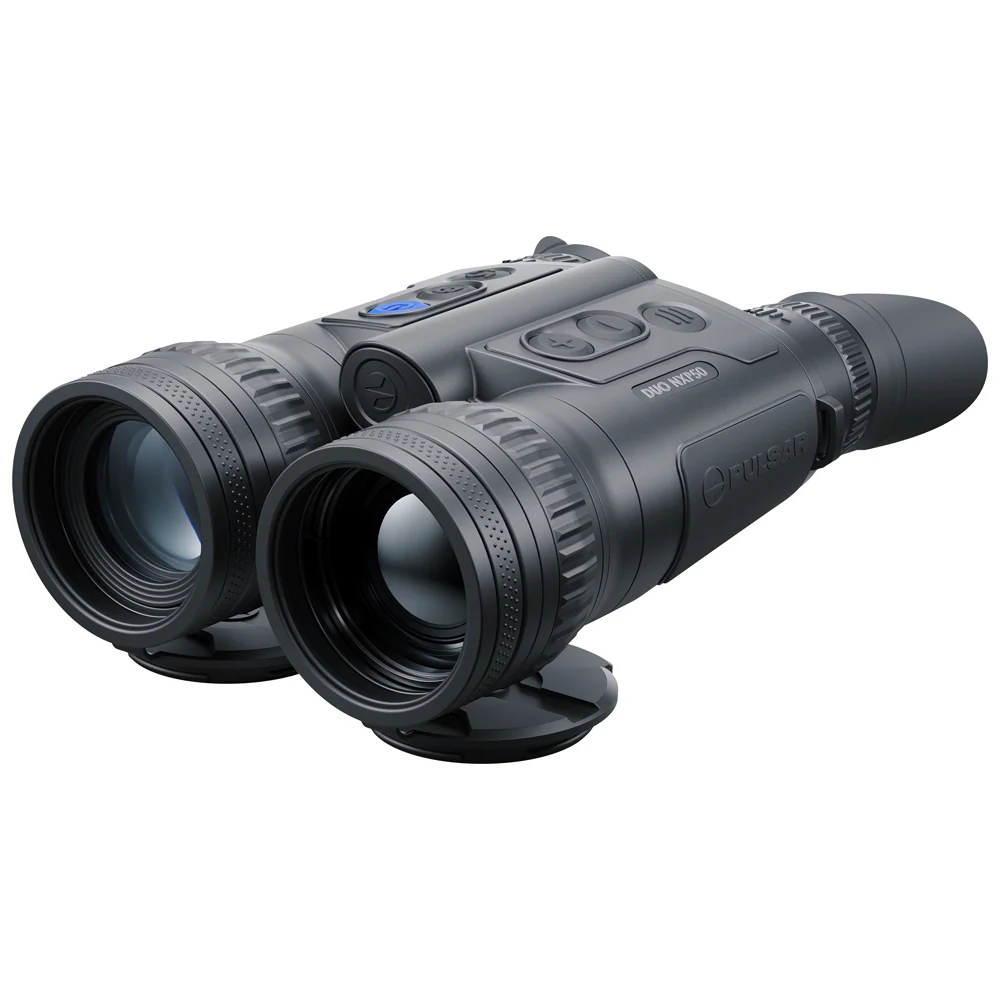
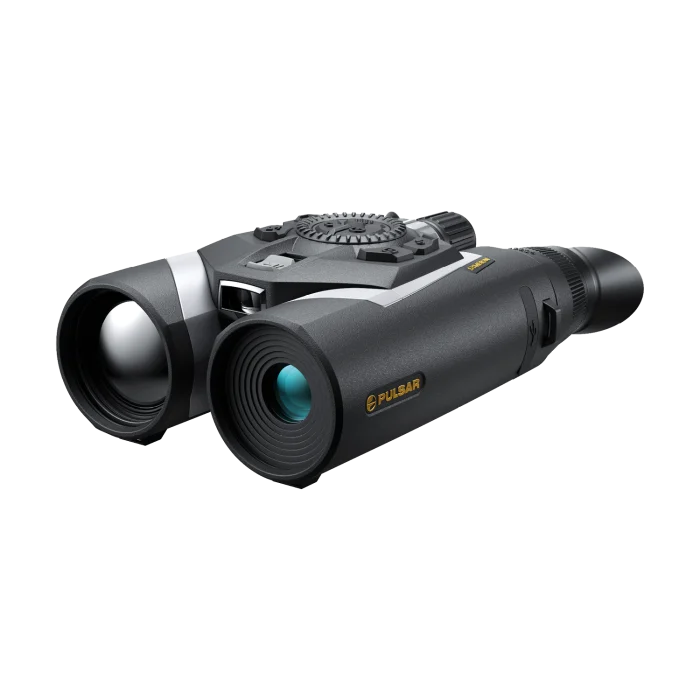
Pulsar Merger Duo NXP50 Multispectral Thermal & Night Vision Binocular
-
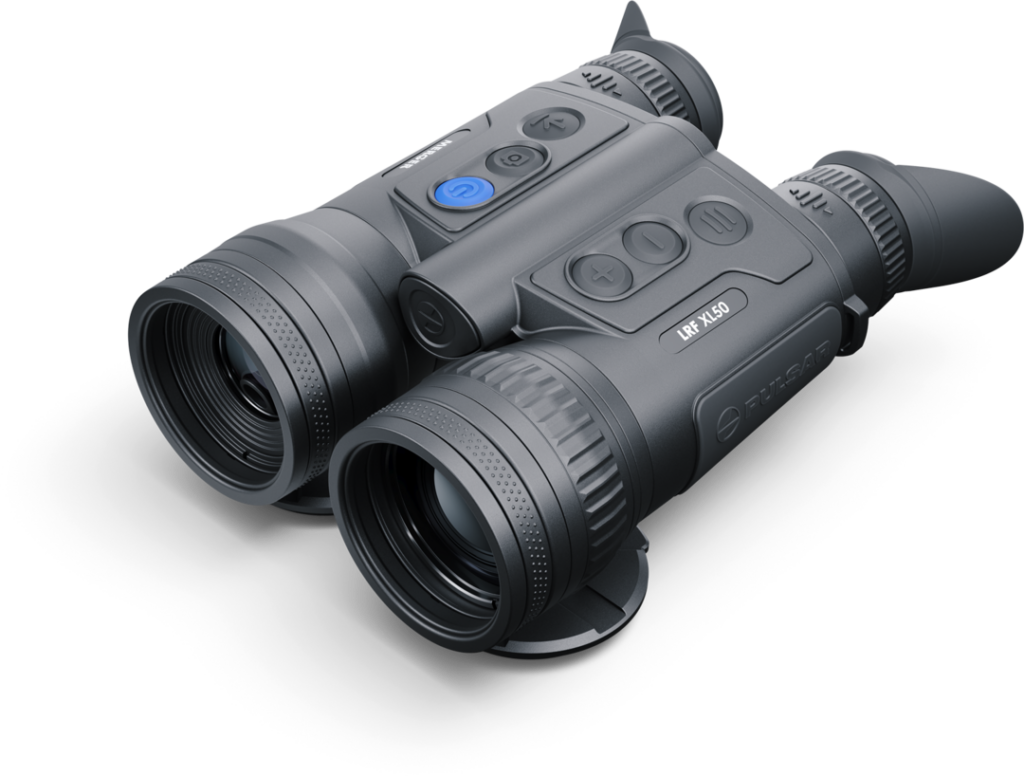
Pulsar Merger LRF XL50 Thermal Imaging Binocular
-
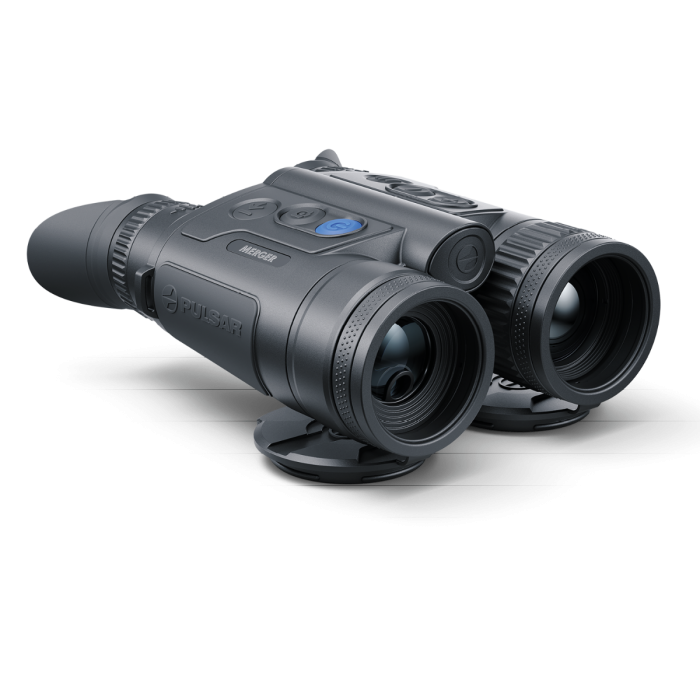
Pulsar Merger LRF XP35 Thermal Imaging Binocular
-
Pulsar Merger LRF XT50 Thermal Imaging Binocular
-
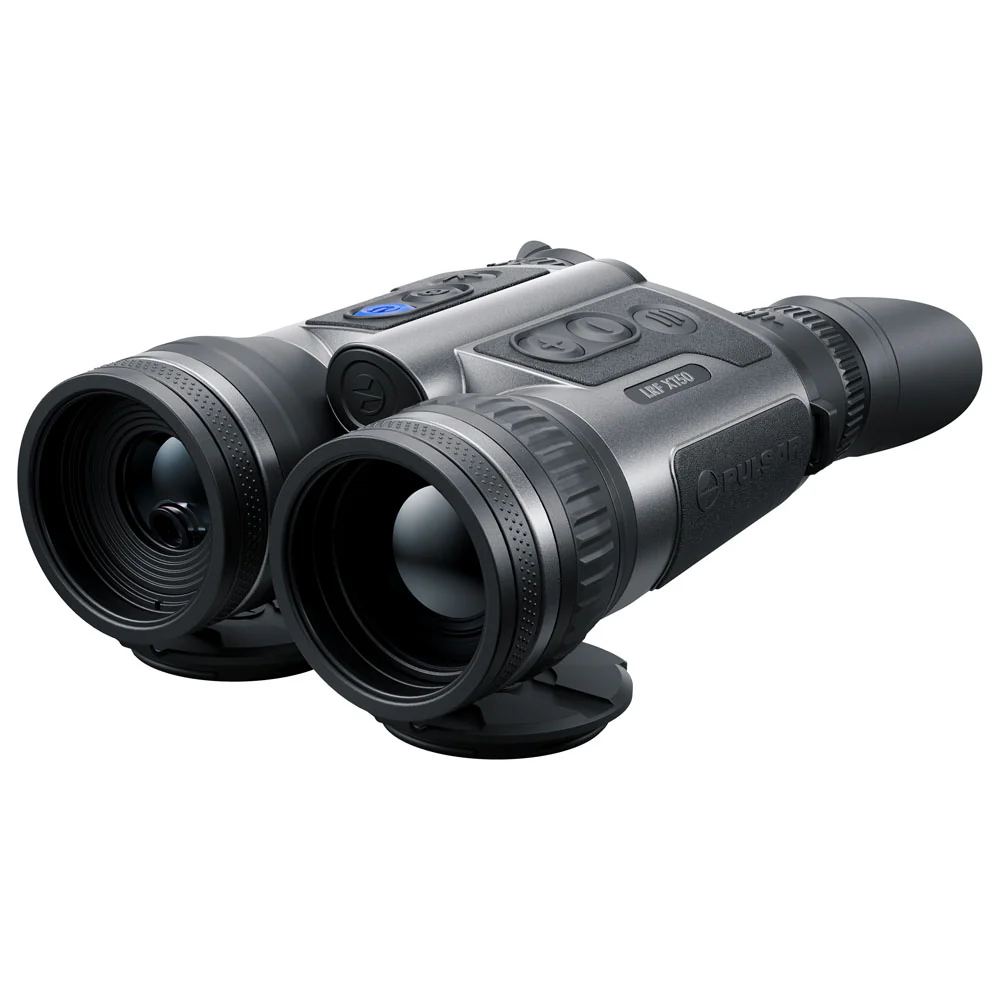
Pulsar Symbion LRF DXR50 Multispectral Thermal Binocular
-
Pulsar Symbion LRF DXT50 Multispectral Thermal Binocular
The honest summary: if you scan in short bursts and move a lot, buy a monocular and spend the difference on a better sensor. If you sit and watch, buy binoculars.
What “multi-spectrum” actually means
The newest thermal binoculars for hunting are multi-spectrum, and the term deserves unpacking because it is used loosely.
A thermal-only device reads infrared heat. It works in total darkness and shows nothing but temperature: no color, no texture, and no fine detail. A multispectral device combines that thermal channel with at least one other imaging channel, typically a high-resolution color camera that works in daylight and, with infrared illumination, in darkness too.
The practical effect is that one device stops being a night-only tool. You glass in natural color during the day, switch to thermal after dark to find warm bodies in cover, and switch back to the optical channel with IR to confirm what you have found. For a hunter who currently carries binoculars by day and a thermal monocular by night, that consolidation is the selling point.
How to choose thermal binoculars for hunting
Sensor resolution and NETD
Start here. Everything else on a pair of thermal binoculars for hunting is secondary to the sensor behind it.
The two specifications that determine image quality are resolution and NETD. A 640×512 sensor provides the detail and identification range serious hunters need, while a 384 sensor keeps costs down but limits how far out you can confirm what you see. NETD, measured in millikelvins, describes the smallest temperature difference the sensor can resolve, and lower is better. Below 15mK is pro-grade and keeps a clean image in fog, drizzle, and humidity.
On a premium device you use for hours, both are worth paying for. Our explainer on 384 versus 640 sensors covers the trade-off.
Multi-spectrum day and night capability
If you want one device rather than two, the multi-spectrum capability is the feature to insist on. A thermal-only binocular is a night tool. A multi-spectrum binocular with a 4K optical channel replaces your day glass as well, which changes the value calculation considerably.
Lens size and detection range
The thermal lens sets the detection range against the field of view. A 35 mm lens gives a wider view and roughly 1,800 m detection, suiting mixed terrain, bush, and mobile scanning. A 50 mm lens narrows the view and pushes detection to about 2,600 m in open country.
Treat those figures as a way to compare devices, not as a promise. Identification happens far closer than detection, and weather cuts both, as our guide on how far thermal actually sees sets out.
Rangefinder
A built-in laser rangefinder measures the exact distance to whatever you are looking at, which helps you plan a stalk, judge whether a shot is on, and avoid the classic error of misjudging distance across open ground at night. On thermal binoculars with rangefinder capability, the measurement appears in the display without breaking your view.
Stabilisation, ergonomics and battery
Electronic stabilization steadies the image at magnification and is one of the clearest differences between a premium binocular and a basic one. Interpupillary adjustment and dioptre correction matter more here than on a monocular, because both eyes are involved. And check the battery format: replaceable cells let you swap batteries in the field, while a sealed internal battery does not.
Thermal, night vision, or day binoculars?
Three technologies are often confused, and they do different jobs.
Day binoculars amplify nothing. They gather and focus available light, so they are superb in daylight and useless after full dark.
Night vision amplifies the small amount of visible light present, producing an image closer to normal vision. It needs some light to work, so it fails on a genuinely black night under a cloud, and it is easily washed out by a vehicle headlight or a farmyard lamp.
Thermal readers emit heat and need no light at all. It finds warm animals in total darkness and through light cover but shows heat and shape rather than color or fine detail.
For finding game after dark, thermal wins clearly, which is why thermal binoculars for hunting have largely displaced night vision in the field. Our full comparison of thermal versus night vision covers the differences properly. A multi-spectrum binocular such as the Ventus effectively bundles all three approaches into one body.
The ThermTec Ventus range compared
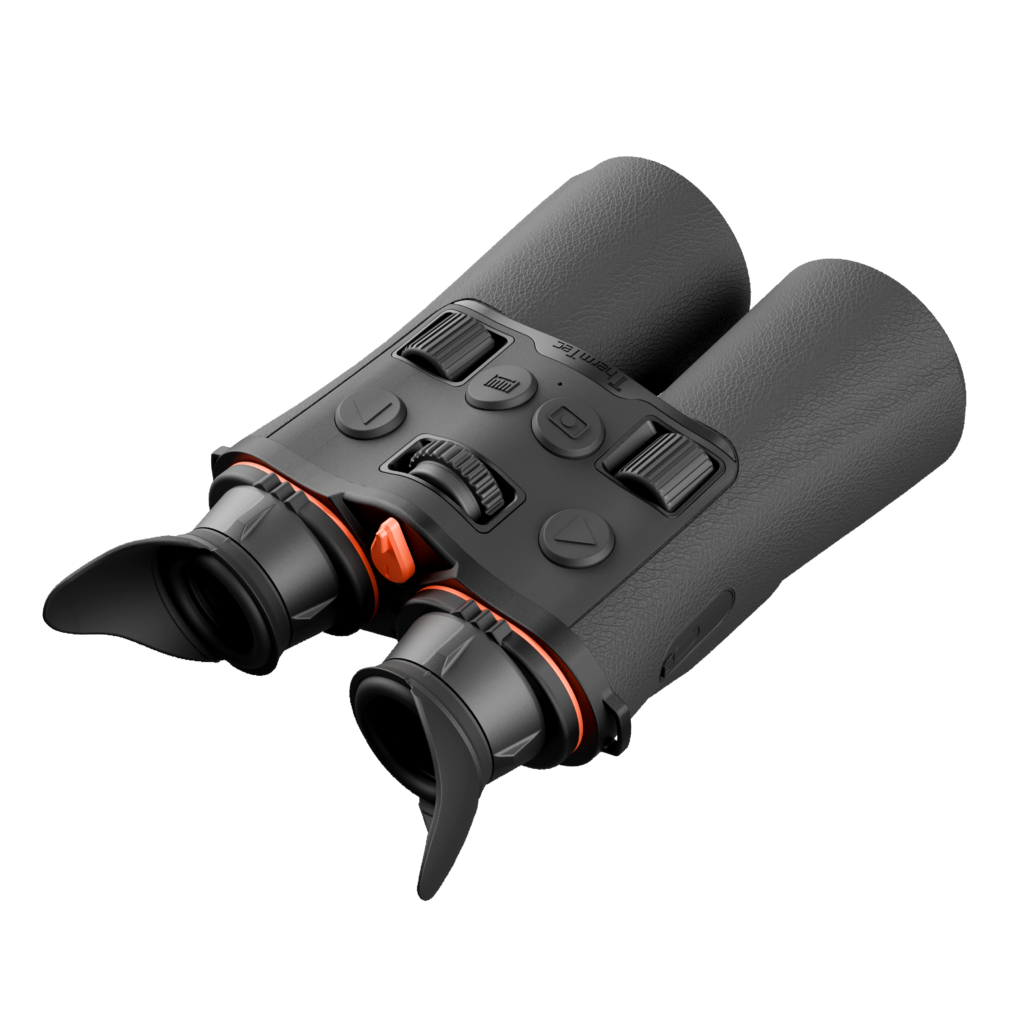
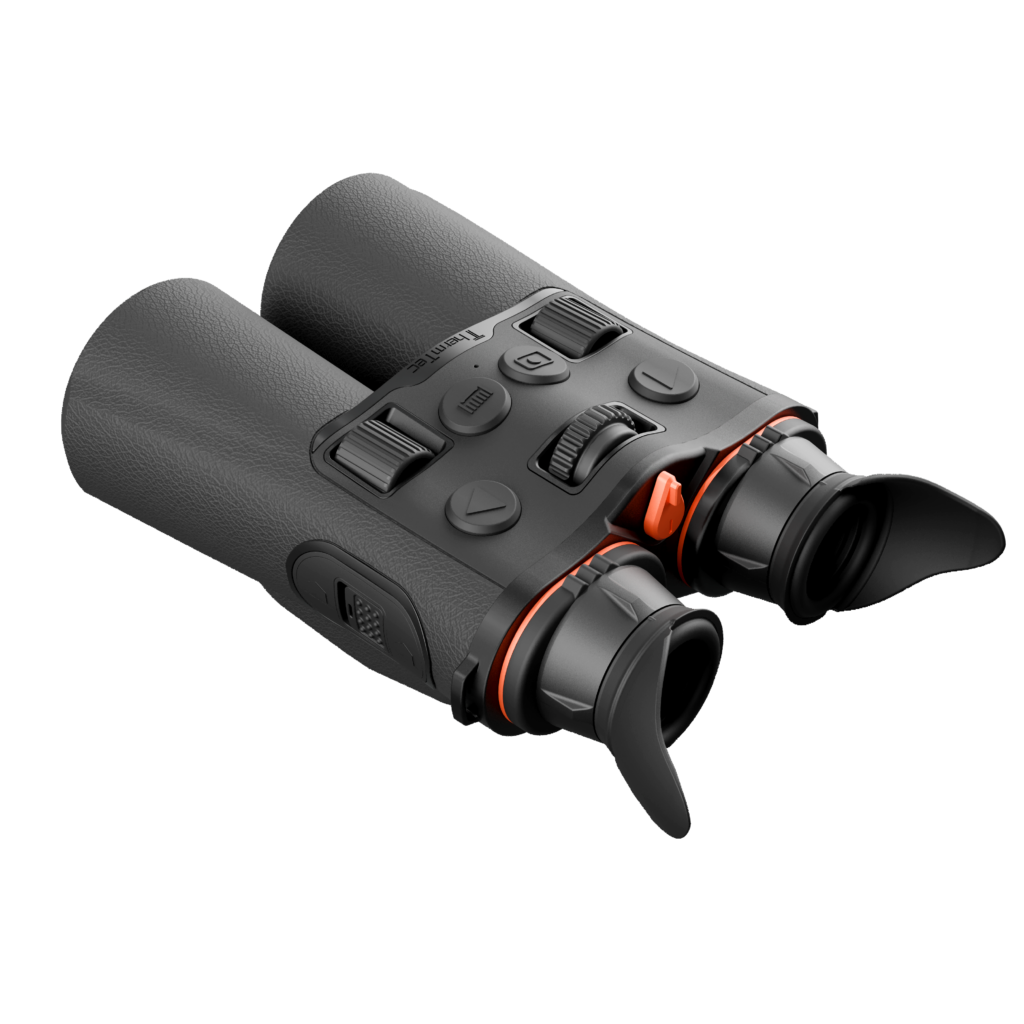
The Ventus is ThermTec’s multispectrum binocular line, combining five functions in one body: a 640 thermal sensor, a 4K day and night optical camera, a 1,000 m rangefinder, dual-band IR illumination, and two-eye viewing.
| Ventus 635L | Ventus 650L | |
|---|---|---|
| Thermal sensor | 640×512, 12µm | 640×512, 12µm |
| NETD | <15 mK | <15 mK |
| Thermal lens | 35 mm F0.9 | 50 mm F1.0 |
| Detection range | 1,800 m | 2,600 m |
| Field of view | Wider | Narrower |
| Optical channel | 4K UHD 12MP | 4K UHD 12MP |
| Rangefinder | 1,000 m | 1,000 m |
| IR illuminator | 850 / 940 nm | 850 / 940 nm |
| Price | €2,990 | €3,690 |
| Best for | Woodland, mixed terrain | Open country, long range |
Wide field: ThermTec Ventus 635L
The Ventus 635L uses a 35 mm thermal lens for a wider field and faster scanning, with detection to 1,800 m. For woodland, bush, and any ground where you are sweeping rather than reaching, the wider view finds game more quickly than extra range would.
Long range: ThermTec Ventus 650L
The Ventus 650L fits a 50 mm lens for detection up to 2,600 m, trading field of view for reach. Open country, hill ground, and long-range observation are its territory.
Both share the same 640 sensor, sub-15mK sensitivity, 4K optical channel, 1,000 m rangefinder, and dual-band IR, so the choice is genuinely about lens and terrain rather than tiers of quality.
How the Ventus compares to Pulsar, HIKMICRO, and other brands
We sell every major thermal brand, so here is the honest comparison rather than the one that suits us. Three names come up whenever buyers shortlist thermal binoculars for hunting.
Pulsar Merger LRF
Pulsar is the most recognized name in the category, and the Merger LRF is its binocular line. The XP50 pairs a 640×480 sensor at a 17 µm pixel pitch with NETD < 25 mK, a fast F50/1.0 germanium lens, 1,800 m detection, and a 1,000 m rangefinder. The XL50 steps up to a 1024×768 sensor at 12 µm and 2,300 m detection.
Two things to weigh. Pulsar’s variable 2.5-20x magnification is genuinely useful and something the Ventus does not match. Against that, the XP50’s 17µm pixel pitch is an older generation than the 12µm sensors ThermTec and HIKMICRO now use, and the XL50 buys its higher resolution at NETD < 40mK, which is a considerable step back from the Ventus at < 15mK. Higher resolution with weaker sensitivity produces a noisier image in exactly the wet, low-contrast conditions where you need it most. Both merger models are also thermal only, with no daytime optical channel.
HIKMICRO Habrok and Habrok Pro
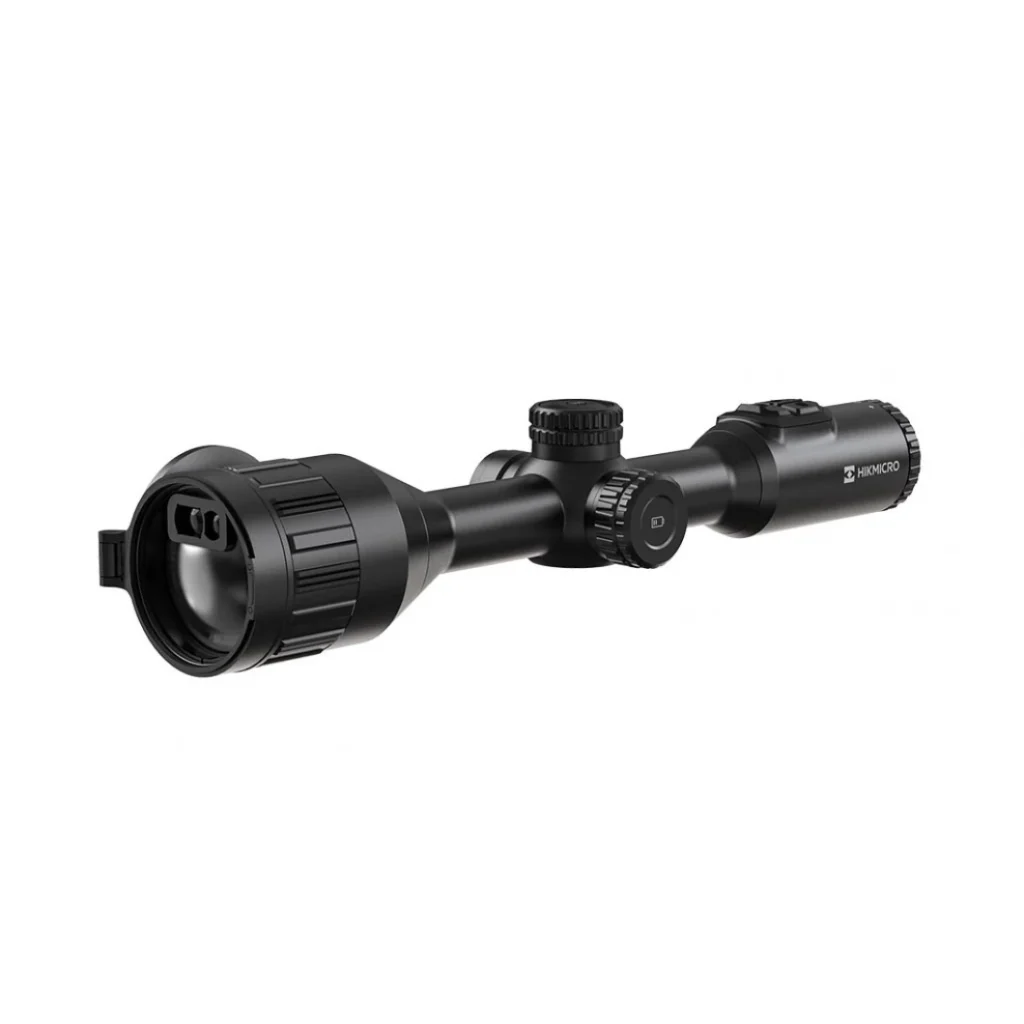
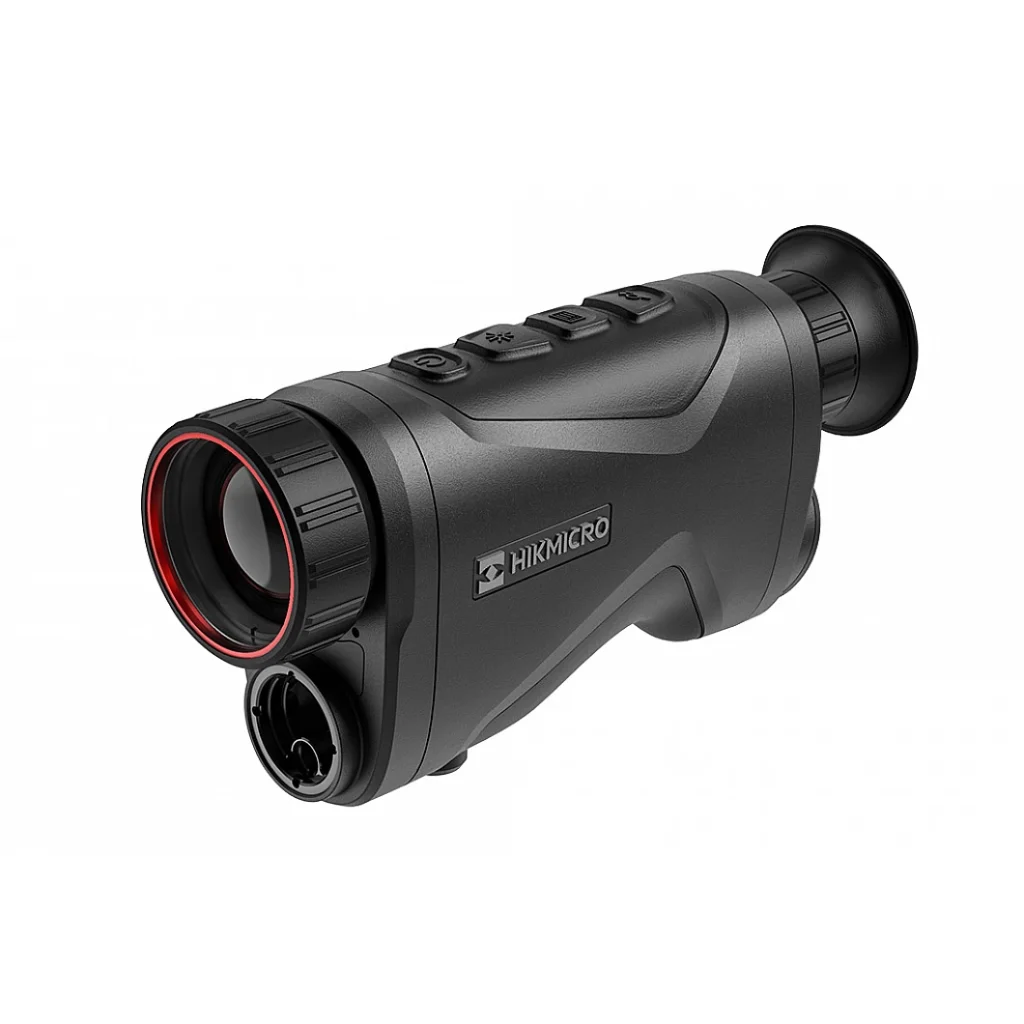
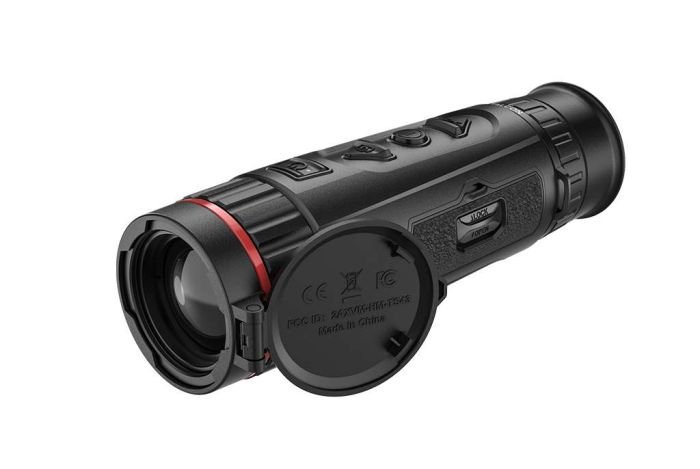
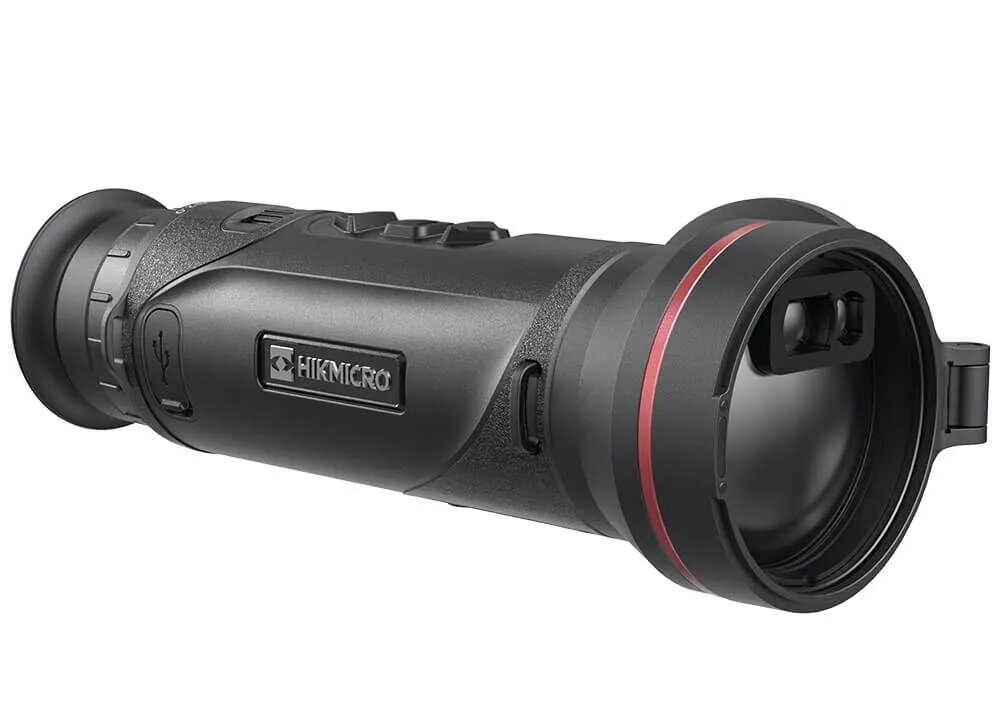
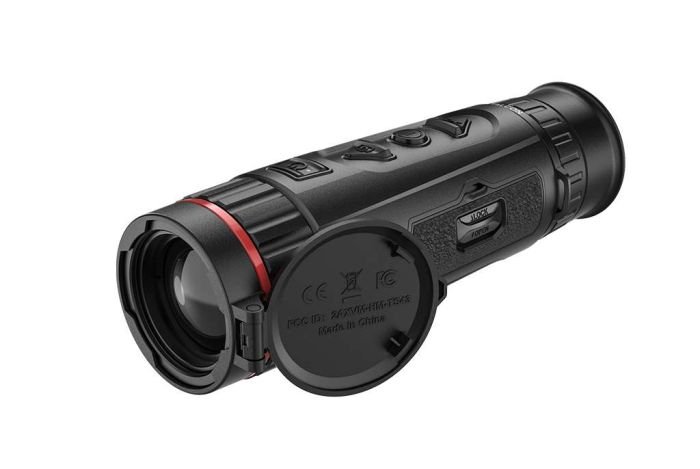
The HIKMICRO Habrok is the Ventus’s closest rival because it takes the same multi-spectrum approach. The Habrok Pro HQ50L runs a 640×512 12 µm sensor at NETD <15 mK with a 50 mm lens, 2,600 m detection, a 4K optical channel, a 1,000 m rangefinder, and an 850 nm IR emitter, at around 975 g. The HX60L goes further with a 1280×1024 sensor and a 60 mm lens.
On paper the Habrok Pro HQ50L and the Ventus 650L are closely matched: they have the same sensor resolution, same pixel pitch, same NETD class, same detection range, and same ranging distance. The practical differences are ergonomics, the Ventus’s dual-band 850/940 nm IR against the Habrok’s single 850 nm emitter, and price. If you want the highest thermal resolution available in a binocular, the HX60L’s 1280×1024 sensor is currently unmatched by ThermTec.
AGM, ATN, and value alternatives
AGM and ATN build their reputations on aggressively priced monoculars and riflescopes rather than binoculars, and their binocular offerings change frequently. Check your current AGM and ATN lineup and list the specific models you stock here, with sensor, NETD, and price, rather than a general claim. If neither currently offers a multi-spectrum binocular, say so plainly: it is a fair reason to point a buyer at the Ventus or the Habrok.
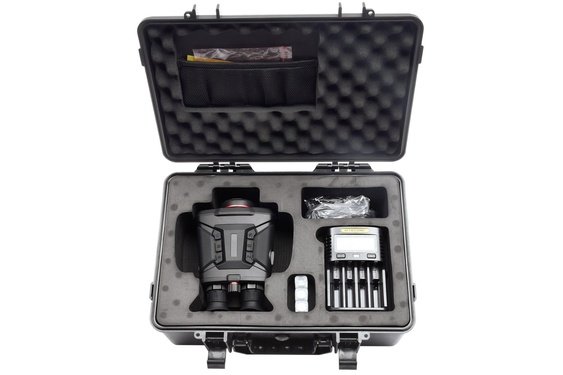
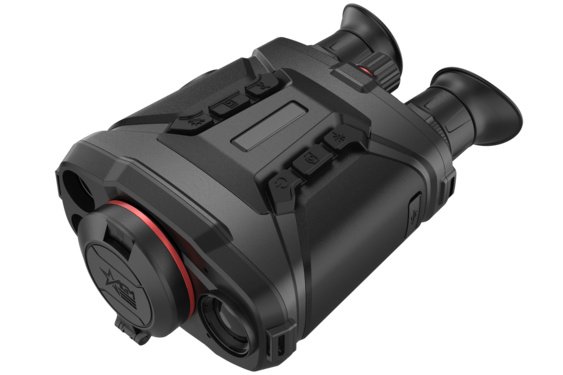
The short version
If you want variable optical magnification and the strongest brand recognition, choose Pulsar. If you want the highest thermal resolution in a multi-spectrum body, choose the HIKMICRO Habrok Pro HX60L. If you want sub-15mK sensitivity, dual-band IR, and a 4K day channel at the keenest price of the three, get the Ventus. All three are stocked, and we will tell you if one of the others suits your ground better.
How the Ventus compares to Pulsar, HIKMICRO, AGM, and ATN
We stock every major thermal brand, so we have no reason to steer you toward one. If you are seriously shopping for thermal binoculars for hunting, the most important comparison is between manufacturers, and it begins with a distinction that most retailers overlook.
Thermal-only versus multi-spectrum
Two different product types share the same heading.
Thermal-only binoculars have a single imaging channel that reads heat. Pulsar’s Merger line is the benchmark here. They do one job extremely well and nothing else.
Multi-spectrum binoculars add a high-resolution optical channel, usually 4K, plus infrared illumination, so one device covers daylight color, digital night vision, and thermal. The ThermTec Ventus, HIKMICRO Habrok, AGM Voyage, and ATN Binox 6 all sit here.
That distinction matters more than any single specification. A Merger and a Ventus are not really competing products.
| Model | Thermal sensor | NETD | Detection | Optical channel | LRF | Type |
|---|---|---|---|---|---|---|
| ThermTec Ventus 650L | 640×512 12µm | <15 mK | 2,600 m | 4K UHD | 1,000 m | Multi-spectrum |
| HIKMICRO Habrok Pro HQ50L | 640×512 12µm | <15 mK | 2,600 m | 4K UHD | 1,000 m | Multi-spectrum |
| HIKMICRO Habrok 4K 2.0 | 256×192 12µm | <18 mK | 1,200 m | 4K UHD | 1,000 m | Multi-spectrum |
| Pulsar Merger LRF XP50 | 640×480 17µm | <25 mK | 1,800 m | None | 1,000 m | Thermal only |
| Pulsar Merger LRF XL50 | 1024×768 12µm | <40 mK | ~2,300 m | None | 1,000 m | Thermal only |
| AGM Voyage LRF TB50-640 | 640×512 12µm | <20 mK | 2,600 m | 2560×1440 | Yes | Fusion |
| ATN Binox 6 Dual | 640×512 | ≤15 mK | Model-dependent | 4K UHD | Yes | Multi-spectrum |
Pulsar Merger: the thermal-only benchmark
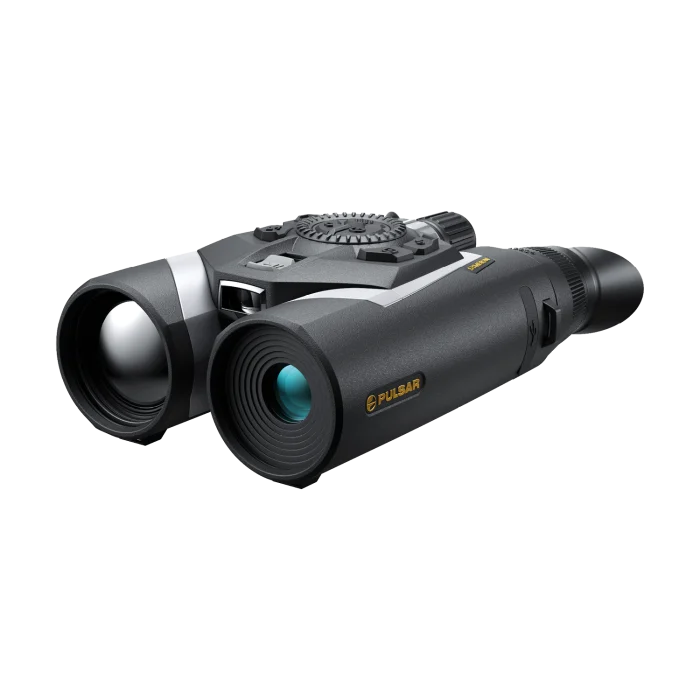
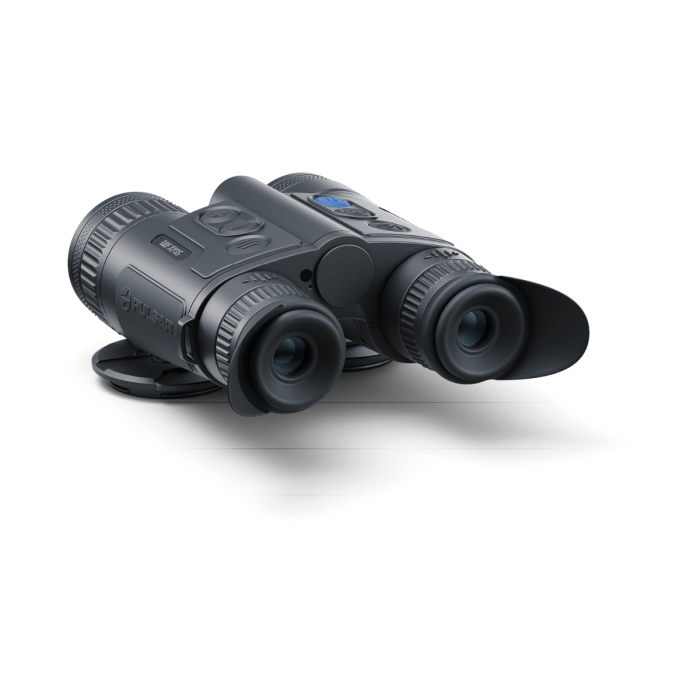
The Merger LRF range is the most respected thermal binocular on the market, and deservedly so. Magnesium housing, a fast F50/1.0 germanium lens, dual AMOLED displays, proper interpupillary adjustment, and the Stream Vision 2 app ecosystem, which remains the most polished software in thermal. The XP50 runs a 640×480 17µm sensor at NETD <25mK with 1,800 m detection; the XL50 steps up to a Lynred-made 1024×768 12µm HD sensor with detection around 2,300 m; the XT50 reaches the furthest.
Here is the part worth knowing before you spend €5,000. The high-resolution XL50 carries an NETD of less than 40mK, which is significantly less sensitive than the ThermTec Ventus and HIKMICRO Habrok Pro at less than 15mK. More pixels, less sensitivity. Reviewers have noted the XL50’s image is not always as crisp as the lower-resolution XP50 in poor conditions, which is precisely what that specification predicts.
If you want a pure thermal binocular with the best build and software, choose Merger. If you want a day channel, Merger does not offer one outside the Duo NXP50.
HIKMICRO Habrok: the Ventus’s direct rival
This is the honest comparison. The Habrok Pro HQ50L runs a 640×512 12µm sensor at NETD <15mK, a 50mm F1.0 lens, 2,600 m detection, a 4K optical channel, a 1,000 m rangefinder, and IR illumination at around 975 g. On paper, the ThermTec Ventus 650L matches those specs. The two are near-identical devices, and choosing between them comes down to price on the day, ergonomics in your hands, warranty terms, and which app you prefer.
HIKMICRO also offers something ThermTec currently does not: a genuine entry point. The Habrok 4K 2.0 with its 256×192 sensor brings multi-spectrum capability in at a considerably lower price, with shutterless imaging and detachable 850 nm and 940 nm IR emitters. If your budget stops well short of €3,000, that is where to look.
AGM Voyage: fusion imaging
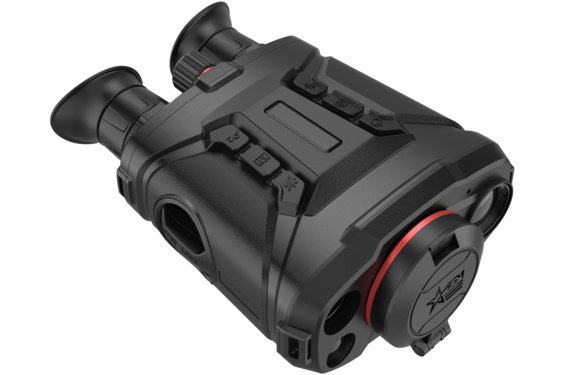
The AGM Voyage LRF does something the others do not. Rather than switching between thermal and visible channels, it can blend them into a single fused image, overlaying heat data onto a visible-light picture. This capability is AGM’s clearest differentiator for identification work that is genuinely useful. Sensors run 384×288 or 640×512 at 12 µm with NETD <20 mK behind a fast 50 mm F0.9 germanium lens, with 2,600 m detection, GPS, an inclinometer, and up to 8 hours on three replaceable 18650 cells.
AGM also offers a five-year transferable warranty, the longest here, which matters more than buyers usually credit on a device costing several thousand euros.
ATN Binox: feature-led
ATN loads its Binox line with technology, and the Binox 6 Dual pairs a sixth-generation thermal engine with 4K day and night imaging and a built-in rangefinder, with sensor options up to 640×512 at ≤15 mK. Battery life is a genuine strength across the range. Buyers who want the whole technology package rate them well; those focused narrowly on optical quality per euro often prefer alternatives.
Where the Ventus sits, honestly
ThermTec’s case is specification per euro. Sub-15mK sensitivity, a 640 sensor, a 4K optical channel, 1,000 m ranging, dual-band IR and electronic stabilization at €2,990 to €3,690 is strong value, and it undercuts Pulsar substantially for a device that does considerably more.
What ThermTec does not yet have is Pulsar’s decade of software refinement and resale strength, or HIKMICRO’s entry-level price point. If you want the best pure thermal binocular and expect to sell it in three years, choose Pulsar. If your budget is under €2,000, HIKMICRO. If fusion imaging or the longest warranty matters most, AGM. If you want the most capability per euro in a multispectrum binocular today, get the Ventus.
The lesson buried in these numbers
Compare the Pulsar XL50 at 1024×768 and <40mK against the Ventus 650L at 640×512 and <15mK, and you have the single most useful principle in thermal buying: resolution and sensitivity are separate specifications, and manufacturers optimize for whichever is easier to market. Resolution is the number that sells. Sensitivity is the number that determines whether you can see a deer standing in wet bracken at 300 m in November drizzle.
Read both figures before you spend on any brand, including ours.
Where multi-spectrum binoculars earn their keep
Beyond finding game, the format covers jobs that a thermal monocular cannot.
Day and night observation. Land managers and stalkers who watch ground across the full day get one device rather than two, with no swap at dusk.
Identifying before deciding. Thermal tells you something warm is there. The 4K optical channel with IR tells you whether it is a roe deer, a fox, or a dog walker before you commit to anything.
Long observation sessions. Two-eye viewing with stabilization is the difference between watching a wood for three hours and giving up after one.
Recovery and tracking. Following a blood trail or locating a downed animal in cover, where a steady, stabilized image and a rangefinder both help.
Security and property. Outside of hunting, the same feature set can also be used for perimeter and livestock monitoring.
Setting up and using thermal binoculars
A few habits make a considerable difference, and none of them appear in the manual’s opening pages.
Set interpupillary distance and diopter properly. This matters far more on binoculars than on a monocular. Adjust the barrel spacing until you see a single clean circle, then set each dioptre individually. Getting this wrong is the most common reason people report eye strain from a device bought specifically to reduce it.
Learn the palettes. White-hot is the sensible default for scanning because your eye picks up bright shapes fastest. Black-hot often reveals more detail on an animal you have already found. Red-hot and similar palettes help isolate a warm body against clutter. Most experienced users scan in one palette and identify it in another.
Scan slowly and systematically. The instinct is to sweep quickly across the ground. Thermal rewards the opposite: work in overlapping bands and pause at the edges of cover, where an animal’s head or flank may be the only warm patch visible.
Use the IR channel sparingly. On a multi-spectrum binocular, 850 nm gives more range but produces a faint visible glow that some animals notice; 940 nm is far more discreet at the cost of range. Switch deliberately rather than leaving it on.
Expect less rain. Heavy rain and dense fog degrade every thermal device. Sub-15mK sensitivity helps, and nothing eliminates it.
What thermal binoculars cost
Thermal binoculars for hunting are at the premium end of the market, with the Ventus range priced between €2,990 and €3,690, placing it against premium monoculars rather than entry ones. That comparison is the right way to think about it: a Wild Pro monocular at €2,890 gets you a sub-15mK 640 sensor with ranging in one eye, while €2,990 gets you the same core imaging in a stabilized two-eye body with a 4K day channel and IR added.
Framed that way, the premium for binoculars is small. Framed against an entry monocular such as the Cyclone at €899, it is substantial. Which comparison is fair depends entirely on how long you spend glassing.
Legality: confirm before you buy
Rules on thermal devices vary across Europe and change periodically. Handheld thermals used for observation are widely permitted and generally treated more permissively than thermals mounted on a firearm, but the details differ by country and sometimes by region. IR illuminators can carry their own restrictions.
We sell optics, not legal advice. Check the current position with your national or regional hunting authority before ordering, particularly if you hunt across borders.
Which thermal binoculars should you choose?
For woodland, bush, and mixed terrain where you scan more than you reach, the Ventus 635L. For open country and long-range observation, the Ventus 650L. Both give thermal, 4K day and night imaging, ranging and IR in one comfortable two-eye device.
If you mostly move rather than sit, and you want the lightest tool for finding game, a thermal monocular will serve you better and cost less. And remember that binoculars and monoculars are both for finding; the shot still comes from a thermal scope or a thermal clip on on the rifle.
Frequently asked questions
Are thermal binoculars better than a thermal monocular for hunting?
For long sessions, clip-on-eye viewing is far less tiring, and with stabilization the image is steadier at magnification. A monocular is lighter, cheaper, and better for mobile scanning. The deciding question is how long you spend glassing in one go: hours favor binoculars, and minutes favor a monocular.
What is a multi-spectrum binocular?
A binocular combining more than one imaging channel. The ThermTec Ventus pairs a 640 thermal sensor with a 4K day and night optical camera, plus a laser rangefinder and dual-band IR. You detect heat on the thermal channel and identify detail on the optical channel, which a thermal-only device cannot do.
Can thermal binoculars be used in daylight?
Thermal works day or night since it reads heat, though contrast is usually lower once ground and animals have warmed up. Multi-spectrum models like the Ventus add a 4K optical channel for natural color in daylight, which makes them a genuine day-and-night binocular rather than a night-only tool.
How far can thermal binoculars detect game animals?
The Ventus 635L detects a large heat source to roughly 1,800 m, and the 650L to roughly 1,800 m. Identification, which is when you confirm what the animal actually is, always happens at a considerably closer distance, and rain and humidity reduce both ranges. both figures.
Do thermal binoculars have a rangefinder?
Premium models do. Both Ventus variants carry a built-in 1,000 m laser rangefinder with the reading shown in the display, so you can measure distance before a stalk without reaching for a separate device.
Which brand makes the best thermal binoculars?
It depends on what you are optimizing for. Pulsar’s Merger line leads on build quality, software, and resale value but is thermal-only and less sensitive on its HD models. HIKMICRO’s Habrok Pro matches the ThermTec Ventus almost exactly and offers a cheaper entry model. AGM adds fusion imaging and the longest warranty. ThermTec leads on specifications per euro. There is no single winner, which is why we stock all of them.
Is the ThermTec Ventus better than the Pulsar Merger?
They are different products. The Ventus is multi-spectrum, adding a 4K day channel and IR illumination to its thermal sensor, and it is more sensitive at less than 15 mK. The Merger is a dedicated thermal binocular with a superior build and the best software in the category but no day channel and, on the HD XL50, a much higher NETD of < 40 mK. Choose the Ventus for versatility and value and the Merger for pure thermal refinement.
Are thermal binoculars worth the extra cost over a monocular?
Against a premium monocular, the gap is small, and the two-eye comfort plus day channel usually justifies it. Against an entry monocular, the gap is large, and if you scan in short bursts, the monocular is the better buy. Match the tool to how long you actually spend looking.
Ready to choose? Browse the ThermTec Ventus multi-spectrum range, compare it with thermal monoculars, or read about thermal scopes and thermal clip ons for the shot itself.